
Chinese Journal of Applied Chemistry ›› 2025, Vol. 42 ›› Issue (6): 838-849.DOI: 10.19894/j.issn.1000-0518.240429
• Full Papers • Previous Articles Next Articles
Zheng-Xin FAN, Jia-Jun ZAN, Yuan DU, Tong SUN( )
)
Received:2024-12-26
Accepted:2025-05-11
Published:2025-06-01
Online:2025-07-01
Contact:
Tong SUN
About author:suntong980@163.comSupported by:CLC Number:
Zheng-Xin FAN, Jia-Jun ZAN, Yuan DU, Tong SUN. Rapid and Non-Destructive Identification of New Torreya grandis Seeds Based on Near-Infrared Spectroscopy and Feature Wavelength Selection Combined with Machine Algorithm for Discrimination[J]. Chinese Journal of Applied Chemistry, 2025, 42(6): 838-849.
Add to citation manager EndNote|Ris|BibTeX
URL: http://yyhx.ciac.jl.cn/EN/10.19894/j.issn.1000-0518.240429
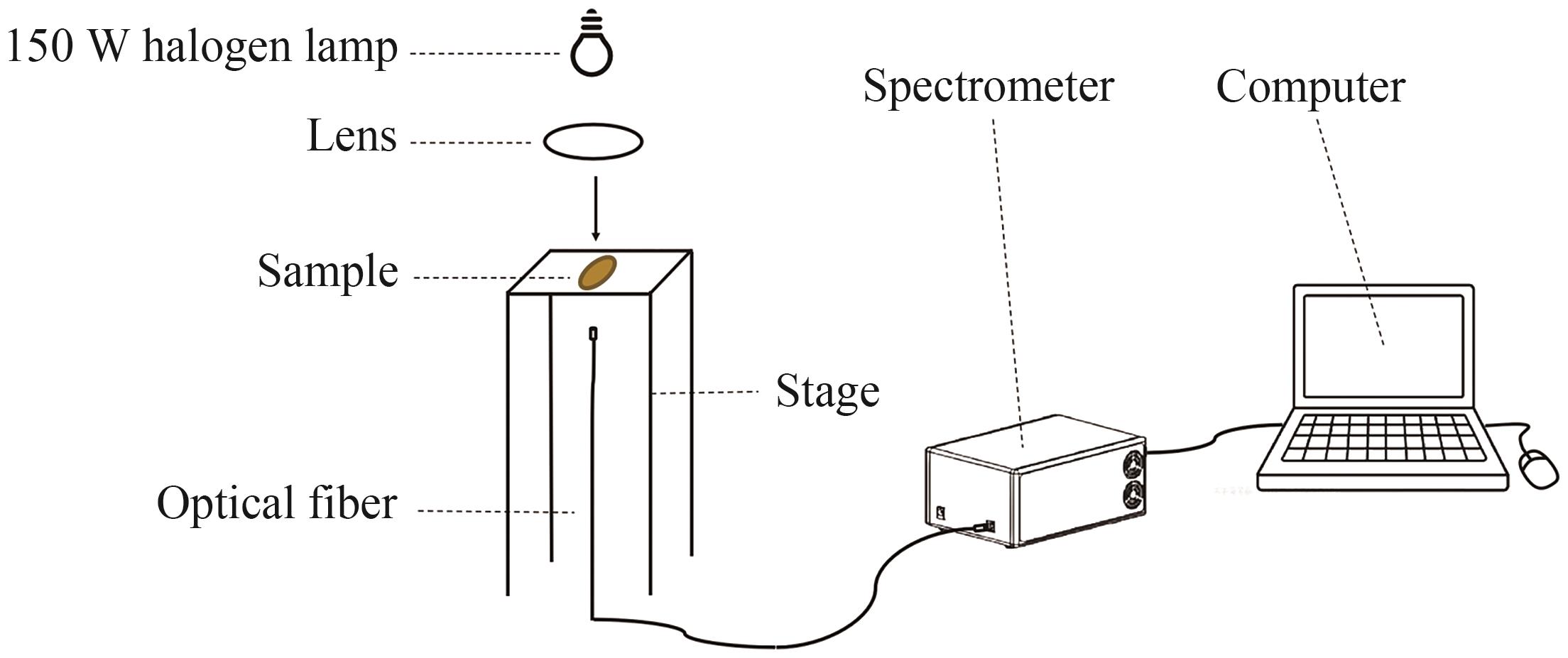
Fig.1 Near infrared transmission detection device of Torreya grandis seeds
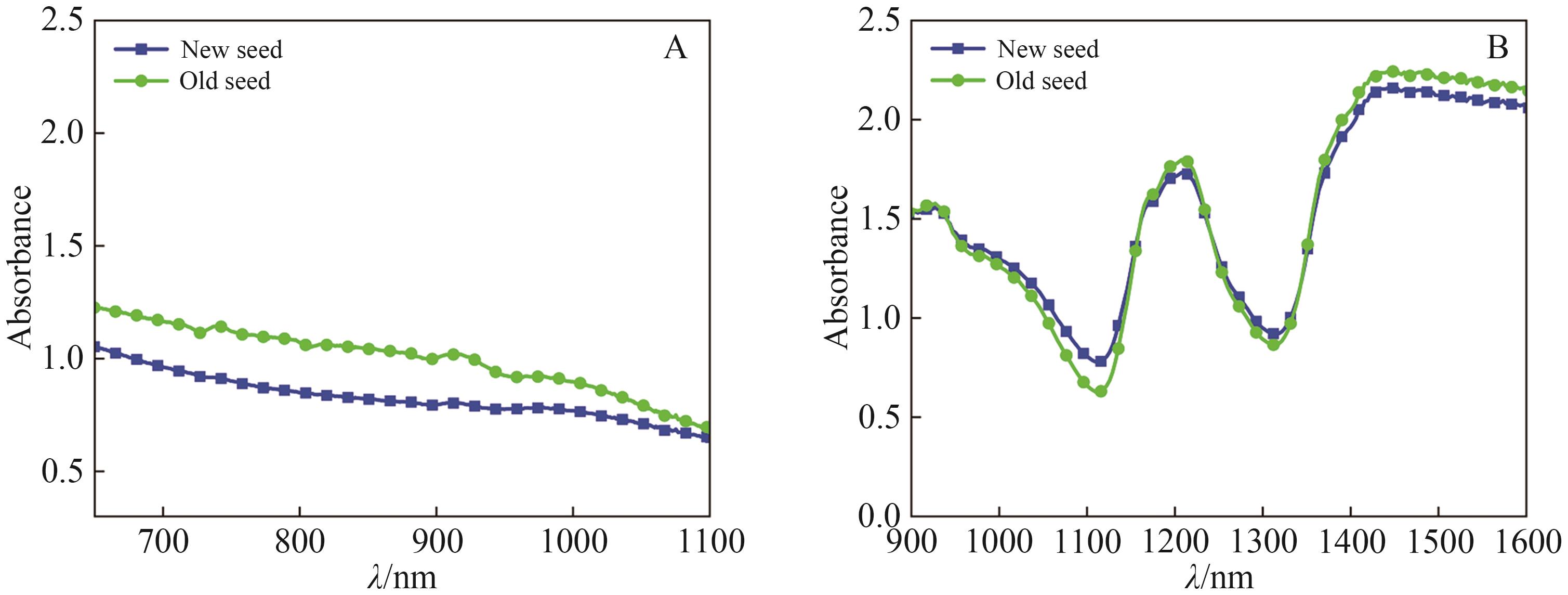
Fig.2 Average near-infrared spectra of fresh and stale Torreya grandis seeds collected by spectrometer Ⅰ (A) and spectrometer Ⅱ (B)
| Principal component | Spectrometer Ⅰ | Spectrometer Ⅱ | ||
|---|---|---|---|---|
| Variance contribution rate/% | Cumulative contribution rate/% | Variance contribution rate/% | Cumulative contribution rate/% | |
| 1 | 84.44 | 84.44 | 79.21 | 79.21 |
| 2 | 14.44 | 98.89 | 15.12 | 94.33 |
| 3 | 0.84 | 99.73 | 3.92 | 98.25 |
| 4 | 0.21 | 99.94 | 1.09 | 99.34 |
Table 1 Principal component contribution of Torreya grandis seeds spectra
| Principal component | Spectrometer Ⅰ | Spectrometer Ⅱ | ||
|---|---|---|---|---|
| Variance contribution rate/% | Cumulative contribution rate/% | Variance contribution rate/% | Cumulative contribution rate/% | |
| 1 | 84.44 | 84.44 | 79.21 | 79.21 |
| 2 | 14.44 | 98.89 | 15.12 | 94.33 |
| 3 | 0.84 | 99.73 | 3.92 | 98.25 |
| 4 | 0.21 | 99.94 | 1.09 | 99.34 |
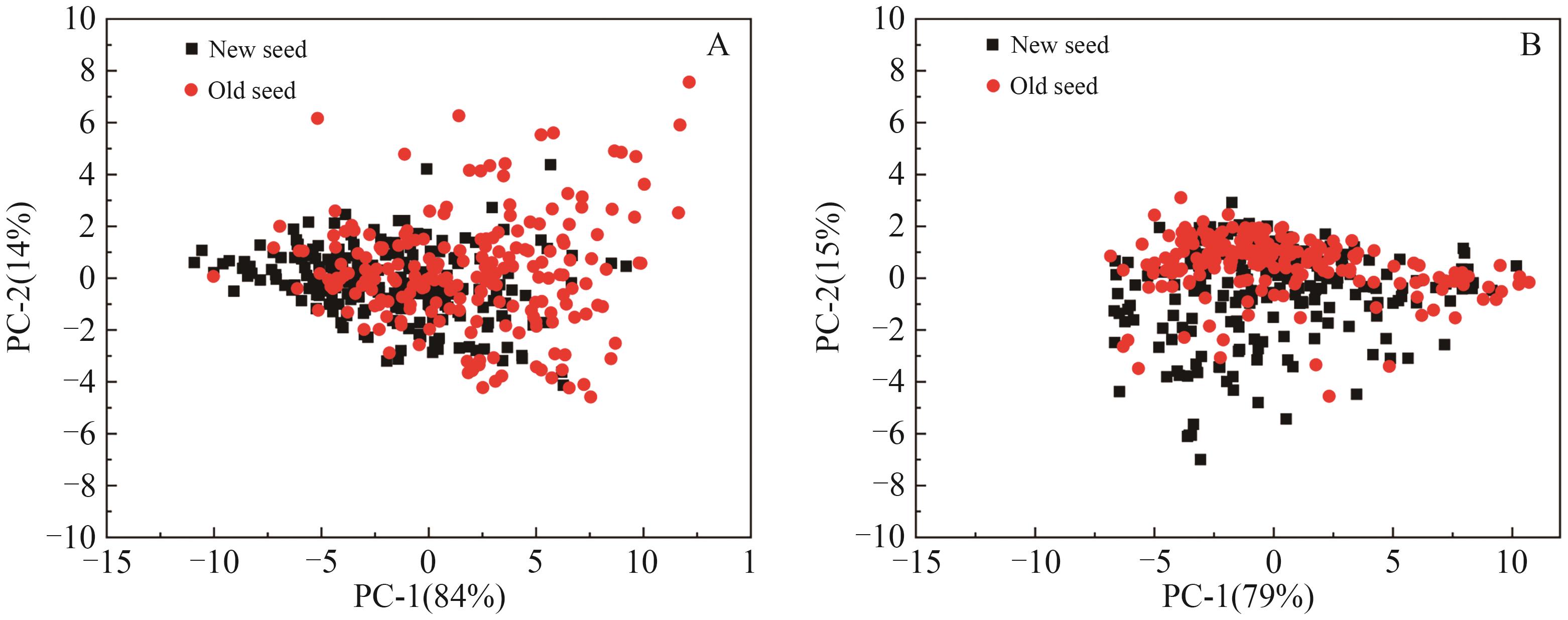
Fig.3 Distribution of the first and second principal components
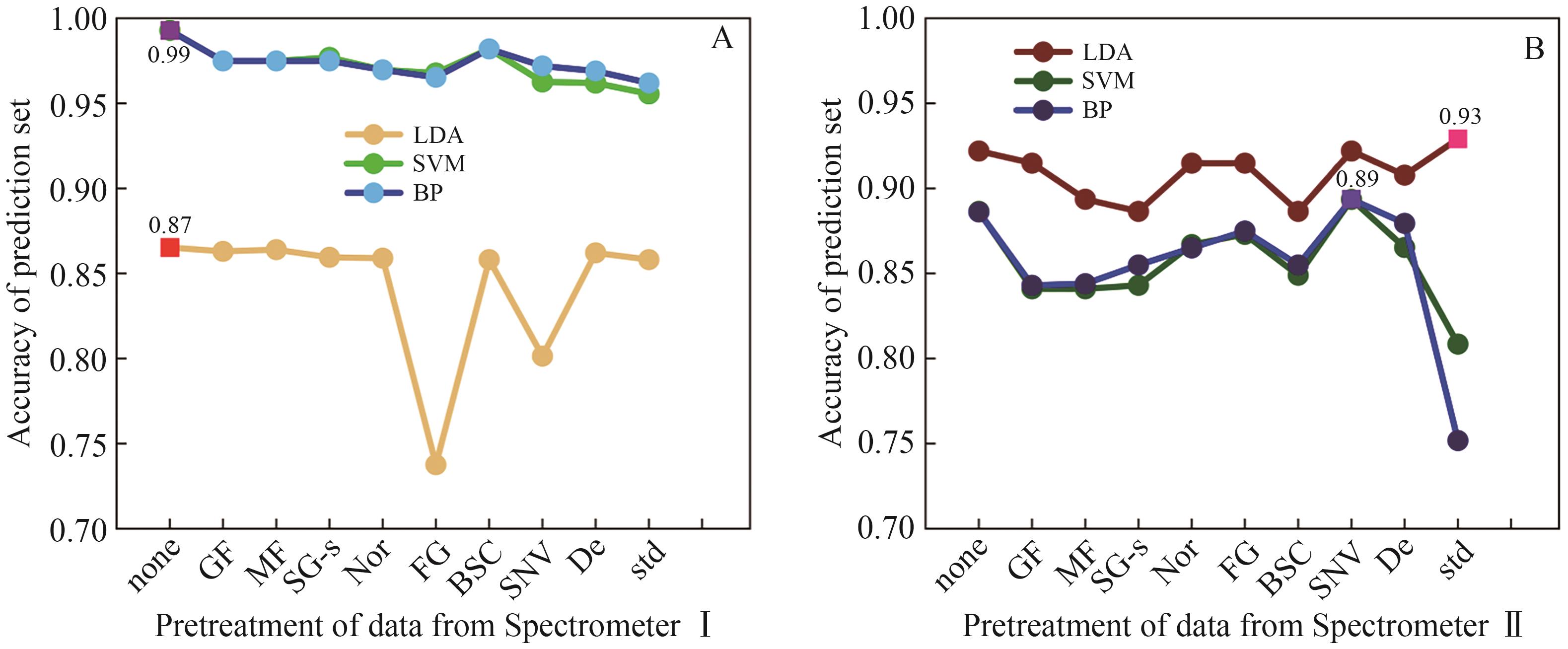
Fig.4 Accuracy of discriminative models for stale Torreya grandis seeds under different preprocessing methods of (A) spectrometer Ⅰ and (B) spectrometer Ⅱ
| Data set | Spectral preprocessing | Modeling methods | Calibration set | Prediction set | ||||
|---|---|---|---|---|---|---|---|---|
| Sensitivity/% | Specificity/% | Accuracy/% | Sensitivity/% | Specificity/% | Accuracy/% | |||
| Spectrometer Ⅰ | None | LDA | 99.34 | 97.67 | 98.58 | 73.13 | 98.67 | 86.62 |
| None | SVM | 99.22 | 98.69 | 98.93 | 100.00 | 98.25 | 99.29 | |
| None | BP | 98.44 | 98.04 | 98.22 | 100.00 | 98.25 | 99.29 | |
| Spectrometer Ⅱ | Standard | LDA | 92.31 | 91.89 | 92.09 | 90.12 | 96.67 | 92.91 |
| SNV | SVM | 89.12 | 87.02 | 88.13 | 89.29 | 88.24 | 88.65 | |
| SNV | BP | 88.36 | 85.61 | 87.05 | 90.91 | 88.37 | 89.36 | |
Table 2 Discriminative modelling results of stale Torreya grandis seeds under the optimal preprocessing method
| Data set | Spectral preprocessing | Modeling methods | Calibration set | Prediction set | ||||
|---|---|---|---|---|---|---|---|---|
| Sensitivity/% | Specificity/% | Accuracy/% | Sensitivity/% | Specificity/% | Accuracy/% | |||
| Spectrometer Ⅰ | None | LDA | 99.34 | 97.67 | 98.58 | 73.13 | 98.67 | 86.62 |
| None | SVM | 99.22 | 98.69 | 98.93 | 100.00 | 98.25 | 99.29 | |
| None | BP | 98.44 | 98.04 | 98.22 | 100.00 | 98.25 | 99.29 | |
| Spectrometer Ⅱ | Standard | LDA | 92.31 | 91.89 | 92.09 | 90.12 | 96.67 | 92.91 |
| SNV | SVM | 89.12 | 87.02 | 88.13 | 89.29 | 88.24 | 88.65 | |
| SNV | BP | 88.36 | 85.61 | 87.05 | 90.91 | 88.37 | 89.36 | |
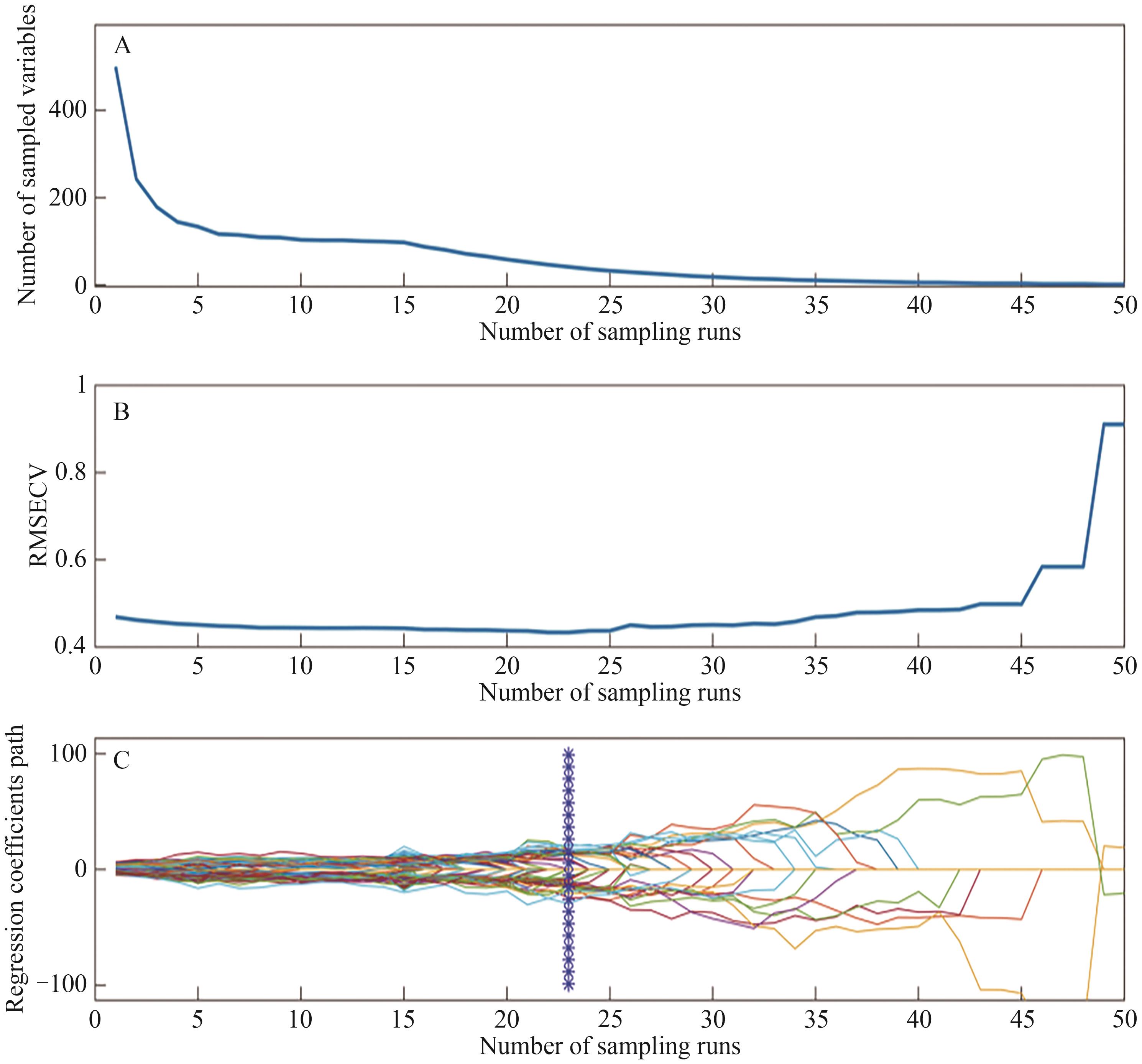
Fig.5 CARS variable selection results of stale Torreya grandis seeds in spectrometer Ⅰ
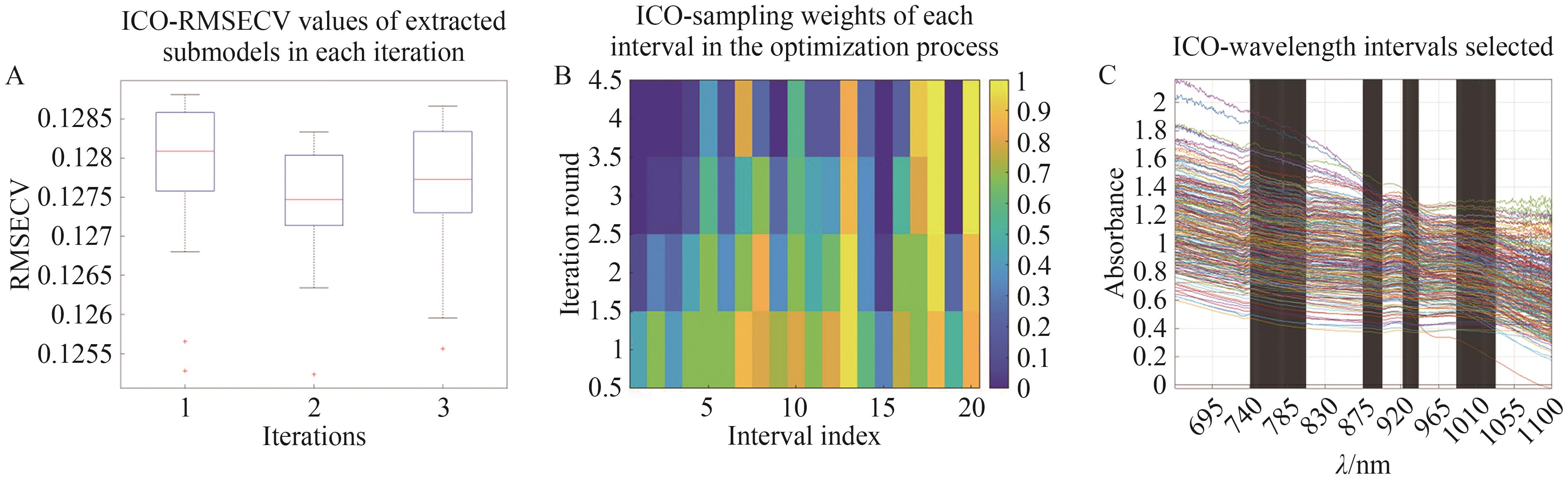
Fig.6 ICO variable selection results of stale Torreya grandis seeds in spectrometer Ⅰ
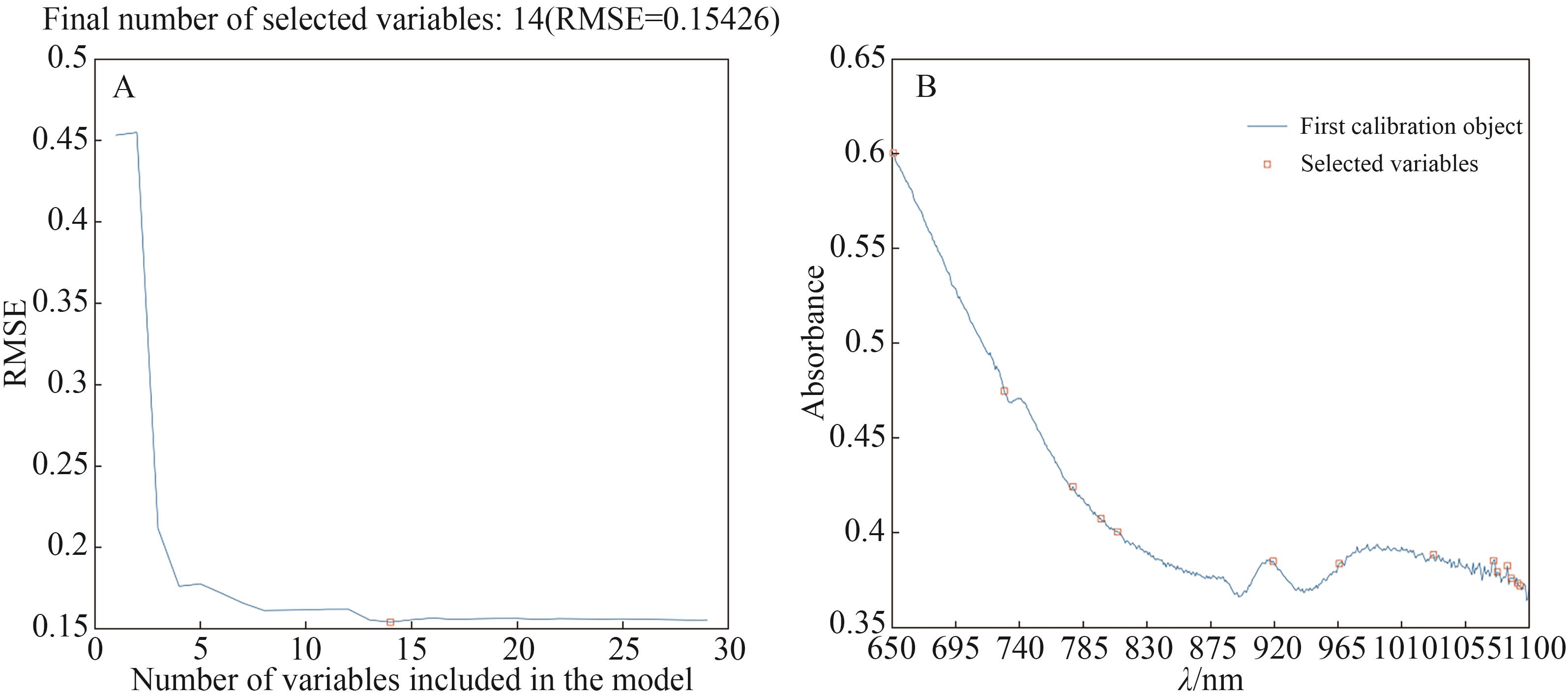
Fig.7 SPA variable selection results of stale Torreya grandis seeds in spectrometer Ⅰ
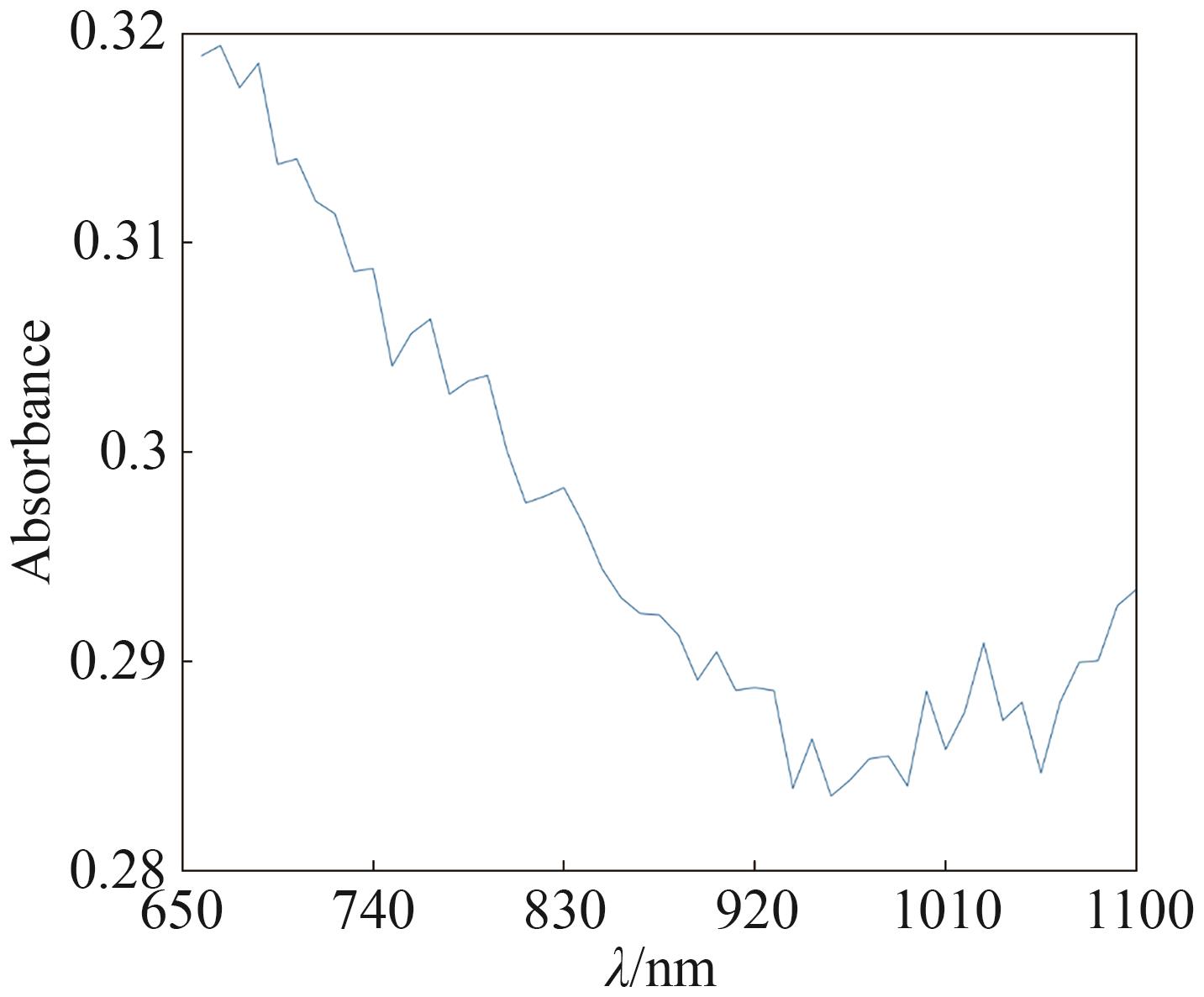
Fig.8 VCPA root mean square error plot
| Wavelength selection methods | Modeling methods | Number of variables | Preprocessing | Calibration set | Prediction set | ||||
|---|---|---|---|---|---|---|---|---|---|
| Sensitivity/% | Specificity/% | Accuracy/% | Sensitivity/% | Specificity/% | Accuracy/% | ||||
| CARS | LDA | 30 | None | 100.00 | 99.22 | 99.64 | 75.68 | 100.00 | 87.23 |
| SVM | 30 | None | 100.00 | 100.00 | 100.00 | 100.00 | 100.00 | 100.00 | |
| BP | 30 | None | 100.00 | 100.00 | 100.00 | 100.00 | 98.25 | 99.29 | |
| ICO | LDA | 172 | None | 100.00 | 100.00 | 100.00 | 75.68 | 98.51 | 86.52 |
| SVM | 172 | None | 100.00 | 99.35 | 99.64 | 100.00 | 98.25 | 99.29 | |
| BP | 172 | None | 100.00 | 99.35 | 99.64 | 100.00 | 98.25 | 99.29 | |
| SPA | LDA | 14 | None | 99.34 | 99.22 | 99.29 | 75.68 | 98.51 | 86.52 |
| SVM | 14 | None | 99.22 | 99.34 | 99.29 | 100.00 | 98.25 | 99.29 | |
| BP | 14 | None | 96.85 | 96.10 | 96.44 | 97.65 | 96.43 | 97.16 | |
| VCPA | LDA | 14 | None | 100.00 | 99.22 | 99.64 | 75.68 | 98.51 | 86.52 |
| SVM | 14 | None | 100.00 | 99.35 | 99.64 | 100.00 | 98.25 | 99.29 | |
| BP | 14 | None | 100.00 | 100.00 | 100.00 | 98.82 | 98.21 | 98.58 | |
Table 3 Discriminative model results of stale Torreya grandis seeds based on characteristic wavelengths (spectrometer Ⅰ)
| Wavelength selection methods | Modeling methods | Number of variables | Preprocessing | Calibration set | Prediction set | ||||
|---|---|---|---|---|---|---|---|---|---|
| Sensitivity/% | Specificity/% | Accuracy/% | Sensitivity/% | Specificity/% | Accuracy/% | ||||
| CARS | LDA | 30 | None | 100.00 | 99.22 | 99.64 | 75.68 | 100.00 | 87.23 |
| SVM | 30 | None | 100.00 | 100.00 | 100.00 | 100.00 | 100.00 | 100.00 | |
| BP | 30 | None | 100.00 | 100.00 | 100.00 | 100.00 | 98.25 | 99.29 | |
| ICO | LDA | 172 | None | 100.00 | 100.00 | 100.00 | 75.68 | 98.51 | 86.52 |
| SVM | 172 | None | 100.00 | 99.35 | 99.64 | 100.00 | 98.25 | 99.29 | |
| BP | 172 | None | 100.00 | 99.35 | 99.64 | 100.00 | 98.25 | 99.29 | |
| SPA | LDA | 14 | None | 99.34 | 99.22 | 99.29 | 75.68 | 98.51 | 86.52 |
| SVM | 14 | None | 99.22 | 99.34 | 99.29 | 100.00 | 98.25 | 99.29 | |
| BP | 14 | None | 96.85 | 96.10 | 96.44 | 97.65 | 96.43 | 97.16 | |
| VCPA | LDA | 14 | None | 100.00 | 99.22 | 99.64 | 75.68 | 98.51 | 86.52 |
| SVM | 14 | None | 100.00 | 99.35 | 99.64 | 100.00 | 98.25 | 99.29 | |
| BP | 14 | None | 100.00 | 100.00 | 100.00 | 98.82 | 98.21 | 98.58 | |
| Wavelength selection methods | Modeling methods | Number of variables | Preprocessing | Calibration set | Prediction set | ||||
|---|---|---|---|---|---|---|---|---|---|
| Sensitivity/% | Specificity/% | Accuracy/% | Sensitivity/% | Specificity/% | Accuracy/% | ||||
| CARS | LDA | 32 | Standard | 91.54 | 89.86 | 90.65 | 75.31 | 85.00 | 79.43 |
| SVM | 24 | SNV | 93.20 | 91.60 | 92.45 | 92 | 95.00 | 93.62 | |
| BP | 24 | SNV | 86.00 | 85.16 | 85.61 | 90.74 | 87.36 | 88.65 | |
| ICO | LDA | 119 | Standard | 90.00 | 91.89 | 91.01 | 81.48 | 81.67 | 81.56 |
| SVM | 75 | SNV | 84.87 | 84.92 | 84.89 | 87.27 | 86.05 | 86.52 | |
| BP | 75 | None | 80.00 | 85.84 | 82.37 | 79.37 | 87.18 | 83.69 | |
| SPA | LDA | 12 | Standard | 74.62 | 80.41 | 77.70 | 70.37 | 68.33 | 69.50 |
| SVM | 17 | SNV | 91.97 | 84.40 | 88.13 | 92.31 | 86.52 | 88.65 | |
| BP | 17 | SNV | 89.33 | 89.06 | 89.21 | 88.14 | 90.24 | 89.36 | |
| VCPA | LDA | 10 | Standard | 88.46 | 88.51 | 88.49 | 82.72 | 83.33 | 82.98 |
| SVM | 12 | SNV | 92.81 | 95.20 | 93.88 | 96.43 | 92.94 | 94.33 | |
| BP | 12 | SNV | 97.92 | 94.78 | 96.40 | 98.18 | 93.02 | 95.04 | |
Table 4 Discriminative model results of stale Torreya grandis seeds based on characteristic wavelengths (spectrometer Ⅱ)
| Wavelength selection methods | Modeling methods | Number of variables | Preprocessing | Calibration set | Prediction set | ||||
|---|---|---|---|---|---|---|---|---|---|
| Sensitivity/% | Specificity/% | Accuracy/% | Sensitivity/% | Specificity/% | Accuracy/% | ||||
| CARS | LDA | 32 | Standard | 91.54 | 89.86 | 90.65 | 75.31 | 85.00 | 79.43 |
| SVM | 24 | SNV | 93.20 | 91.60 | 92.45 | 92 | 95.00 | 93.62 | |
| BP | 24 | SNV | 86.00 | 85.16 | 85.61 | 90.74 | 87.36 | 88.65 | |
| ICO | LDA | 119 | Standard | 90.00 | 91.89 | 91.01 | 81.48 | 81.67 | 81.56 |
| SVM | 75 | SNV | 84.87 | 84.92 | 84.89 | 87.27 | 86.05 | 86.52 | |
| BP | 75 | None | 80.00 | 85.84 | 82.37 | 79.37 | 87.18 | 83.69 | |
| SPA | LDA | 12 | Standard | 74.62 | 80.41 | 77.70 | 70.37 | 68.33 | 69.50 |
| SVM | 17 | SNV | 91.97 | 84.40 | 88.13 | 92.31 | 86.52 | 88.65 | |
| BP | 17 | SNV | 89.33 | 89.06 | 89.21 | 88.14 | 90.24 | 89.36 | |
| VCPA | LDA | 10 | Standard | 88.46 | 88.51 | 88.49 | 82.72 | 83.33 | 82.98 |
| SVM | 12 | SNV | 92.81 | 95.20 | 93.88 | 96.43 | 92.94 | 94.33 | |
| BP | 12 | SNV | 97.92 | 94.78 | 96.40 | 98.18 | 93.02 | 95.04 | |
| 1 | 王蕤, 王玫鹃, 汤富彬, 等. 浙江省不同地区香榧生籽营养品质差异性分析与评价[J]. 核农学报, 2021, 35(11): 2578-2588. |
| WANG R, WANG M J, TANG F B, et al. Analysis and evaluation of nutritional quality differences of Torreya grandis in different regions of Zhejiang Province[J]. J Nuclear Agric Sci, 2021, 35(11): 2578-2588. | |
| 2 | 何慈颖, 娄和强, 吴家胜. 香榧油脂及其合成调控机制研究进展[J]. 浙江农林大学学报, 2023, 40(4): 714-722. |
| HE C Y, LOU H Q, WU J S. Research progress on the oil and its synthesis regulation mechanism of Torreya grandis[J]. J Zhejiang A&F Univ, 2023, 40(4): 714-722. | |
| 3 | LI H L, XIAO N, SUN T, et al. Influence of lighting pattern and sample positioning on detection of moldy core disease in apples by NIR spectroscopy[J]. Food Bioprocess Technol, 2024, 17(12): 5221-5241. |
| 4 | CORTÉS V, BLASCO J, ALEIXOS N, et al. Monitoring strategies for quality control of agricultural products using visible and near-infrared spectroscopy: a review[J]. Trends Food Sci Technol, 2019, 85: 138-148. |
| 5 | QIAO L, MU Y C, LU B, et al. Calibration maintenance application of near-infrared spectrometric model in food analysis[J]. Food Rev Int, 2023, 39(3): 1628-1644. |
| 6 | SQUEO G, CRUZ J, DE ANGELIS D, et al. Considerations about the gap between research in near-infrared spectroscopy and official methods and recommendations of analysis in foods[J]. Curr Opin Food Sci, 2024, 59: 101203. |
| 7 | VELEZ-SILVA N L, DRENNEN J K, ANDERSON C A. Continuous manufacturing of pharmaceutical products: a density-insensitive near infrared method for the in-line monitoring of continuous powder streams[J]. Int J Pharm, 2024, 650: 123699. |
| 8 | REN S H, JIA Y F. Near-infrared data classification at phone terminal based on the combination of PCA and CS-RBFSVC algorithms[J]. Spectrochim Acta A, 2023, 287: 122080. |
| 9 | LOU Q J, LEI M, WANG Y, et al. Diagnostic features emerging in near-infrared reflectance spectroscopy for low petroleum hydrocarbon pollution after spectral subtraction[J]. SCI Total Environ, 2024, 928: 172264. |
| 10 | LIU S Y, WANG S T, HU C H, et al. apid and accurate determination of diesel multiple properties through NIR data analysis assisted by machine learning[J]. Spectrochim Acta A, 2022, 277: 121261. |
| 11 | HU J Q, MA X C, LIU L L, et al. Rapid evaluation of the quality of chestnuts using near-infrared reflectance spectroscopy[J]. Food Chem, 2017, 231: 141-147. |
| 12 | 刘洁. 基于近红外光谱技术的板栗品质无损检测方法研究[D]. 武汉: 华中农业大学, 2011. |
| LIU J. Research on nondestructive detection method of chestnut quality based on near infrared spectroscopy technology[D]. Wuhan: Huazhong Agricultural University, 2011. | |
| 13 | 张严, 谢岩黎, 孙淑敏, 等. 近红外分析花生籽粒脂肪酸含量的研究[J]. 河南工业大学学报(自然科学版), 2014, 35(2): 54-58. |
| ZHANG Y, XIE Y L, SUN S M, et al. Research on near infrared analysis of fatty acid content in Peanut Grains[J]. J Henan Univ Technol (Nat Sci Ed), 2014, 35(2): 54-58. | |
| 14 | CANNEDDU G, JÚNIOR L C, DE ALMEIDA TEIXEIRA G H. Quality evaluation of shelled and unshelled macadamia nuts by means of near-infrared spectroscopy (NIR)[J]. J Food Sci, 2016, 81(7): C1613-C1621. |
| 15 | MOSCETTI R, MONARCA D, CECCHINI M, et al. Detection of mold-damaged chestnuts by near-infrared spectroscopy[J]. Postharvest Bio Techol, 2014, 93: 83-90. |
| 16 | CARVALHO L C, MORAIS C L M, LIMA K M G, et al. Using intact nuts and near infrared spectroscopy to classify macadamia cultivars[J]. Food Anal Method, 2018, 11(7): 1857-1866. |
| 17 | GHOSH S, MISHRA P, MOHAMAD S N H, et al. Discrimination of peanuts from bulk cereals and nuts by near infrared reflectance spectroscopy[J]. Biosyst Eng, 2016, 151: 178-186. |
| 18 | HUANG T, CAI G, LIU H, et al. Selecting near-infrared reflection spectroscopy pretreatment methods by chemical components valid and invalid absorption wavebands[J]. Spectr Lett, 2022, 55(9): 607-617. |
| 19 | KONG L F, WU C Z, LI H L, et al. Discrimination of tea seed oil adulteration based on near-infrared spectroscopy and combined preprocessing method[J]. J Food Compos Anal, 2024, 134: 106560. |
| 20 | ZHANG W, PAN L, LU L. Prediction of TVB-N content in beef with packaging films using visible-near infrared hyperspectral imaging[J]. Food Control, 2023, 147: 109562. |
| 21 | LI M X, SHI Y B, ZHANG J B, et al. Rapid evaluation of Ziziphi Spinosae Semen and its adulterants based on the combination of FT-NIR and multivariate algorithms[J]. Food Chem: X, 2023, 20: 101022. |
| 22 | TANG R, CHEN X, LI C. Detection of nitrogen content in rubber leaves using near-infrared (NIR) spectroscopy with correlation-based successive projections algorithm (SPA)[J]. Appl Spectrosc, 2018, 72(5): 740-749. |
| 23 | JIANG H, XU W, CHEN Q. Comparison of algorithms for wavelength variables selection from near-infrared (NIR) spectra for quantitative monitoring of yeast (Saccharomyces cerevisiae) cultivations[J]. Spectrochim Acta A, 2019, 214: 366-371. |
| 24 | LI M, XIA L, WU Q, et al. MD-LDA: a supervised LDA topic model for identifying mechanism of disease in TCM[J]. Data Technol Appl, 2024, 59(1): 1-18. |
| 25 | ALMOUJAHED M B, RANGARAJAN A K, WHETTON R L, et al. Non-destructive detection of fusarium head blight in wheat kernels and flour using visible near-infrared and mid-infrared spectroscopy[J]. Chemom Intell Lab, 2024, 245: 105050. |
| 26 | SCHREUDER J, NIKNAFS S, WILLIAMS P, et al. Non-destructive prediction of fertility and sex in chicken eggs using the short wave near-infrared region[J]. Spectrochim Acta A, 2024, 322: 124716. |
| 27 | ZHANG X, SUN J, LI P, et al. Hyperspectral detection of salted sea cucumber adulteration using different spectral preprocessing techniques and SVM method[J]. LWT, 2021, 152: 112295. |
| 28 | MAO S, ZHOU J, HAO M, et al. BP neural network to predict shelf life of channel catfish fillets based on near infrared transmittance (NIT) spectroscopy[J]. Food Packaging Shelf, 2023, 35: 101025. |
| 29 | TAN B, YOU W, HUANG C, et al. An intelligent near-infrared diffuse reflectance spectroscopy scheme for the non-destructive testing of the sugar content in cherry tomato fruit[J]. Electronics, 2022, 11(21): 3504. |
| 30 | 刘婷婷. 基于近红外光谱的猕猴桃糖度分级及品种鉴别技术研究[D]. 西安: 西京学院, 2024. |
| LIU T T. Research on Kiwifruit agar classification and varitty classification technology based on near infrared spectroscopy[D]. Xi'an: Xijing University, 2024. | |
| 31 | 余展旺, 殷海, 何曼文, 等. 基于高光谱成像技术对菜心种子霉变的识别[J]. 种子, 2024, 43(8): 146-150, 156. |
| YU Z W, YIN H, HE M W, et al. Identification of cabbage seed mildew based on hyperspectral imaging technology[J]. Seeds, 2024, 43(8): 146-150, 156. |
| [1] | Zhi-Yun DONG, Fu-Gui XI, Jian-Feng FAN. Evaluation and Improvement Measures of Ideological and Political Teaching Quality in Chemistry Courses ——Take “Organic Chemistry” as an Example [J]. Chinese Journal of Applied Chemistry, 2025, 42(5): 723-734. |
| [2] | Ling LI, Li-Ting TANG, Jun-Jie YANG, Li-Qiang YAN, Jian-Ping LI. Recent Advances in Small-Molecule Organic Fluorescent Probes for Hydrazine [J]. Chinese Journal of Applied Chemistry, 2025, 42(4): 453-465. |
| [3] | Wen-Qi PENG, Rui ZHOU, Wang-Xin CHENG, Zi-Pin ZHANG. An Electrochemical-Fluorescence Dual-Mode Chemosensor for Berberine Detection in Biological Samples [J]. Chinese Journal of Applied Chemistry, 2025, 42(4): 522-532. |
| [4] | Zhen LI, Zi-Xia TANG, Yang-Yang ZHANG, Yu-Chen CAO, Pei-Ke FU, Mei LYU, Li-Tao WANG. Research Progress of Covalent Organic Framework Modified Silica Gel Composites in High Performance Liquid Chromatography [J]. Chinese Journal of Applied Chemistry, 2025, 42(3): 313-320. |
| [5] | Jie-Xia CHEN, Zhuo-Er LIU, Chang-Ning LU, Ke-Xin YANG, Zi-Yan CHEN, Yan WEI. Construction of a Photoelectrochemical Biosensor Based on ZnS-Modified Electrode for the Determination of L-Cysteine [J]. Chinese Journal of Applied Chemistry, 2025, 42(3): 321-329. |
| [6] | Si-Wei CHEN, Li-Shi WANG, Huan-Feng JIANG. Research Advances of Anti-Aging Mechanism, Application and Detection of Nicotinamide Mononucleotide [J]. Chinese Journal of Applied Chemistry, 2025, 42(2): 168-181. |
| [7] | Lu-Lu TIAN, Song-Tao HU, Xu-Zhou QU, Lin WANG, Biao DONG. Preparation of Gold Nanorod Self-Assembled Flexible Films and Ratiometric Surface-Enhanced Raman Scattering Detection of Bacteria [J]. Chinese Journal of Applied Chemistry, 2025, 42(2): 182-191. |
| [8] | Yun-Fan CAI, Ke-Hui XU, Yao ZHAO, Zhi-Ting LI, Ling-Yun XIA, Chen-Yu WANG, Zhi-Xiao LUO, Li-Na NIU. Substrate Design of Surface-Enhanced Raman Spectroscopy and Research Progress in the Detection of Body Fluids [J]. Chinese Journal of Applied Chemistry, 2025, 42(1): 1-13. |
| [9] | Lu-Sheng HAN, Yu-Dan WANG, Yu-Hang LI, Gen-Yue LI, Xin-Hong SONG, Kai-Li YANG, Xin TAN, En-Peng WANG. Identification of Age of Forest Sun-Dried Ginseng Based on Hyperspectral Imaging Technology [J]. Chinese Journal of Applied Chemistry, 2025, 42(1): 69-77. |
| [10] | Zi-Chen YI, Wen-Ji ZHANG, Wei YI, Zi-Hua LI, Jia-Si JIANG. Research Progress in Inferring Fingerprint Legacy Time [J]. Chinese Journal of Applied Chemistry, 2024, 41(12): 1697-1711. |
| [11] | Yi-Ling TANG, Jun-Bo ZHAO, Miao ZHANG, Xiao-Yu QIAN, Ping XIANG, Hui YAN. Investigation on in vivo and in vitro Metabolites of Bromazolam [J]. Chinese Journal of Applied Chemistry, 2024, 41(12): 1770-1779. |
| [12] | Zhi-Rong GAO, Yun-Long AI, Jian-Lin LIU. Research Progress in Online Gas Chromatography Analysis Technology [J]. Chinese Journal of Applied Chemistry, 2024, 41(11): 1552-1564. |
| [13] | De-Jin TIE, Mei-Jia XU, Xiao-Dan TANG, Hong-Min JIA, Hong-Mei YU. A Double Ratio Fluorescent Probe for pH and Water Detection [J]. Chinese Journal of Applied Chemistry, 2024, 41(10): 1491-1501. |
| [14] | Yong-Mei ZHAO, Pei-Xuan CHENG, Jing-Jiao XIE, Wen LUO. 3-Hydroxyflavone-Based Excited State Intramolecular Proton Transfer Probe for Detection of Biothiols [J]. Chinese Journal of Applied Chemistry, 2024, 41(10): 1502-1510. |
| [15] | Ying WANG, Rui-Ping WU. Application of High-Precision X-Ray Fluorescence Spectroscopy in the Determination of Cu Ions in Copper Containing Sludge [J]. Chinese Journal of Applied Chemistry, 2024, 41(9): 1307-1314. |
| Viewed | ||||||
|
Full text |
|
|||||
|
Abstract |
|
|||||
