
Chinese Journal of Applied Chemistry ›› 2025, Vol. 42 ›› Issue (12): 1593-1607.DOI: 10.19894/j.issn.1000-0518.250245
• Review •
Xin-Yao SU1, Wei-Xin ZHAO1, Shi-Han WANG1, Jia-Zhen DAI1, Shang-Yang WANG1, Wei PENG1,2, Shu-Rong LI1,2, Ling-Yan ZHANG1,2( ), Pei-Jun MENG1,2()
Received:2025-06-14
Accepted:2025-09-22
Published:2025-12-01
Online:2025-12-30
Contact:
Ling-Yan ZHANG,Pei-Jun MENG
About author:mengpeijun79@163.com;Supported by:CLC Number:
Xin-Yao SU, Wei-Xin ZHAO, Shi-Han WANG, Jia-Zhen DAI, Shang-Yang WANG, Wei PENG, Shu-Rong LI, Ling-Yan ZHANG, Pei-Jun MENG. Research Progress in the Application of Nanomaterial Sensors for Immunoglobulin G Detection[J]. Chinese Journal of Applied Chemistry, 2025, 42(12): 1593-1607.
Add to citation manager EndNote|Ris|BibTeX
URL: http://yyhx.ciac.jl.cn/EN/10.19894/j.issn.1000-0518.250245
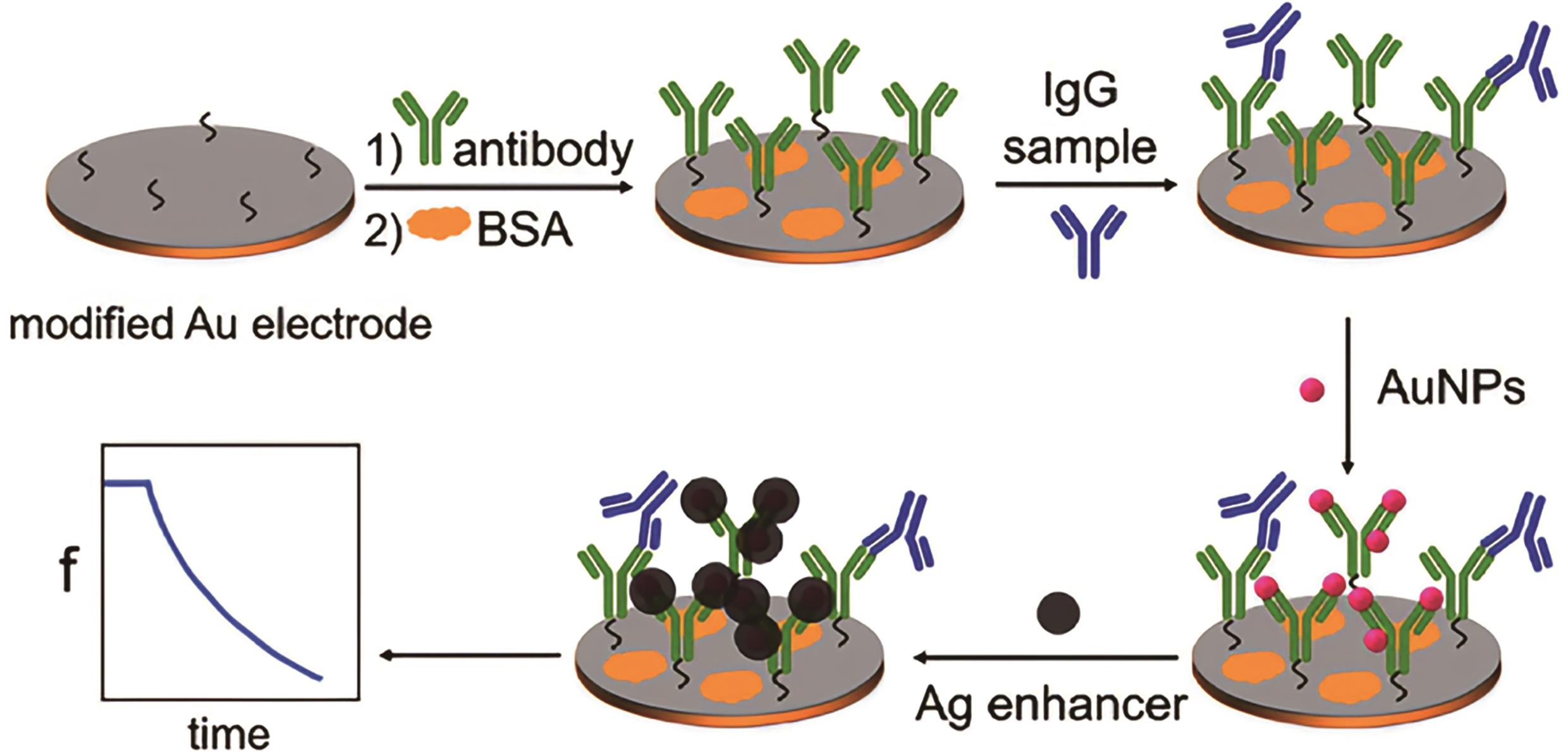
Fig.1 Scheme of QCM immunosensor construction and IgG detection based on AuNPs-catalyzed silver enhance-ment[22]
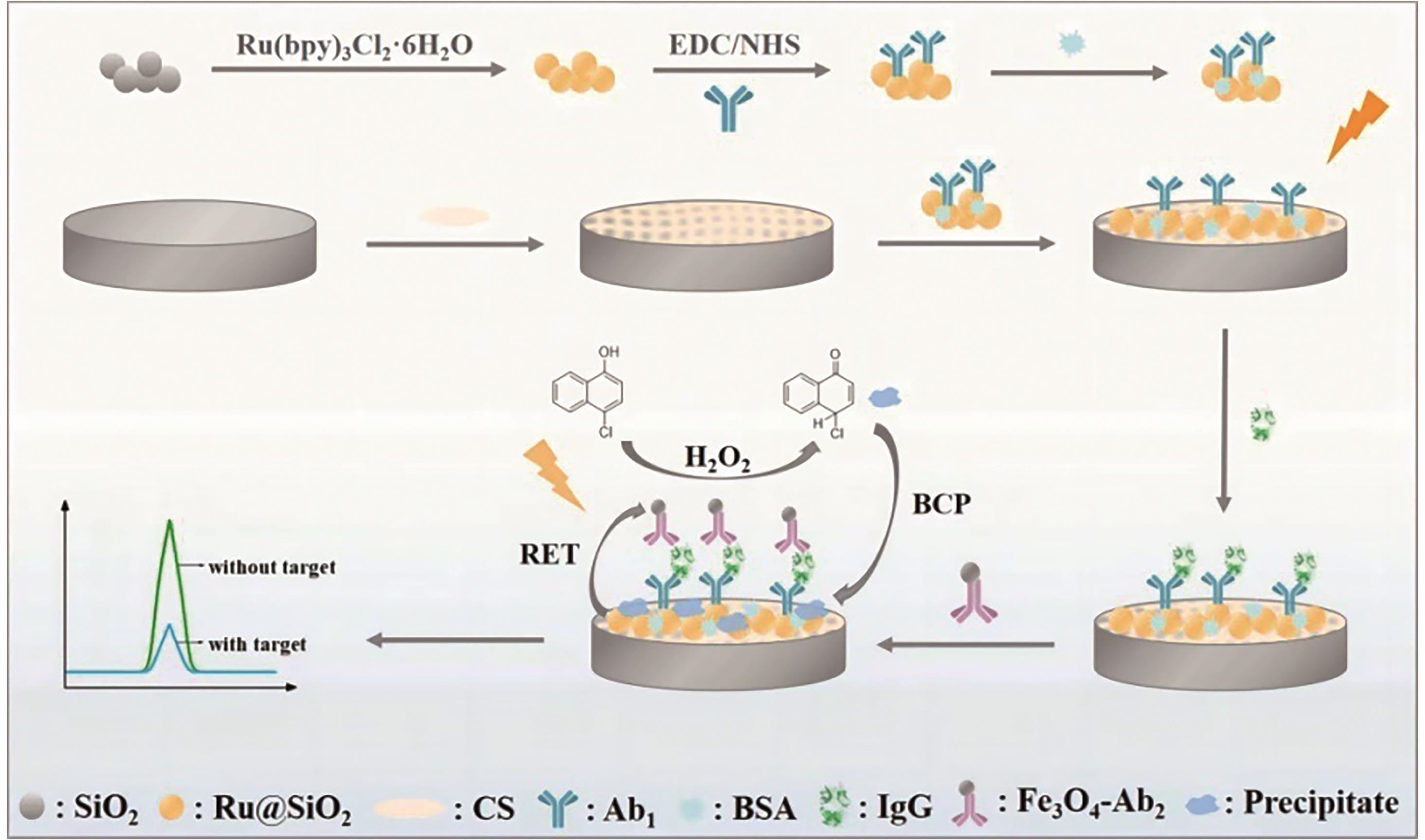
Fig.2 Schematic representation of the preparation of dual-suppression based ECL sensor for the detection of IgG[31]
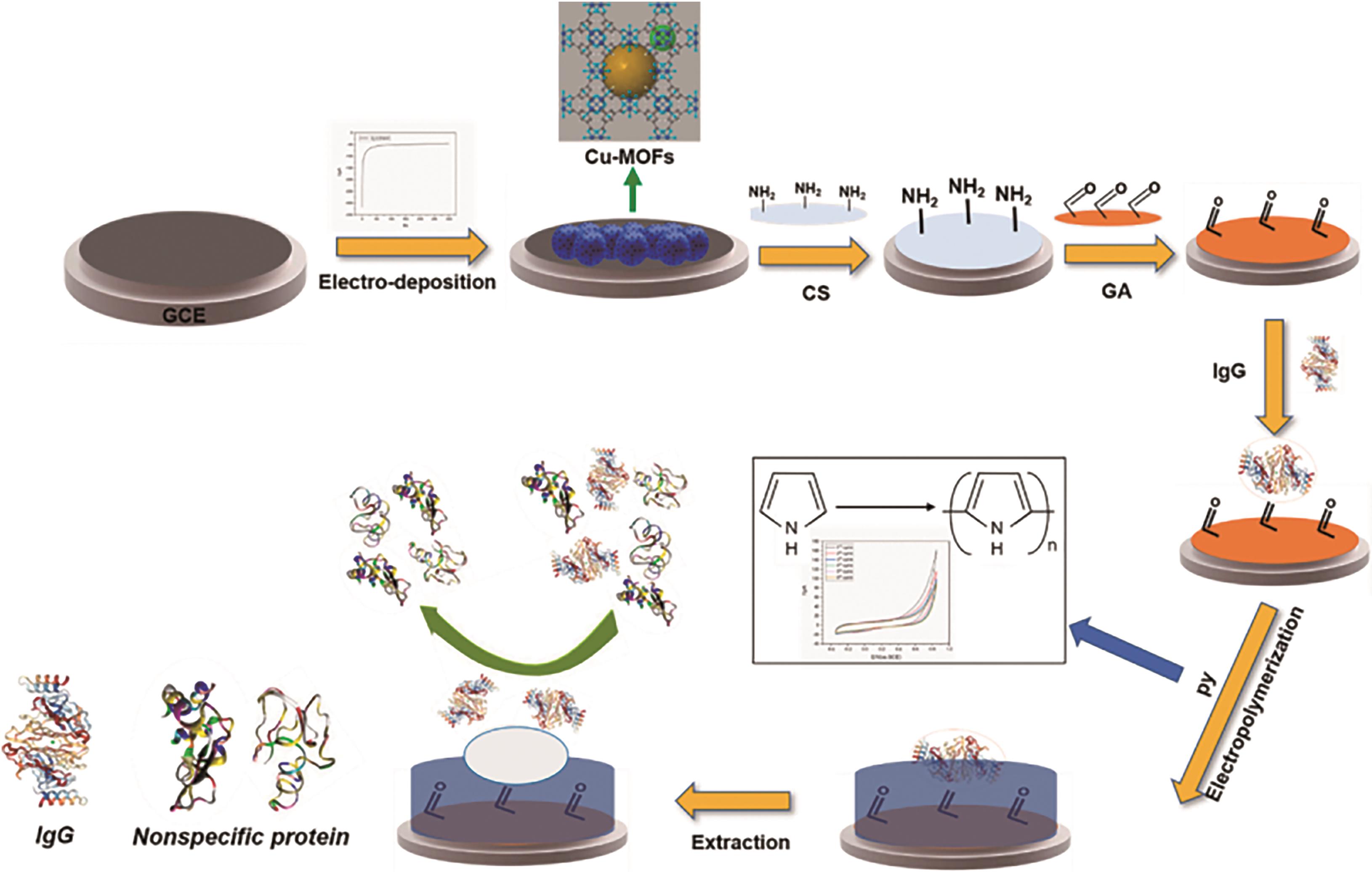
Fig.3 Scheme of the MIP-based electrochemical sensor fabrication for IgG detection[38]
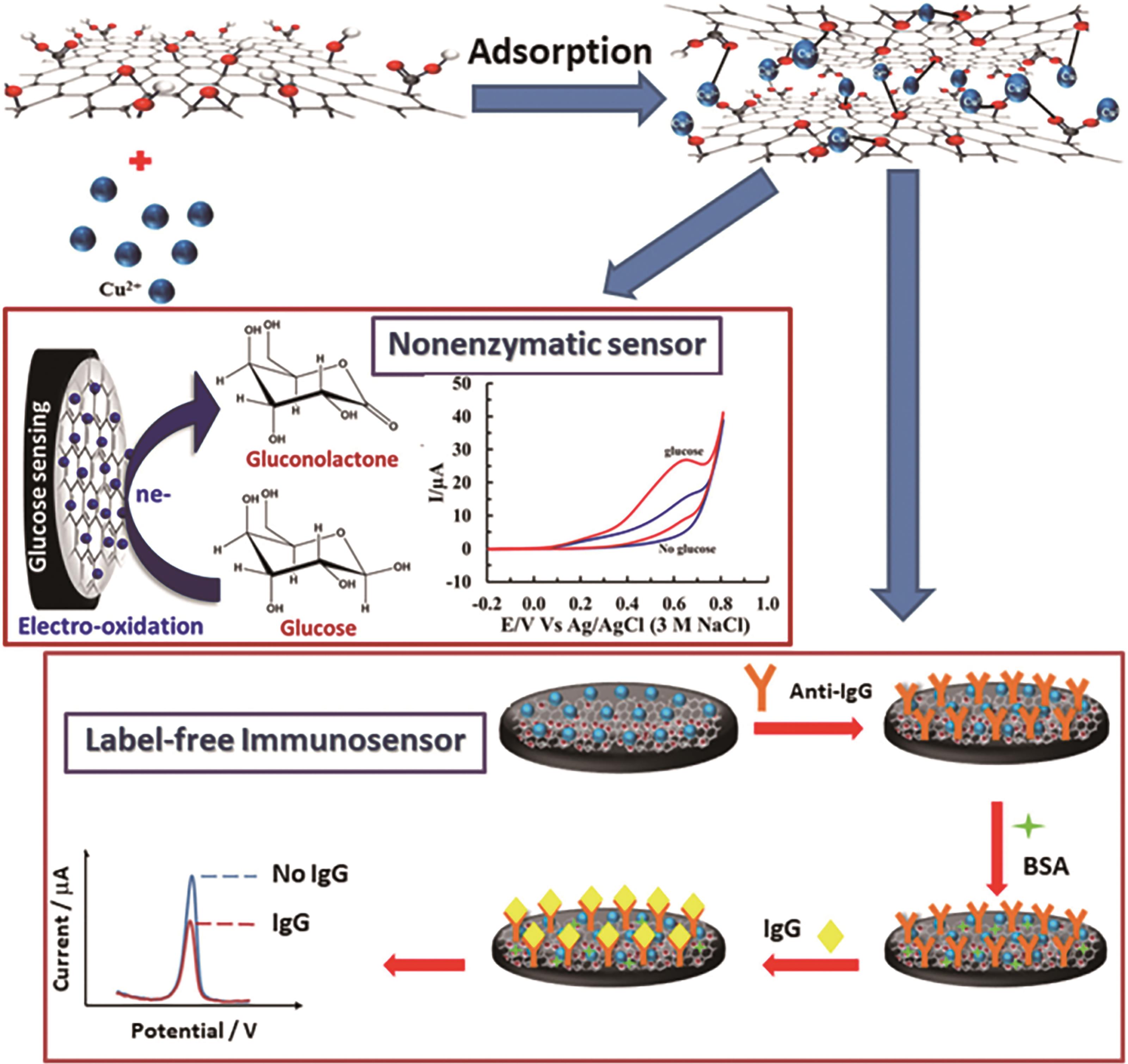
Fig.4 Fabrications of IgG immunosensor and non-enzymatic glucose sensor based on a versatile Cu/GO-modified SPCE[51]
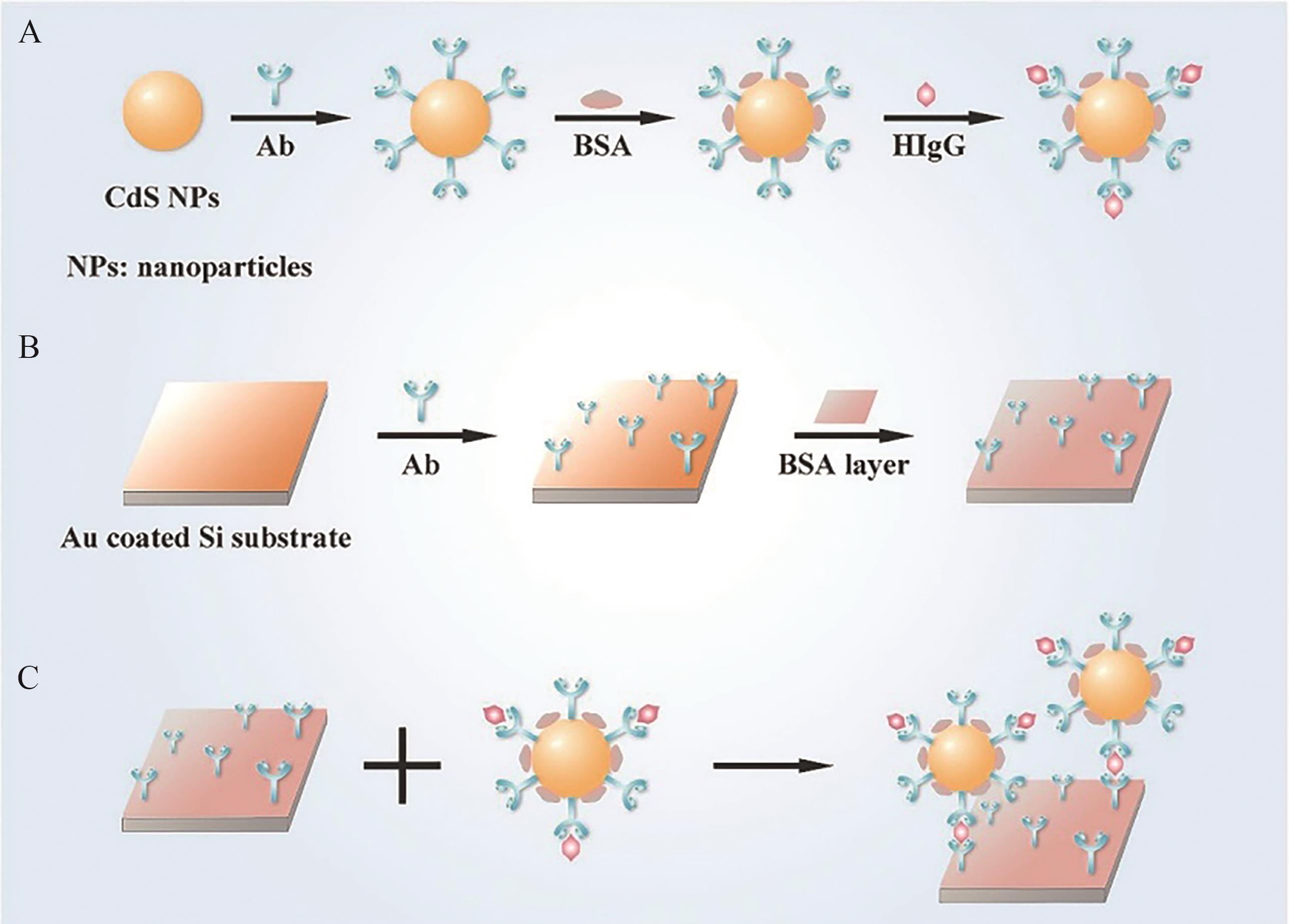
Fig.5 Schematic diagram of the proposed immunoassay strategy: (A) Construction of CdS nanoprobes; (B) Modification of Au coated Si substrate; (C) Binding of CdS nanoprobes to modified substrates[62]
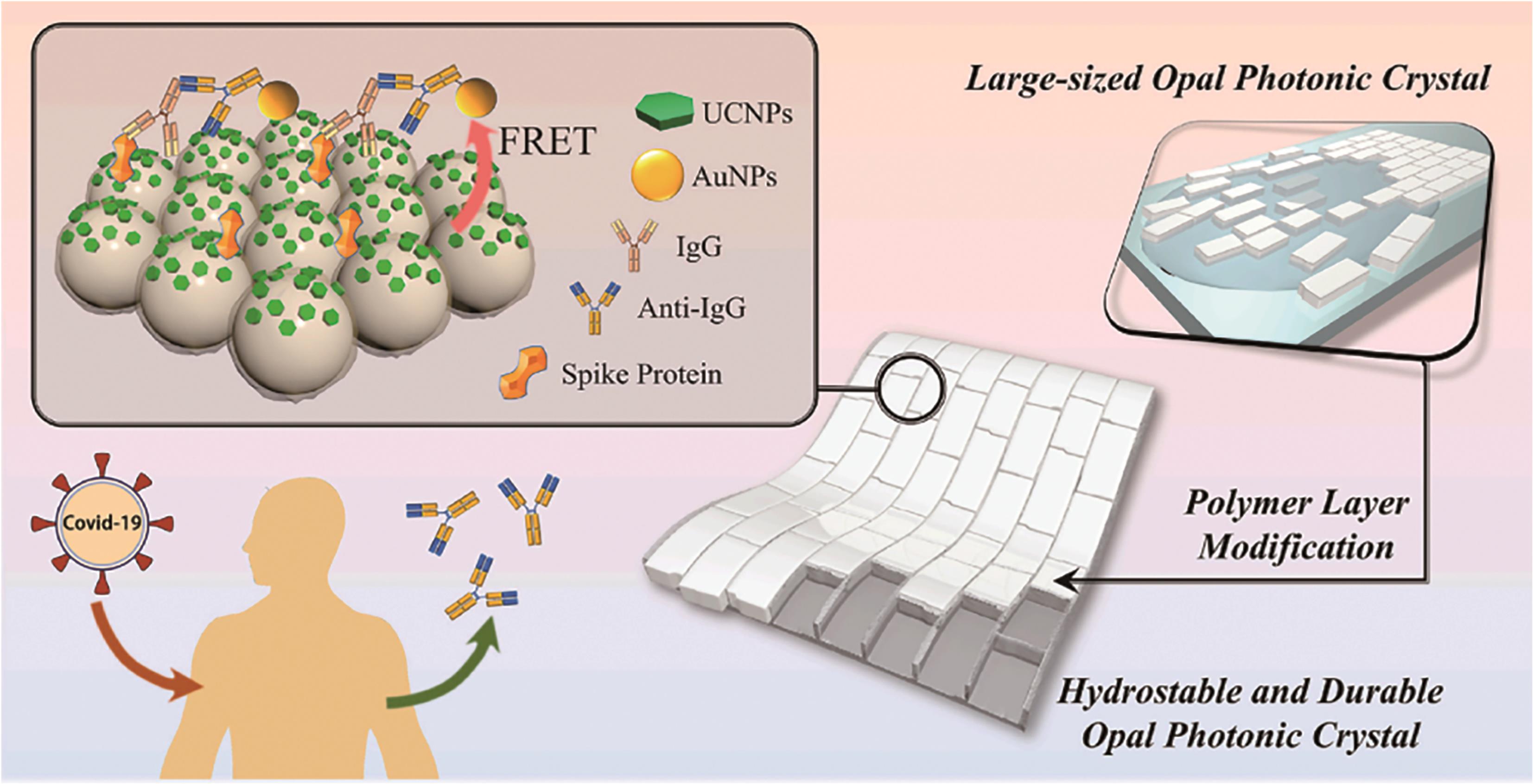
Fig.6 Schematic illustration of optimized OPC film and subsequent sensing process[69]
| Nanomaterials | Sensor type | Target detectors | LOD/(ng·mL-1) | Linear range/(ng·mL-1) | Ref. | ||
|---|---|---|---|---|---|---|---|
| Noble metal nano-materials | AuNCs | Electrochemiluminescence sensor | IgG | 0.06 | 0.5~5.0×10⁴ | [ | |
| AuNPs | Electrochemical sensor | IgG | 0.2 | 1.37~145 | [ | ||
| Au/Pt NCs | Optical sensor | anti-RBD IgG | 0.52 | 0.5~100 | [ | ||
| AuNPs | Piezoelectric sensors | IgG | 2.6 | 0~20 | [ | ||
| Au/Pt NCs | Electrochemical sensor | anti-RBD IgG | 8.22 | 50~300 | [ | ||
| Ti3C2T x MXene/AuNPs | Optical sensor | IgG | 170 | 5×10³~3×10⁴ | [ | ||
| Metal deriva-tive nano-materials | Metal oxide NPs | Fe3O4 | Electrochemiluminescence sensor | IgG | 4.9×10⁻⁹ | 1×10⁻⁸~1×10³ | [ |
| Fe3O4 | Fluorescence sensor | IgG | 0.004 | 0.005~40 | [ | ||
| ZrO2 | Electrochemical sensor | IgG | 0.011 | 0.01~4×10³ | [ | ||
| ZnO@Au | Optical sensor | IgG | 37.5 | 37.5~4.0×10⁴ | [ | ||
| Metal organic framework nanomaterials | CuFe-MOF | Electrochemical sensor | IgG | 4.5×10⁻⁴ | 0.001~50 | [ | |
| Cu-MOF | Electrochemical sensor | IgG | 3×10⁻³ | 0.01~10 | [ | ||
| Ni/Co-MOF | Electrochemical sensor | IgG | 4.1×10⁻³ | 4.5×10⁻³~1.5×10³ | [ | ||
| MOF@PtNi | Catalytic sensors | IgG | 0.269 | 0.5~1×10⁻⁵ | [ | ||
| Colorimetric sensors | IgG | 0.378 | 0.5~1×10⁻⁵ | [ | |||
| Carbon nanomaterials | Cu/GO | Electrochemical sensor | IgG | 2.0×10⁻⁴ | 1.0×10⁻³~5.0×10⁻¹ | [ | |
| AgNPs/rGO | Electrochemical sensor | IgG | 8.6×10⁻⁴ | 1×10⁻³~5×10⁻²; 5×10⁻²~5×10² | [ | ||
| AuNRs/Graphene | Optical sensor | IgG | 1.22 | 2.5~2.5×10⁴ | [ | ||
| GQDs | Electrochemical sensor | anti-SARS-CoV-2 IgG | 2.028 | 0.5~100 | [ | ||
| Graphene | Electrochemical sensor | DENV IgG | 22.5 | 125~2×10³ | [ | ||
| Cu/GO | Electrochemical sensor | glucose | 2.16×10⁴ | 1.8×10⁴~2.25×10⁶ | [ | ||
Quantum dot nanomaterials | CdS@SiO2 QDs | Optical sensor | IgG | 1.237×10⁻⁸ | 5.0×10⁻⁸~1.0×10⁴ | [ | |
| CdS QDs | Optical sensor (PL) | IgG | 9.3×10⁻⁷ | 2×10⁻⁶~1×10² | [ | ||
| Optical sensor (MRRS) | IgG | 1.10×10⁻⁶ | 5×10⁻⁶~1×10² | [ | |||
| CdSeTeS QDs | Fluorescence sensor | anti-HEV IgG | 8.7×10⁻⁵ | 1×10⁻⁴~1 | [ | ||
| CdTe QDs | Electrochemical sensor | IgG | 0.26 | 0.75~7.5×10⁶ | [ | ||
| Rare-earth-doped upconversion nanoparticles | NaYF4∶Yb3+,Er3+ | Fluorescence sensor | SARS-Cov-2 IgG | 0.1 | 0.1~10 | [ | |
Table 1 Comparison of the performance of IgG sensors of different nanomaterials
| Nanomaterials | Sensor type | Target detectors | LOD/(ng·mL-1) | Linear range/(ng·mL-1) | Ref. | ||
|---|---|---|---|---|---|---|---|
| Noble metal nano-materials | AuNCs | Electrochemiluminescence sensor | IgG | 0.06 | 0.5~5.0×10⁴ | [ | |
| AuNPs | Electrochemical sensor | IgG | 0.2 | 1.37~145 | [ | ||
| Au/Pt NCs | Optical sensor | anti-RBD IgG | 0.52 | 0.5~100 | [ | ||
| AuNPs | Piezoelectric sensors | IgG | 2.6 | 0~20 | [ | ||
| Au/Pt NCs | Electrochemical sensor | anti-RBD IgG | 8.22 | 50~300 | [ | ||
| Ti3C2T x MXene/AuNPs | Optical sensor | IgG | 170 | 5×10³~3×10⁴ | [ | ||
| Metal deriva-tive nano-materials | Metal oxide NPs | Fe3O4 | Electrochemiluminescence sensor | IgG | 4.9×10⁻⁹ | 1×10⁻⁸~1×10³ | [ |
| Fe3O4 | Fluorescence sensor | IgG | 0.004 | 0.005~40 | [ | ||
| ZrO2 | Electrochemical sensor | IgG | 0.011 | 0.01~4×10³ | [ | ||
| ZnO@Au | Optical sensor | IgG | 37.5 | 37.5~4.0×10⁴ | [ | ||
| Metal organic framework nanomaterials | CuFe-MOF | Electrochemical sensor | IgG | 4.5×10⁻⁴ | 0.001~50 | [ | |
| Cu-MOF | Electrochemical sensor | IgG | 3×10⁻³ | 0.01~10 | [ | ||
| Ni/Co-MOF | Electrochemical sensor | IgG | 4.1×10⁻³ | 4.5×10⁻³~1.5×10³ | [ | ||
| MOF@PtNi | Catalytic sensors | IgG | 0.269 | 0.5~1×10⁻⁵ | [ | ||
| Colorimetric sensors | IgG | 0.378 | 0.5~1×10⁻⁵ | [ | |||
| Carbon nanomaterials | Cu/GO | Electrochemical sensor | IgG | 2.0×10⁻⁴ | 1.0×10⁻³~5.0×10⁻¹ | [ | |
| AgNPs/rGO | Electrochemical sensor | IgG | 8.6×10⁻⁴ | 1×10⁻³~5×10⁻²; 5×10⁻²~5×10² | [ | ||
| AuNRs/Graphene | Optical sensor | IgG | 1.22 | 2.5~2.5×10⁴ | [ | ||
| GQDs | Electrochemical sensor | anti-SARS-CoV-2 IgG | 2.028 | 0.5~100 | [ | ||
| Graphene | Electrochemical sensor | DENV IgG | 22.5 | 125~2×10³ | [ | ||
| Cu/GO | Electrochemical sensor | glucose | 2.16×10⁴ | 1.8×10⁴~2.25×10⁶ | [ | ||
Quantum dot nanomaterials | CdS@SiO2 QDs | Optical sensor | IgG | 1.237×10⁻⁸ | 5.0×10⁻⁸~1.0×10⁴ | [ | |
| CdS QDs | Optical sensor (PL) | IgG | 9.3×10⁻⁷ | 2×10⁻⁶~1×10² | [ | ||
| Optical sensor (MRRS) | IgG | 1.10×10⁻⁶ | 5×10⁻⁶~1×10² | [ | |||
| CdSeTeS QDs | Fluorescence sensor | anti-HEV IgG | 8.7×10⁻⁵ | 1×10⁻⁴~1 | [ | ||
| CdTe QDs | Electrochemical sensor | IgG | 0.26 | 0.75~7.5×10⁶ | [ | ||
| Rare-earth-doped upconversion nanoparticles | NaYF4∶Yb3+,Er3+ | Fluorescence sensor | SARS-Cov-2 IgG | 0.1 | 0.1~10 | [ | |
| [1] | DIEM S, FÄSSLER M, BOMZE D, et al. Immunoglobulin G and subclasses as potential biomarkers in metastatic melanoma patients starting checkpoint inhibitor treatment[J]. J Immunother, 2019, 42(3): 89-93. |
| [2] | AZAM T, BUKHARI S H, LIAQAT U, et al. Emerging methods in biosensing of immunoglobin G-a review[J]. Sensors, 2023, 23(2): 676-699. |
| [3] | VIDARSSON G, DEKKERS G, RISPENS T. IgG subclasses and allotypes: from structure to effector functions[J]. Front Immunol, 2014, 5: 520-536. |
| [4] | FINGER-JARDIM F, AVILA E C, DA HORA V P, et al. Herpes simplex virus type 2 IgG antibodies in sera of umbilical cord as a proxy for placental infection in asymptomatic pregnant women[J]. Am J Reprod Immunol, 2018, 79(4): e12824-e12831. |
| [5] | BOUMAN J A, RIOU J, BONHOEFFER S, et al. Estimating the cumulative incidence of SARS-CoV-2 with imperfect serological tests: exploiting cutoff-free approaches[J]. PLoS Comput Biol, 2021, 17(2): e1008728. |
| [6] | WEST R, KOBOKOVICH A, CONNELL N, et al. COVID-19 antibody tests: a valuable public health tool with limited relevance to individuals[J]. Trends Microbiol, 2021, 29(3): 214-223. |
| [7] | FIGUEIREDO-CAMPOS P, BLANKENHAUS B, MOTA C, et al. Seroprevalence of anti-SARS-CoV-2 antibodies in COVID-19 patients and healthy volunteers up to 6 months post disease onset[J]. Eur J Immunol, 2020, 50(12): 2025-2040. |
| [8] | CHEN J S, CHEN P F, LIN H T, et al. A localized surface plasmon resonance (LSPR) sensor integrated automated microfluidic system for multiplex inflammatory biomarker detection[J]. Analyst, 2020, 145(23): 7654-7661. |
| [9] | POHANKA M. Piezoelectric immunosensor for the determination of immunoglobulin G[J]. Int J Electrochem Sci, 2018, 13(9): 8784-8791. |
| [10] | BECKER Y, LOIGNON R C, JULIEN A S, et al. Anti-mitochondrial autoantibodies in systemic lupus erythematosus and their association with disease manifestations[J]. Sci Rep, 2019, 9(1): 4530-4545. |
| [11] | SOLLIE S, SANTAOLALLA A, MICHAUD D S, et al. Serum immunoglobulin G is associated with decreased risk of pancreatic cancer in the Swedish AMORIS study[J]. Front Oncol, 2020, 10: 263-270. |
| [12] | GUTIÉRREZ-BAUTISTA J F, TARRIÑO M, GONZÁLEZ A, et al. Comparison of an enzyme linked-immunosorbent assay and a chemiluminescent immunoassay with an immunofluorescence assay for detection of phase Ⅱ IgM and IgG antibodies to Coxiella burnetii[J]. Microorganisms, 2024, 12(3): 552-560. |
| [13] | LUONG K, LOZIER B K, NOVIS C L, et al. Comparison of three methods for the detection of antibodies against muscle-specific kinase[J]. J Immunol Methods, 2024, 526: 113627-113632. |
| [14] | SCHNEIDER F, FAILING K, WEHREND A. Measurement of IgG concentration in bovine colostrum by immunoturbidimetric assay in comparison to ELISA-based assessment[J]. Tierarztl PraxAusg G GrosstiereNutztiere, 2020, 48(2): 73-79. |
| [15] | KHALID K, TAN X, MOHD ZAID H F, et al. Advanced in developmental organic and inorganic nanomaterial: a review[J]. Bioengineered, 2020, 11(1): 328-355. |
| [16] | GONG Y X, LIU H Y, KE S, et al. Latest advances in biomimetic nanomaterials for diagnosis and treatment of cardiovascular disease[J]. Front Cardiovasc Med, 2023, 9: 1037741-1037755. |
| [17] | ZHANG J J, CHENG F F, LI J J, et al. Fluorescent nanoprobes for sensing and imaging of metal ions: recent advances and future perspectives[J]. Nano Today, 2016, 11(3): 309-329. |
| [18] | ZHANG S, ZHAO W J, ZENG J Y, et al. Wearable non-invasive glucose sensors based on metallic nanomaterials[J]. Mater Today Bio, 2023, 20: 100638-100654. |
| [19] | 廖彩云, 张雅婷, 杨荣极, 等. 表面增强拉曼光谱法快速检测甲基苯丙胺[J]. 中国法医学杂志, 2025, 40(4): 459-462. |
| LIAO C Y, ZHANG Y T, YANG R J, et al. Rapid on-site detection of methamphetamine using surface-enhanced raman spectroscopy[J]. Chin J Forensic Med, 2025, 40(4): 459-462. | |
| [20] | HONG G L, SU C P, HUANG Z N, et al. Electrochemiluminescence immunoassay platform with immunoglobulin G-encapsulated gold nanoclusters as a “two-in-one” probe[J]. Anal Chem, 2021, 93(38): 13022-13028. |
| [21] | DE ARAUJO ANDRADE T, RIBEIRO I S, SILVA T A, et al. Diagnosis of viral infectious diseases through sensitive detection of human serum antibodies using a modified label-free electrochemical biosensor[J]. Anal Bioanal Chem, 2024, 416(28): 6345-6355. |
| [22] | SONG C, JI S, SUN H, et al. An unconventional immunosensor for biomolecule detection via nonspecific gold nanoparticle-antibody interactions[J]. Anal Chem, 2024, 96(19): 7367-7372. |
| [23] | ZHU J Y, ZHAO C, XIA B Y, et al. An enhanced SPR optical fiber biosensor using Ti3C2TxMXene/AuNPs for label-free and sensitive detection of human IgG[J]. Nanoscale, 2024, 16(39): 18477-18487. |
| [24] | VÁZQUEZ-DÍAZ S, SAA L, OTAEGUI D, et al. Dual-mode immunosensor for antibody detection: harnessing the versatility of antibody-based nanozymes across optical and electrochemical platforms[J]. Anal Chem, 2025, 97(6): 3361-3370. |
| [25] | BOBRINETSKIY I, RADOVIC M, RIZZOTTO F, et al. Advances in nanomaterials-based electrochemical biosensors for foodborne pathogen detection[J]. Nanomaterials, 2021, 11(10): 2700-2725. |
| [26] | GUO J P, WANG Y M, NIU S S, et al. Highly sensitive fluorescence-linked immunosorbent assay for the determination of human IgG in serum using quantum dot nanobeads and magnetic Fe3O4 nanospheres[J]. ACS Omega, 2020, 5(36): 23229-23236. |
| [27] | HUO S J, ZHAO H B, DONG J P, et al. Facile synthesis of ordered mesoporous zirconia for electrochemical enrichment and detection of organophosphorus pesticides[J]. Electroanal, 2018, 30(9): 2121-2130. |
| [28] | CHEN X Y, SONG L, ZHU G Y, et al. A novel site-induced biomolecule anchoring strategy based on solid superacid ZrO2/ S O 4 2 - for fabricating label-free IgG electrochemical immunosensors[J]. New J Chem, 2021, 45(24): 10850-10856. |
| [29] | DOBRUCKA R, ROMANIUK-DRAPAŁA A, KACZMAREK M. Biologically synthesized of Au/Pt/ZnO nanoparticles using Arctium lappa extract and cytotoxic activity against leukemia[J]. Biomed Microdev, 2020, 22(4): 72-79. |
| [30] | YANG H H, ZHAO X Q, ZHANG Z W, et al. Biotin-streptavidin sandwich integrated PDA-ZnO@Au nanocomposite based SPR sensor for hIgG detection[J]. Talanta, 2022, 246: 123496-123503. |
| [31] | WANG W L, WANG Y Y, KAN X W. Dual suppression amplification based on resonance energy transfer and enzymatic biocatalytic precipitation for IgG electrochemiluminescence ultrasensitive assay[J]. Sens Actuators B: Chem, 2023, 397: 134672-134679. |
| [32] | JIANG M, LIAO J, LIU C H, et al. Metal-organic frameworks/metal nanoparticles as smart nanosensing interfaces for electrochemical sensors applications: a mini-review[J]. Front Bioeng Biotechnol, 2023, 11: 1251713-1251720. |
| [33] | MUKHERJEE D, VAN DER BRUGGEN B, MANDAL B. Advancements in visible light responsive MOF composites for photocatalytic decontamination of textile wastewater: a review[J]. Chemosphere, 2022, 295: 133835-133849. |
| [34] | DU L P, CHEN W, ZHU P, et al. Applications of functional metal-organic frameworks in biosensors[J]. Biotechnol J, 2021, 16(2): 1900424-1900435. |
| [35] | WU M X, YANG Y W. Metal-organic framework (MOF)-based drug/cargo delivery and cancer therapy[J]. Adv Mater, 2017, 29(23): 1606134-1606153. |
| [36] | DUMAN F D, FORGAN R S. Applications of nanoscale metal-organic frameworks as imaging agents in biology and medicine[J]. J Mater Chem B, 2021, 9(16): 3423-3449. |
| [37] | JIANG M, LIAO J, LIU C H, et al. Metal-organic frameworks/metal nanoparticles as smart nanosensing interfaces for electrochemical sensors applications: a mini-review[J]. Front Bioeng Biotechnol, 2023, 11: 1251713-1251720. |
| [38] | LIANG A X, TANG S S, LIU M, et al. A molecularly imprinted electrochemical sensor with tunable electrosynthesized Cu-MOFs modification for ultrasensitive detection of human IgG[J]. Bioelectrochemistry, 2022, 146: 108154-108164. |
| [39] | MA C C, GUO Y, LIU H O, et al. Facile synthesis of bimetallic MOF crystals with controllable morphology and topology by the self-converted strategy of hydroxy double salts (HDSs)[J]. Microporous Mesoporous Mater, 2021, 322: 111153-111165. |
| [40] | JIANG Q, XIAO Y, HONG A N, et al. Bimetallic metal-organic framework Fe/Co-MIL-88 (NH2) exhibiting high peroxidase-like activity and its application in detection of extracellular vesicles[J]. ACS Appl Mater Interfaces, 2022, 14(37): 41800-41808. |
| [41] | RAVIPATI M, SREEKUMAR A, BADHULIKA S. Bimetallic nickel/cobalt metal-organic framework-based electrochemical sensor for trace level detection of IgG in simulated human blood serum[J]. Microchem J, 2023, 195: 109510-109519. |
| [42] | LIU R X, SHI F, XIA Y P, et al. Universal MOF nanozyme-induced catalytic amplification strategy for label-free electrochemical immunoassay[J]. Chin Chem Lett, 2024, 35(11): 109664-109667. |
| [43] | SHEN J, WANG Y, DUAN Z N, et al. MOF scaffold for anchoring platinum-nickel nanoparticles with enhanced oxidase-like activity to improve lateral flow immunoassay diagnosis[J]. Biosens Bioelectron, 2025: 117189-117196. |
| [44] | 王培瀚. 金属-碳基纳米材料的制备及其电化学传感检测的研究[D]. 济南: 济南大学, 2023. |
| WANG P H. Preparation of metal-carbon-based nanomaterials and their electrochemical sensing detection[D]. Jinan: University of Jinan, 2023. | |
| [45] | SINGH D, GUPTA G D, GUPTA N, et al. A critical appraisal of functionalized 2-dimensional carbon-based nanomaterials for drug delivery applications[J]. Recent Pat Nanotechnol, 2024, 18(4): 479-493. |
| [46] | RAVI S N, RAJENDRAN S, MADHUMATHI G S, et al. Carbon nanomaterials: pioneering innovations in bioimaging and biosensing technologies[J]. J Mol Struct, 2024, 1316: 138987-138997. |
| [47] | REZAEI Z, WANG N Y, YANG Y P, et al. Enhancing organoid technology with carbon-based nanomaterial biosensors: advancements, challenges, and future directions[J]. Adv Drug Delivery Rev, 2025: 115592-115608. |
| [48] | CRISAN L,CRISANB V, BRAN S, et al. Carbon-based nanomaterials as scaffolds in bone regeneration[J]. Part Sci Technol, 2020, 38(8): 912-921. |
| [49] | KOUR R, ARYA S, YOUNG S J, et al. Recent advances in carbon nanomaterials as electrochemical biosensors[J]. J Electrochem Soc, 2020, 167(3): 037555-037578. |
| [50] | CHANARSA S, JAKMUNEE J, OUNNUNKAD K. A bifunctional nanosilver-reduced graphene oxide nanocomposite for label-free electrochemical immunosensing[J]. Front Chem, 2021, 9: 631571-631582. |
| [51] | PHETSANG S, KHWANNIMIT D, RATTANAKIT P, et al. A redox Cu(Ⅱ)-graphene oxide modified screen printed carbon electrode as a cost-effective and versatile sensing platform for electrochemical label-free immunosensor and non-enzymatic glucose sensor[J]. Front Chem, 2021, 9: 671173-671186. |
| [52] | SIEW Q Y, TAN S H, PANG E L, et al. A graphene-based dengue immunosensor using plant-derived envelope glycoprotein domain Ⅲ (EDⅢ) as the novel probe antigen[J]. Analyst, 2021, 146(6): 2009-2018. |
| [53] | DU PLOOY J, KOCK B, JAHED N, et al. Carbon nanostructured immunosensing of anti-SARS-CoV-2 S-Protein antibodies[J]. Molecules, 2023, 28(24): 8022-8040. |
| [54] | GAO X G, LI L Y, DENG R, et al. Localized surface plasmon resonance-modulated graphene-based optical sensor for ultrasensitive immunoassays[J]. ACS Appl Electron Mater, 2023, 5(2): 1140-1147. |
| [55] | GENG H C, QIAO Y, JIANG N, et al. Water-soluble ZnCuInSe quantum dots for bacterial classification, detection, and imaging[J]. Anal Bioanal Chem, 2020, 412(30): 8379-8389. |
| [56] | YU W, YU N, WANG Z, et al. Chitosan-mediated green synthesis and folic-acid modification of CuS quantum dots for photoacoustic imaging guided photothermal therapy of tumor[J]. J Colloid Interface Sci, 2019, 555: 480-489. |
| [57] | SHI X D, SHI C Z, YE W, et al. Targeted fluorescence imaging and biological effects of peptide conjugated quantum dots on pancreatic cancer cells[J]. J Nanosci Nanotechnol, 2020, 20(3): 1351-1357. |
| [58] | GRASSO G, SCARFIELLO R, COLELLA F, et al. Ratiometricfluorescent biosensors for quantitative lactic acid detection using CdTe@CdS quantum dots and lactate oxidase[J]. Sens Actuators Rep, 2025: 100303-100315. |
| [59] | 程娇娇, 彭微, 靳敏, 等. 量子点在卫生分析领域中的应用[J]. 化学通报, 2022, 85(3): 341-350. |
| CHEN J J, PENG W, JIN M, et al. Application of quantum dots in the field of health analysis[J]. Chem Bull, 2022, 85(3): 341-350. | |
| [60] | ZHANG Y, LIU B, LIU Z, et al. Research progress in the synthesis and biological application of quantum dots[J]. New J Chem, 2022, 46(43): 20515-20539. |
| [61] | GANGANBOINA A B, TAKEMURA K, ZHANG W, et al. Cargo encapsulated hepatitis E virus-like particles for anti-HEV antibody detection[J]. Biosens Bioelectron, 2021, 185: 113261-113269. |
| [62] | LI H Y, WEN X K, DING Y D, et al. Photoluminescent and multi-phonon resonance Raman scattering dual-mode immunoassays based on CdS nanoparticles for HIgG detection[J]. Mikrochim Acta, 2022, 189(12): 477-485. |
| [63] | WANG J, DONG W H, YANG X M, et al. Biosensors based on DNA-functionalized CdTe quantum dots for the enhanced electrochemical detection of human-IgG[J]. Anal Methods, 2023, 15(28): 3411-3419. |
| [64] | WEN X K, LI H Y, CHEN H, et al. Tri-signal CdS@SiO2 nanoprobes for accurate and sensitive detection of human immunoglobulin G with enhanced flexibility and internal validation[J]. Talanta, 2024, 278: 126495-126502. |
| [65] | 彭孔浩, 白安琪, 孟颖, 等. 纳米材料传感器在有机磷农药残留检测中的研究进展[J]. 应用化学, 2024, 41(4): 472-483. |
| PENG K H, BAI A Q, MENG Y, et al. Research progress on nanomaterial-based sensors for organophosphorus pesticide residue detection[J]. Chin J Appl Chem, 2024, 41(4): 472-483. | |
| [66] | SATPATHY A, SU T Y, HUANG W T, et al. Versatile nanoplatforms for bioimaging and therapy using upconversion nanoparticles[J]. ACS Omega, 2024, 2(9): 1790-1802. |
| [67] | RAMIN B B S, SANTOS W G, MESSADDEQ Y, et al. Layer-by-layer assembly of NaYF4∶Yb3+/Er3+UCNPs@Cystein and UCNPs@Cys-Ab as hybrid bio-optical sensors for E.coli bacteria[J]. J Lumin, 2024, 271: 120590-120599. |
| [68] | ZHANG S, DUN S P, GUO X, et al. A synergistic effect of NaYF4∶Yb,Er@NaGdF4∶Nd@SiO2 upconversion nanoparticles and TiO2 hollow spheres to enhance photovoltaic performance of dye-sensitized solar cells[J]. Electrochim Acta, 2022, 421: 140435-140443. |
| [69] | HU S T, LI Y G, DONG B, et al. Highly hydrostable and flexible opal photonic crystal film for enhanced up-conversion fluorescence sensor of COVID-19 antibody[J]. Biosens Bioelectron, 2023, 237: 115484-115494. |
| [70] | QI H N, SHEN C, CHEN G, et al. Rapid and non-destructive determination of soluble solid content of crown pear by visible/near-infrared spectroscopy with deep learning regression[J]. J Food Compost Anal, 2023, 123: 105585-105593. |
| [71] | REN G X, NING J M, ZHANG Z Z. Intelligent assessment of tea quality employing visible-near infrared spectra combined with a hybrid variable selection strategy[J]. Microchem J, 2020, 157: 105085-105092. |
| [1] | Xin-Xin HUANG, You-Sheng SHI, Tao DENG, Chun CAI. Research Progress of Fluorescent Probes Based on Aggregation-Induced Emission for Detection of Biomarkers [J]. Chinese Journal of Applied Chemistry, 2025, 42(8): 1035-1056. |
| [2] | Bin DAI, Lin PENG, Xue-Ning ZHU, Te WANG, Sai-Nan YANG, Ling-Ling ZHANG. Research Progress on the Application of Rare Earth Luminescent Materials in Immunoassay [J]. Chinese Journal of Applied Chemistry, 2025, 42(8): 1057-1069. |
| [3] | Jian-Jun LI, Jia-Ye HE, Bi-Hai HOU. Research Advancements in the Visual Detection of Lip Prints Using Fluorescent Nanomaterials [J]. Chinese Journal of Applied Chemistry, 2025, 42(5): 642-655. |
| [4] | Liang XIONG, Bing-Yang GAO, Cong LIU, Dong-Ming YIN, Zhen-Hua ZHANG, Zhi-Ya HAN, Nan DING, Yong CHENG, Li-Min WANG. Research Progress in Nanoscale Magnesium-Based Hydrogen Storage Materials [J]. Chinese Journal of Applied Chemistry, 2025, 42(3): 293-312. |
| [5] | Nian JIN, Chun-Li GAO, Quan-Qian GE, Mai XU, Xian LIANG, Chuan-Gao ZHU, Feng-Wu WANG. Research Progress on the Construction of Defective Titanium Dioxide and Its Application in Photocatalysis/Photoelectrocatalysis [J]. Chinese Journal of Applied Chemistry, 2025, 42(2): 149-167. |
| [6] | Yi-Qian YANG, Xiao-Xia YAN, Hao PENG, Ai-Guo WU, Fang YANG. Advances of NIR-Ⅱ-Triggered Photodynamic Therapy in Overcoming Tumor Hypoxia Environment [J]. Chinese Journal of Applied Chemistry, 2024, 41(7): 925-936. |
| [7] | Ying-Wei LI, Ji HAN, Bu-Yuan GUAN. Research Progress on the Synthesis and Application of Two-Dimensional Mesoporous Materials [J]. Chinese Journal of Applied Chemistry, 2024, 41(6): 767-782. |
| [8] | Kong-Hao PENG, An-Qi BAI, Ying MENG, Hui YIN, Xin-Yao SU, Jin-Yu YANG, Shu-Rong LI, Ling-Yan ZHANG, Li-Xia LUO, Pei-Jun MENG. Research Progress of Nanomaterial Sensors in the Detection of Organophosphorus Pesticide Residues [J]. Chinese Journal of Applied Chemistry, 2024, 41(4): 472-483. |
| [9] | Xue-Min ZHOU, Shu-Zhen LYU, Guo-Fang ZHANG, Zhu-Mei CUI, Sai BI. A Near-Infrared-Driven Signal Amplification Fluorescence Biosensor Based on Upconversion Beacon Probe for microRNA Detection [J]. Chinese Journal of Applied Chemistry, 2024, 41(1): 137-146. |
| [10] | Li-Zhen YUAN, Ni-Ya LIN, Yun-Fan ZHANG, Jing-Jing HU, Xiao-Ding LOU, Fan XIA. Development in Probes on Outer Surface of Nanochannels for Detecting Biomarkers [J]. Chinese Journal of Applied Chemistry, 2024, 41(1): 87-99. |
| [11] | Hui-Hui LI, Kai-Sheng YAO, Ya-Nan ZHAO, Li-Na FAN, Yu-Lin TIAN, Wei-Wei LU. Ionic Liquid-Modulated Synthesis of Pt-Pd Bimetallic Nanomaterials and Their Catalytic Performance for Ammonia Borane Hydrolysis to Generate Hydrogen [J]. Chinese Journal of Applied Chemistry, 2023, 40(4): 597-609. |
| [12] | Xiao-Hu LIU, Xiao-Juan LAI, Hong-Yan CAO, Ting-Ting WANG, Zhi-Qiang DANG. Synergistic Performance of Foaming Agent/Stabilizer/SiO2 Composite Foam Retarded Acid System [J]. Chinese Journal of Applied Chemistry, 2023, 40(1): 91-99. |
| [13] | Tao WANG, Sha LIU, Bao-Lin LIU, Zhi-Xian GAO. Application of Biosensors Based on Aptamers and Antibodies in the Detection of Estradiol [J]. Chinese Journal of Applied Chemistry, 2022, 39(3): 374-390. |
| [14] | Hui DU, Chen-Yang YAO, Hao PENG, Bo JIANG, Shun-Xiang LI, Jun-Lie YAO, Fang ZHENG, Fang YANG, Ai-Guo WU. Applications of Transition Metal⁃doped Iron⁃based Nanoparticles in Biomedicine [J]. Chinese Journal of Applied Chemistry, 2022, 39(3): 391-406. |
| [15] | Hong-Zhen PENG, Yu ZHANG, Lin-Jie GUO, Wei SONG, Qing-Nuan LI, Xiang-Ying MENG. Facile One⁃Step Synthesis of WS2@Au Quantum Dot Composite by in situ Reduction and Its Sensing Application [J]. Chinese Journal of Applied Chemistry, 2022, 39(3): 480-488. |
| Viewed | ||||||
|
Full text |
|
|||||
|
Abstract |
|
|||||
