
Chinese Journal of Applied Chemistry ›› 2026, Vol. 43 ›› Issue (3): 422-434.DOI: 10.19894/j.issn.1000-0518.250417
• Full Papers • Previous Articles Next Articles
Shuai ZHANG1, Xuan LI2, Zhao-Liang XING3, Ju-Yang LIU3, Huan GAO1, Zhe MA1, Li PAN1, Chong ZHANG3( ), Yue-Sheng LI1()
Received:2025-10-31
Accepted:2025-12-26
Published:2026-03-01
Online:2026-03-26
Contact:
Chong ZHANG,Yue-Sheng LI
About author:ysli@tju.edu.cnSupported by:CLC Number:
Shuai ZHANG, Xuan LI, Zhao-Liang XING, Ju-Yang LIU, Huan GAO, Zhe MA, Li PAN, Chong ZHANG, Yue-Sheng LI. Removing Inorganic Impurities from Polypropylene by Swelling-Complexation Process[J]. Chinese Journal of Applied Chemistry, 2026, 43(3): 422-434.
Add to citation manager EndNote|Ris|BibTeX
URL: http://yyhx.ciac.jl.cn/EN/10.19894/j.issn.1000-0518.250417
| Method | ρ(Mg)/(mg·L-1) | ρ(Al)/(mg·L-1) | ρ(Ti)/(mg·L-1) | ρ(total metal residue)/(mg·L-1) |
|---|---|---|---|---|
| Untreated sample PP1 | 9.12 | 22.91 | 1.85 | 33.88 |
| Swelling-washing only | 8.13 | 19.38 | 1.78 | 29.29 |
| Methanol complexation | 7.65 | 11.43 | 1.22 | 20.30 |
| Ethanol complexation | 2.62 | 11.02 | 1.20 | 14.84 |
| Benzyl alcohol complexation | 3.58 | 8.43 | 0.65 | 12.66 |
| Isopropanol complexation | 2.65 | 7.30 | 0.95 | 10.90 |
| n-Butanol complexation | 4.62 | 8.18 | 1.03 | 13.83 |
| Isobutanol complexation | 2.76 | 7.05 | 0.93 | 10.74 |
| tert-Butanol complexation | 3.70 | 8.68 | 0.81 | 13.19 |
| Ethylene glycol complexation | 8.02 | 14.89 | 1.41 | 24.32 |
| 1,2-Propanediol complexation | 7.70 | 12.58 | 0.67 | 20.95 |
Table 1 Experimental results of swelling-complexation deashing of polypropylene by fatty alcohols
| Method | ρ(Mg)/(mg·L-1) | ρ(Al)/(mg·L-1) | ρ(Ti)/(mg·L-1) | ρ(total metal residue)/(mg·L-1) |
|---|---|---|---|---|
| Untreated sample PP1 | 9.12 | 22.91 | 1.85 | 33.88 |
| Swelling-washing only | 8.13 | 19.38 | 1.78 | 29.29 |
| Methanol complexation | 7.65 | 11.43 | 1.22 | 20.30 |
| Ethanol complexation | 2.62 | 11.02 | 1.20 | 14.84 |
| Benzyl alcohol complexation | 3.58 | 8.43 | 0.65 | 12.66 |
| Isopropanol complexation | 2.65 | 7.30 | 0.95 | 10.90 |
| n-Butanol complexation | 4.62 | 8.18 | 1.03 | 13.83 |
| Isobutanol complexation | 2.76 | 7.05 | 0.93 | 10.74 |
| tert-Butanol complexation | 3.70 | 8.68 | 0.81 | 13.19 |
| Ethylene glycol complexation | 8.02 | 14.89 | 1.41 | 24.32 |
| 1,2-Propanediol complexation | 7.70 | 12.58 | 0.67 | 20.95 |
| Method or complexing agent | ρ(Mg)/(mg·L-1) | ρ(Al)/(mg·L-1) | ρ(Ti)/(mg·L-1) | ρ(total metal residue)/(mg·L-1) |
|---|---|---|---|---|
| Untreated sample PP1 | 9.12 | 22.91 | 1.85 | 33.88 |
| Swelling-washing only | 8.13 | 19.38 | 1.78 | 29.29 |
| Ethylene glycol monomethyl ether | 3.76 | 8.27 | 1.10 | 13.13 |
| Ethylene glycol dimethyl ether | 2.32 | 7.98 | 0.90 | 11.20 |
| Diethylene glycol monomethyl ether | 3.35 | 8.07 | 1.08 | 12.50 |
| Diethylene glycol dimethyl ether | 1.74 | 7.67 | 0.88 | 10.29 |
| Tetramethylethylenediamine | 2.91 | 7.51 | 0.81 | 11.23 |
| Pentamethyldiethylenetriamine | 2.65 | 6.88 | 1.25 | 10.78 |
Table 2 Experimental results of swelling-complexation deashing of polypropylene using polydentate complexing agents such as ethylene glycol ether
| Method or complexing agent | ρ(Mg)/(mg·L-1) | ρ(Al)/(mg·L-1) | ρ(Ti)/(mg·L-1) | ρ(total metal residue)/(mg·L-1) |
|---|---|---|---|---|
| Untreated sample PP1 | 9.12 | 22.91 | 1.85 | 33.88 |
| Swelling-washing only | 8.13 | 19.38 | 1.78 | 29.29 |
| Ethylene glycol monomethyl ether | 3.76 | 8.27 | 1.10 | 13.13 |
| Ethylene glycol dimethyl ether | 2.32 | 7.98 | 0.90 | 11.20 |
| Diethylene glycol monomethyl ether | 3.35 | 8.07 | 1.08 | 12.50 |
| Diethylene glycol dimethyl ether | 1.74 | 7.67 | 0.88 | 10.29 |
| Tetramethylethylenediamine | 2.91 | 7.51 | 0.81 | 11.23 |
| Pentamethyldiethylenetriamine | 2.65 | 6.88 | 1.25 | 10.78 |
| Method or complexing agent | ρ(Mg)/(mg·L-1) | ρ(Al)/(mg·L-1) | ρ(Ti)/(mg·L-1) | ρ(total metal residue)/(mg·L-1) |
|---|---|---|---|---|
| Untreated sample PP1 | 9.12 | 22.91 | 1.85 | 33.88 |
| Swelling-washing only | 8.13 | 19.38 | 1.78 | 29.29 |
| Acetylacetone | 1.46 | 6.85 | 0.75 | 9.06 |
| 2,3-Butanedione | 8.03 | 8.43 | 1.53 | 17.99 |
| Benzoylacetone | 2.43 | 6.73 | 1.28 | 10.44 |
| Ethyl acetoacetate | 1.59 | 7.26 | 0.82 | 9.67 |
| Diethyl malonate | 2.36 | 7.38 | 0.97 | 10.71 |
Table 3 Experimental results of swelling-complexation deashing of polypropylene by 1,3-dicarbonyl compounds
| Method or complexing agent | ρ(Mg)/(mg·L-1) | ρ(Al)/(mg·L-1) | ρ(Ti)/(mg·L-1) | ρ(total metal residue)/(mg·L-1) |
|---|---|---|---|---|
| Untreated sample PP1 | 9.12 | 22.91 | 1.85 | 33.88 |
| Swelling-washing only | 8.13 | 19.38 | 1.78 | 29.29 |
| Acetylacetone | 1.46 | 6.85 | 0.75 | 9.06 |
| 2,3-Butanedione | 8.03 | 8.43 | 1.53 | 17.99 |
| Benzoylacetone | 2.43 | 6.73 | 1.28 | 10.44 |
| Ethyl acetoacetate | 1.59 | 7.26 | 0.82 | 9.67 |
| Diethyl malonate | 2.36 | 7.38 | 0.97 | 10.71 |
| Method | ρ(Mg)/(mg·L-1) | ρ(Al)/(mg·L-1) | ρ(Ti)/(mg·L-1) | ρ(total metal residue)/(mg·L-1) |
|---|---|---|---|---|
| Untreated sample PP1 | 9.12 | 22.91 | 1.85 | 33.88 |
| Acac 1 mL | 1.46 | 6.85 | 0.75 | 9.06 |
| Acac 5 mL | 1.43 | 4.60 | 0.41 | 6.44 |
| Acac 2×1 mL | 1.47 | 4.87 | 0.66 | 6.94 |
| Acac 4×1 mL | 1.46 | 4.47 | 0.45 | 6.38 |
| Acac 1 mL/Acetic acid 1 mL | 1.47 | 2.00 | 0.16 | 3.63 |
| Untreated sample PP2 | 10.52 | 38.45 | 1.12 | 50.09 |
| Acac 1 mL/Acetic acid 1 mL | 4.23 | 5.42 | 0.03 | 9.68 |
Table 4 Experimental results of swelling-complexation deashing of polypropylene by acetylacetone and acetic acid/acetylacetone mixture
| Method | ρ(Mg)/(mg·L-1) | ρ(Al)/(mg·L-1) | ρ(Ti)/(mg·L-1) | ρ(total metal residue)/(mg·L-1) |
|---|---|---|---|---|
| Untreated sample PP1 | 9.12 | 22.91 | 1.85 | 33.88 |
| Acac 1 mL | 1.46 | 6.85 | 0.75 | 9.06 |
| Acac 5 mL | 1.43 | 4.60 | 0.41 | 6.44 |
| Acac 2×1 mL | 1.47 | 4.87 | 0.66 | 6.94 |
| Acac 4×1 mL | 1.46 | 4.47 | 0.45 | 6.38 |
| Acac 1 mL/Acetic acid 1 mL | 1.47 | 2.00 | 0.16 | 3.63 |
| Untreated sample PP2 | 10.52 | 38.45 | 1.12 | 50.09 |
| Acac 1 mL/Acetic acid 1 mL | 4.23 | 5.42 | 0.03 | 9.68 |
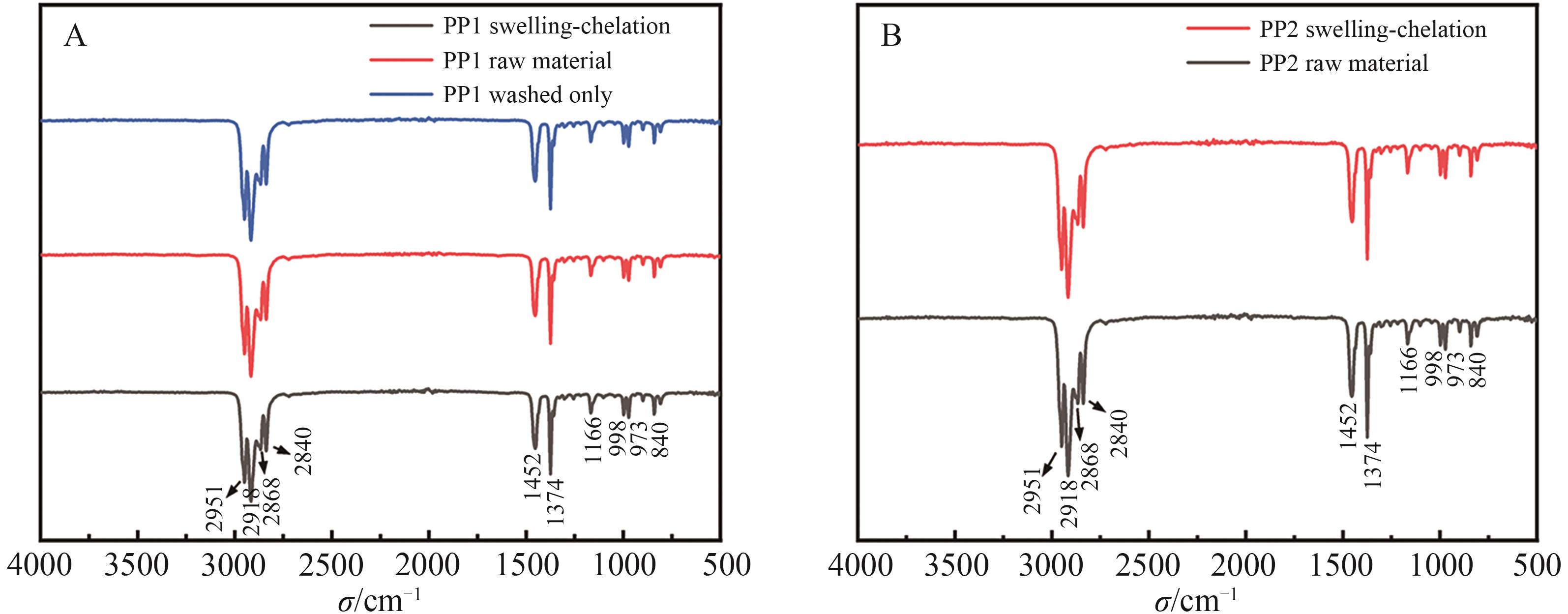
Fig.1 FT-IR spectra of PP1 (A) and PP2 (B) before and after purification
| Sample | Melting peak temperature/℃ | Melting enthalpy/(J·g-1) | Crystallinity/% |
|---|---|---|---|
| Untreated sample PP1 | 157.9/164.6 | 95.32 | 45.6 |
| PP1 swelling only | 161.8 | 111.83 | 53.5 |
| PP1 swelling-complexation | 163.1 | 99.81 | 47.8 |
| Untreated sample PP2 | 160.7 | 101.02 | 48.3 |
| PP2 swelling-complexation | 162.0 | 111.71 | 53.4 |
Table 5 DSC thermal performance parameters of polypropylene samples before and after purification
| Sample | Melting peak temperature/℃ | Melting enthalpy/(J·g-1) | Crystallinity/% |
|---|---|---|---|
| Untreated sample PP1 | 157.9/164.6 | 95.32 | 45.6 |
| PP1 swelling only | 161.8 | 111.83 | 53.5 |
| PP1 swelling-complexation | 163.1 | 99.81 | 47.8 |
| Untreated sample PP2 | 160.7 | 101.02 | 48.3 |
| PP2 swelling-complexation | 162.0 | 111.71 | 53.4 |
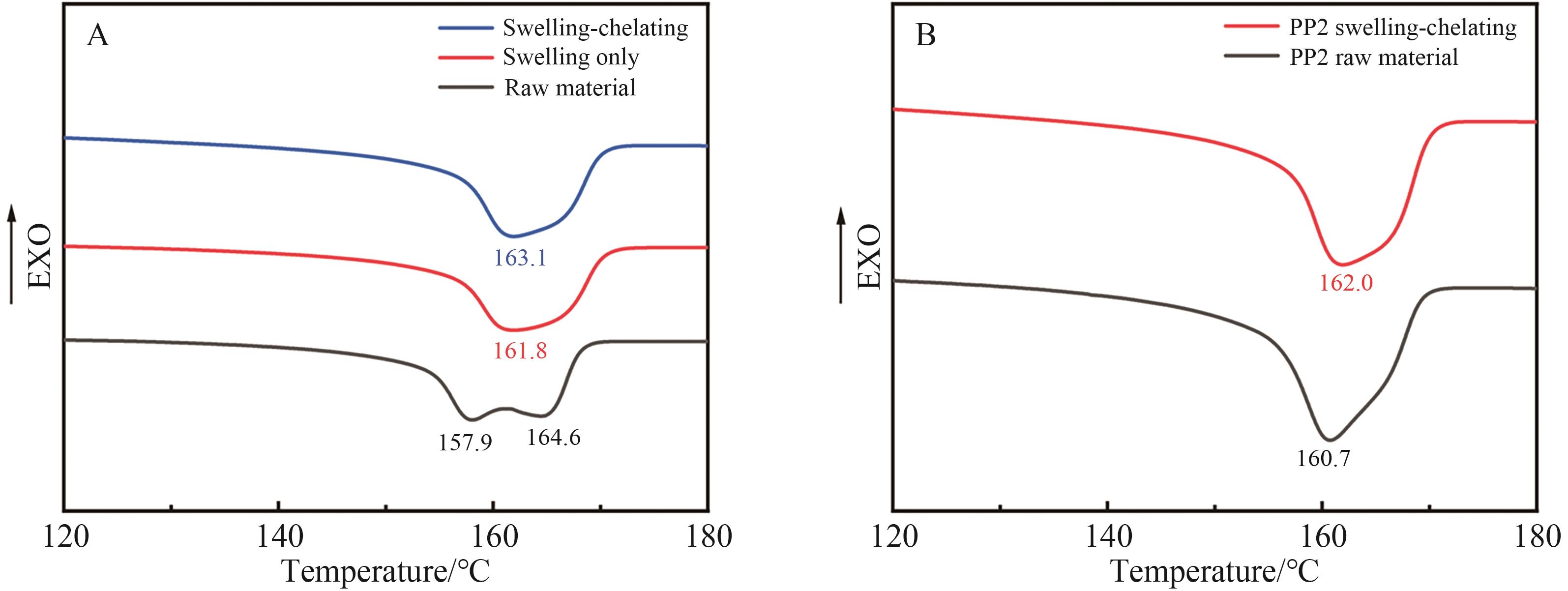
Fig.2 DSC secondary temperature rise curves of PP1 (A) and PP2 (B) before and after purification
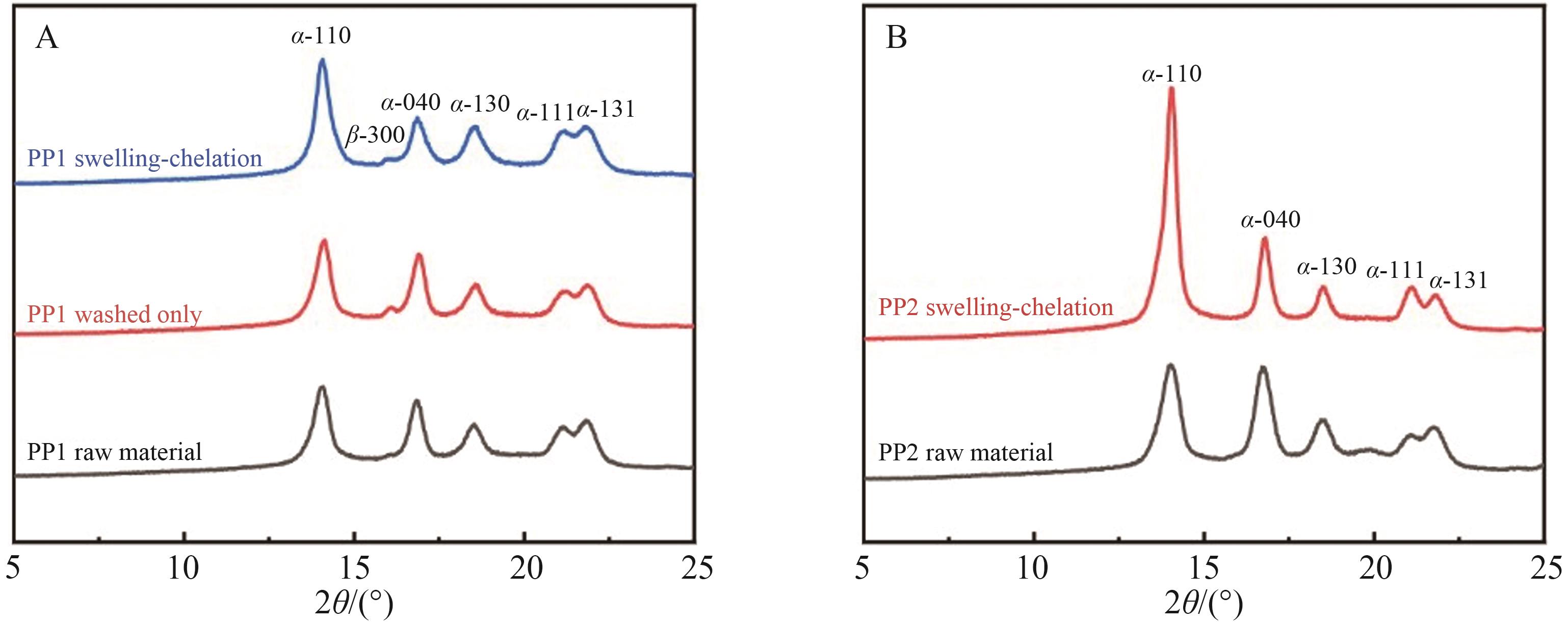
Fig.3 WXRD patterns of PP1 (A) and PP2 (B) before and after purification
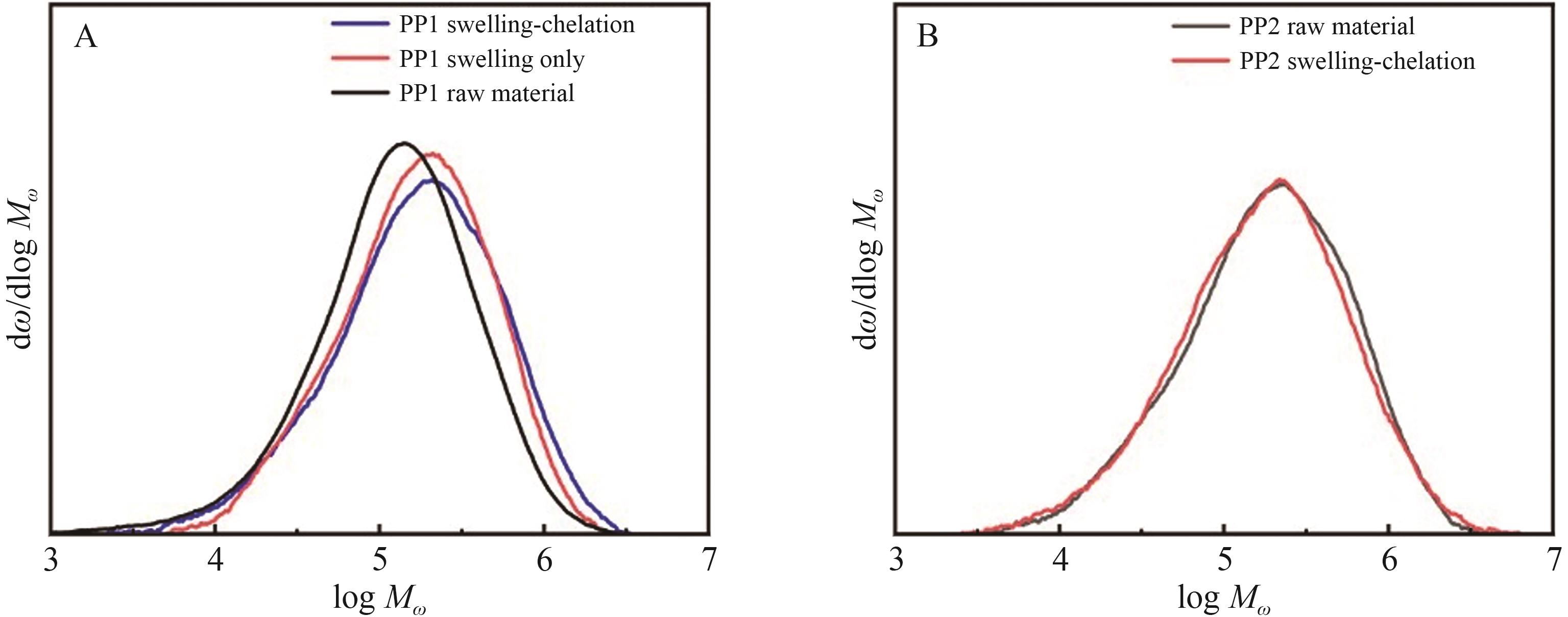
Fig.4 HT-GPC patterns of PP1 (A) and PP2 (B) before and after purification
| Sample | 10-4Mn | 10-4Mw | PDI |
|---|---|---|---|
| Untreated sample PP1 | 6.14 | 31.98 | 5.21 |
| PP1 swelling only | 7.54 | 30.30 | 4.02 |
| PP1 swelling-complexation | 8.13 | 28.63 | 3.52 |
| Untreated sample PP2 | 8.56 | 32.16 | 3.76 |
| PP2 swelling-complexation | 9.12 | 32.78 | 3.60 |
Table 6 GPC results of samples before and after PP1 and PP2 swelling treatment
| Sample | 10-4Mn | 10-4Mw | PDI |
|---|---|---|---|
| Untreated sample PP1 | 6.14 | 31.98 | 5.21 |
| PP1 swelling only | 7.54 | 30.30 | 4.02 |
| PP1 swelling-complexation | 8.13 | 28.63 | 3.52 |
| Untreated sample PP2 | 8.56 | 32.16 | 3.76 |
| PP2 swelling-complexation | 9.12 | 32.78 | 3.60 |
| Sample | Ash content/(mg·L-1) | 10-13Volume resistivity/(Ω·m) | Breakdown strength/(kV·mm-1) |
|---|---|---|---|
| Untreated sample PP1 | 33.88 | 8.75 | 421.5 |
| PP1 swelling-complexation | 3.63 | 11.34 | 450.6 |
| Untreated sample PP2 | 50.09 | 5.88 | 355.6 |
| PP2 swelling-complexation | 9.68 | 10.22 | 406.1 |
Table 7 The electrical insulation properties of polypropylene samples before and after purification
| Sample | Ash content/(mg·L-1) | 10-13Volume resistivity/(Ω·m) | Breakdown strength/(kV·mm-1) |
|---|---|---|---|
| Untreated sample PP1 | 33.88 | 8.75 | 421.5 |
| PP1 swelling-complexation | 3.63 | 11.34 | 450.6 |
| Untreated sample PP2 | 50.09 | 5.88 | 355.6 |
| PP2 swelling-complexation | 9.68 | 10.22 | 406.1 |
| [1] | KARGER-KOCSIS J, BÁRÁNY T. Polypropylene handbook[M]. Cham: Springer, 2019. |
| [2] | GUEZZOUT Z, BOUBLIA A, HADDAOUI N. Enhancing thermal and mechanical properties of polypropylene-nitrile butadiene rubber nanocomposites through graphene oxide functionalization[J]. J Polym Res, 2023, 30(6): 207. |
| [3] | LUO Y, LIN X, LICHTFOUSE E, et al. Conversion of waste plastics into value-added carbon materials[J]. Environ Chem Lett, 2023, 21(6): 3127-3158. |
| [4] | TAO H, YAN M, ZHANG L, et al. Progress in preparation, processing, and application of high dielectric polypropylene matrix composite materials[J]. Polym Compos, 2024, 45(6): 4819-4838. |
| [5] | ZHOU Y, PENG S, HU J, et al. Polymeric insulation materials for HVDC cables: development, challenges and future perspective[J]. IEEE Trans Dielctr Electr Insul, 2017, 24(3): 1308-1318. |
| [6] | SAHA A, GHASSEMI M. Challenges in electrical insulation[M]//LI L. Aeronautics-characteristics and emerging technologies: characteristics and emerging technologies. London: Intech Open, 2025: 127. |
| [7] | ESMIZADEH E, TZOGANAKIS C, MEKONNEN T H. Degradation behavior of polypropylene during reprocessing and its biocomposites: thermal and oxidative degradation kinetics[J]. Polymers, 2020, 12(8): 1627. |
| [8] | XING Z, GU Z, ZHANG C, et al. Influence of space charge on dielectric property and breakdown strength of polypropylene dielectrics under strong electric field[J]. Energies, 2022, 15(12): 4412. |
| [9] | CHAWLA P A, JHA K T, SHOME A. Ziegler-Natta catalysts: applications in modern polymer science[J]. SynOpen, 2023, 7(3): 293-296. |
| [10] | PANTOUSTIER N, MOINS S, WAUTIER M, et al. Solvent-free synthesis and purification of poly[2-(dimethylamino)ethyl methacrylate] by atom transfer radical polymerization[J]. Chem Commun, 2003(3): 340-341. |
| [11] | LAMBETH R H, PEDERSON S J, BARANOSKI M, et al. Methods for removal of residual catalyst from polymers prepared by ring opening metathesis polymerization[J]. J Polym Sci, Part A: Polym Chem, 2010, 48(24): 5752-5757. |
| [12] | 叶新新, 邢照亮, 姜涛, 等. 聚丙烯洗涤脱灰工艺研究[J]. 化学工业与工程, 2023, 40(4): 122-128. |
| YE X X, XING Z L, JIANG T, et al. Study on washing and deashing process of polypropylene[J]. Chem Ind Eng, 2023, 40(4): 122-128. | |
| [13] | 齐迎昊, 张翀, 邢照亮, 等. 溶剂洗涤法脱除聚丙烯中的灰分[J]. 合成树脂及塑料, 2020, 37(4): 9-13. |
| QI Y H, ZHANG C, XING Z L, et al. Removal of ash from polypropylene by solvent washing[J]. China Synth Resin Plast, 2020, 37(4): 9-13. | |
| [14] | 周昌浩, 邢照亮, 姜涛, 等. 电工膜用高纯聚丙烯脱灰技术研究[J]. 化学工业与工程, 2024, 41(1): 103-110. |
| ZHOU C H, XING Z L, JIANG T, et al. Deashing technology of high-purity polypropylene for electrical film[J]. Chem Ind Eng, 2024, 41(1): 103-110. | |
| [15] | MCKENNA J M. Process for removing vanadium residues from polymer solutions: US, 4016349[P]. 1977-04-05. |
| [16] | YDENS I, MOINS S, BOTTEMAN F, et al. Removal of copper-based catalyst in atom transfer radical polymerization using different extraction techniques[J]. e-Polymers, 2004, 4(1): 039. |
| [17] | PÉREZ-COLLADO M, MOLERO C, LARRONDO F, et al. Removal of caesium catalyst from polyols by ion exchange on Amberlite 252[J]. React Funct Polym, 2005, 64(3): 139-150. |
| [18] | KRAJENTA J, PAWLAK A. Crystallization of the β-form of polypropylene from the melt with reduced entanglement of macromolecules[J]. Polymers, 2024, 16(12): 1710. |
| [19] | HAYNES W M. CRC handbook of chemistry and physics[M]. Boca Raton: CRC Press, 2016. |
| [20] | TSENG K H, LIN P Y. UNS S31603 Stainless steel tungsten inert gas welds made with microparticle and nanoparticle oxides[J]. Materials, 2014, 7(6): 4755-4772. |
| [21] | DIAS FILHO N L, COSTA R M, MARANGONI F. Adsorption of transition-metal ions in ethanol solution by a nanomaterial based on modified silsesquioxane[J]. Colloids Surf A, 2008, 317(1): 625-635. |
| [22] | ATANASSOVA M, KURTEVA V. Mutual solubilities between ethylene glycol and organic diluents: gas chromatography and NMR[J]. Molecules, 2023, 28(13): 5121. |
| [23] | LI X, ZHOU G, NI W, et al. Revisiting coordinate bonding in non-aqueous polymer/metal ions complex[J]. Polymer, 2023, 271: 125806. |
| [24] | HE Y, ZHOU Z, HAN H. Steric effects of alcohols on the [Mn4O4] cubane-type structures[J]. Crystals, 2024, 14(5): 478. |
| [25] | BAILEY J, BRUTON G, HUXLEY A, et al. A practical synthesis of differentially protected 4,4′-dipiperidinyl ethers: novel ligands of pharmaceutical interest[J]. Synlett, 2009, 2009(7): 1051-1054. |
| [26] | MAGANO J, MONFETTE S. Development of an air-stable, broadly applicable nickel source for nickel-catalyzed cross-coupling[J]. ACS Catal, 2015, 5(5): 3120-3123. |
| [27] | WAN X, ZHAO T, REN Q, et al. Role of TMEDA in iron-catalyzed C(sp 2)—C(sp 3) cross-coupling reactions: a mechanistic study using DFT calculations[J]. Organometallics, 2024, 43(4): 449-456. |
| [28] | UGWU D I, CONRADIE J. The use of bidentate ligands for heavy metal removal from contaminated water[J]. Environ Adv, 2024, 15: 100460. |
| [29] | KURAJICA S, ŠKORIĆ I, LOZIĆ I, et al. Ethyl acetoacetate ligand distribution in the course of titanium n-butoxide chelation[J]. Mater Chem Phys, 2014, 147(3): 1058-1067. |
| [30] | STARY J, LILJENZIN J O. Critical evaluation of equilibrium constants involving acetylacetone and its metal chelates[J]. Pure Appl Chem, 1982, 54(12): 2557-2592. |
| [31] | LOTZ B. α and β phases of isotactic polypropylene: a case of growth kinetics ‘phase reentrency’ in polymer crystallization[J]. Polymer, 1998, 39(19): 4561-4567. |
| [32] | HIROSE M, YAMAMOTO T, NAIKI M. Crystal structures of the α and β forms of isotactic polypropylene: a monte carlo simulation[J]. Comput Theor Polym Sci, 2000, 10(3): 345-353. |
| [33] | VARGA J. Supermolecular structure of isotactic polypropylene[J]. J Mater Sci, 1992, 27(5): 2557-2579. |
| [34] | XIA Y, TAN X, ZHU M, et al. A mechanistic investigation of the directional entrapping modification on the semicrystalline polypropylene surface[J]. J Appl Polym Sci, 2020, 137(38): 49153. |
| [35] | SANCHEZ I C, DIMARZIO E A. Dilute solution theory of polymer crystal growth: fractionation effects[J]. J Res Natl Bur Stand A Phys Chem, 1972, 76A(3): 213-223. |
| [36] | JIANG Q, JIA H, WANG J, et al. Effects of nucleating agents on crystallization behavior and mechanical properties of high-fluid polypropylene[J]. Iran Polym J, 2012, 21(3): 201-209. |
| [37] | PAWLAK A, GALESKI A. Crystallization of polypropylene[M]//KARGER-KOCSIS J, BÁRÁNY T. Polypropylene handbook: morphology, blends and composites. Cham: Springer International Publishing, 2019: 185-242. |
| [38] | YASUI K, HAMAMOTO K. Soft matter electrolytes: mechanism of ionic conduction compared to liquid or solid electrolytes[J]. Materials, 2024, 17(20): 5134. |
| [39] | LI Z, FU J, ZHOU X, et al. Ionic conduction in polymer-based solid electrolytes[J]. Adv Sci, 2023, 10(10): 2201718. |
| [40] | ZHANG D, MENG X, HOU W, et al. Solid polymer electrolytes: ion conduction mechanisms and enhancement strategies[J]. Nano Res Energy, 2023, 2: e9120050. |
| [41] | AZIZ S B, WOO T J, KADIR M F Z, et al. A conceptual review on polymer electrolytes and ion transport models[J]. J Sci: Adv Mater Devices, 2018, 3(1): 1-17. |
| [42] | WOLFGANG N, DIETRICH G, MARTINA S, et al. Process for the preparation of polypropylene with low ash content: WO, 2013127707[P]. 2013-06-09. |
| [43] | DU B X, XING J W, RAN Z Y, et al. Dielectric and energy storage properties of polypropylene by deashing method for DC polymer film capacitors[J]. IEEE Trans Dielectr Electr Insul, 2021, 28(6): 1917-1924. |
| [1] | Yong-Feng CHANG, Ming-Feng HE, Kai-Jun LEI, Fang-Hao ZHENG, Xiao-Song ZHOU, Zhen-Xu WU, Zi-Xue JIAO, Pei-Biao ZHANG. Preparation and Properties of Epidermal Growth Factor/Shangkehuangshui/Polyvinyl Alcohol Hydrogel Wound Dressing [J]. Chinese Journal of Applied Chemistry, 2025, 42(12): 1649-1660. |
| [2] | Hai-Long SUN, Hao-Peng WANG, Hong-Da CHENG, Yi LI, Chang-Yu HAN. Crystallization, Rheological and Mechanical Properties of Poly(L-Lactic Acid)/Poly(D-Lactic Acid)/Glass Fiber Composites [J]. Chinese Journal of Applied Chemistry, 2025, 42(8): 1096-1104. |
| [3] | Ao-Tian ZHANG, Jun-Jie SHI, Qian-Huo CHEN, Hong-Zhou LI. Synthesis of Nitrogen-Phosphous Flame Retardants and Their Flame Retardant Applications in Epoxy Resins [J]. Chinese Journal of Applied Chemistry, 2025, 42(2): 212-221. |
| [4] | Chun-Xiao MA, Ai-Zhen HE, Guang-Yuan YAO, Jie PAN, Jian-Xin CHEN. Research Progress in the Synthesis and Application of Maleic Anhydride Polymers [J]. Chinese Journal of Applied Chemistry, 2025, 42(1): 14-28. |
| [5] | Yu-Jia XIE, Xin-Lin XIE, Wei-Bing PEI, Qi LI, Jia-Ming GUO, Yao YUAN, Yu LIU. Preparation and Application of Thermostable Solvent Poly(Aryl Ether Ketone) Sizing Agent [J]. Chinese Journal of Applied Chemistry, 2025, 42(1): 78-85. |
| [6] | Xiao-Ying YANG, Bao-Hua ZHANG, Ye-Ying LAN, Yu-Wei ZHANG. Research Progress of Carbon Based Composite Bipolar Plate Materials for Redox Flow Batteries [J]. Chinese Journal of Applied Chemistry, 2024, 41(10): 1381-1398. |
| [7] | Xiao-Jun LYU, Qing-Bo ZHAO, Hong-Fu ZHAO, San-Rong LIU, Ji-Fu BI, Bo-Yang TANG. Research Progress in the Preparation of Functional Block Polymers Based on Hydroxy-Terminated Polybutadiene Liquid Rubber [J]. Chinese Journal of Applied Chemistry, 2024, 41(8): 1073-1084. |
| [8] | Xue-Yan YANG, Jun-Jie SHI, Yong-Jun ZHOU, Yu-Mei DAI, Hong-Zhou LI. Flame Retardancy of Epoxy Resin Enhanced by Intercalation of Magnesium Aluminum Hydrotalcite with Phosphorous Flame Retardants [J]. Chinese Journal of Applied Chemistry, 2024, 41(8): 1154-1167. |
| [9] | Cheng-Xin SHANG, Jun-Sheng HAO, Song-Bai WANG. Exploration and Practice of Teaching Mode of Polymer Chemistry Experiment under the Background of New Engineering [J]. Chinese Journal of Applied Chemistry, 2024, 41(3): 452-458. |
| [10] | Kai-Jun LEI, Run-Run QIANG, Huai-Guo LI, Fang-Hao ZHENG, Zi-Xue JIAO, Zong-Liang WANG, Yu WANG, Ming-Feng HE, Pei-Biao ZHANG. Preparation and Characterization of Shangkehuangshui/Polyvinyl Alcohol Electrospinning Nanofiber Membranes as Wound Dressing [J]. Chinese Journal of Applied Chemistry, 2023, 40(11): 1539-1549. |
| [11] | Chun-Bo WANG, Peng-Bo LIU, Zeng-Wen CAO, Guang-Yuan ZHOU. Preparation and Characterization of Vinyltri(2-methoxyethoxy)silane Grafted Ethylene Vinyl Acetate Copolymer [J]. Chinese Journal of Applied Chemistry, 2023, 40(10): 1405-1411. |
| [12] | Fu-Lin WANG, Zhong-Fu ZHAO, Yi-Ming LIANG, Jian-En HUANG, Chun-Qing ZHANG. Preparation, Structure and Properties of Crystalline Homo-Polystyrene/Hydrogenated Poly(styrene-b-butadiene-b-styrene) Anion Exchange Membrane [J]. Chinese Journal of Applied Chemistry, 2023, 40(6): 833-844. |
| [13] | Xin-Tao XIE, Sang-Ni JIANG, Xi-Fei YU. Selective Binding pH Responsive Liposomes with Phenylboronic Acid for Drug Delivery [J]. Chinese Journal of Applied Chemistry, 2023, 40(6): 860-870. |
| [14] | Yu-Jie MA, Ying-Xin ZHANG, Huan-Yan DAI, Zhi-Min XU, Bing HAN. Preparation and Properties of 3D Printed nHA/PEEK-AgNPs Composite Porous Scaffolds [J]. Chinese Journal of Applied Chemistry, 2023, 40(4): 536-545. |
| [15] | Xiao-Mei WANG, Jiang-Fei GUO, Li-Zhi WANG, Jian-Han HUANG. Porphyrin⁃Based Hyper⁃cross⁃Linked Polymer: Preparation and Adsorption of Carbon Dioxide and Hg(Ⅱ) Ion [J]. Chinese Journal of Applied Chemistry, 2022, 39(7): 1083-1089. |
| Viewed | ||||||
|
Full text |
|
|||||
|
Abstract |
|
|||||
