
应用化学 ›› 2025, Vol. 42 ›› Issue (12): 1649-1660.DOI: 10.19894/j.issn.1000-0518.250251
常永丰1,2, 何明丰3, 雷凯君3, 郑芳昊3, 周小松1,2, 武振旭2( ), 焦自学2(), 章培标2()
收稿日期:2025-06-20
接受日期:2025-09-11
出版日期:2025-12-01
发布日期:2025-12-30
通讯作者:
武振旭,焦自学,章培标
作者简介:zhangpb@ciac.ac.cn基金资助:
Yong-Feng CHANG1,2, Ming-Feng HE3, Kai-Jun LEI3, Fang-Hao ZHENG3, Xiao-Song ZHOU1,2, Zhen-Xu WU2(), Zi-Xue JIAO2(), Pei-Biao ZHANG2()
Received:2025-06-20
Accepted:2025-09-11
Published:2025-12-01
Online:2025-12-30
Contact:
Zhen-Xu WU,Zi-Xue JIAO,Pei-Biao ZHANG
Supported by:摘要:
伤科黄水(Shangkehuangshui,HS)是佛山市中医院的一种院内制剂,用于治疗骨骼损伤以及软组织损伤,具有抗炎消肿、活血化瘀和祛腐生新的功效。 目前,临床上一般通过“湿敷”法给药,存在药效短、药物利用率低和操作不便等一些弊端。 本文以医用辅料聚乙烯醇(PVA)为辅料,采用辐照法制备了含伤科黄水的水凝胶。 该水凝胶拉伸强度可达70 kPa,断裂伸长率达350%以上。 同时,体外药物释放实验显示无论HS中生物碱类组分还是非生物碱组分均能实现良好的释放。 细胞增殖实验显示加入人源表皮细胞生长因子(Epidermal growth factor, EGF)后,1 d时,在PVA/EGF和PVA/HS水凝胶中培养的NIH3T3数量较PVA组明显增加,约20%; 7 d后可提高30%以上,效果显著(p<0.0001)。 大鼠的皮肤修复实验证明HS/PVA水凝胶具有与伤科黄水制剂湿敷相近的促进皮肤损伤修复效果,且含有EGF的EGF/HS/PVA水凝胶具有更好的促皮肤组织修复能力。 总之,采用辐照法制备的EGF/HS/PVA水凝胶产品贴敷能够实现甚至超越“伤科黄水”湿敷的药物效果。
中图分类号:
常永丰, 何明丰, 雷凯君, 郑芳昊, 周小松, 武振旭, 焦自学, 章培标. 表皮细胞生长因子/伤科黄水/聚乙烯醇水凝胶创面敷料的制备及其性能[J]. 应用化学, 2025, 42(12): 1649-1660.
Yong-Feng CHANG, Ming-Feng HE, Kai-Jun LEI, Fang-Hao ZHENG, Xiao-Song ZHOU, Zhen-Xu WU, Zi-Xue JIAO, Pei-Biao ZHANG. Preparation and Properties of Epidermal Growth Factor/Shangkehuangshui/Polyvinyl Alcohol Hydrogel Wound Dressing[J]. Chinese Journal of Applied Chemistry, 2025, 42(12): 1649-1660.
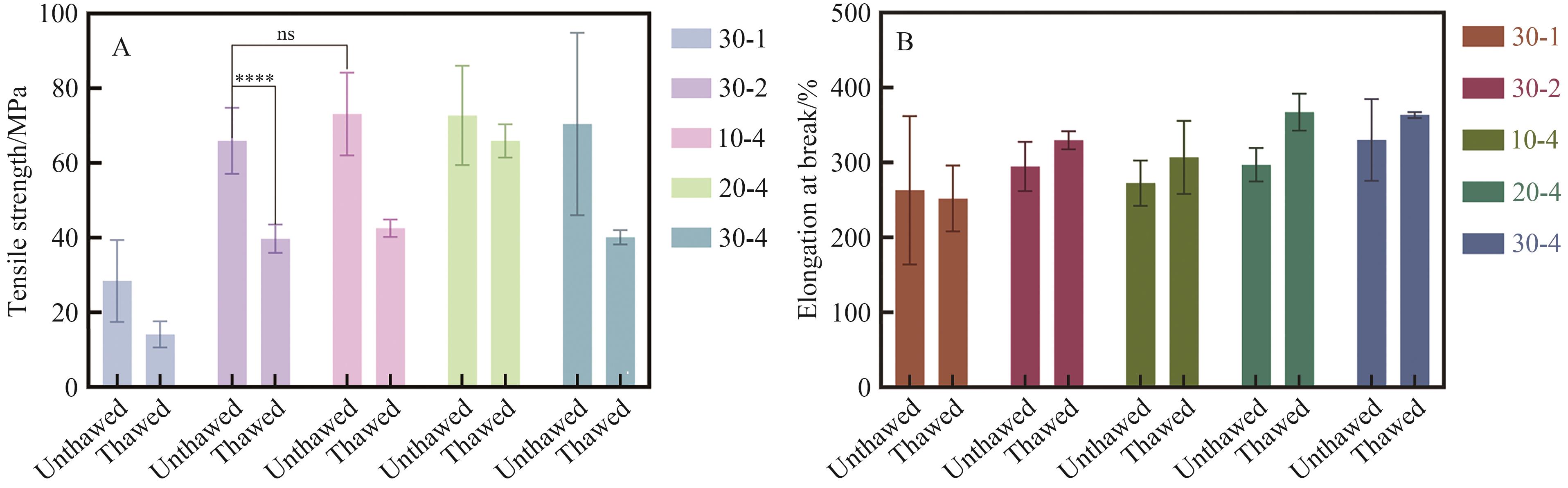
图1 (A)不同组别水凝胶的拉伸强度; (B)不同组别水凝胶的断裂伸长率
Fig.1 (A) Tensile strength at break of different groups of hydrogels; (B) Elongation at break of different groups of hydrogels
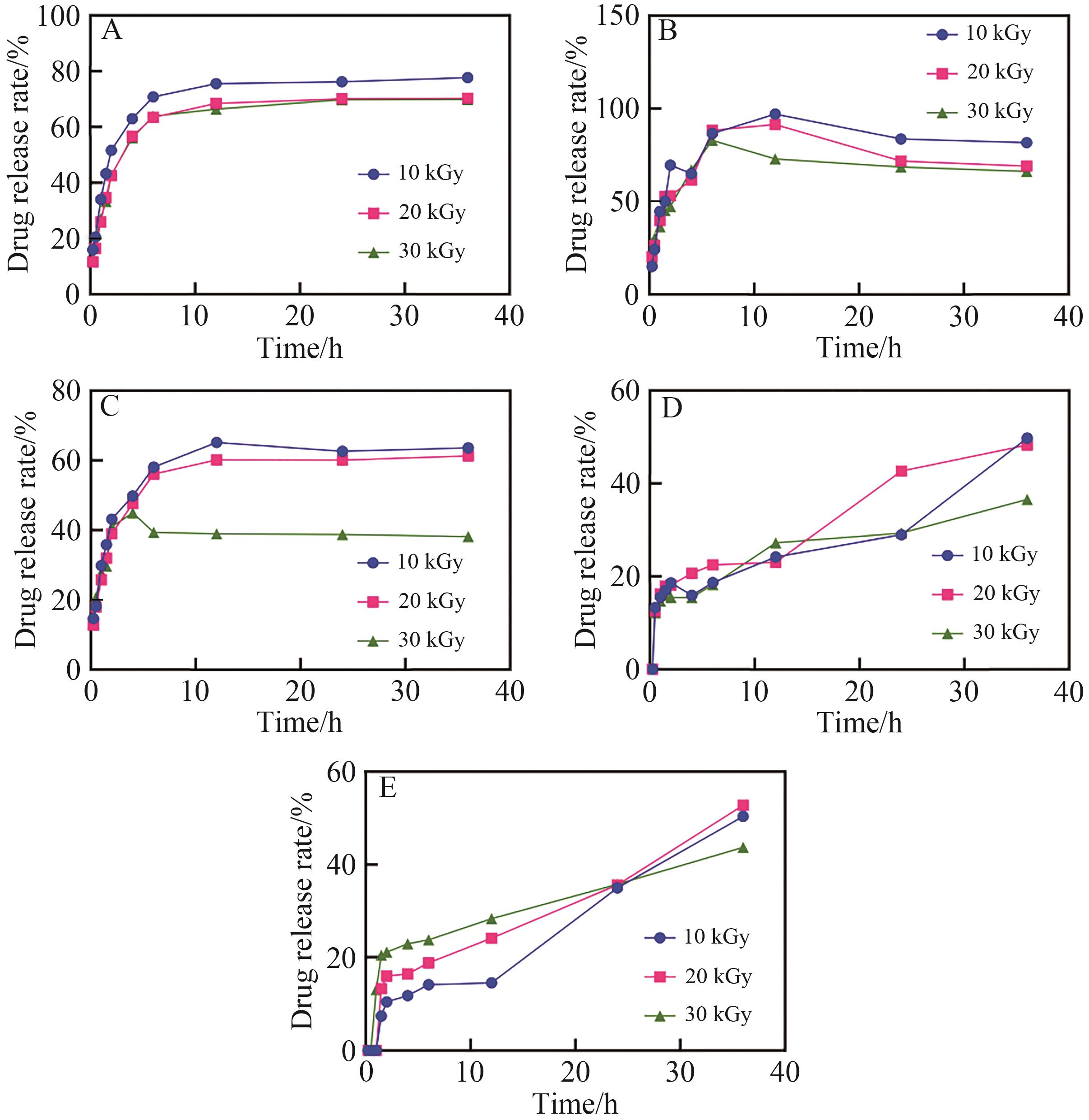
图2 不同辐照剂量下水凝胶中主要成分在PBS中的释放
Fig.2 Release of hydrogel with different “Shangkehuangshui” content in PBS under different radiation dose
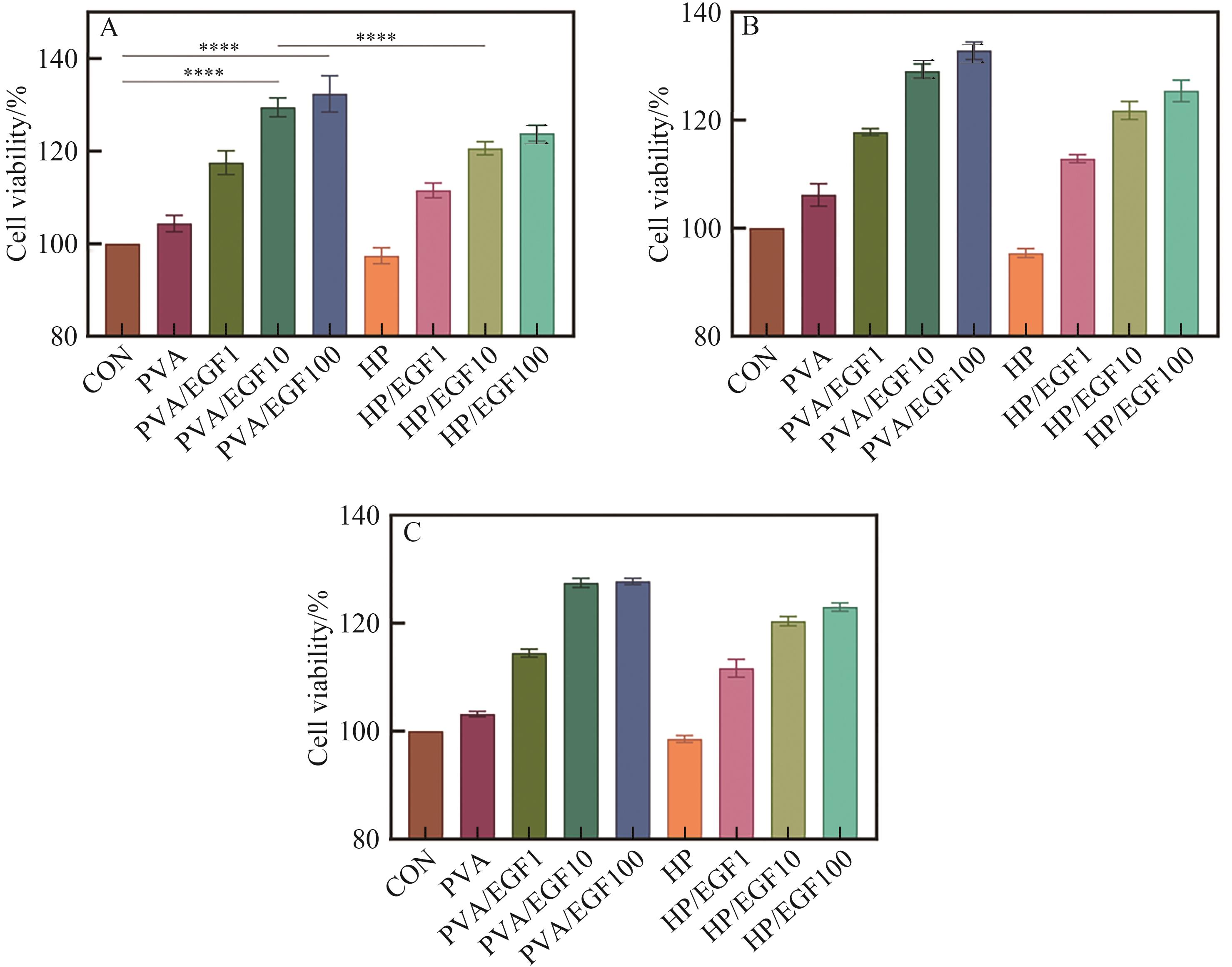
图3 1(A)、3(B)和7 d(C)后水凝胶中不同组分对于细胞活性的影响
Fig.3 Influence of different components in hydrogels on cell activity(A.1 d; B.3 d; C.7 d)
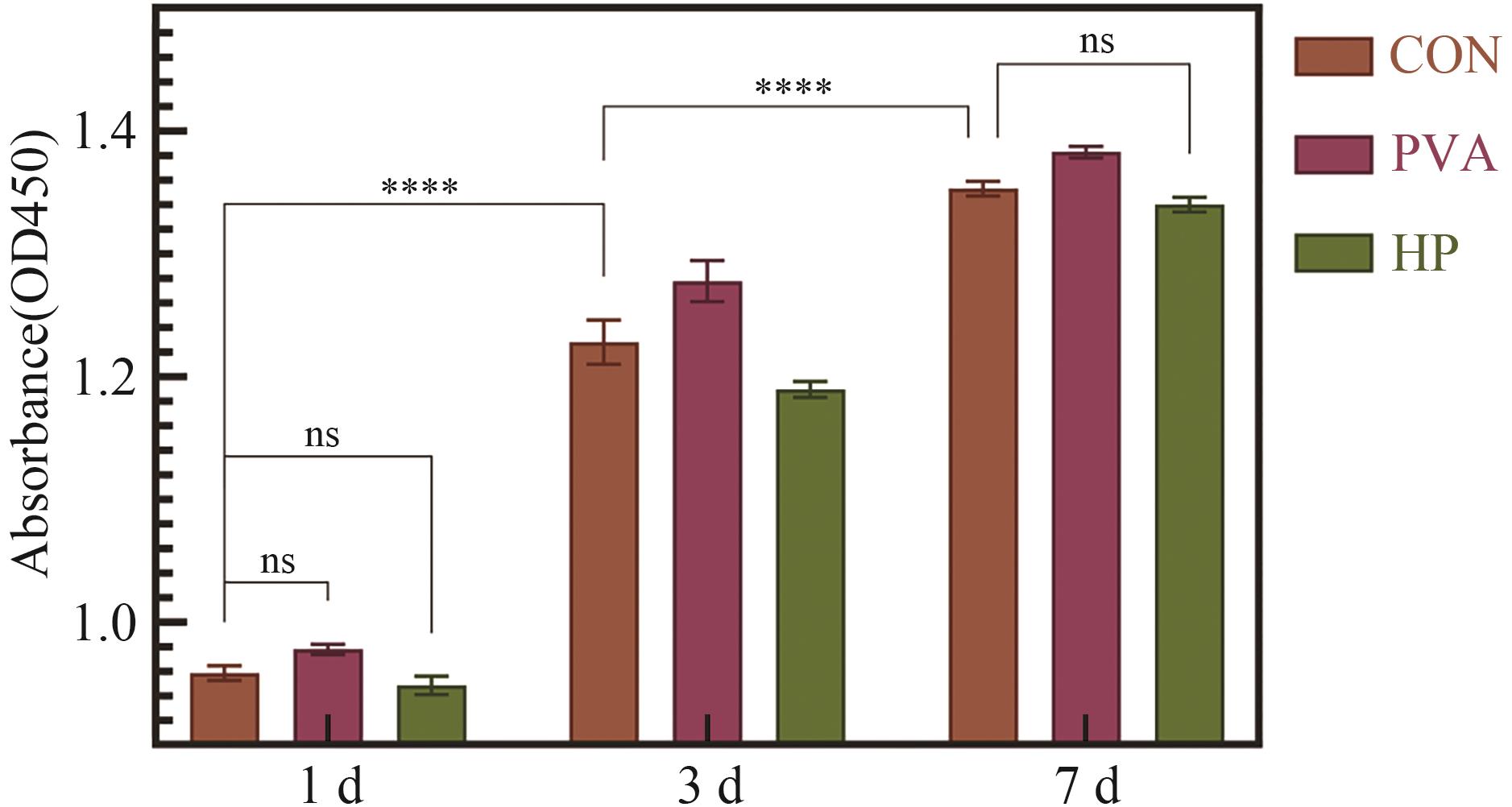
图4 水凝胶中PVA和“伤科黄水”对于细胞活性的影响(1、3和7 d)
Fig.4 Effect of PVA and “Shangkehuangshui” on cell activity in hydrogels (1, 3 and 7 d)
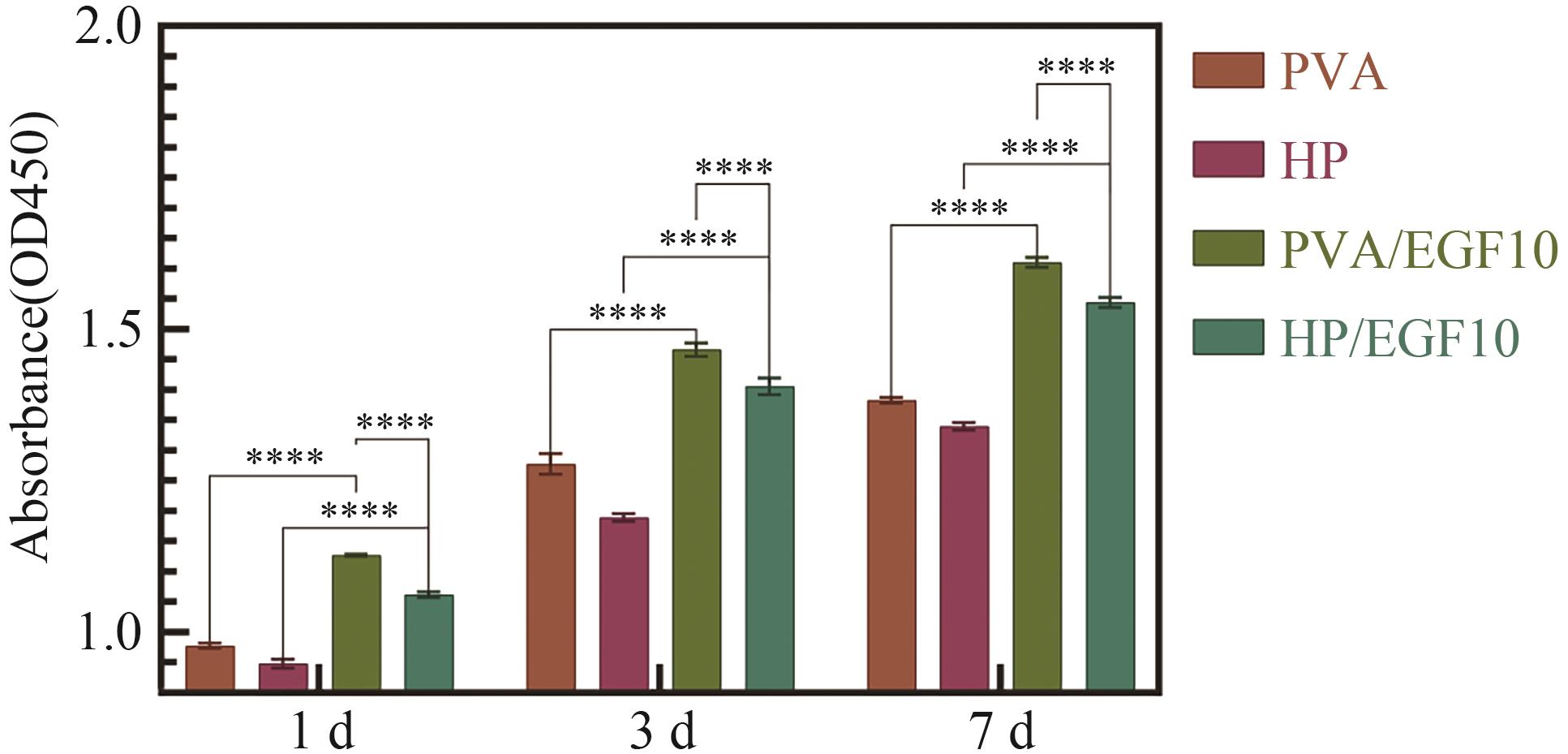
图5 水凝胶中加入EGF生长因子对于细胞活性的影响(1、3和7 d)
Fig.5 The effect of EGF growth factor on cell viability in hydrogels (1, 3 and 7 d)
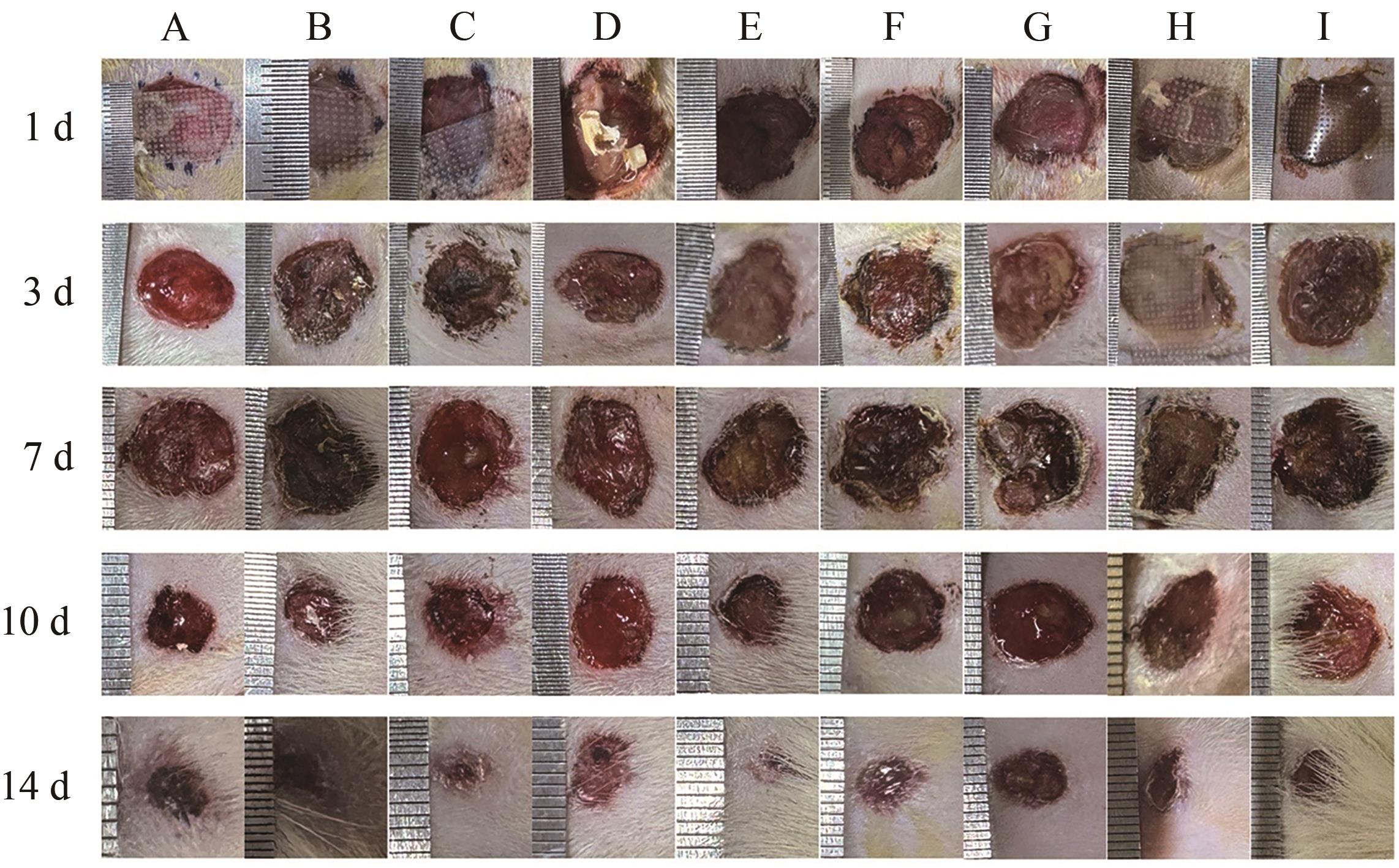
图6 不同条件下大鼠伤口1、3、7、10和14 d愈合情况A.CON; B.PVA; C.PVA/EGF1; D.PVA/EGF10; E.PVA/EGF100; F.HP; G.HP/EGF10; H.HP/EGF10; I.HP/EGF100
Fig.6 Healing status of rat wounds in 1, 3, 7, 10 and 14 d under different conditions
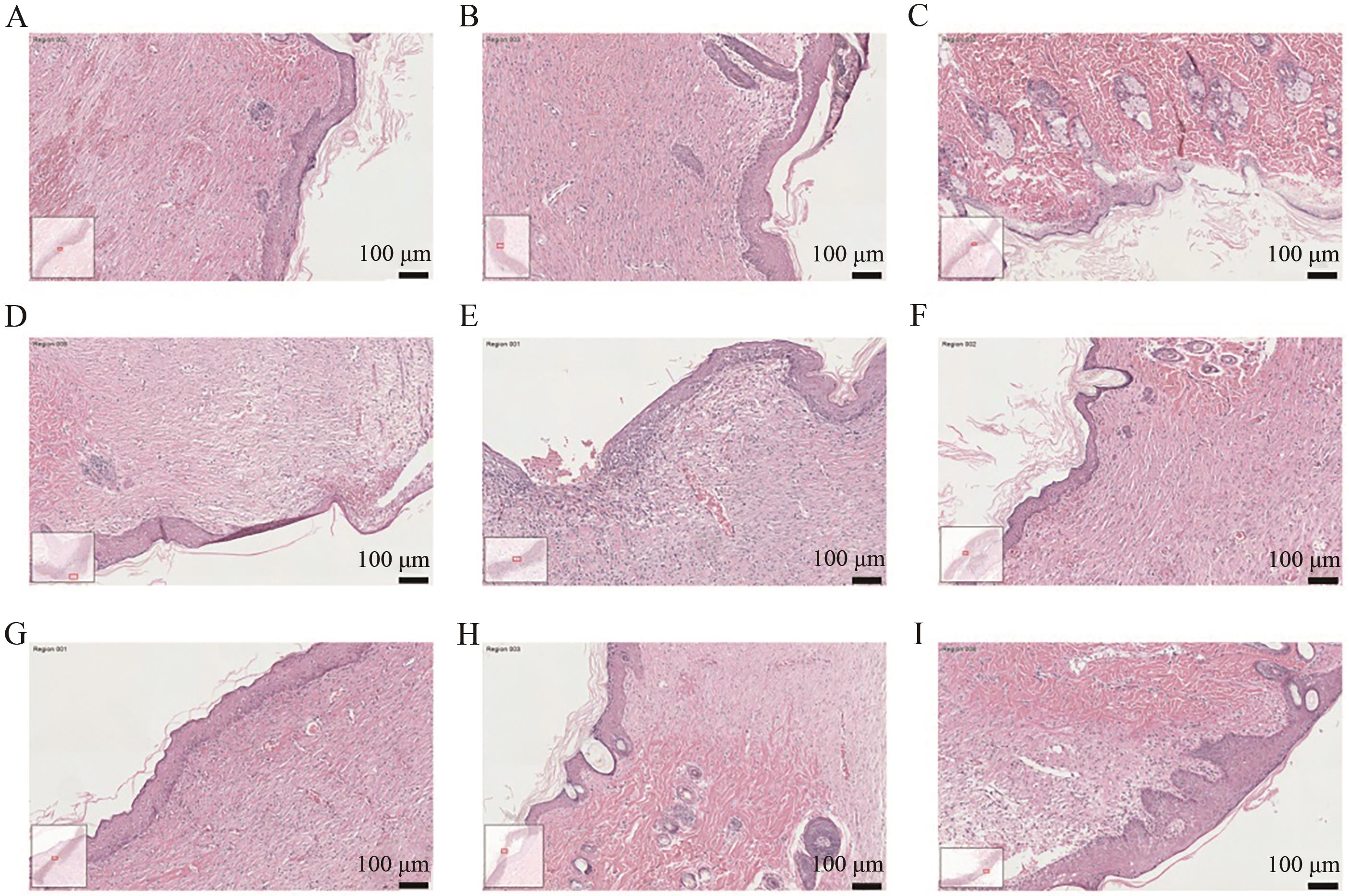
图7 不同材料下14 d大鼠伤口组织切片染色(H&E)A.CON; B.PVA; C.PVA/EGF1; D.PVA/EGF10; E.PVA/EGF100; F.HP; G.HP/EGF1; H.HP/EGF10; I.HP/EGF100
Fig.7 H&E staining of wound margin on 14 d
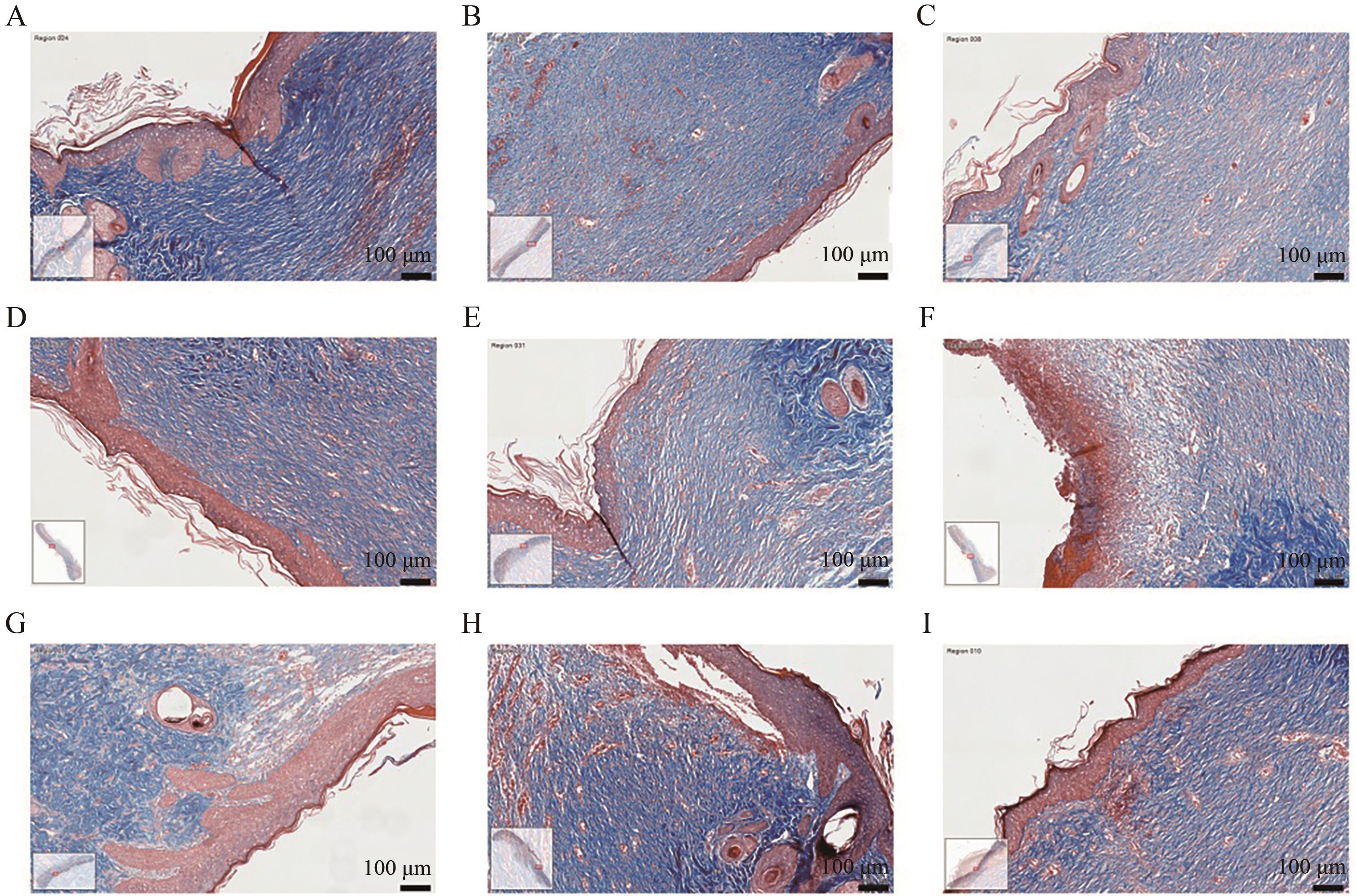
图8 不同材料下14 d大鼠伤口组织切片染色(Masson)A.CON; B.PVA; C.PVA/EGF1; D.PVA/EGF10; E.PVA/EGF100; F.HP; G.HP/EGF1; H.HP/EGF10; I.HP/EGF100
Fig.8 Staining of 14 d rat wound tissue slices under different materials (Masson)
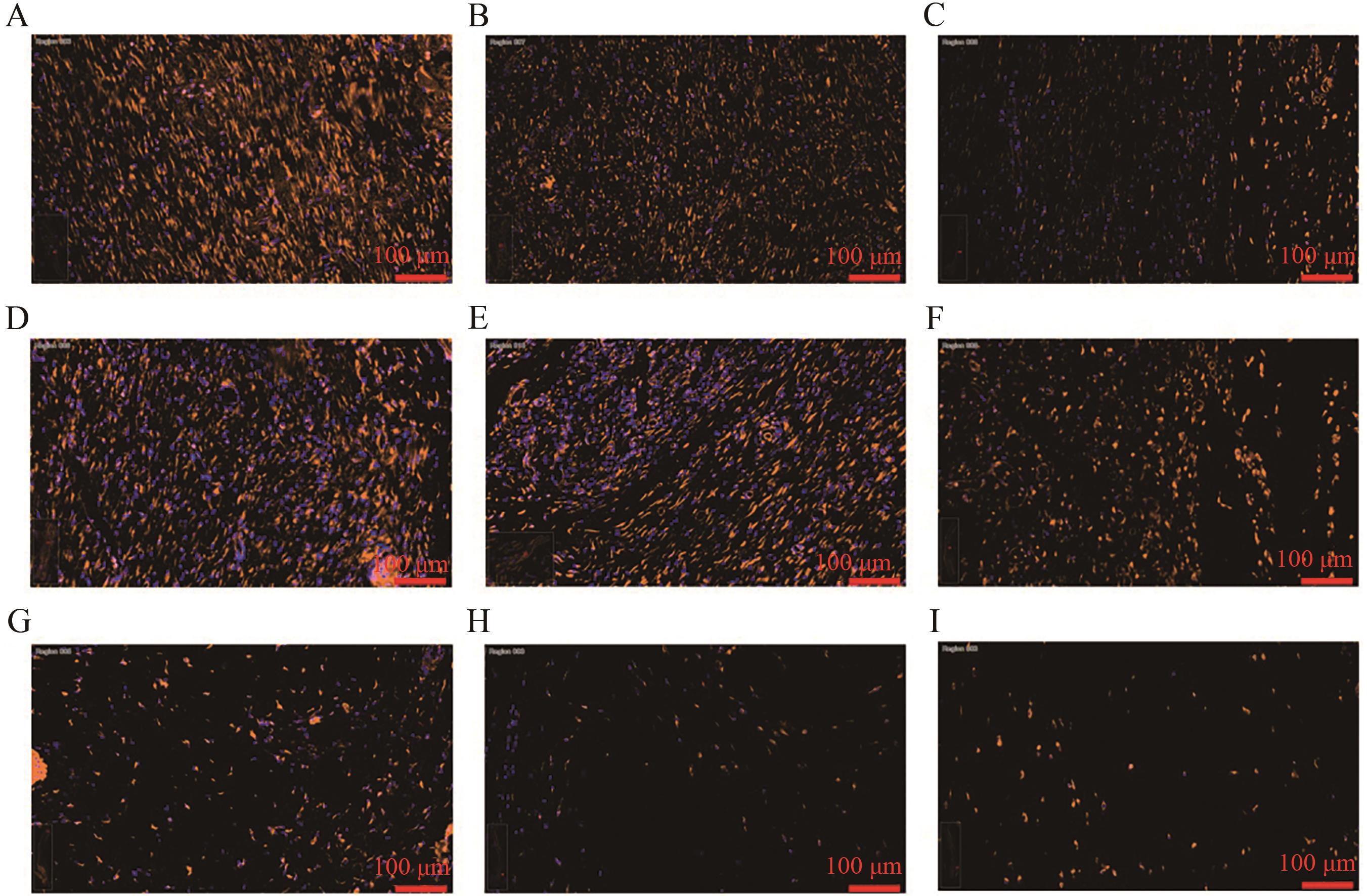
图9 伤口组织的免疫荧光染色分析A.CON; B.PVA; C.PVA/EGF1; D.PVA/EGF10; E.PVA/EGF100; F.HP; G.HP/EGF1; H.HP/EGF10; I.HP/EGF100
Fig.9 Immunofluorescence staining analysis of wound tissue
| MOD | PVA | PVA/EGF1 | PVA/EGF10 | PVA/EGF100 | HP/EGF | HP/EGF1 | HP/EGF10 | HP/EGF100 | |
|---|---|---|---|---|---|---|---|---|---|
| 10-9·L·WBC | 12.8 | 6.6 | 16.1 | 13.3 | 6.3 | 7.7 | 7.4 | 8.3 | 10.4 |
| 10-9·L·LYM | 11.1 | 4.8 | 13.0 | 9.6 | 5.0 | 6.4 | 6.0 | 6.2 | 8.5 |
| 10-9·L·MO | 0.3 | 0.2 | 0.3 | 0.5 | 0.2 | 0.1 | 0.1 | 0.3 | 0.2 |
| 10-9·L·GRAN | 1.4 | 1.6 | 2.8 | 3.2 | 1.1 | 1.2 | 1.3 | 1.8 | 1.7 |
| LYM/% | 86.6 | 73.0 | 80.5 | 72.4 | 79.1 | 82.4 | 80.1 | 74.3 | 81.4 |
| MO/% | 2.7 | 3.2 | 2.1 | 3.9 | 2.8 | 1.9 | 2.0 | 3.5 | 2.0 |
| GRAN/% | 10.7 | 23.8 | 17.4 | 23.7 | 18.1 | 15.7 | 17.9 | 22.2 | 16.6 |
| 10-12·L·RBC | 5.66 | 6.61 | 4.98 | 4.13 | 4.99 | 6.27 | 5.52 | 6.09 | 5.81 |
| HGB/(g?L-1) | 124 | 146 | 139 | 89 | 104 | 129 | 120 | 121 | 119 |
| HCT/% | 32.9 | 38.5 | 30.6 | 26.0 | 27.9 | 34.6 | 32.5 | 32.3 | 32.7 |
| MCV/fL | 58.3 | 58.3 | 61.6 | 63.1 | 56.0 | 55.3 | 59.0 | 53.1 | 56.4 |
| MCH/pg | 21.9 | 22.0 | 27.9 | 21.5 | 20.8 | 20.5 | 21.7 | 19.8 | 20.4 |
| MCHC/(g?L-1) | 376 | 379 | 454 | 342 | 372 | 372 | 369 | 374 | 363 |
| RDW/% | 12.1 | 12.5 | 16.1 | 14.3 | 12.4 | 12.6 | 12.2 | 12.5 | 11.7 |
| 10-9·L·PLT | 1184 | 439 | 740 | 906 | 534 | 791 | 584 | 823 | 694 |
| MPV/fL | 6.2 | 7.4 | 6.3 | 7.8 | 7.8 | 6.9 | 6.7 | 7.0 | 6.2 |
| PDW | 16.6 | 17.3 | 17.3 | 17.4 | 17.6 | 16.6 | 17.0 | 17.0 | 16.6 |
| PCT/% | 0.32 | 0.324 | 0.001 | 0.001 | 0.416 | 0.545 | 0.391 | 0.576 | 0.430 |
表1 不同组别皮肤创伤大鼠的血常规
Table 1 Routine blood count of mice with skin trauma in different groups
| MOD | PVA | PVA/EGF1 | PVA/EGF10 | PVA/EGF100 | HP/EGF | HP/EGF1 | HP/EGF10 | HP/EGF100 | |
|---|---|---|---|---|---|---|---|---|---|
| 10-9·L·WBC | 12.8 | 6.6 | 16.1 | 13.3 | 6.3 | 7.7 | 7.4 | 8.3 | 10.4 |
| 10-9·L·LYM | 11.1 | 4.8 | 13.0 | 9.6 | 5.0 | 6.4 | 6.0 | 6.2 | 8.5 |
| 10-9·L·MO | 0.3 | 0.2 | 0.3 | 0.5 | 0.2 | 0.1 | 0.1 | 0.3 | 0.2 |
| 10-9·L·GRAN | 1.4 | 1.6 | 2.8 | 3.2 | 1.1 | 1.2 | 1.3 | 1.8 | 1.7 |
| LYM/% | 86.6 | 73.0 | 80.5 | 72.4 | 79.1 | 82.4 | 80.1 | 74.3 | 81.4 |
| MO/% | 2.7 | 3.2 | 2.1 | 3.9 | 2.8 | 1.9 | 2.0 | 3.5 | 2.0 |
| GRAN/% | 10.7 | 23.8 | 17.4 | 23.7 | 18.1 | 15.7 | 17.9 | 22.2 | 16.6 |
| 10-12·L·RBC | 5.66 | 6.61 | 4.98 | 4.13 | 4.99 | 6.27 | 5.52 | 6.09 | 5.81 |
| HGB/(g?L-1) | 124 | 146 | 139 | 89 | 104 | 129 | 120 | 121 | 119 |
| HCT/% | 32.9 | 38.5 | 30.6 | 26.0 | 27.9 | 34.6 | 32.5 | 32.3 | 32.7 |
| MCV/fL | 58.3 | 58.3 | 61.6 | 63.1 | 56.0 | 55.3 | 59.0 | 53.1 | 56.4 |
| MCH/pg | 21.9 | 22.0 | 27.9 | 21.5 | 20.8 | 20.5 | 21.7 | 19.8 | 20.4 |
| MCHC/(g?L-1) | 376 | 379 | 454 | 342 | 372 | 372 | 369 | 374 | 363 |
| RDW/% | 12.1 | 12.5 | 16.1 | 14.3 | 12.4 | 12.6 | 12.2 | 12.5 | 11.7 |
| 10-9·L·PLT | 1184 | 439 | 740 | 906 | 534 | 791 | 584 | 823 | 694 |
| MPV/fL | 6.2 | 7.4 | 6.3 | 7.8 | 7.8 | 6.9 | 6.7 | 7.0 | 6.2 |
| PDW | 16.6 | 17.3 | 17.3 | 17.4 | 17.6 | 16.6 | 17.0 | 17.0 | 16.6 |
| PCT/% | 0.32 | 0.324 | 0.001 | 0.001 | 0.416 | 0.545 | 0.391 | 0.576 | 0.430 |
| Blood parameter | 10-12 RBC/L | 10-9 PLT/L | 10-9 WBC/L | LYM/% | MO/% |
|---|---|---|---|---|---|
| Reference range | 6.36~9.42 | 592~2972 | 1.8~10.7 | 55.8~91.6 | 6.6~38.9 |
表2 正常大鼠的血液指标参考范围
Table 2 Reference range of blood parameters in normal mice
| Blood parameter | 10-12 RBC/L | 10-9 PLT/L | 10-9 WBC/L | LYM/% | MO/% |
|---|---|---|---|---|---|
| Reference range | 6.36~9.42 | 592~2972 | 1.8~10.7 | 55.8~91.6 | 6.6~38.9 |
| MOD | PVA | PVA/EGF1 | PVA/EGF10 | PVA/EGF100 | HP/EGF | HP/EGF1 | HP/EGF10 | HP/EGF100 | |
|---|---|---|---|---|---|---|---|---|---|
| UREA/(mol?L-1) | 2.728 | 7.581 | 5.774 | 8.920 | 6.806 | 6.491 | 6.258 | 6.297 | 8.126 |
| CREA/(μmol?L-1) | 19.776 | 48.790 | 35.739 | 35.194 | 48.265 | 41.917 | 38.441 | 41.370 | 36.679 |
| UA/(μmol?L-1) | 72.830 | 42.397 | 105.011 | 60.451 | 72.492 | 51.843 | 42.836 | 66.561 | 64.561 |
| AST/(U?L-1) | 75.756 | 97.828 | 72.874 | 73.987 | 111.194 | 99.854 | 98.395 | 119.196 | 70.174 |
| ALT/(U?L-1) | 14.452 | 22.385 | 26.184 | 34.680 | 39.945 | 33.075 | 31.484 | 35.652 | 32.171 |
| ALP/(U?L-1) | 45.145 | 148.724 | 98.412 | 149.387 | 116.321 | 132.186 | 137.857 | 146.472 | 163.149 |
| TBA/(μmol?L-1) | 24.806 | 23.440 | 9.656 | 14.849 | 11.812 | 15.310 | 33.232 | 17.144 | 174.140 |
| ALB/(U?L-1) | 14.946 | 30.967 | 30.856 | 25.255 | 27.999 | 29.573 | 30.700 | 31.072 | 27.772 |
| γ-GT/(U?L-1) | 3.153 | 0.090 | 0.758 | 0.881 | 6.191 | 1.022 | 2.889 | 2.532 | 5.901 |
| TBIL/(μmol?L-1) | 18.377 | 9.836 | 12.194 | 10.784 | 9.527 | 12.395 | 10.637 | 7.307 | 3.299 |
| DBIL/(μmol?L-1) | 11.913 | 2.313 | 5.328 | 1.538 | 3.033 | 4.015 | 2.989 | 2.575 | 1.418 |
表3 不同组别皮肤创伤大鼠的肝肾功能
Table 3 Liver and kidney function in different groups of mice with skin trauma
| MOD | PVA | PVA/EGF1 | PVA/EGF10 | PVA/EGF100 | HP/EGF | HP/EGF1 | HP/EGF10 | HP/EGF100 | |
|---|---|---|---|---|---|---|---|---|---|
| UREA/(mol?L-1) | 2.728 | 7.581 | 5.774 | 8.920 | 6.806 | 6.491 | 6.258 | 6.297 | 8.126 |
| CREA/(μmol?L-1) | 19.776 | 48.790 | 35.739 | 35.194 | 48.265 | 41.917 | 38.441 | 41.370 | 36.679 |
| UA/(μmol?L-1) | 72.830 | 42.397 | 105.011 | 60.451 | 72.492 | 51.843 | 42.836 | 66.561 | 64.561 |
| AST/(U?L-1) | 75.756 | 97.828 | 72.874 | 73.987 | 111.194 | 99.854 | 98.395 | 119.196 | 70.174 |
| ALT/(U?L-1) | 14.452 | 22.385 | 26.184 | 34.680 | 39.945 | 33.075 | 31.484 | 35.652 | 32.171 |
| ALP/(U?L-1) | 45.145 | 148.724 | 98.412 | 149.387 | 116.321 | 132.186 | 137.857 | 146.472 | 163.149 |
| TBA/(μmol?L-1) | 24.806 | 23.440 | 9.656 | 14.849 | 11.812 | 15.310 | 33.232 | 17.144 | 174.140 |
| ALB/(U?L-1) | 14.946 | 30.967 | 30.856 | 25.255 | 27.999 | 29.573 | 30.700 | 31.072 | 27.772 |
| γ-GT/(U?L-1) | 3.153 | 0.090 | 0.758 | 0.881 | 6.191 | 1.022 | 2.889 | 2.532 | 5.901 |
| TBIL/(μmol?L-1) | 18.377 | 9.836 | 12.194 | 10.784 | 9.527 | 12.395 | 10.637 | 7.307 | 3.299 |
| DBIL/(μmol?L-1) | 11.913 | 2.313 | 5.328 | 1.538 | 3.033 | 4.015 | 2.989 | 2.575 | 1.418 |
| [1] | GU X. Biodegradable materials and the tissue engineering of nerves[J]. Engineering, 2021, 7(12): 1700-1703. |
| [2] | GAO J, YU X, WANG X, et al. Biomaterial-related cell microenvironment in tissue engineering and regenerative medicine[J]. Engineering, 2022, 13: 31-45. |
| [3] | DAS R, CURRY E J, LE T T, et al. Biodegradable nanofiber bone-tissue scaffold as remotely-controlled and self-powering electrical stimulator[J]. Nano Energy, 2020, 76: 105028. |
| [4] | ASIRI A, AL-ASHWAL R H, SALLEH A, et al. Effect of electrospun epidermal and fibroblast growth factors/polyvinyl alcohol nanofibers on full-thickness burn model; proceedings of the 6th International Conference on Biomedical Engineering, Malaysia, F Sep 04-05, 2023[C]. 2025, 115: 486-493. |
| [5] | PARANGUSAN K, SUBRAMANIAM V, BABU A, et al. Biocompatible neem gum-modified polyvinyl alcohol composite as dielectric material for flexible energy devices[J]. Heliyon, 2024, 10(7): e28379. |
| [6] | SASMAZEL H T, ALAZZAWI M, SADHU V, et al. Biocompatibility of electrospun PVA-based nanocomposite with chemical vapor deposition-derived graphene monolayer[J]. Polimery, 2024, 69(7/8): 657-667. |
| [7] | FATHOLLAHIPOUR S, KOOSHA M, TAVAKOLI J, et al. Erythromycin releasing PVA/sucrose and PVA/honey hydrogels as wound dressings with antibacterial activity and enhanced bio-adhesion[J]. Iranian J Pharm Res, 2020, 19(1): 448-464. |
| [8] | ULLAH F, OTHMAN M B H, JAVED F, et al. Classification, processing and application of hydrogels: a review[J]. Mater Sci Eng C-Mater Biol Appl, 2015, 57: 414-433. |
| [9] | BEHM B, BABILAS P, LANDTHALER M, et al. Cytokines, chemokines and growth factors in wound healing[J]. J Europ Academy Dermatol Venereol, 2012, 26(7): 812-820. |
| [10] | ROUSSELLE P, MONTMASSON M, GARNIER C. Extracellular matrix contribution to skin wound re-epithelialization[J]. Matrix Biol, 2019, 75/76: 12-26. |
| [11] | YILMAZ H, TUBA B, GUNDUZ O, et al. Producing biomimetic-biofunctional scaffold by adding antibiotics to gelatin methacrylate, producing layer, preparing solution of polyvinyl alcohol and epidermal growth factor biosignaling molecule, immobilizing, preparing polycaprolactone and collagen solution and forming membrane, WO2024136818-A2; WO2024136818-A3 [P/OL]. |
| [12] | HU H, XU F J. Rational design and latest advances of polysaccharide-based hydrogels for wound healing[J]. Biomater Sci, 2020, 8(8): 2084-2101. |
| [13] | LI Z, HUANG X, LIN L, et al. Polyphenol and Cu2+ surface-modified chitin sponge synergizes with antibacterial, antioxidant and pro-vascularization activities for effective scarless regeneration of burned skin[J]. Chem Eng J, 2021, 419: 129488. |
| [14] | PRASAD C, OH S H, MIN D J, et al. Nanoporous and biocompatible TEMPO-oxidized cellulose nanofibrils/sodium alginate/polyvinyl alcohol (CNF/SA/PVA) aerogel with potential applications in hydrophobic organic contaminants removal and cytotoxicity tests[J]. Mater Sci Eng B-Adv Funct Solid-State Mater, 2025, 322: 13. |
| [15] | LI B G, MA Q, LI J L, et al. Regulating hydrogen bonds within multi-crosslinking hydrogel electrolytes for improved water retention and frost resistance[J]. J Power Sources, 2025, 653: 8. |
| [16] | IQBAL N, KHAN A S, ASIF A, et al. Recent concepts in biodegradable polymers for tissue engineering paradigms: a critical review[J]. Int Mater Rev, 2019, 64(2): 91-126. |
| [17] | CHYZY A, PLONSKA-BRZEZINSKA M E. Hydrogel properties and their impact on regenerative medicine and tissue engineering[J]. Molecules, 2020, 25(24) :5795. |
| [18] | DAS R, CURRY E J, LE T T, et al. Biodegradable nanofiber bone-tissue scaffold as remotely-controlled and self-powering electrical stimulator[J]. Nano Energy, 2020, 76: 105028. |
| [19] | 雷凯君, 强润润, 李怀国, 等. 伤科黄水/聚乙烯醇静电纺丝纳米纤维创面敷料的制备及其性能[J]. 应用化学, 2023, 40(11): 1539-1549. |
| LEI K J, QIANG R R, LI H G, et al. Preparation and characterization of Shangkehuangshui/polyvinyl alcohol electrospinning nanofiber membranes as wound dressing[J]. Chin J Appl Chem, 2023, 40(11): 1539-1549. | |
| [20] | DENG Y, YANG C, ZHU Y, et al. Lamprey-teeth-inspired oriented antibacterial sericin microneedles for infected wound healing improvement[J]. Nano Lett, 2022, 22(7): 2702-2711. |
| [21] | ZHANG X, YAO D, ZHAO W, et al. Engineering platelet-rich plasma based dual-network hydrogel as a bioactive wound dressing with potential clinical translational value[J]. Adv Funct Mater, 2021, 31(8): 2009258. |
| [22] | YAO S, CHI J, WANG Y, et al. Zn-MOF encapsulated antibacterial and degradable microneedles array for promoting wound healing[J]. Adv Healthcare Mater, 2021, 10(12): 2100056. |
| [23] | WANG C, WANG M, XU T, et al. Engineering bioactive self-healing antibacterial exosomes hydrogel for promoting chronic diabetic wound healing and complete skin regeneration[J]. Theranostics, 2021, 11(20): 10174-10175. |
| [24] | LUO M, WANG M, NIU W, et al. Injectable self-healing anti-inflammatory europium oxide-based dressing with high angiogenesis for improving wound healing and skin regeneration[J]. Chem Eng J, 2021, 412: 128471. |
| [25] | HU H, SHENG Q, YANG F, et al. Enhanced skin wound healing through chemically modified messenger RNA encoding epidermal growth factor (EGF)[J]. Int Wound J, 2025, 22(5): e70143. |
| [1] | 吉汪尧, 菅晓霞, 韩佩瑶, 张翔. 聚(3,4-亚乙二氧基噻吩)-聚(苯乙烯磺酸)/聚乙烯醇半互穿网络聚合物的制备及其性能[J]. 应用化学, 2025, 42(11): 1479-1490. |
| [2] | 徐守萍, 曾丽花, 皮丕辉, 文秀芳, 程江. 综合型高分子化学实验设计:亲水海绵擦的制备[J]. 应用化学, 2025, 42(1): 117-123. |
| [3] | 王昊, 王熙宇, 熊英, 崔俊硕. 萘基反应型石墨烯分散剂及其在增强聚乙烯醇复合薄膜中的应用[J]. 应用化学, 2024, 41(12): 1712-1720. |
| [4] | 颜丽娟, 高添贺, 施冬健, 陈明清. 丁香酚/改性聚乙烯醇抗菌复合膜的制备与性能[J]. 应用化学, 2023, 40(4): 527-535. |
| [5] | 雷凯君, 强润润, 李怀国, 郑芳昊, 焦自学, 王宗良, 王宇, 何明丰, 章培标. 伤科黄水/聚乙烯醇静电纺丝纳米纤维创面敷料的制备及其性能[J]. 应用化学, 2023, 40(11): 1539-1549. |
| [6] | 林渊, 陈嘉炼, 李红周. 单宁酸/聚乙烯醇的阻燃性能[J]. 应用化学, 2023, 40(1): 69-78. |
| [7] | 陈炳刚, 刘三荣, 蒋子江, 于喜飞. 水性聚硅氧烷和聚乙烯醇复合物制备及其作为皮肤屏障材料的性能[J]. 应用化学, 2022, 39(8): 1224-1236. |
| [8] | 张守村, 皮茂. 单体对聚乙烯醇乳化行为的影响及大孔材料的制备[J]. 应用化学, 2021, 38(1): 77-83. |
| [9] | 黄刚, 张宏伟, 张欢欢, 石彤非, 许东华. 氧化石墨烯对聚乙烯醇/硼酸水凝胶流变性能的影响[J]. 应用化学, 2018, 35(7): 767-775. |
| [10] | 孙琪, 王丽秋, 刘洋, 郭晨晓, 王鹏君, 刘学龙, 张晓博, 郑立辉, 刘丽萍. 近红外聚乙烯醇荧光高分子材料的制备及性能[J]. 应用化学, 2018, 35(1): 53-59. |
| [11] | 关晓琳, 贾天明, 秦雨欣, 张东海, 张扬, 范红婷, 魏强兵, 来守军. 低温水相合成巯基化聚乙烯醇/CdS量子点纳米复合物及用于测定环境水样中痕量Cu2+[J]. 应用化学, 2017, 34(3): 291-299. |
| [12] | 刘艳, 俞丹, 李维亚, 高翠翠, 王炜. 壳聚糖/聚乙烯醇共混膜在织物化学镀中的应用[J]. 应用化学, 2015, 32(2): 200-206. |
| [13] | 邓新旺, 胡惠媛, 罗仲宽, 吴茂盛, 周莉. 肝素钠/聚乙烯醇复合水凝胶的制备与性能[J]. 应用化学, 2015, 32(12): 1358-1363. |
| [14] | 范志恒, 周莉, 欧阳君君, 罗仲宽, 李妙妙. 化学-物理法制备聚乙烯醇/壳聚糖/纳米羟基磷灰石复合水凝胶及其性能[J]. 应用化学, 2014, 31(01): 61-64. |
| [15] | 欧阳君君, 周莉. 多孔β-磷酸三钙/壳聚糖/聚乙烯醇复合水凝胶的制备与性能[J]. 应用化学, 2012, 29(09): 995-999. |
| 阅读次数 | ||||||
|
全文 |
|
|||||
|
摘要 |
|
|||||
