
Chinese Journal of Applied Chemistry ›› 2025, Vol. 42 ›› Issue (7): 993-1001.DOI: 10.19894/j.issn.1000-0518.240237
• Chemistry Teaching and Experiment Innovation • Previous Articles Next Articles
Peng WANG1, Jian LIN1, Lin-Kai WU1, Wan-Yu BAI1, Ya-Fei XIN1, Xia CHEN1,2( )
)
Received:2024-07-29
Accepted:2025-04-04
Published:2025-07-01
Online:2025-07-23
Contact:
Xia CHEN
About author:chenxia@sxu.edu.cnSupported by:CLC Number:
Peng WANG, Jian LIN, Lin-Kai WU, Wan-Yu BAI, Ya-Fei XIN, Xia CHEN. Synthesis of 2-(3-Methyl-2-pyrazinyl)-1-phenylacetopheno: Recommending a Scientific Training Experiment[J]. Chinese Journal of Applied Chemistry, 2025, 42(7): 993-1001.
Add to citation manager EndNote|Ris|BibTeX
URL: http://yyhx.ciac.jl.cn/EN/10.19894/j.issn.1000-0518.240237

Fig.1 Schematic diagram of the synthesis route of compounds Ⅰ-Ⅳ
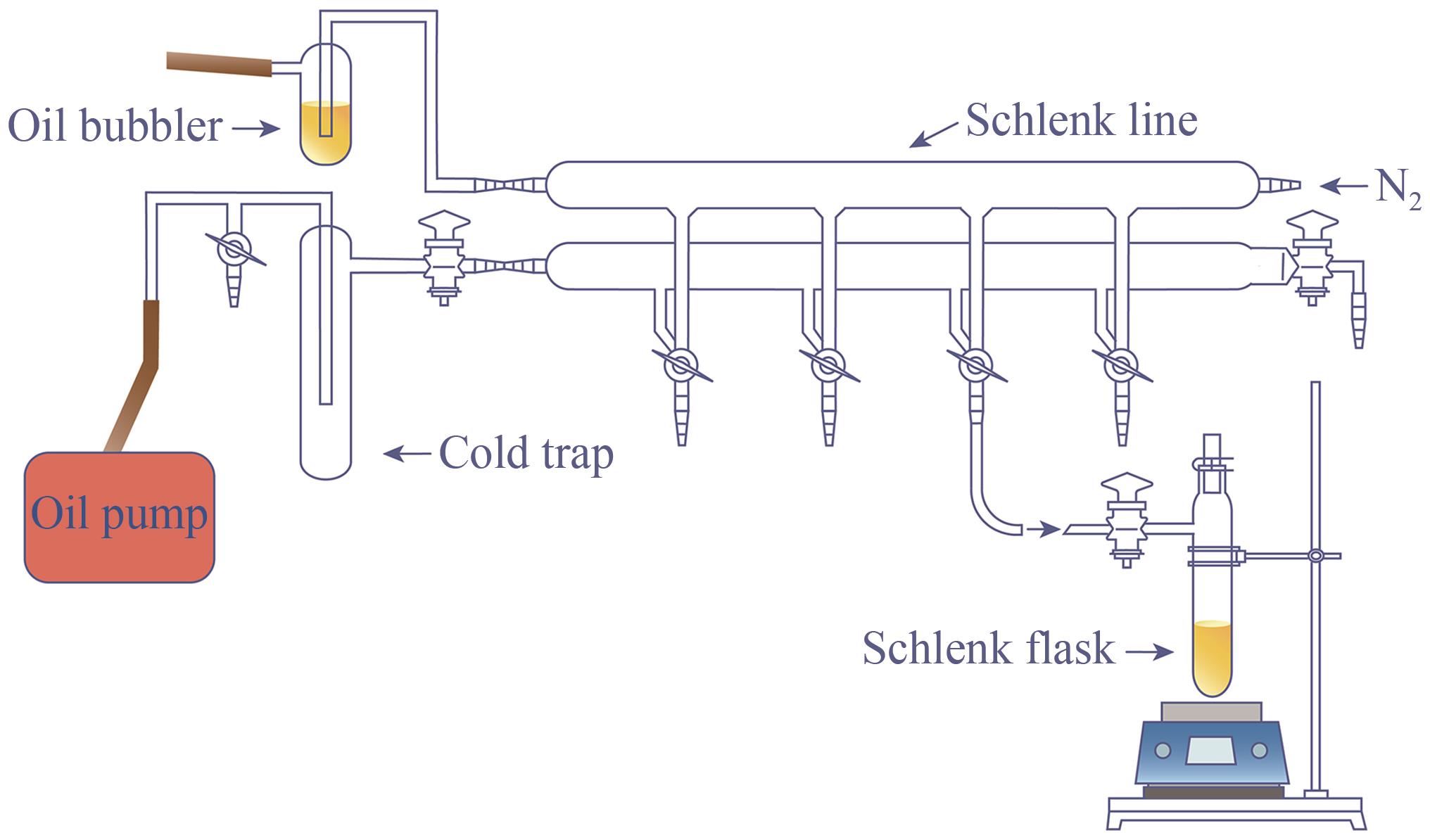
Fig.2 Schematic diagram of the Schlenk apparatus

Fig.3 1H NMR spectrum of compound IV (CDCl3, 25 ℃, 600 MHz)
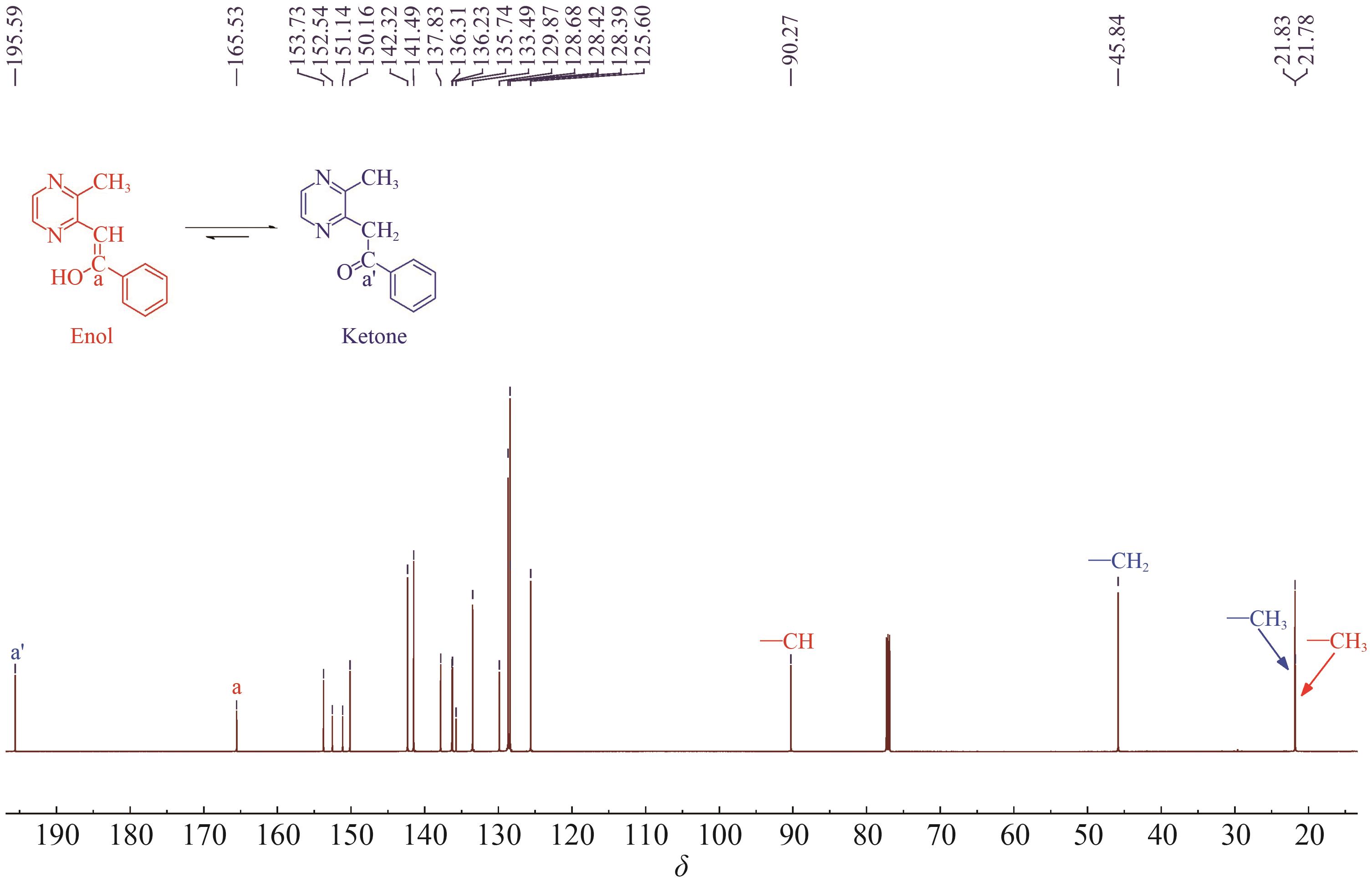
Fig.4 13C NMR spectrum of compound IV (CDCl3, 25 ℃, 151 MHz)

Fig.5 Schematic diagram of the reaction mechanism of compound Ⅲ

Fig.6 Process diagram from raw materials to compound Ⅳ (product)
| 训练内容及课时安排 | 总学时数/h | |
|---|---|---|
| 教师讲授 | 1. 金属配合物在合成内酯聚合物中的应用,本次科研训练的涉及到的有机反应类型,如:亲核取代、亲核加成、1,3-硅基迁移机理、双键的重排等内容(1.0 h) | 2 |
| 2. 无水无氧操作流程讲解及演示(0.5 h) | ||
| 3. 减压蒸馏操作流程讲解及演示、溶剂处理、产物提纯的方法(过柱、重结晶)等(0.5 h) | ||
| 学生实操 | 1. 化合物Ⅰ[2-甲基-3-(三甲基硅基)甲基吡嗪]的合成: 2,3-二甲基吡嗪与TMEDA和 n BuLi进行取代反应(1 h),锂盐与三甲基氯硅烷进行取代反应(1 h),萃取及干燥处理(1 h),旋蒸去除溶剂(0.5 h),减压蒸馏(2.5 h),共计6 h | 16 |
| 2. 化合物Ⅱ[2-甲基-3-(三甲基硅基)甲基吡嗪锂盐]的合成: 化合物Ⅰ与丁基锂进行取代反应(1 h) | ||
| 3. 化合物Ⅲ[2-(3-甲基吡嗪-2-基)-1-苯基-2-(三甲基硅基)乙基亚胺锂盐]的合成: 化合物Ⅱ与苯甲腈进行加成反应(1 h) | ||
| 4. 化合物Ⅳ[2-(3-甲基-2-吡嗪基)-1-苯乙酮]的合成: 化合物Ⅲ加酸水解反应(1 h),调节pH(1 h),萃取及干燥处理(1 h),旋蒸去除溶剂(0.5 h),减压蒸馏(2.5 h),共计6 h | ||
| 5. 化合物Ⅳ的核磁表征(2 h) | ||
| 教师讲解结果分析 | 通过对产物的结构表征,归属有机基团,分析反应过程,推断反应机理,解释反应现象,优化反应条件,总结实验结果(2 h) | 2 |
Table 1 Scientific training experiment schedule
| 训练内容及课时安排 | 总学时数/h | |
|---|---|---|
| 教师讲授 | 1. 金属配合物在合成内酯聚合物中的应用,本次科研训练的涉及到的有机反应类型,如:亲核取代、亲核加成、1,3-硅基迁移机理、双键的重排等内容(1.0 h) | 2 |
| 2. 无水无氧操作流程讲解及演示(0.5 h) | ||
| 3. 减压蒸馏操作流程讲解及演示、溶剂处理、产物提纯的方法(过柱、重结晶)等(0.5 h) | ||
| 学生实操 | 1. 化合物Ⅰ[2-甲基-3-(三甲基硅基)甲基吡嗪]的合成: 2,3-二甲基吡嗪与TMEDA和 n BuLi进行取代反应(1 h),锂盐与三甲基氯硅烷进行取代反应(1 h),萃取及干燥处理(1 h),旋蒸去除溶剂(0.5 h),减压蒸馏(2.5 h),共计6 h | 16 |
| 2. 化合物Ⅱ[2-甲基-3-(三甲基硅基)甲基吡嗪锂盐]的合成: 化合物Ⅰ与丁基锂进行取代反应(1 h) | ||
| 3. 化合物Ⅲ[2-(3-甲基吡嗪-2-基)-1-苯基-2-(三甲基硅基)乙基亚胺锂盐]的合成: 化合物Ⅱ与苯甲腈进行加成反应(1 h) | ||
| 4. 化合物Ⅳ[2-(3-甲基-2-吡嗪基)-1-苯乙酮]的合成: 化合物Ⅲ加酸水解反应(1 h),调节pH(1 h),萃取及干燥处理(1 h),旋蒸去除溶剂(0.5 h),减压蒸馏(2.5 h),共计6 h | ||
| 5. 化合物Ⅳ的核磁表征(2 h) | ||
| 教师讲解结果分析 | 通过对产物的结构表征,归属有机基团,分析反应过程,推断反应机理,解释反应现象,优化反应条件,总结实验结果(2 h) | 2 |
| [1] | 国务院办公厅. 关于深化高等学校创新创业教育改革的实施意见[Z]. 国办发[2015]36号[EB/OL]. [2015-5-4]. https://www.gov.cn/gongbao/content/2015/content_2868465.html. |
| General Office of the State Council. Implementation opinions on deepening the reform of innovation and entrepreneurship education in institutions of higher learning[Z]. Guo Ban Fa[2015] No.36[EB/OL]. [2015-5-4]. https://www.gov.cn/gongbao/content/2015/content_2868465.html. | |
| [2] | 孟苗, 朱光远, 李焕勇, 等. 无水无氧实验技术在中级无机化学实验教学中的探索[J]. 广东化工, 2019, 46(3): 189-190. |
| MENG M, ZHU G Y, LI H Y, et al. Exploration of Schlenk-vacuum-line operation in the course of medium inorganic chemistry & experiment[J]. Guangdong Chem Ind, 2019, 46(3): 189-190. | |
| [3] | 赵晓霞, 白银娟, 刘晶晶, 等. 综合化学实验中空气敏感合成实验的选取和教学[J]. 大学化学, 2019, 34(6): 46-52. |
| ZHAO X X, BAI Y J, LIU J J, et al. Selection and teaching of synthetic experiments with air-sensitive substances in comprehensive chemical experiment[J]. Univ Chem, 2019, 34(6): 46-52. | |
| [4] | 卢颖斌. 格氏试剂的制备及其应用分析[J]. 当代化工研究, 2019(7): 18-19. |
| LU Y B. Preparation and application analysis of Grignard reagent[J]. Mod Chem Res, 2019(7): 18-19. | |
| [5] | ZIEGLER K, HOLZKAMP E, BREIL H, et al. Das mülheimer normaldruck-polyäthylen-verfahren[J]. Angew Chem, 1955, 67(19/20): 541-547. |
| [6] | NATTA G, PINO P, CORRADINI P, et al. Crystalline high polymers of α-olefins[J]. J Am Chem Soc, 1955, 77(6): 1708-1710. |
| [7] | 庄庄, 李昌秀, 刘海涛, 等. 纳米粒子负载Ziegler-Natta催化剂的研究进展[J]. 石油化工, 2022, 51(6): 698-706. |
| ZHUANG Z, LI C X, LIU H T, et al. Research progress in nanoparticles supported Ziegler-Natta catalysts[J]. Petrochem Technol, 2022, 51(6): 698-706. | |
| [8] | 徐伟, 翟宏斌, 程斌, 等. 可见光诱导的钯催化Heck反应[J]. 有机化学, 2023, 43(9): 3035-3054. |
| XU W, ZHAI H B, CHENG B, et al. Visible light-induced Pd-catalyzed Heck reactions[J]. Chin J Org Chem, 2023, 43(9): 3035-3054. | |
| [9] | 翁扬扬, 曲景平, 陈宜峰. 钯催化大位阻芳基异腈作为羰基源的烯丙基羰基化Negishi偶联反应[J]. 有机化学, 2021, 41(5): 1949-1956. |
| WENG Y Y, QU J P, CHEN Y F. Palladium-catalyzed allylic carbonylative Negishi cross-coupling reactions with sterically bulky aromatic isocyanides[J]. Chin J Org Chem, 2021, 41(5): 1949-1956. | |
| [10] | 程景, 金剑 ,杨雪苹, 等. 基于Suzuki-Miyaura偶联反应探索有机化学反应机理的创新实验设计[J]. 化学教育(中英文), 2023, 44(8): 82-88. |
| CHENG J, JIN J, YANG X P, et al. Innovative experimental design of exploring organic chemistry reaction mechanism based on Suzuki-Miyaura coupling reaction[J]. Chem Educ (Chin Eng), 2023, 44(8): 82-88. | |
| [11] | 郑洁, 章福平, 李育佳. 实验室无水无氧手套箱操作和安全运行管理的探索和实践[J]. 大学化学, 2023, 38(10): 300-305. |
| ZHENG J, ZHANG F P, LI Y J. Exploration and practice of anhydrous and oxygen-free glove box in laboratory safety operation and management[J]. Univ Chem, 2023, 38(10): 300-305. | |
| [12] | QIN L, ZHANG Y, CHAO J B, et al. Four- and five-coordinate aluminum complexes supported by N,O-bidentate β-pyrazylenolate ligands: synthesis, structure and application in ROP of ε-caprolactone and lactide[J]. Dalton Trans, 2019, 48(32): 12315-12325. |
| [13] | 郝晓敏. 含吡嗪基配体铝配合物的合成及催化研究[D]. 太原: 山西大学, 2018. |
| HAO X M. Four- and five-coordinate aluminum complexes supported by N,O-bidentate pyrazyl-enolate ligands: synthesis, structure and application in ROP of ε-caprolactone and L-lactide[D]. Taiyuan: Shanxi University, 2018. | |
| [14] | BAI J L, WANG P, CAO W, et al. Tautomer-selective derivatives of enolate, ketone and enaminone by addition reaction of picolyl-type anions with nitriles[J]. J Mol Struct, 2017, 1128: 645-652. |
| [15] | COLE M L, JUNK P C. Pyridyl donor induced 1,3-silyl migration in metal complexes of the guanidine CyHNC{N(SiMe3)PyNCy, Py=2-(6-MeC5H3N)[J]. Dalton Trans, 2003, 11(11): 2109-2111. |
| [16] | 欧亚平, 张静, 庾江喜, 等. 1,4-双[2-(4-吡啶基)乙烯基]苯衍生物的合成、光谱性质及理论研究[J]. 有机化学, 2017, 37(2): 394-402. |
| OU Y P, ZHANG J, YU J X, et al. Synthesis, spectral properties and theoretical studies of 1,4-bis[2-(4-pyridyl)ethenyl]benzene derivatives[J]. Chin J Org Chem, 2017, 37(2): 394-402. | |
| [17] | 吴岩. 建设中国“金课”[J]. 中国大学教学, 2018(12): 4-9. |
| WU Y. Building China's golden courses[J]. China Univ Teach, 2018(12): 4-9. |
| [1] | Di-Yang SHAN, Zhen-Hua WANG, Zhi-Yu TANG, Shao-Hua WANG, Qian ZHU, Zhi-Yu SHAO, Ke-Ke HUANG, Shou-Hua FENG. Applications and Research Progress of (Sub) Nanometer High-Entropy Alloys [J]. Chinese Journal of Applied Chemistry, 2025, 42(7): 914-929. |
| [2] | Hui GUO, Wu-Lian CHEN. Synthesis and Characterization of Memantine-Methyl-D6 Hydrochloride [J]. Chinese Journal of Applied Chemistry, 2025, 42(6): 793-801. |
| [3] | Hao YAN, Zhuo-Ran SUN, Xiao-Rong LI. Innovative Comprehensive Experimental Design of Organic Chemistry-Synthesis of 3,5-Diarylpyridine in Deep Eutectic Solvent [J]. Chinese Journal of Applied Chemistry, 2025, 42(6): 864-874. |
| [4] | Zhi-Jun ZHANG, You-Mei XING, Zhen WU, Wei-Hua FANG, Yun-Jian YIN, Guo-Jie WANG. Research Progress in the Synthesis, Assembly and Applications of Gemini Surfactants [J]. Chinese Journal of Applied Chemistry, 2025, 42(5): 621-641. |
| [5] | Dan WANG, Liang WANG. Gram-Scale Biginelli Reaction in Acidic Deep Eutectic Solvent [J]. Chinese Journal of Applied Chemistry, 2025, 42(4): 533-541. |
| [6] | Wen-Jia LIU, Meng-Xin YANG, Ya-Jing WANG, Yan-Fang LIU, Miao-Yu ZHANG, Yi-Heng XIONG. Comparison of the Efficacy of Silica-Alumina-Based Metal-Loaded Catalytic Ozone Oxidation of Organic Matter in Coking Wastewater [J]. Chinese Journal of Applied Chemistry, 2025, 42(3): 330-344. |
| [7] | Liang XU, Jian-Peng LIU, Jian QING. Research Progress in Design, Synthesis and Properties of Organic Octupolar Two-Photon Excited Fluorescence Materials [J]. Chinese Journal of Applied Chemistry, 2025, 42(1): 29-41. |
| [8] | Ling-Dong LI, Song-Wei ZHANG, Wei-Lun ZHANG, Peng-Fei LIU, Jiang-Jiming YU, Hao ZHOU. Synthesis of Side Chain Derived Quaternary Ammonium N-Chloramines for Antibacterial Applications [J]. Chinese Journal of Applied Chemistry, 2024, 41(7): 966-975. |
| [9] | Yu-Fang LIU, Cai-Hong ZHANG, Mao-Sen YUAN. The Greening Improvement of Wittig Reaction Experiment [J]. Chinese Journal of Applied Chemistry, 2024, 41(4): 586-592. |
| [10] | Zi-Jun PANG, Zhi QIN, A-Cong CHEN, Xiang-Hong GUAN, Geng-Rui WEI, Ze-Min LI, Hua HUANG, Chao-Hai WEI. Recent Advances in Functional Materials for Pollutant Removal from Sewage Wastewater: Scaling Effects of Elemental Substances‑Synthetic Modification‑Process Engineering [J]. Chinese Journal of Applied Chemistry, 2024, 41(2): 190-216. |
| [11] | Hui-Lin YI. Research Progress on the Synthesis of Organic Peroxide in Microreactor [J]. Chinese Journal of Applied Chemistry, 2024, 41(11): 1535-1551. |
| [12] | Ming-Yu LIU, Jing-Wei DAI. Hydrogels: Exploring Innovative Materials for the Future of Medicine [J]. Chinese Journal of Applied Chemistry, 2024, 41(10): 1511-1518. |
| [13] | Er-Gui LUO, Tao TANG, Yi WANG, Jun-Ming ZHANG, Yu-Hong CHANG, Tian-Jun HU, Jian-Feng JIA. Progress on Tuning the Geometric and Electronic Structure of Precious Metal Catalysts for Hydrogen Peroxide Production via Two-Electron Oxygen Reduction [J]. Chinese Journal of Applied Chemistry, 2023, 40(8): 1063-1076. |
| [14] | Jia-Zheng LI, Shu-Zhong HE. Research Progress of Total Synthesis of Polygalolides [J]. Chinese Journal of Applied Chemistry, 2023, 40(5): 615-624. |
| [15] | Zhen-Bang LIU, Shuo ZHANG, Yu BAO, Ying-Ming MA, Wei-Qi LIANG, Wei WANG, Ying HE, Li NIU. Progress of Application Research on Cheminformatics in Deep Learning [J]. Chinese Journal of Applied Chemistry, 2023, 40(3): 360-373. |
| Viewed | ||||||
|
Full text |
|
|||||
|
Abstract |
|
|||||
