
Chinese Journal of Applied Chemistry ›› 2026, Vol. 43 ›› Issue (1): 77-86.DOI: 10.19894/j.issn.1000-0518.250227
• Full Papers • Previous Articles Next Articles
Yu-Xin GAO1, Rui LI2, Ming-Yue YAN2, Yan-Xiong PAN2, Li-Juan WANG1, Qi YANG1, Xiang-Ling JI2, Wei LIU2( )
)
Received:2025-06-03
Accepted:2025-08-25
Published:2026-01-01
Online:2026-01-26
Contact:
Wei LIU
About author:wliu@ciac.ac.cnCLC Number:
Yu-Xin GAO, Rui LI, Ming-Yue YAN, Yan-Xiong PAN, Li-Juan WANG, Qi YANG, Xiang-Ling JI, Wei LIU. Fractionation and Chain Microstructure of Polypropylene Homopolymer for Spinning[J]. Chinese Journal of Applied Chemistry, 2026, 43(1): 77-86.
Add to citation manager EndNote|Ris|BibTeX
URL: http://yyhx.ciac.jl.cn/EN/10.19894/j.issn.1000-0518.250227
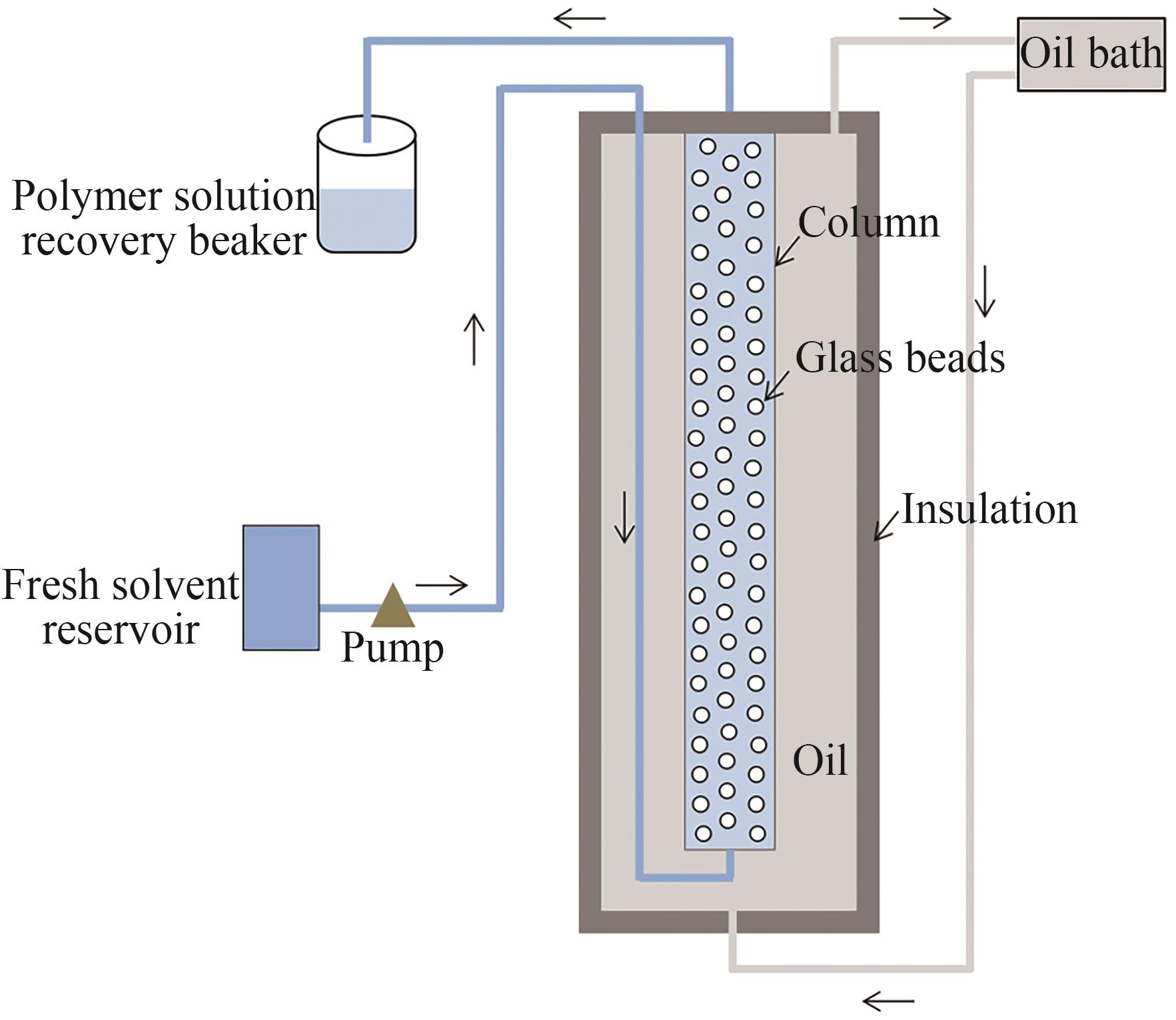
Fig.1 Schematic diagram of P-TREF equipment
| Sample | 10-4Mw | 10-4Mn | Mw/Mn | Tm/℃ | Tc/℃ | Xc/% |
|---|---|---|---|---|---|---|
| HPP | 19.78 | 7.43 | 2.66 | 161.1/167.4 | 109.7 | 43.2 |
Table 1 Relative molecular mass, melting temperature, crystallization temperature, and crystallinity of HPP resin
| Sample | 10-4Mw | 10-4Mn | Mw/Mn | Tm/℃ | Tc/℃ | Xc/% |
|---|---|---|---|---|---|---|
| HPP | 19.78 | 7.43 | 2.66 | 161.1/167.4 | 109.7 | 43.2 |
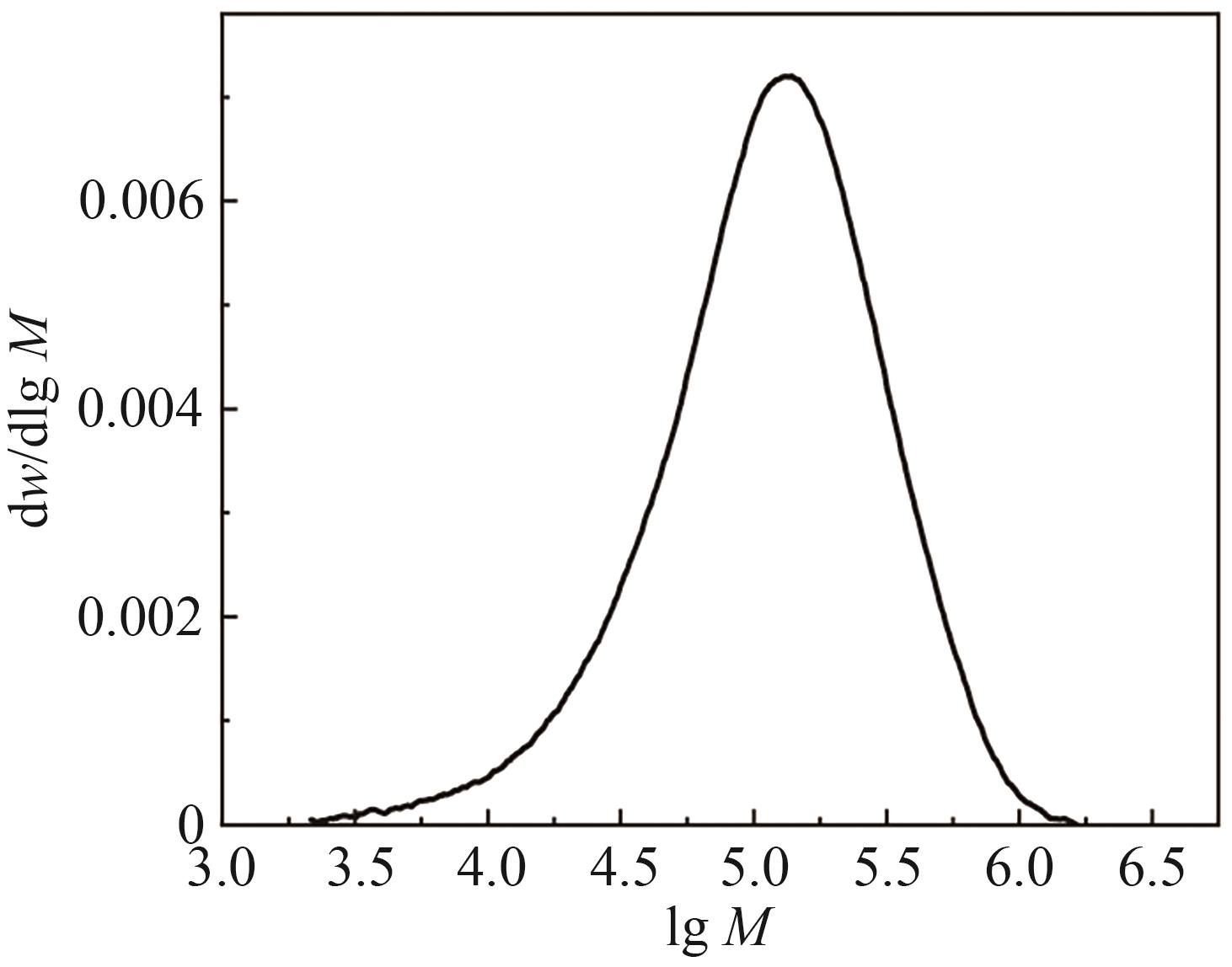
Fig.2 Molecular mass distribution profile of HPP resin
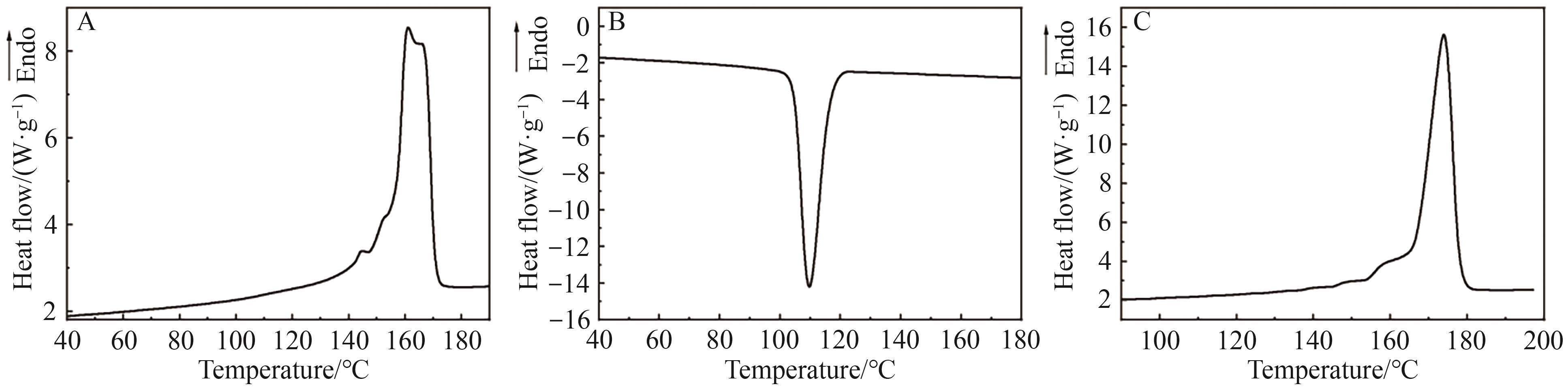
Fig.3 DSC heating (A), cooling (B) and SSA thermal fractionation (C) curves of HPP resinat a rate of 10 ℃/min
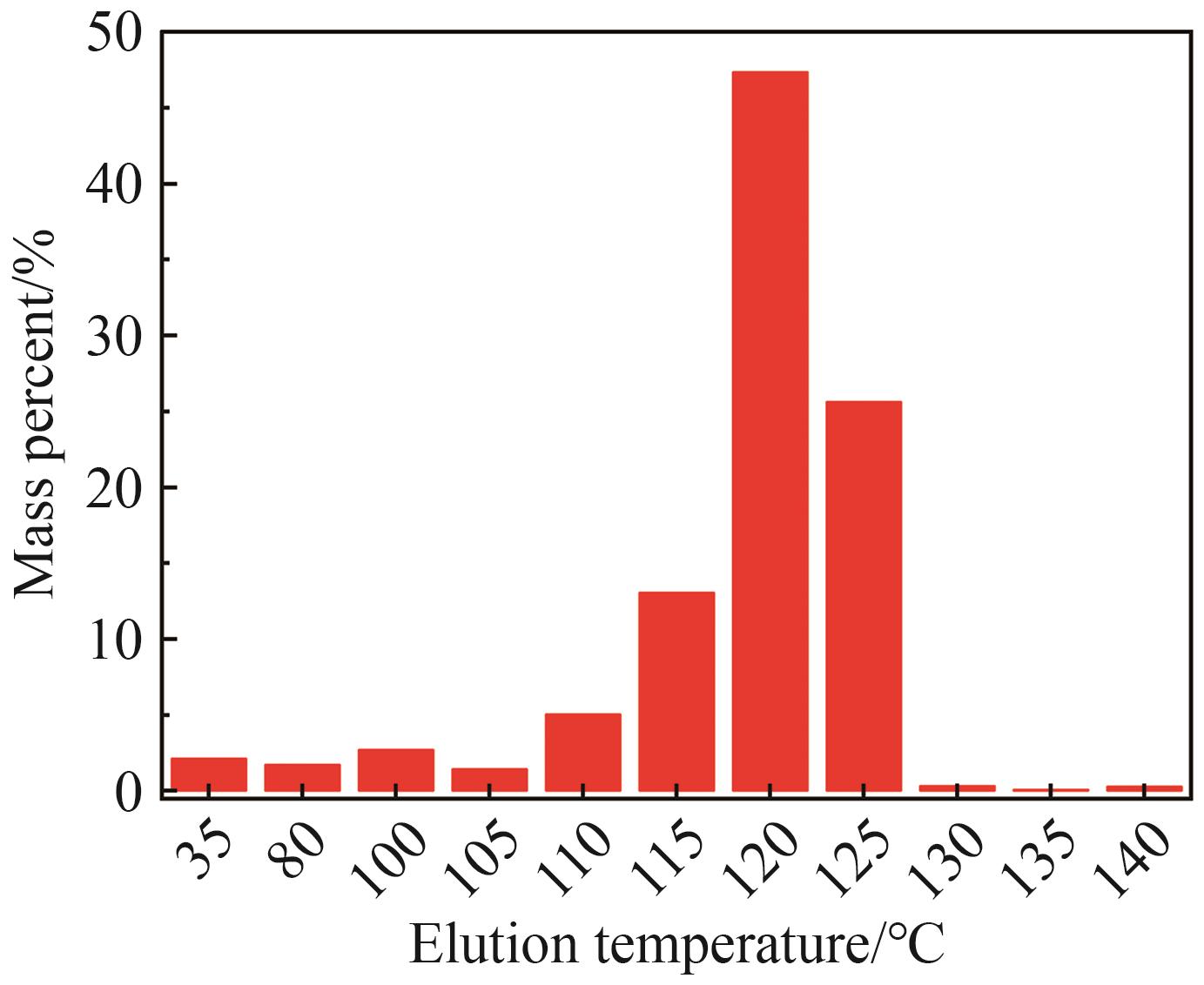
Fig.4 Variations in mass percent (Wi) of the fractions of HPP resin with the elution temperature of P-TREF
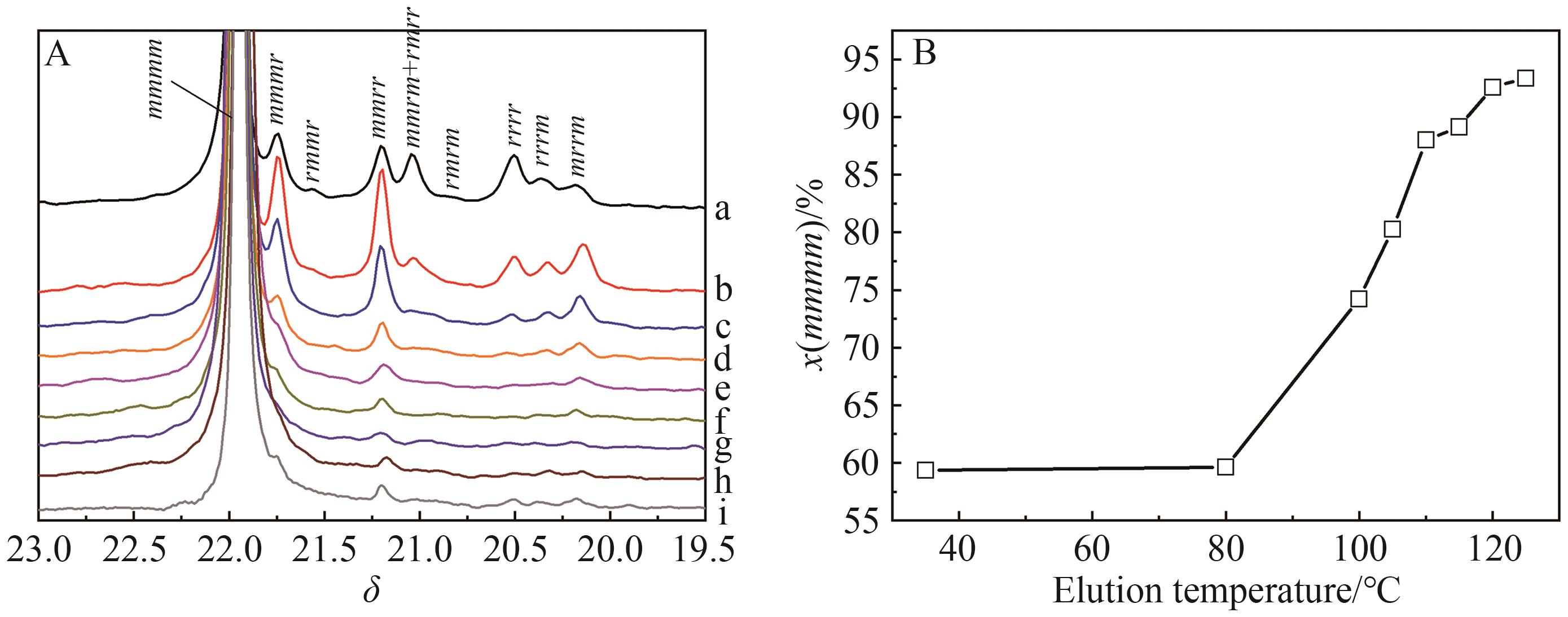
Fig.5 (A) 13C NMR spectra of 35 ℃ fraction (a), 80 ℃ fraction (b), 100 ℃ fraction (c), 105 ℃ fraction (d), 110 ℃ fraction (e), 115 ℃ fraction (f), 120 ℃ fraction (g), 125 ℃ fraction (h), and HPP resin (i); (B) The relationship between the isotacticity of fractions with P-TREF elution temperature
| Sample | x(mmmm)/% | x(mmmr)/% | x(rmmr)/% | x(mmrr)/% | x(mmrm+rmrr)/% | x(rmrm)/% | x(rrrr)/% | x(rrrm)/% | x(mrrm)/% |
|---|---|---|---|---|---|---|---|---|---|
| HPP | 81.2 | 8.3 | 2.2 | 2.4 | 2.2 | 0.5 | 1.0 | 0.9 | 1.5 |
Table 2 The pentad tacticities of HPP resin
| Sample | x(mmmm)/% | x(mmmr)/% | x(rmmr)/% | x(mmrr)/% | x(mmrm+rmrr)/% | x(rmrm)/% | x(rrrr)/% | x(rrrm)/% | x(mrrm)/% |
|---|---|---|---|---|---|---|---|---|---|
| HPP | 81.2 | 8.3 | 2.2 | 2.4 | 2.2 | 0.5 | 1.0 | 0.9 | 1.5 |
| Elution temperature/℃ | 35 | 80 | 100 | 105 | 110 | 115 | 120 | 125 | 130 | 135 | 140 |
|---|---|---|---|---|---|---|---|---|---|---|---|
| Wi/% | 2.13 | 1.76 | 2.72 | 1.44 | 5.09 | 13.08 | 47.37 | 25.67 | 0.34 | 0.10 | 0.29 |
Table 3 The mass percent (Wi) of the fractions of HPP resin obtained from P-TREF
| Elution temperature/℃ | 35 | 80 | 100 | 105 | 110 | 115 | 120 | 125 | 130 | 135 | 140 |
|---|---|---|---|---|---|---|---|---|---|---|---|
| Wi/% | 2.13 | 1.76 | 2.72 | 1.44 | 5.09 | 13.08 | 47.37 | 25.67 | 0.34 | 0.10 | 0.29 |
| Elution temperature/℃ | x(mmmm)/% | x(mmmr)/% | x(rmmr)/% | x(mmrr)/% | x(mmrm+rmrr)/% | x(rmrm)/% | x(rrrr)/% | x(rrrm)/% | x(mrrm)/% |
|---|---|---|---|---|---|---|---|---|---|
| 35 | 59.4 | 9.4 | 1.9 | 7.4 | 6.4 | 1.4 | 6.9 | 3.7 | 3.5 |
| 80 | 59.6 | 11.7 | 2.0 | 10.4 | 3.5 | 1.1 | 3.6 | 2.7 | 5.3 |
| 100 | 74.2 | 9.9 | 0.8 | 7.2 | 1.4 | 1.0 | 1.3 | 1.3 | 2.9 |
| 105 | 80.3 | 7.3 | 2.4 | 3.8 | 1.3 | 1.3 | 0.8 | 1.1 | 1.8 |
| 110 | 88.0 | 4.0 | 2.7 | 2.2 | 0.6 | 0.5 | 0.3 | 0.6 | 1.1 |
| 115 | 89.1 | 3.9 | 2.2 | 2.5 | 0.3 | 0.4 | 0.3 | 0.4 | 0.9 |
| 120 | 92.6 | 2.3 | 1.0 | 1.5 | 0.8 | 0.3 | 0.5 | 0.4 | 0.6 |
| 125 | 93.4 | 1.8 | 0.8 | 1.6 | 0.6 | 0.5 | 0.4 | 0.5 | 0.5 |
Table 4 The pentad tacticities of fractions of HPP resin
| Elution temperature/℃ | x(mmmm)/% | x(mmmr)/% | x(rmmr)/% | x(mmrr)/% | x(mmrm+rmrr)/% | x(rmrm)/% | x(rrrr)/% | x(rrrm)/% | x(mrrm)/% |
|---|---|---|---|---|---|---|---|---|---|
| 35 | 59.4 | 9.4 | 1.9 | 7.4 | 6.4 | 1.4 | 6.9 | 3.7 | 3.5 |
| 80 | 59.6 | 11.7 | 2.0 | 10.4 | 3.5 | 1.1 | 3.6 | 2.7 | 5.3 |
| 100 | 74.2 | 9.9 | 0.8 | 7.2 | 1.4 | 1.0 | 1.3 | 1.3 | 2.9 |
| 105 | 80.3 | 7.3 | 2.4 | 3.8 | 1.3 | 1.3 | 0.8 | 1.1 | 1.8 |
| 110 | 88.0 | 4.0 | 2.7 | 2.2 | 0.6 | 0.5 | 0.3 | 0.6 | 1.1 |
| 115 | 89.1 | 3.9 | 2.2 | 2.5 | 0.3 | 0.4 | 0.3 | 0.4 | 0.9 |
| 120 | 92.6 | 2.3 | 1.0 | 1.5 | 0.8 | 0.3 | 0.5 | 0.4 | 0.6 |
| 125 | 93.4 | 1.8 | 0.8 | 1.6 | 0.6 | 0.5 | 0.4 | 0.5 | 0.5 |
| Elution temperature/℃ | 10-4Mw | 10-4Mn | Mw/Mn |
|---|---|---|---|
| 35 | 19.35 | 3.80 | 5.09 |
| 80 | 5.45 | 0.95 | 4.71 |
| 100 | 5.30 | 1.51 | 3.51 |
| 105 | 6.37 | 2.07 | 3.07 |
| 110 | 8.00 | 3.70 | 2.17 |
| 115 | 9.28 | 5.75 | 1.61 |
| 120 | 18.42 | 10.38 | 1.77 |
| 125 | 28.43 | 17.11 | 1.66 |
| 130 | 31.46 | 17.90 | 1.76 |
| 135 | — | — | — |
| 140 | 18.98 | 6.38 | 2.98 |
Table 5 Relative molecular mass of the fractions of HPP resin obtained under different elution temperatures
| Elution temperature/℃ | 10-4Mw | 10-4Mn | Mw/Mn |
|---|---|---|---|
| 35 | 19.35 | 3.80 | 5.09 |
| 80 | 5.45 | 0.95 | 4.71 |
| 100 | 5.30 | 1.51 | 3.51 |
| 105 | 6.37 | 2.07 | 3.07 |
| 110 | 8.00 | 3.70 | 2.17 |
| 115 | 9.28 | 5.75 | 1.61 |
| 120 | 18.42 | 10.38 | 1.77 |
| 125 | 28.43 | 17.11 | 1.66 |
| 130 | 31.46 | 17.90 | 1.76 |
| 135 | — | — | — |
| 140 | 18.98 | 6.38 | 2.98 |
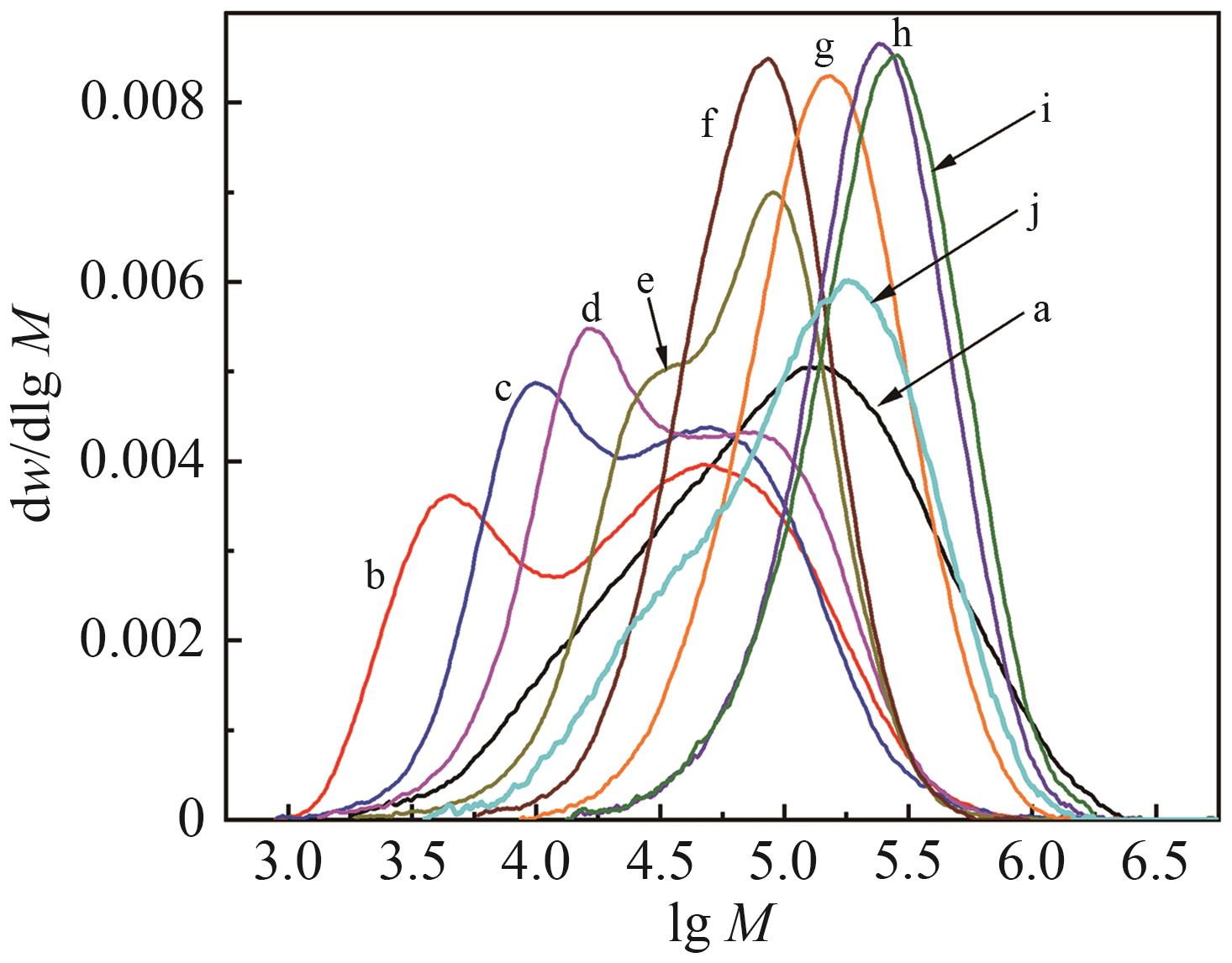
Fig.6 Molecular mass distribution profiles of 35 (a), 80 (b), 100 (c), 105 (d), 110 (e), 115 (f), 120 (g), 125 (h), 130 (i), and 140 ℃ (j) fractions of HPP resin
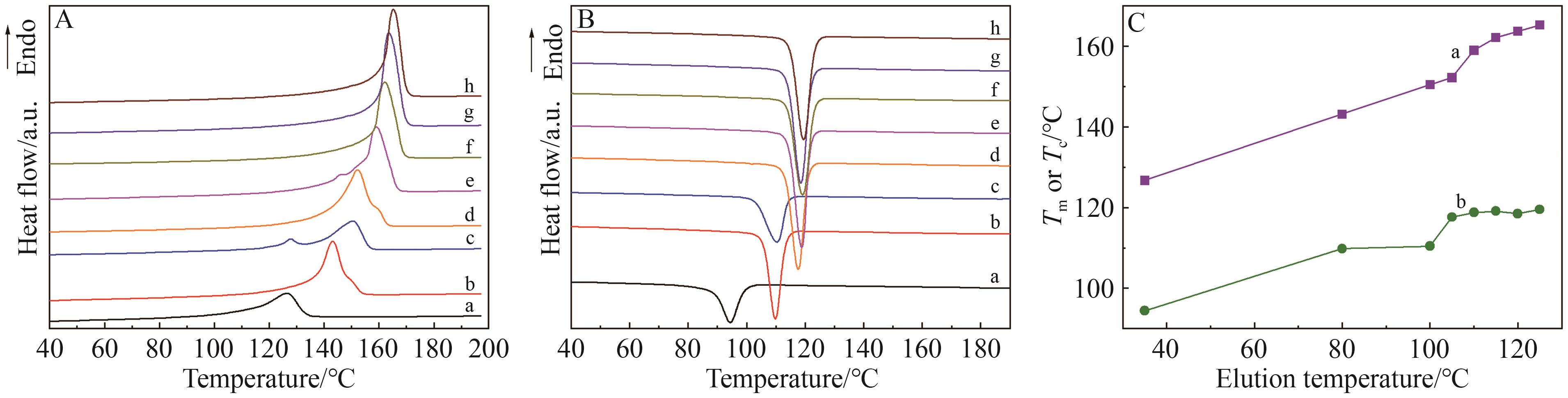
Fig.7 Melting (A) and crystallization (B) curves of 35 (a), 80 (b), 100 (c), 105 (d), 110 (e), 115 (f), 120 (g) and 125 ℃ (h) fractions of HPP resin, and (C) the variation of Tm (a) and Tc (b) with P-TREF elution temperatures
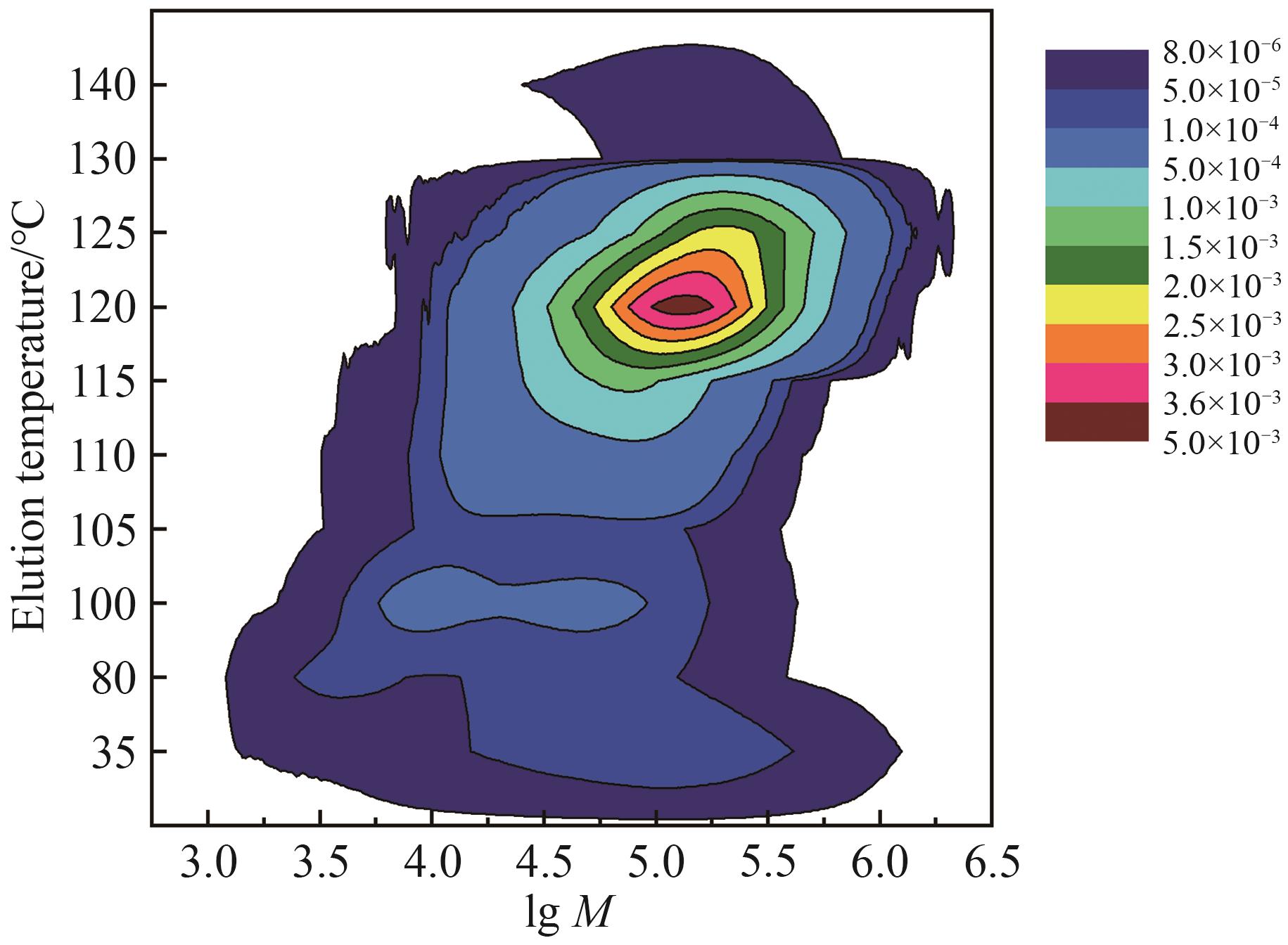
Fig.8 Contour plot of fraction distribution in HPP resin obtained from P-TREF and HT-GPC cross fractionation
| [1] | YUAN Z, JIA Y M. Mechanical properties and microstructure of glass fiber and polypropylene fiber reinforced concrete: an experimental study[J]. Constr Build Mater, 2021, 266: 121048. |
| [2] | HE Y S, WANG F P, DU G Q, et al. Revisiting the thermal ageing on the metallised polypropylene film capacitor: from device to dielectric film[J]. High Volt, 2023, 8(2): 305-314. |
| [3] | MATIAS A A, LIMA M S, PEREIRA J, et al. Use of recycled polypropylene/poly(ethylene terephthalate) blends to manufacture water pipes: an industrial scale study[J]. Waste Manage, 2020, 101: 250-258. |
| [4] | HOSSAIN M T, SHAHID M A, MAHMUD N, et al. Research and application of polypropylene: a review[J]. Discover Nano, 2024, 19(1): 2. |
| [5] | PAGHADAR B R, SAINANI J B, SAMITH K M, et al. Internal donors on supported Ziegler Natta catalysts for isotactic polypropylene: a brief tutorial review[J]. J Polym Res, 2021, 28(10): 402. |
| [6] | DE ROSA C, AURIEMMA F. Structure and physical properties of syndiotactic polypropylene: a highly crystalline thermoplastic elastomer[J]. Prog Polym Sci, 2006, 31(2): 145-237. |
| [7] | WU M H, WANG C C, CHEN C Y. Chemical modification of atactic polypropylene and its applications as a crystallinity additive and compatibility agent[J]. Polymer, 2020, 194: 122386. |
| [8] | LI P, LIU W, LIU X, et al. Chain microstructure comparison of two transparent polypropylene resins fractionated by temperature rising elution fractionation[J]. J Polym Res, 2023, 30(7): 280. |
| [9] | TANG Y J, REN M Q, HOU L P, et al. Effect of microstructure on soluble properties of transparent polypropylene copolymers[J]. Polymer, 2019, 183: 121869. |
| [10] | LI R, ZHANG Z K, LIU W, et al. Chain microstructure of two in-reactor alloy impact polypropylene resins with same stiffness and different toughness[J]. J Polym Res, 2023, 30(9): 364. |
| [11] | LIU W, ZHANG J Q, HONG M, et al. Chain microstructure of two highly impact polypropylene resins with good balance between stiffness and toughness[J]. Polymer, 2020, 188: 122146. |
| [12] | CHERUTHAZHEKATT S, PIJPERS T F J, HARDING G W, et al. Multidimensional analysis of the complex composition of impact polypropylene copolymers: combination of TREF, SEC-FTIR-HPer DSC, and high temperature 2D-LC[J]. Macromolecules, 2012, 45(4): 2025-2034. |
| [13] | SUBBAIAH Y, ALAHMADI A S, DEBASAGOITI M, et al. Accurate molar mass estimation of polyolefin blends using high temperature-size exclusion chromatography with triple detection: insight into molecular level mixing of polypropylene with various application grades of polyethylene[J]. J Sep Sci, 2025, 48(1): e70075. |
| [14] | BUSICO V, CIPULLO R, MONACO G, et al. Full assignment of the 13C NMR spectra of regioregular polypropylenes: methine region[J]. Macromolecules, 1998, 31(25): 8713-8719. |
| [15] | RANDALL J C. Carbon-13 nuclear magnetic-resonance quantitative measurements of average sequence lengths of like stereochemical additions in polypropylene and polystyrene[J]. J Polym Sci Pol Phys, 1976, 14(11): 2083-2094. |
| [16] | 高宇新, 刘巍, 李瑞, 等. 比较4种应用于薄膜与管道的聚乙烯树脂的链结构特点[J]. 应用化学, 2025, 42(4): 490-498. |
| GAO Y X, LIU W, LI R, et al. Comparison of chain microstructure of four polyethylene resins for films and pipes[J]. Chin J Appl Chem, 2025, 42(4): 490-498. | |
| [17] | MÜLLER A J, MICHELL R M, PEREZ R A, et al. Successive self-nucleation and annealing (SSA): correct design of thermal protocol and applications[J]. Eur Polym J, 2015, 65: 132-154. |
| [18] | ANANTAWARASKUL S, SOARES J B P, WOOD-ADAMS P M. Effect of operation parameters on temperature rising elution fractionation and crystallization analysis fractionation[J]. J Polym Sci Pol Phys, 2003, 41(14): 1762-1778. |
| [19] | MONRABAL B, DEL HIERRO P. Characterization of polypropylene-polyethylene blends by temperature rising elution and crystallization analysis fractionation[J]. Anal Bioanal Chem, 2011, 399(4): 1557-1561. |
| [20] | WILD L. Temperature rising elution fractionation[J]. Adv Polym Sci, 1991, 98: 1-47. |
| [21] | VIVILLE P, DAOUST D, JONAS A M, et al. Characterization of the molecular structure of two highly isotactic polypropylenes[J]. Polymer, 2001, 42(5): 1953-1967. |
| [22] | VIRKKUNEN V, LAARI P, PITKÄNEN P, et al. Tacticity distribution of isotactic polypropylene prepared with heterogeneous Ziegler-Natta catalyst. 2. application and analysis of SSA data for polypropylene[J]. Polymer, 2004, 45(14): 4623-4631. |
| [23] | NADELLA H P, HENSON H M, SPRUIELL J E, et al. Melt spinning of isotactic polypropylene: structure development and relationship to mechanical-properties[J]. J Appl Polym Sci, 1977, 21(11): 3003-3022. |
| [24] | SPRUIELL J E, LU F M, DING Z, et al. The influence of isotacticity, ethylene comonomer content, and nucleating agent additions on the structure and properties of melt-spun isotactic polypropylene filaments[J]. J Appl Polym Sci, 1996, 62(11): 1965-1975. |
| [25] | COLOMBE G, GREE S, LHOST O, et al. Correlation between mechanical properties and orientation of the crystalline and mesomorphic phases in isotactic polypropylene fibers[J]. Polymer, 2011, 52(24): 5630-5643. |
| [1] | Fang-Fang LIU, Hai-Bo YAO, Guo-Min LI, Li-Peng WANG, Zhi-Xin DONG, Xue-Peng QIU. Preparation and Atomic Oxygen-Resistant Properties of Quaternary Ammonium Salt Modified Polyhedral Oligomeric Silsesquioxane/Polyimide Composite Fibers [J]. Chinese Journal of Applied Chemistry, 2026, 43(1): 31-40. |
| [2] | Hui-Peng ZHANG, Yong-Feng WANG, Ruo-Fan LI. The Tensile Properties of Concrete under Different Fiber Types and Their Dosages [J]. Chinese Journal of Applied Chemistry, 2025, 42(9): 1233-1244. |
| [3] | Hui-Yao FANG, Yuan LIN, Zhao-Hui SU. Application of Atomic Force Microscopy-Infrared for Single Micro- and Nanoplastics [J]. Chinese Journal of Applied Chemistry, 2025, 42(8): 1070-1077. |
| [4] | Hai-Long SUN, Hao-Peng WANG, Hong-Da CHENG, Yi LI, Chang-Yu HAN. Crystallization, Rheological and Mechanical Properties of Poly(L-Lactic Acid)/Poly(D-Lactic Acid)/Glass Fiber Composites [J]. Chinese Journal of Applied Chemistry, 2025, 42(8): 1096-1104. |
| [5] | Xiao-Long LAI, Zhi-Yun ZOU, Feng-Xiang XIE, Wen-E LI. Analysis of the Influence of Polypropylene Fiber on the Performance of Modified Asphalt Concrete [J]. Chinese Journal of Applied Chemistry, 2025, 42(7): 962-970. |
| [6] | Zi-Hang XUE, Si-Hao JIAN, Min-Hang HAN, Bo LI, Rui-Xin HAO, Chao MA, Yang MIAO, Feng GAO. Low-Cost Preparation and Performance of Fiberglass Reinforced Silica Aerogel Blanket [J]. Chinese Journal of Applied Chemistry, 2025, 42(10): 1361-1374. |
| [7] | Yu-Jia XIE, Xin-Lin XIE, Wei-Bing PEI, Qi LI, Jia-Ming GUO, Yao YUAN, Yu LIU. Preparation and Application of Thermostable Solvent Poly(Aryl Ether Ketone) Sizing Agent [J]. Chinese Journal of Applied Chemistry, 2025, 42(1): 78-85. |
| [8] | Lin-Tao YANG, Mao LI. Molecular-Mass and Its Distribution Analysis of n-Alkylated Poly(p-phenylene terephthamide) [J]. Chinese Journal of Applied Chemistry, 2023, 40(6): 853-859. |
| [9] | Qian-Yu LI, Jie LIU, Tao TANG. Flame Retardancy of Polycarbonate/Short Carbon Fiber/Potassium 3‑(Phenylsulfonyl)benzenesulfonate Composites [J]. Chinese Journal of Applied Chemistry, 2023, 40(12): 1662-1671. |
| [10] | Quan-Xing ZHENG, Qiao-Ling LI, Ke ZHANG, Pei-Chen ZHOU, Jiang-Sheng LIU, Xiu-Cai LIU, Chao-Zhang HUANG, Bin LI, Han-Chun XU, Hong-Qiao LAN, Jia-Zeng LIU, Peng-Fei MA, Wei XIE, Xiao-Dong YI. Pyrolysis Process of Plant Fibers [J]. Chinese Journal of Applied Chemistry, 2022, 39(7): 1073-1082. |
| [11] | Chen-Chen ZHANG, Yu-Han LIU, Wen-Jie ZHAO, Bai-Jun LIU, Zhao-Yan SUN, Wan-Li LIU, Yan-Miao WANG, Wei HU. Preparation of Oxidized Organosolv Lignin⁃based Hydrophilic Sizing Agent and Its Application in Polypropylene [J]. Chinese Journal of Applied Chemistry, 2022, 39(12): 1854-1861. |
| [12] | Jiu-Geng CHENG, Zhao-Hui SU. Quantitative Analysis of Phase Composition of Poly (1-butene) /Polypropylene Blends by Atomic Force Microscopy-Infrared [J]. Chinese Journal of Applied Chemistry, 2022, 39(02): 266-271. |
| [13] | ZHANG Chun-Hua, ZHAO Xiao-Bo, LI Yue-Jun, SUN Da-Wei. Preparation of (BiO)2CO3-Bi-TiO2 Composite Nanofibers and Its Photocatalytic Degradation of Antibiotics [J]. Chinese Journal of Applied Chemistry, 2021, 38(1): 99-106. |
| [14] | QIU Jian, JIANG Zhiwei, XING Haiping, LI Minggang, LIU Jie, TANG Tao. Preparation and Electromagnetic Shielding Properties of Polypropylene/Carbon Nanotubes Composites with Segregated Structure [J]. Chinese Journal of Applied Chemistry, 2020, 37(8): 904-911. |
| [15] | QIU Jian, JIANG Zhiwei, XING Haiping, LI Minggang, LIU Jie, TANG Tao. Preparation and Electromagnetic Shielding Properties of Polypropylene/Carbon Nanotubes Composites with Segregated Structure [J]. Chinese Journal of Applied Chemistry, 2020, 37(8): 0-0. |
| Viewed | ||||||
|
Full text |
|
|||||
|
Abstract |
|
|||||
