
Chinese Journal of Applied Chemistry ›› 2025, Vol. 42 ›› Issue (5): 675-683.DOI: 10.19894/j.issn.1000-0518.240326
• Full Papers • Previous Articles Next Articles
Meng-Yang TIAN1, Jian-Min LIU2( )
)
Received:2024-10-18
Accepted:2025-04-03
Published:2025-05-01
Online:2025-06-05
Contact:
Jian-Min LIU
About author:jmliu@gxufe.edu.cnSupported by:CLC Number:
Meng-Yang TIAN, Jian-Min LIU. Optimizing Chemical Reaction Conditions Based on Improved Genetic Algorithms[J]. Chinese Journal of Applied Chemistry, 2025, 42(5): 675-683.
Add to citation manager EndNote|Ris|BibTeX
URL: http://yyhx.ciac.jl.cn/EN/10.19894/j.issn.1000-0518.240326
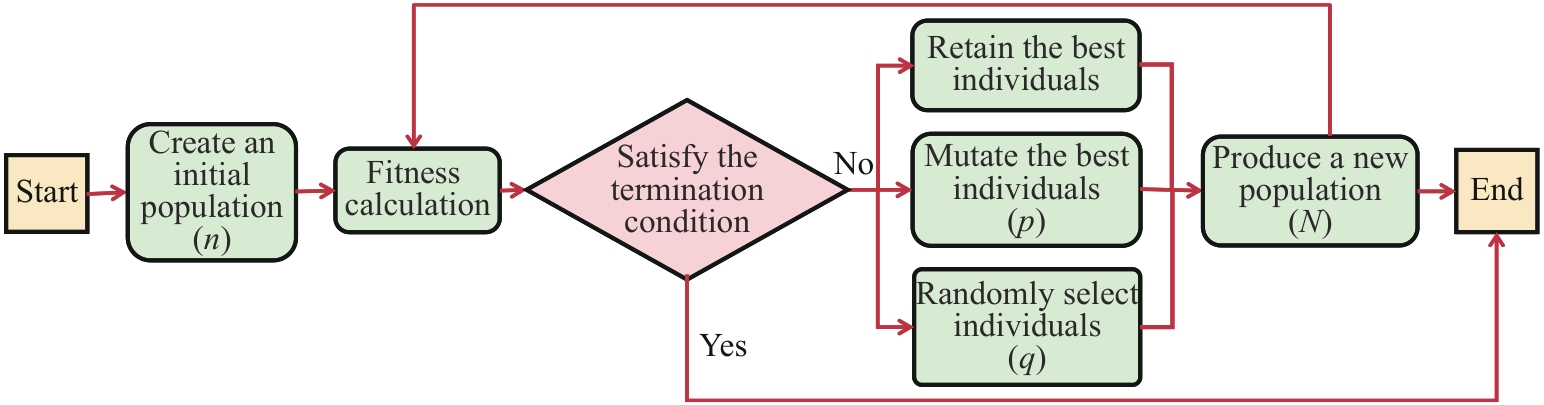
Fig.1 Flowchart of IGA for optimization of chemical reaction conditions

Fig.2 Direct arylation reaction
| No. | Reaction conditions | Values of reaction conditions | |||
|---|---|---|---|---|---|
| 1 | Ligand | BrettPhos | CgMe-PPh | GorlosPhos | JackiePhos |
| t-BuPh-CPhos | PPh2Me | P(Fur)3 | PPh3 | ||
| PPh2Me | PPht-Bu2 | PCy3 | XPhos | ||
| 2 | Base | CsOAc | CsOPiv | KOAc | KOPiv |
| 3 | Solvent | BuCN | BuOAc | DMAc | p-Xylene |
| 4 | Concentration(substrate)/(mol·L-1) | 0.057 | 0.1 | 0.153 | |
| 5 | Temperature/℃ | 90 | 105 | 120 | |
Table 1 Sample space of direct arylation reaction
| No. | Reaction conditions | Values of reaction conditions | |||
|---|---|---|---|---|---|
| 1 | Ligand | BrettPhos | CgMe-PPh | GorlosPhos | JackiePhos |
| t-BuPh-CPhos | PPh2Me | P(Fur)3 | PPh3 | ||
| PPh2Me | PPht-Bu2 | PCy3 | XPhos | ||
| 2 | Base | CsOAc | CsOPiv | KOAc | KOPiv |
| 3 | Solvent | BuCN | BuOAc | DMAc | p-Xylene |
| 4 | Concentration(substrate)/(mol·L-1) | 0.057 | 0.1 | 0.153 | |
| 5 | Temperature/℃ | 90 | 105 | 120 | |
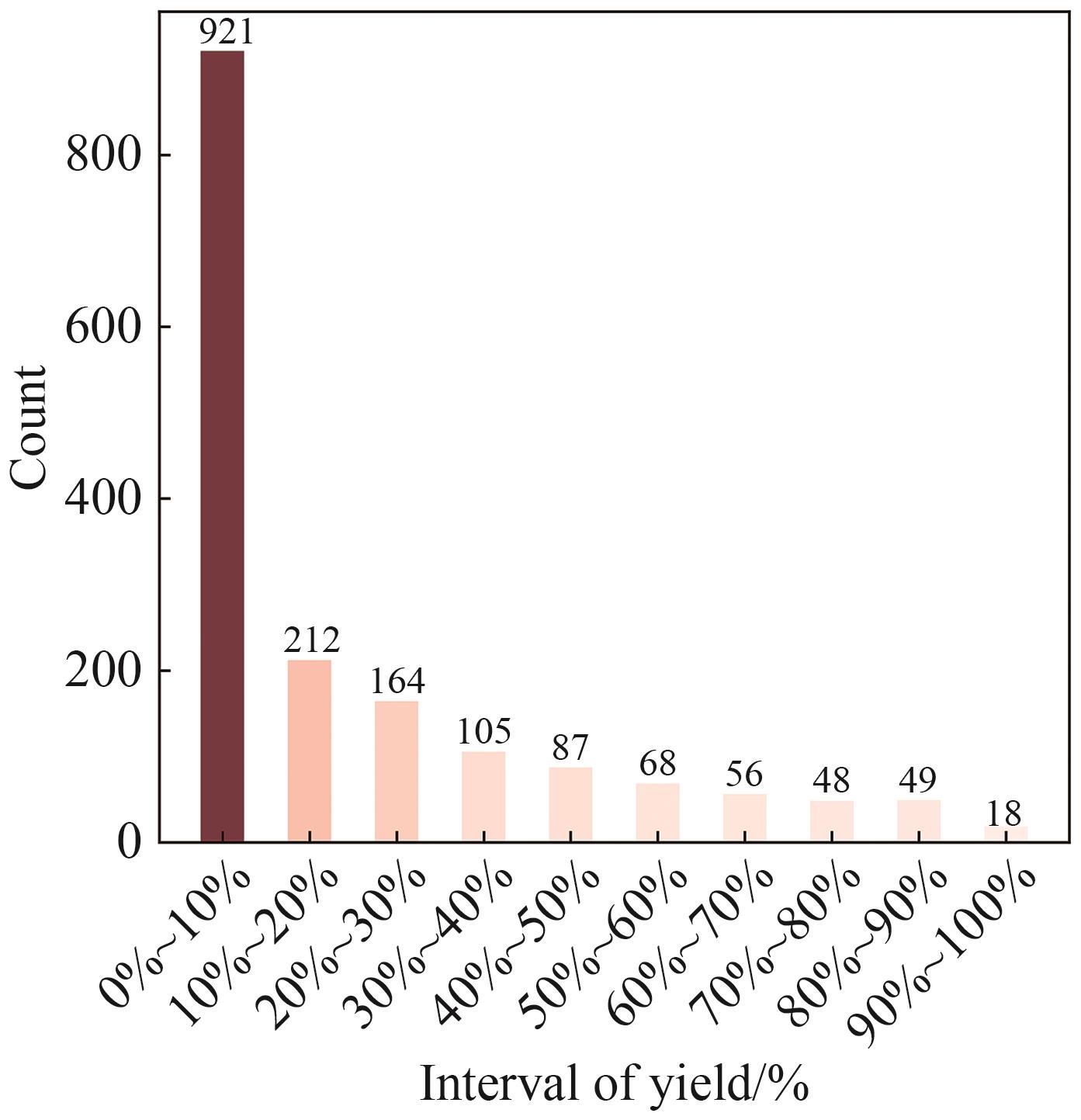
Fig.3 Distribution of yields for 1728 chemical reaction conditions
| No. | Total sample number | Initial population number | Population size | Number of iteration | Maximum yield of the RS/% | Maximum yield of the GA/% | Random selection sample size in IGA | Maximum yield of the IGA/% |
|---|---|---|---|---|---|---|---|---|
| 1 | 30 | 6 | 4 | 6 | 83.69 | 89.47 | 2 | 88.30 |
| 2 | 1 | 90.60 | ||||||
| 3 | 35 | 5 | 5 | 6 | 84.91 | 90.13 | 3 | 89.45 |
| 4 | 2 | 91.37 | ||||||
| 5 | 1 | 91.85 | ||||||
| 6 | 41 | 5 | 6 | 6 | 85.99 | 92.20 | 1 | 93.11 |
| 7 | 49 | 7 | 6 | 7 | 88.15 | 93.95 | 1 | 95.07 |
| 8 | 56 | 7 | 7 | 7 | 88.87 | 95.33 | 1 | 96.40 |
| 9 | 62 | 6 | 7 | 8 | 89.60 | 95.90 | 1 | 96.93 |
| 10 | 70 | 6 | 8 | 8 | 90.50 | 96.88 | 1 | 97.47 |
| 11 | 71 | 7 | 8 | 8 | 90.67 | 96.97 | 1 | 98.0 |
Table 2 Comparison of IGA, GA and RS for optimizing reaction conditions
| No. | Total sample number | Initial population number | Population size | Number of iteration | Maximum yield of the RS/% | Maximum yield of the GA/% | Random selection sample size in IGA | Maximum yield of the IGA/% |
|---|---|---|---|---|---|---|---|---|
| 1 | 30 | 6 | 4 | 6 | 83.69 | 89.47 | 2 | 88.30 |
| 2 | 1 | 90.60 | ||||||
| 3 | 35 | 5 | 5 | 6 | 84.91 | 90.13 | 3 | 89.45 |
| 4 | 2 | 91.37 | ||||||
| 5 | 1 | 91.85 | ||||||
| 6 | 41 | 5 | 6 | 6 | 85.99 | 92.20 | 1 | 93.11 |
| 7 | 49 | 7 | 6 | 7 | 88.15 | 93.95 | 1 | 95.07 |
| 8 | 56 | 7 | 7 | 7 | 88.87 | 95.33 | 1 | 96.40 |
| 9 | 62 | 6 | 7 | 8 | 89.60 | 95.90 | 1 | 96.93 |
| 10 | 70 | 6 | 8 | 8 | 90.50 | 96.88 | 1 | 97.47 |
| 11 | 71 | 7 | 8 | 8 | 90.67 | 96.97 | 1 | 98.0 |
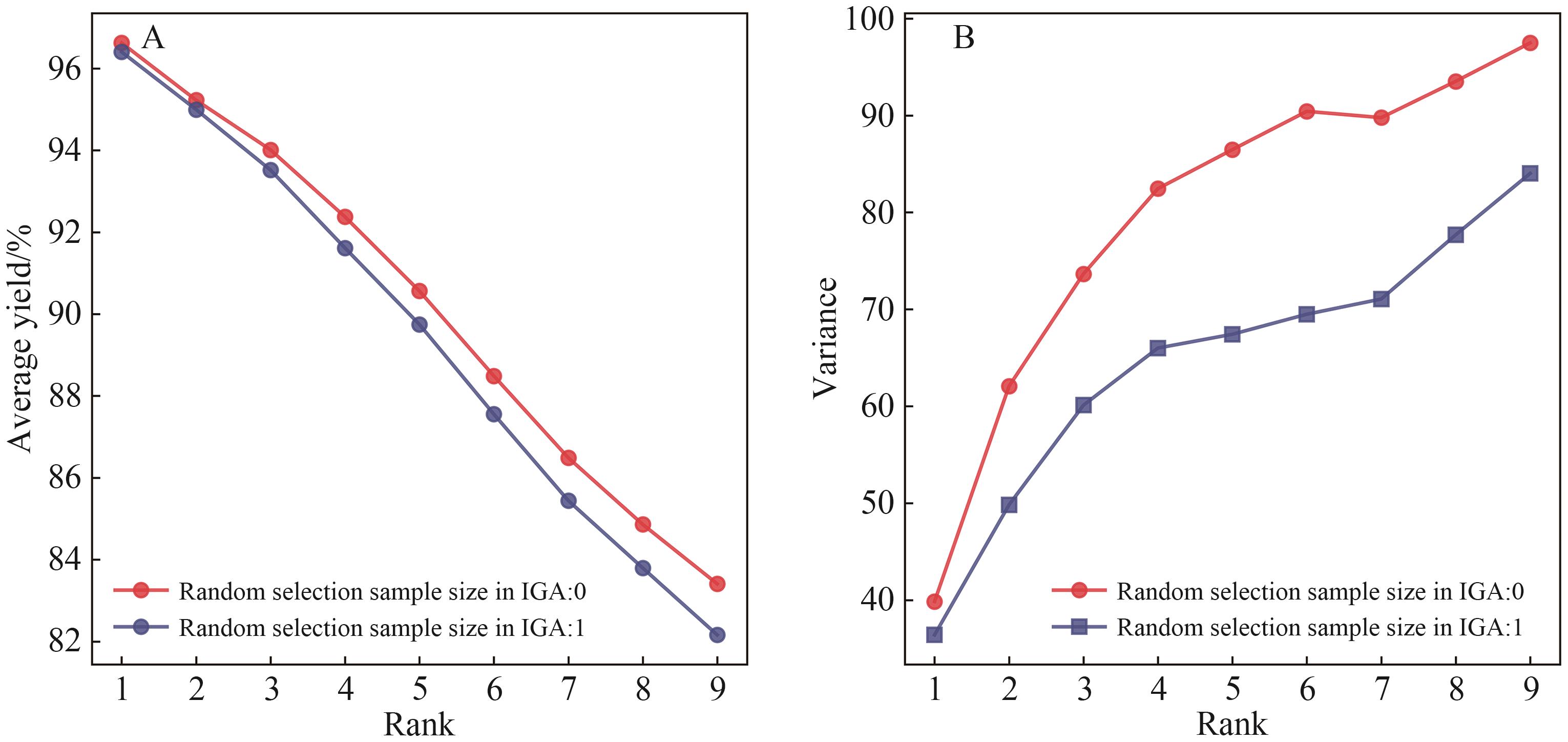
Fig.4 (A) Comparison chart of average yield values and (B) comparison chart of variance values
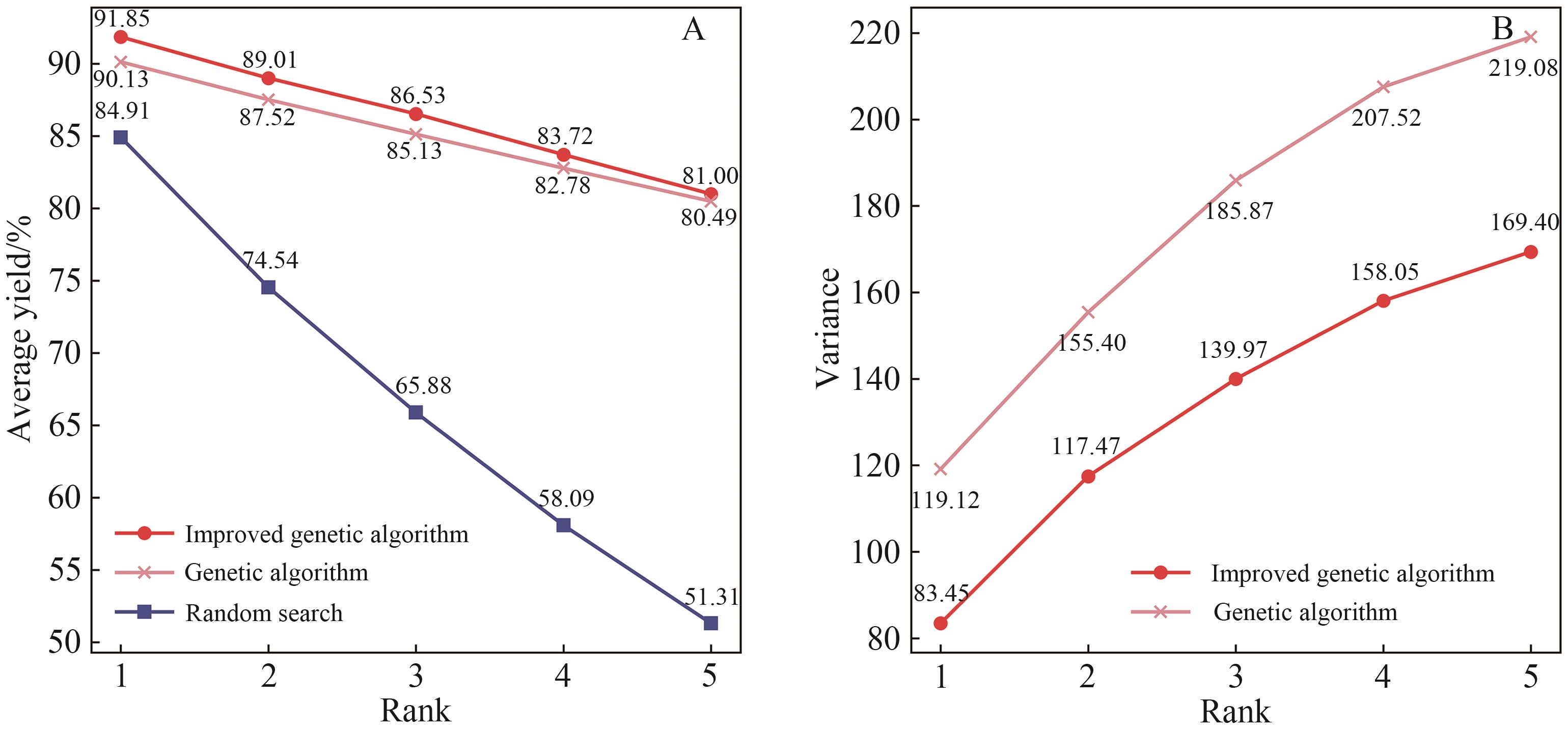
Fig.5 (A) Comparison chart of the top 5 average yield values and (B) comparison chart of variance values

Fig.6 Halogenated aromatic hydrocarbons and organoborate compounds undergo Suzuka-Miyaura reaction to form diaryl compounds
| No. | Reaction conditions | Values of reaction conditions | |||
|---|---|---|---|---|---|
| 1 | X | Cl | Br | I | OTF |
| 2 | Y | B(OH)2 | BPin | BF3K | |
| 3 | Ligand | AmPhos-7 | CataCXiumA-11 | dppf-4 | dtbpf-4 |
| P(Cy)3-16 | P(o-To1)3-12 | SPhos-3 | P(tBu)3 | ||
| XPhos-20 | Xantphos-4 | P(Ph)3 | |||
| 4 | Base | CsF | Et3N | K3PO4 | KOH |
| LiOtBu | NaHCO3 | NaOH | |||
| 5 | Solvent | DMF | MeCN | MeOH | THF |
Table 3 Sample space of Suzuki-Miyaura reaction
| No. | Reaction conditions | Values of reaction conditions | |||
|---|---|---|---|---|---|
| 1 | X | Cl | Br | I | OTF |
| 2 | Y | B(OH)2 | BPin | BF3K | |
| 3 | Ligand | AmPhos-7 | CataCXiumA-11 | dppf-4 | dtbpf-4 |
| P(Cy)3-16 | P(o-To1)3-12 | SPhos-3 | P(tBu)3 | ||
| XPhos-20 | Xantphos-4 | P(Ph)3 | |||
| 4 | Base | CsF | Et3N | K3PO4 | KOH |
| LiOtBu | NaHCO3 | NaOH | |||
| 5 | Solvent | DMF | MeCN | MeOH | THF |
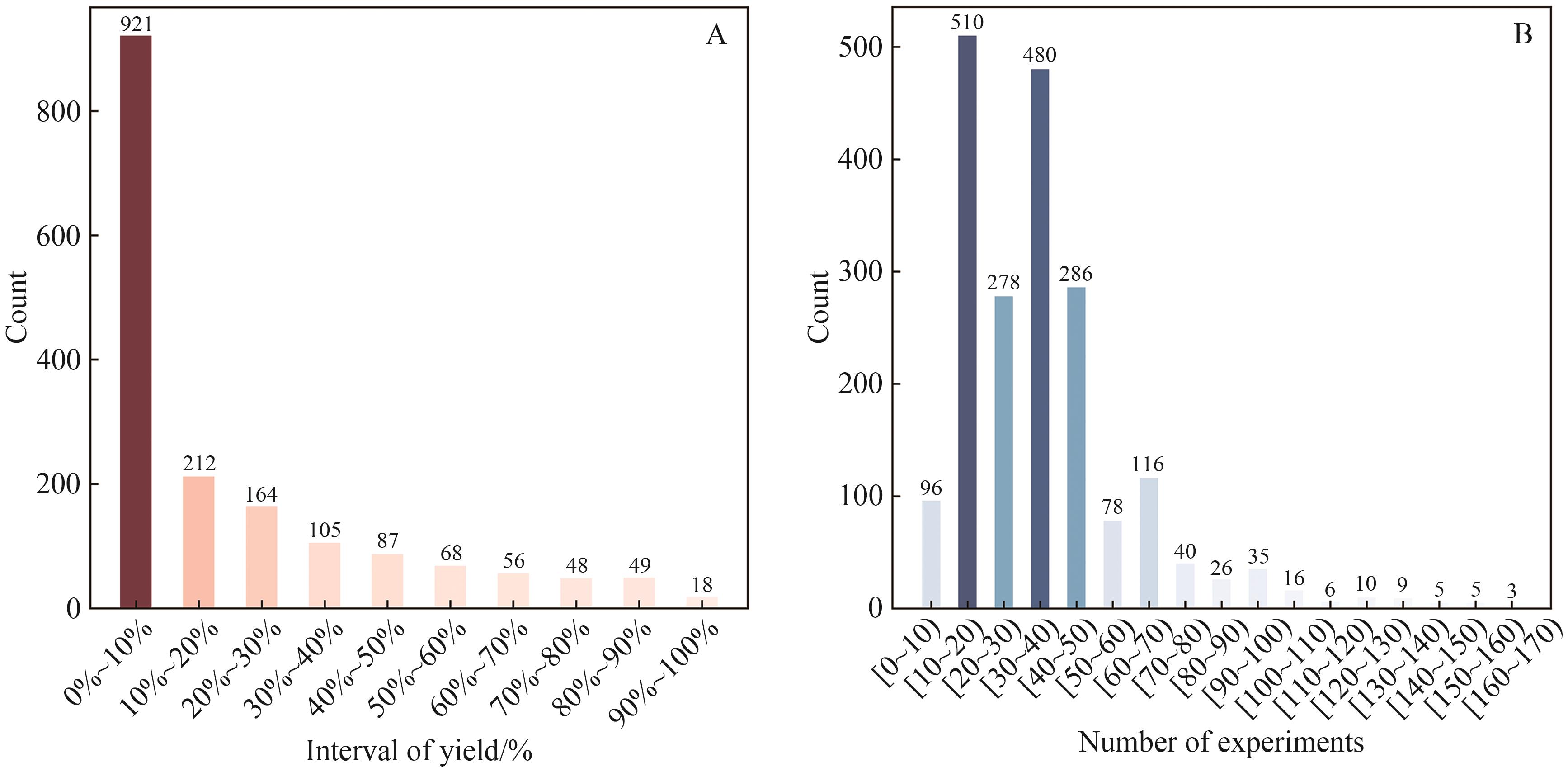
Fig.7 (A) Distribution of yields for 3696 chemical reaction conditions and (B) distribution of the number of experiments for termination
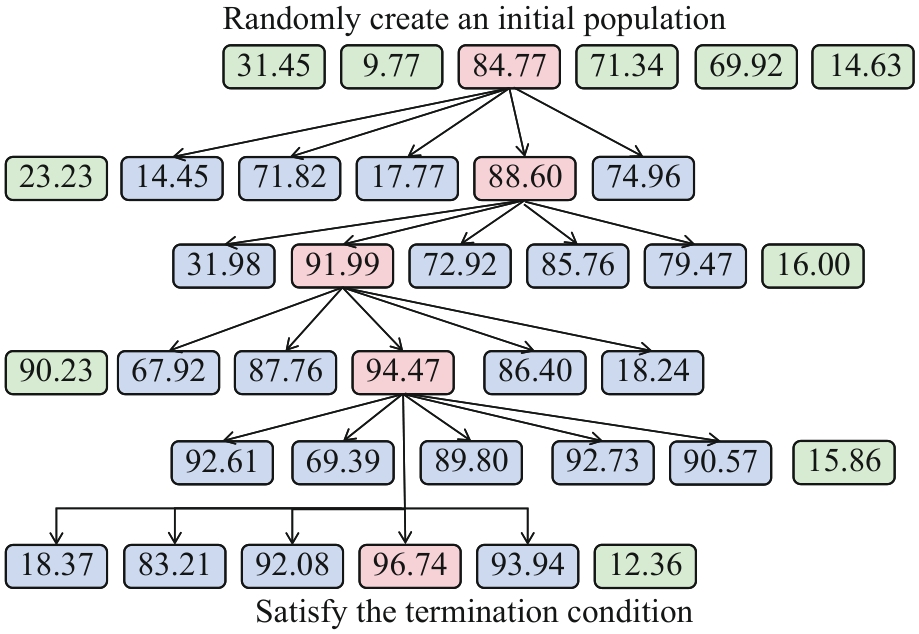
Fig.8 Optimization process of Suzuki-Miyaura reaction conditions using the IGA
| 1 | 罗渝然, 俞书勤, 张祖德, 等. 再谈什么是活化能——Arrhenius活化能的定义、解释、以及容易混淆的物理量[J]. 大学化学, 2010, 25(3): 35-42. |
| LUO Y R, YU S Q, ZHANG Z D, et al. Re-discussion on what is activation energy: definition, explanation, and confusing physical quantities of arrhenius activation energy[J]. Univ Chem, 2010, 25(3): 35-42. | |
| 2 | MAO Z, CAMPBELL C T. Apparent activation energies in complex reaction mechanisms: a simple relationship via degrees of rate control[J]. ACS Catal, 2019, 9(10): 9465-9473. |
| 3 | CARVALHO-SILVA V H, COUTINHO N D, AQUILANTI V. Temperature dependence of rate processes beyond arrhenius and eyring: activation and transitivity[J]. Front Chem, 2019, 7: 380. |
| 4 | PHIMMAVONG S. Effect of concentration on reaction speed[J]. Int J Pap Adv Sci Rev, 2020, 1(1): 21-29. |
| 5 | MOHAMADPOUR F, AMANI A M. Photocatalytic systems: reactions, mechanism, and applications[J]. RSC Adv, 2024, 14(29): 20609-20645. |
| 6 | 傅献彩, 沈文霞, 姚天扬, 等. 物理化学. 第五版[M]. 北京: 高等教育出版社, 2006. |
| FU X C, SHEN W X, YAO T Y, et al. Physical chemistry.5th ed[M]. Beijing: Higher Education Press, 2006. | |
| 7 | SANTANILLA A B, REGALADO E L, PEREIRA T, et al. Organic chemistry: nanomole-scale high-throughput chemistry for the synthesis of complex molecules[J]. Science, 2015, 347(6217): 49-53. |
| 8 | 刘海臣, 卓金武, 吴国光. 基于人工神经网络的茶叶咖啡因提取条件的优化[J]. 应用化学, 2007, 24(4): 457-460. |
| LIU H C, ZHUO J W, WU G G. Optimization of extraction conditions for caffeine from tea based on artificial neural network[J]. Chin J Appl Chem, 2007, 24(4): 457-460. | |
| 9 | 徐爽, 张钰霜, 杨嘉和, 等. 基于人工神经网络优化米酒糟淀粉水解条件研究[J]. 中国酿造, 2024, 43(8): 237-242. |
| XU S, ZHANG Y S, YANG J H, et al. Study on optimization of rice wine lees starch hydrolysis conditions based on artificial neural network[J]. China Brew, 2024, 43(8): 237-242. | |
| 10 | 渠一聪, 张绍绒, 罗理勇, 等. 基于人工神经网络耦合遗传算法(BP-GA)优化茶氨酸-葡萄糖美拉德反应的条件[J]. 食品工业科技, 2023, 44(24): 183-192 |
| QU Y C, ZHANG S R, LUO L Y, et al. Optimization of theanine-glucose maillard reaction conditions based on artificial neural network coupled genetic algorithm (BP-GA)[J]. Sci Technol Food Ind, 2023, 44(24): 183-192. | |
| 11 | MCMULLEN J P, STONE M T, BUCHWALD S L, et al. An integrated microreactor system for self-optimization of a heck reaction: from micro-to mesoscale flow systems[J]. Angew Chem Int Ed Engl, 2010, 49(39): 7076-7080. |
| 12 | BOURNE R A, SKILTON R A, PARROTT A J, et al. Adaptive process optimization for continuous methylation of alcohols in supercritical carbon dioxide[J]. Org Process Res Dev, 2011, 15: 932-938. |
| 13 | CORTÉS-BORDA D, WIMMER E, GOUILLEUX B, et al. An autonomous self-optimizing flow reactor for the synthesis of natural product carpanone[J]. J Org Chem, 2018, 83(23): 14286-14299. |
| 14 | CORTÉS-BORDA D, KUTTONOVA K V, JAMET C, et al. Optimizing the Heck-Matsuda reaction in flow with a constraint-adapted direct search algorithm[J]. Org Process Res Dev, 2016, 20(11): 1979-1987. |
| 15 | MOORE J S, JENSEN K F. Automated multitrajectory method for reaction optimization in a microfluidic system using online IR analysis[J]. Org Process Res Dev, 2012, 16(8): 1409-1415. |
| 16 | SHIELDS B J, STEVENS J, LI J, et al. Bayesian reaction optimization as a tool for chemical synthesis[J]. Nature, 2021, 590: 89-96. |
| 17 | MALU M, DASARATHY G, SPANIAS A, et al. Bayesian optimization in high-dimensional spaces: a brief survey: the 2021 12th IISA[C]. Chania Crete, Greece: 2021: 1-8. |
| 18 | ALHIJAWI B, AWAJAN A. Genetic algorithms: theory, genetic operators, solutions, and applications[J]. Evol Intell, 2024, 17(3): 1245-1256. |
| 19 | KATOCH S, CHAUHAN S S, KUMAR V. A review on genetic algorithm: past, present, and future[J]. Multimed Tools App, 2021, 80: 8091-8126. |
| 20 | PERERA D, TUCKER J W, BRAHMBHATT S, et al. A platform for automated nanomole-scale reaction screening and micromole-scale synthesis in flow[J].Science, 2018, 359(6374): 429-434. |
| 21 | FOX R J, CUNIERE N L, BAKRANIA L, et al. C—H arylation in the formation of a complex pyrrolopyridine, the commercial synthesis of the potent JAK2 inhibitor, BMS-9115433[J]. J Org Chem, 2019, 84(8): 4661-4669. |
| 22 | JI Y, PLATA R E, REGENS C S, et al. Mono-oxidation of bidentate bis-phosphines in catalyst activation: kinetic and mechanistic studies of a Pd/xantphos-catalyzed C—H functionalization[J]. J Am Chem Soc, 2015, 137(41): 13272-13281. |
| [1] | Yi-En DU, Shao-Hua GUO, Ai-Hua ZHANG. Optimization of Preparation and Characterization of Copper Sulfate Pentahydrate Crystals [J]. Chinese Journal of Applied Chemistry, 2025, 42(3): 416-428. |
| [2] | Dong-Yu ZHANG, Chun-Li WANG, Yong CHENG, Li-Min WANG. Research Progress of Antimony⁃Based Anode for Sodium/Potassium Ion Batteries: Failure Analysis and Solutions [J]. Chinese Journal of Applied Chemistry, 2024, 41(5): 616-636. |
| [3] | Yu-Xi WANG, Dong WANG, Chun-Xia TANG, Chang-Sen DU, Shu-Qin FENG, Shao-Hai FU. Preparation and Properties of Ethylene Glycol Carbon Black Paste [J]. Chinese Journal of Applied Chemistry, 2023, 40(3): 389-396. |
| [4] | Xue-Jian SHI, Wan-Qiang LIU, Chun-Li WANG, Yong CHENG, Li-Min WANG. Research Progress of Sb-based Anode Materials for Potassium Ion Batteries [J]. Chinese Journal of Applied Chemistry, 2023, 40(2): 210-228. |
| [5] | Ying ZHAO, Yi-Jia SHAO, Luo-Qian LI, Jian-Wei REN, Shi-Jun LIAO. Research Progress on the Degradation Mechanism and Cycle Stability Improvement of Lithium-Rich Cathode Materials [J]. Chinese Journal of Applied Chemistry, 2022, 39(02): 205-222. |
| [6] | WANG Lu, ZHAO Meng, CHEN Zhao-Bin. Research Progress of Shielding and Shielding Materials of Nuclear Radiation [J]. Chinese Journal of Applied Chemistry, 2021, 38(12): 1576-1587. |
| [7] | WU Zhiqiang,XU Zeyang,BI Shuxian,ZHAN Haijuan,MA Baojun,LIU Wanyi. Synthesis of Schiff Base Catalyzed by Coal-based Solid Acid Catalyst [J]. Chinese Journal of Applied Chemistry, 2017, 34(5): 563-571. |
| [8] | CAO Jianfang, FAN Jiangli, GUO Yu, WU Hongmei. Density Functional Theory Research on the Optical Properties of Thiazole Orange Cyanine Dyes [J]. Chinese Journal of Applied Chemistry, 2017, 34(12): 1474-1480. |
| [9] | WANG Haitao, WANG Hongyan, YANG Liangru , MAO Pu, QU Lingbo. Process Optimization of 4-Hydroxyl-2-(methylsulfanyl)-pyrimidine-5-carboxylic Acid Ethyl Ester Synthesis [J]. Chinese Journal of Applied Chemistry, 2015, 32(4): 412-415. |
| [10] | LI Bingying, YAN Jie, NI Juechen, FENG Xiaogeng, XING Yongheng. Synthesis, Molecular Structure and Thermal Stability of Percarbamide [J]. Chinese Journal of Applied Chemistry, 2015, 32(12): 1423-1430. |
| [11] | ZHU Jingbo, MA Liqun, LIANG Fei, MIAO Yingchun, WANG Limin. Phases and Structure of Ti-V Based Alloys and Hydrides and Optimization Design of Constituents and Composition [J]. Chinese Journal of Applied Chemistry, 2015, 32(11): 1221-1230. |
| [12] | MA Yajuan1, LI Xiaodong2, LI Yun1, HONG Bo1, ZHOU Miping1*. Improved Preparation of the Key Intermediate N-Toluenesulfonyl Benzodiazepine-5-ketone Used for Conivaptan Hydrochloride Synthesis [J]. Chinese Journal of Applied Chemistry, 2014, 31(01): 50-53. |
| [13] | DAI Peng1, XIAO Yunjie1, WANG Zeyu1, CHEN Shikun1, HE Tongsheng2, SHEN Yongcun1*. A New Synthetic Route of N-(3-Aminopropyl)methacrylamide Hydrochloride [J]. Chinese Journal of Applied Chemistry, 2013, 30(11): 1289-1292. |
| [14] | CHEN Yongshi1,2, LIN Jianguo2*, QIU Ling2, CHENG Wen2, LUO Shineng2, MA Haixia1*. Synthesis and Characterization of Phenylmethanesulfonamide Ligand for Potential Labeling [99mTc(CO)3(H2O)3]+ [J]. Chinese Journal of Applied Chemistry, 2012, 29(07): 757-761. |
| [15] | LI Guo-Ping*, YU Fang-Qin, LIN Jin-He, CHEN Yin-Zhi. The Solubility Improvement of tetramethyl substituted Cucurbit[6]uril on Dexamethasone Acetate [J]. Chinese Journal of Applied Chemistry, 2010, 27(05): 563-566. |
| Viewed | ||||||
|
Full text |
|
|||||
|
Abstract |
|
|||||
