
应用化学 ›› 2025, Vol. 42 ›› Issue (10): 1375-1385.DOI: 10.19894/j.issn.1000-0518.250083
雷玲钰1( ), 苏靖昕2, 周亚1, 王耀1
收稿日期:2025-02-28
接受日期:2025-08-14
出版日期:2025-10-01
发布日期:2025-10-29
通讯作者:
雷玲钰
Ling-Yu LEI1(), Jing-Xin SU2, Ya ZHOU1, Yao WANG1
Received:2025-02-28
Accepted:2025-08-14
Published:2025-10-01
Online:2025-10-29
Contact:
Ling-Yu LEI
About author:Llingyu868@163.com摘要:
心肌肌钙蛋白I(cTnI)是一种敏感性和特异性较强的心肌损伤标志物,在急性心肌梗死(AMI)等心血管疾病的早期诊断中具有较高的临床价值。 然而,在AMI发病初期,血清中的cTnI浓度较低,且受其他因素(如生理变化、其他疾病等)干扰。 为提高早期诊断的准确性和可靠性,开发灵敏度更高、抗干扰性更强的生物传感器迫在眉睫。 基于此,本文构建一种新型、简便的光电化学(PEC)生物传感器,基于仿生金属有机框架(MOF)纳米酶催化沉淀策略,实现人体血清中cTnI的高灵敏检测。 实验结果表明,cTnI的检测范围为0.1 pg/mL~100 ng/mL,检出限为11.9 fg/mL。 基于仿生MOF纳米酶介导的心肌标志物光电化学传感器具有灵敏度高、低检测限、宽线性响应范围和较好的选择性及高稳定性,可用于急性心肌梗死标志物cTnI的早期检测,有望实现对急性心肌梗死的早期诊断和治疗检测。
中图分类号:
雷玲钰, 苏靖昕, 周亚, 王耀. 基于仿生金属有机框架纳米酶介导的超灵敏心肌标志物光电化学传感器的构建及应用[J]. 应用化学, 2025, 42(10): 1375-1385.
Ling-Yu LEI, Jing-Xin SU, Ya ZHOU, Yao WANG. Construction and Application Research of a Biomimetic MOF Nanozyme-Mediated Ultrasensitive Photoelectrochemical Sensor for Cardiac Biomarkers[J]. Chinese Journal of Applied Chemistry, 2025, 42(10): 1375-1385.
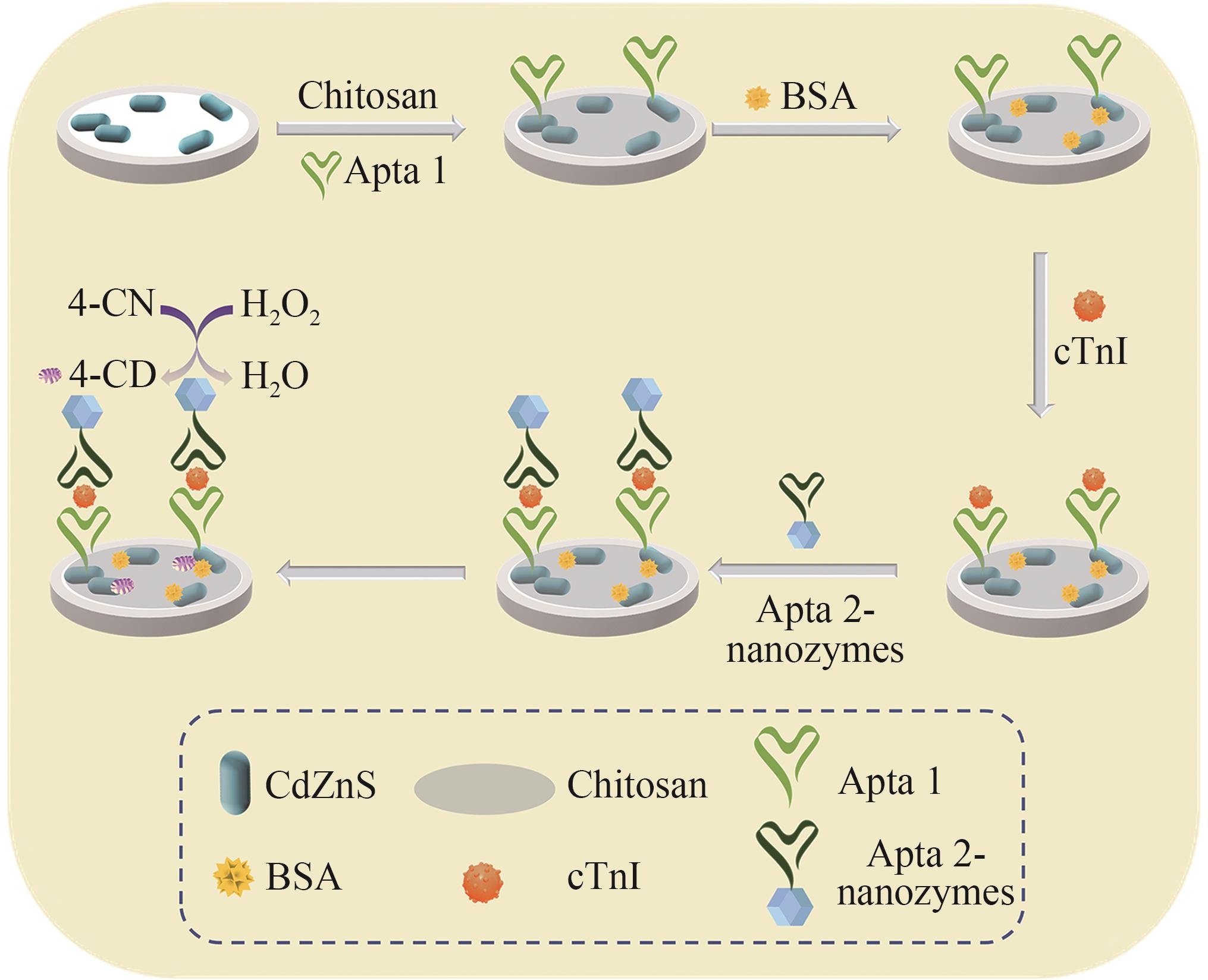
图1 用于cTnI检测的传感器构建机理图
Fig.1 Schematic diagram of sensor construction for cTnI detection
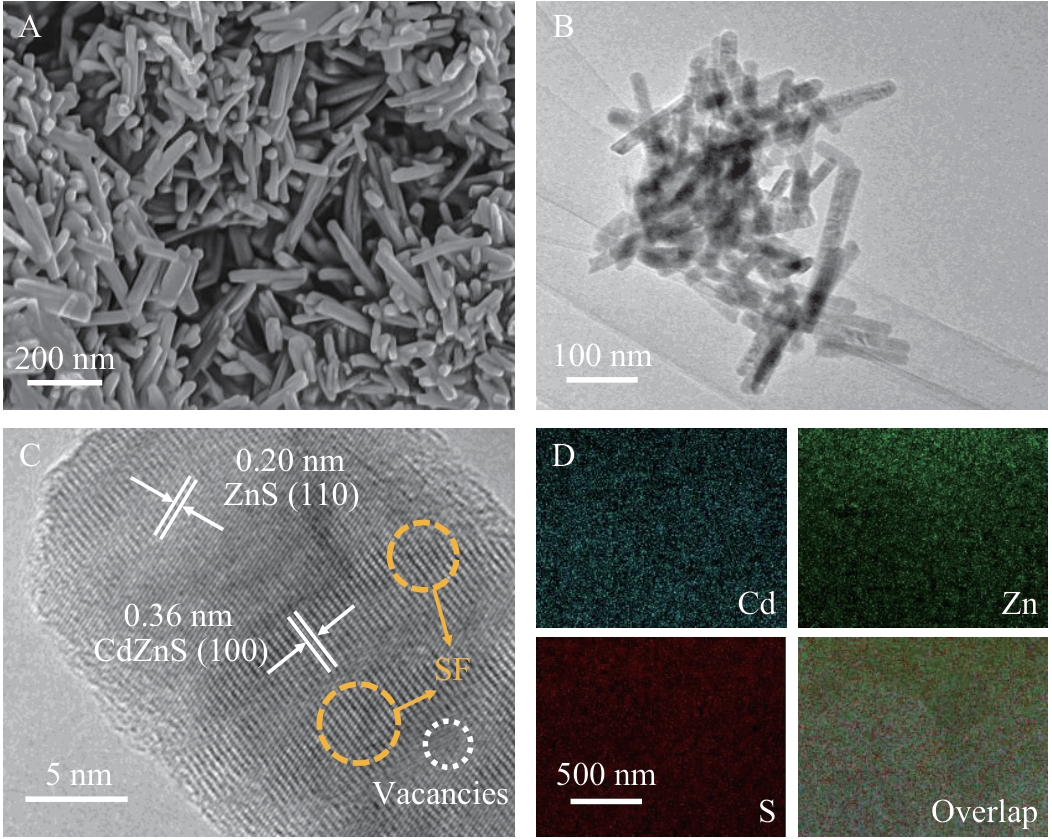
图2 CdZnS纳米棒的(A) SEM图、(B) TEM图、(C) HR-TEM图和(D) EDS图谱
Fig.2 (A) SEM, (B) TEM, (C) HR-TEM and (D) EDS image of CdZnS nanorods
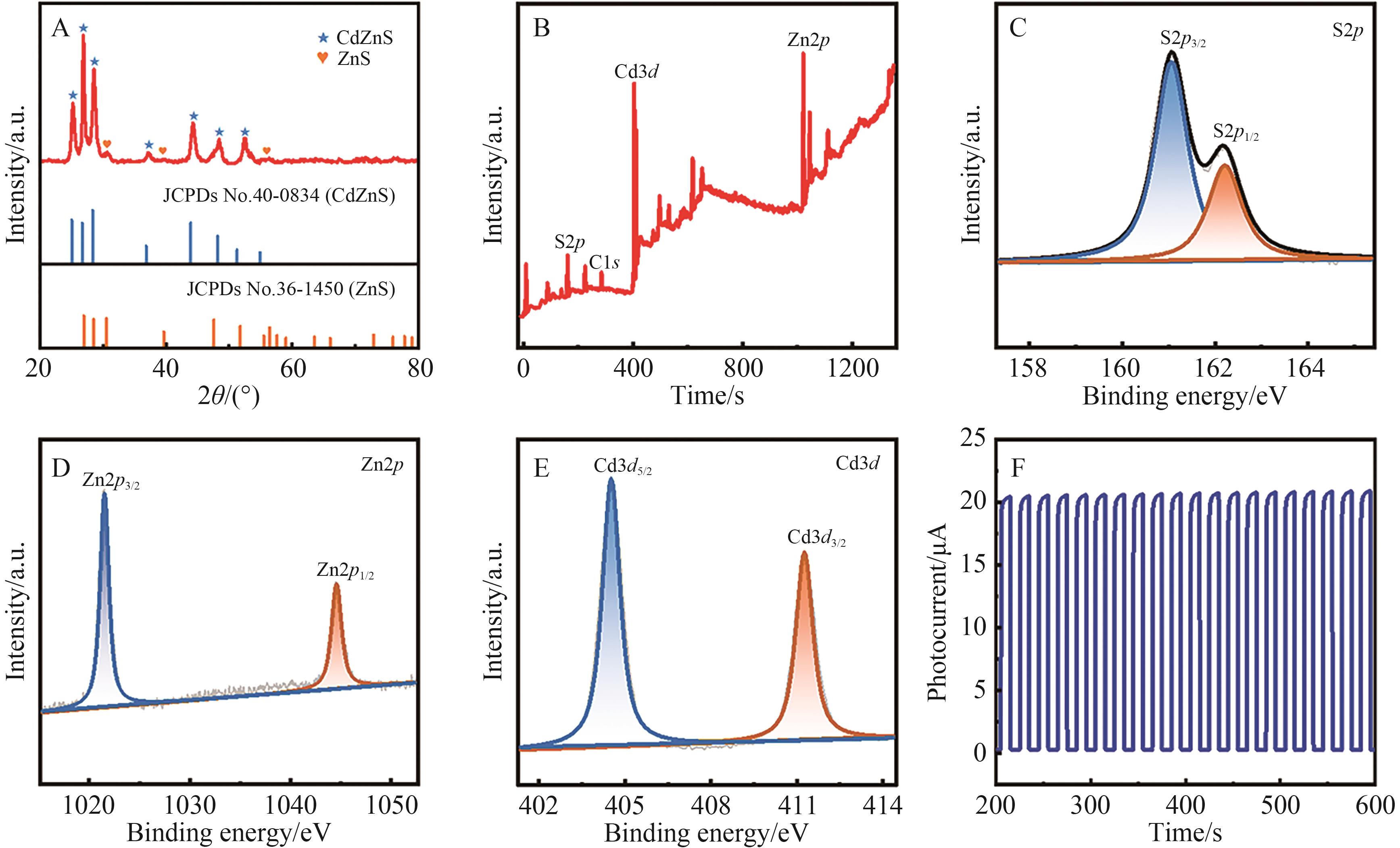
图3 CdZnS纳米棒的XRD图(A)和XPS全谱图(B); S2p(C)、Zn2p(D)和Cd3d(E)高分辨率谱图; CdZnS纳米棒/FTO光活性基底的光电流稳定性图(F)
Fig.3 XRD pattern (A) and XPS full spectrum (B) of CdZnS nanorods; High-resolution spectra of S2p (C), Zn2p (D) and Cd3d (E) of CdZnS nanorods; Photocurrent stability diagram of CdZnS nanorods/FTO photoactive substrate (F)
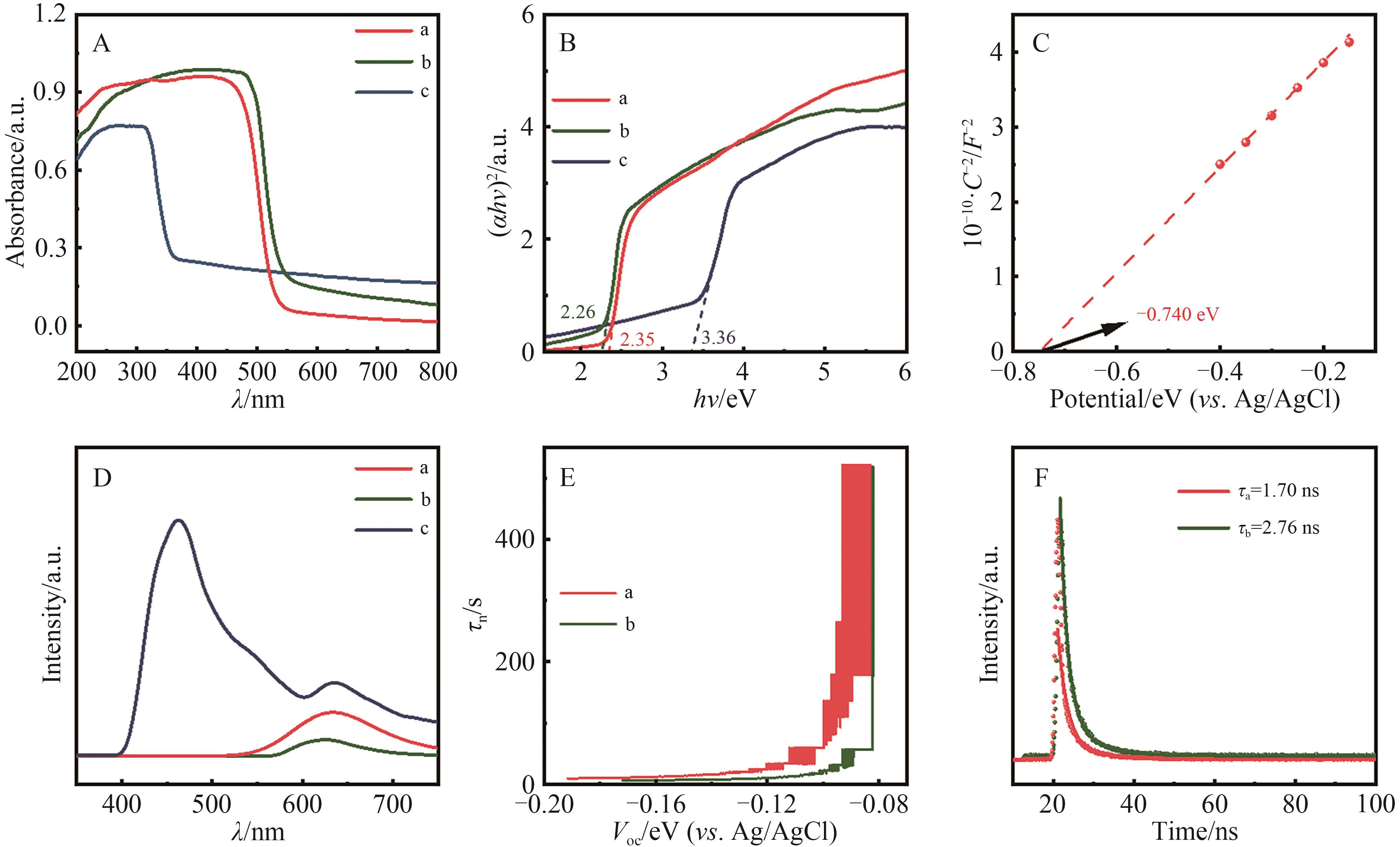
图4 CdZnS(a)、CdS(b)和ZnS(c)的紫外-可见漫反射光谱(A)和对应的Tauc图(B); CdZnS的Mott-Schottky图(C); CdZnS(a)、CdS(b)和ZnS(c)的光致发光光谱(D); CdZnS(a)和CdS(b)光致电荷载流子的平均寿命(E)和时间分辨光致发光光谱(F)
Fig.4 UV-Vis diffuse reflectance spectra (A) and corresponding Tauc plots (B) of CdZnS (a), CdS (b), and ZnS (c); Mott-Schottky plot of CdZnS (C); Photoluminescence spectra (D) of CdZnS (a), CdS (b), and ZnS (c); Average lifetime (E) and time-resolved photoluminescence spectra (F) of photo induced charge carriers in CdZnS (a) and CdS (b)
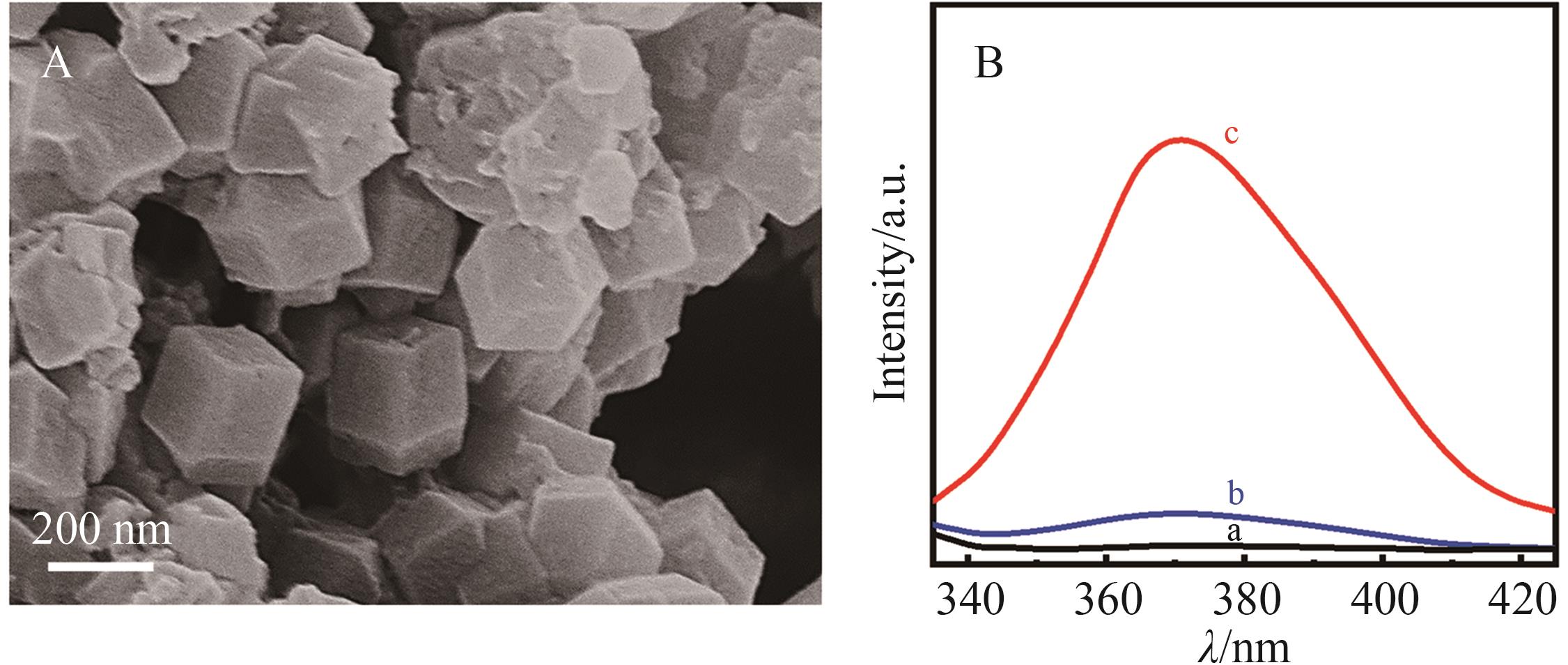
图5 Hemin/BSA@ZIF-8 纳米酶的扫描电子显微镜图像(A); TMB(a)、TMB-H2O2(b)和Hemin/BSA@ZIF-8-TMB-H2O2(c)在0.1 mol/L NaAc-HAc缓冲溶液(pH=4.0)中的UV-Vis光谱(B)
Fig.5 Hemin/BSA@ZIF-8 scanning electron microscopy images of nanoenzymes (A); TMB (a), TMB-H2O2 (b), and Hemin/BSA@ZIF-8-TMB-H2O2 (c) UV-Vis absorption spectra in 0.1 mol/L NaAc-HAc buffer solution (pH=4.0) (B)
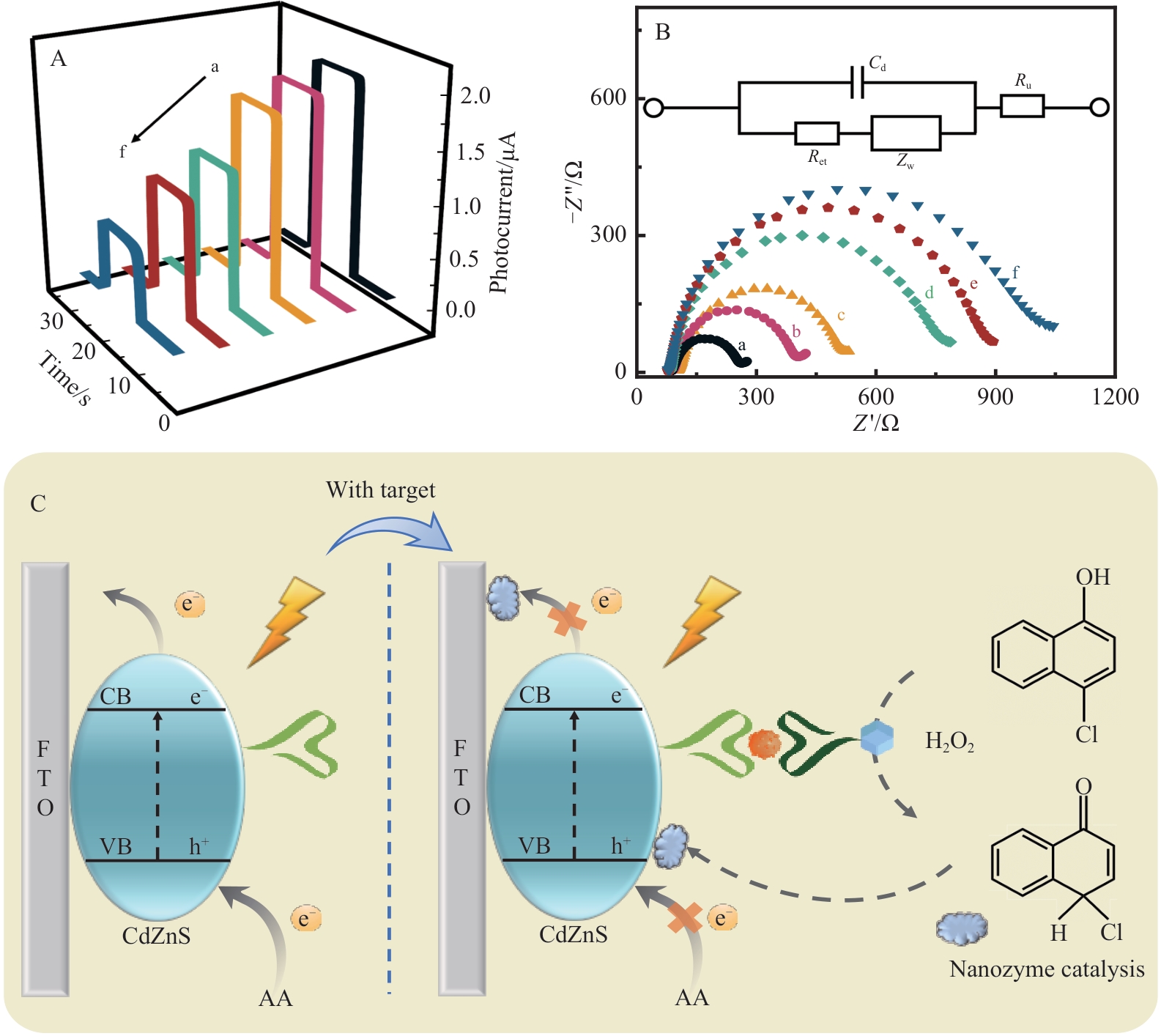
图6 PEC适体传感器构建过程中的光电流响应(A)、阻抗谱图(B)和PEC适体传感器的可能电子传递机制(C)
Fig.6 Photocurrent response during the construction process of PEC aptamer sensor (A), impedance spectrum (B) and possible electron transfer mechanism of PEC aptamer sensor (C)
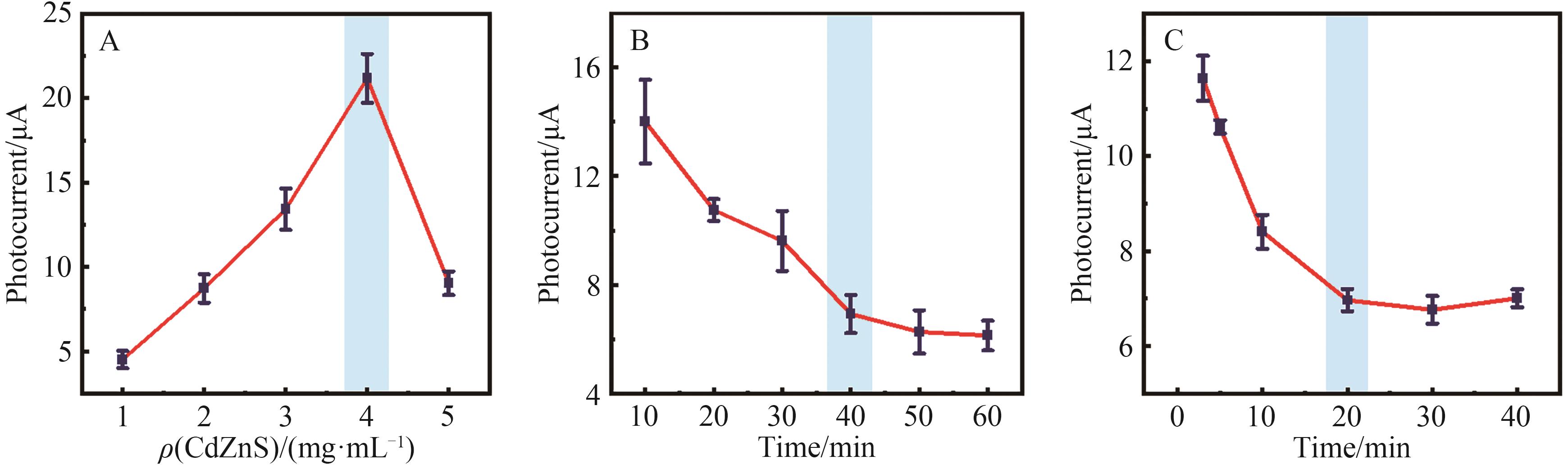
图7 优化CdZnS的负载浓度(A)、目标物cTnI和Apta 2-Hemin/BSA@ZIF-8纳米酶的孵育时间(B)以及纳米酶催化的沉淀反应时间(C)
Fig.7 Optimization of CdZnS loading concentration (A), target compounds cTnI and Apta 2-Hemin/BSA@ZIF-8 incubation time of nanoenzyme (B) and precipitation reaction time catalyzed by nanoenzyme (C)
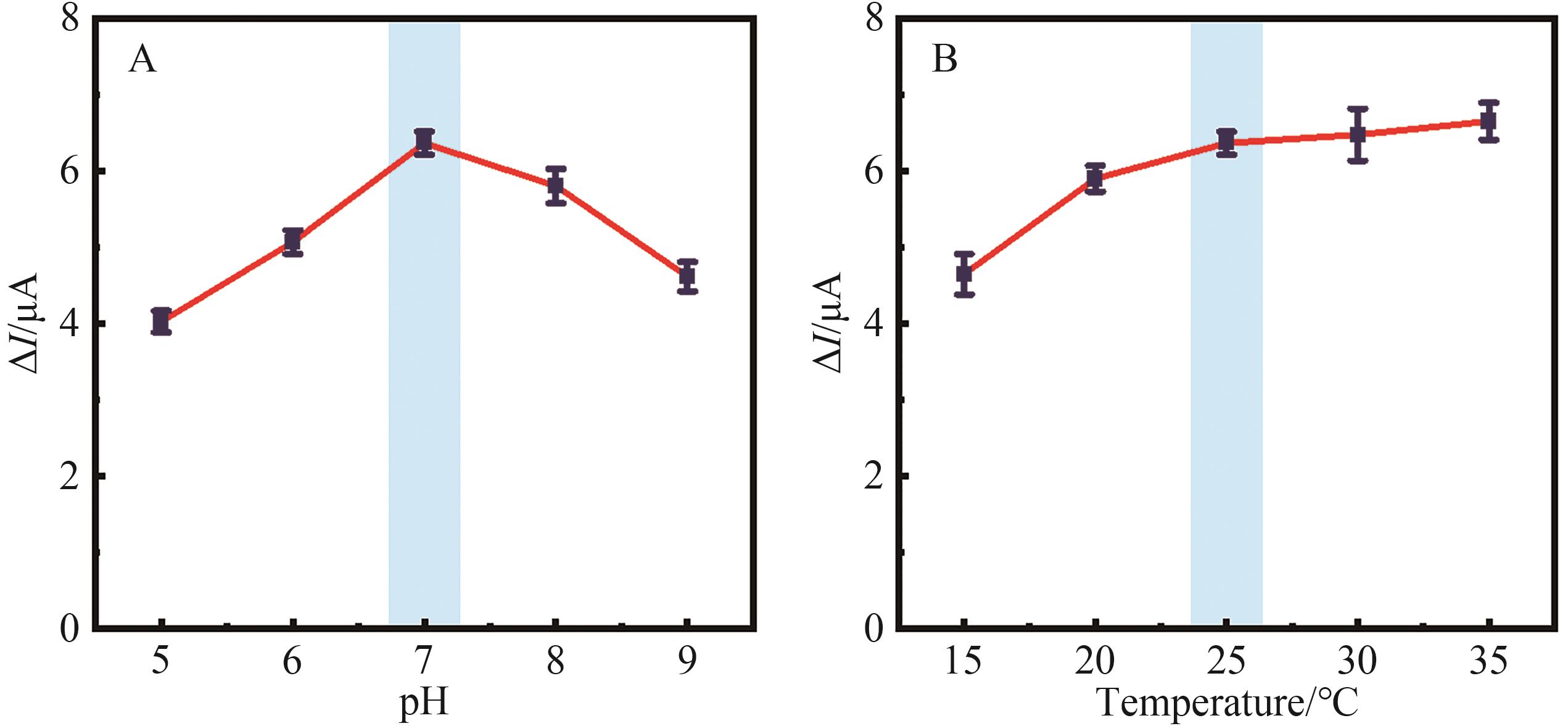
图8 优化纳米酶催化环境的温度(A)和pH值(B),误差棒为3次独立检测结果的标准偏差
Fig.8 Temperature (A) and pH value (B) optimized for nanoenzyme catalytic environment, with error bars representing the standard deviation of three independent detection results
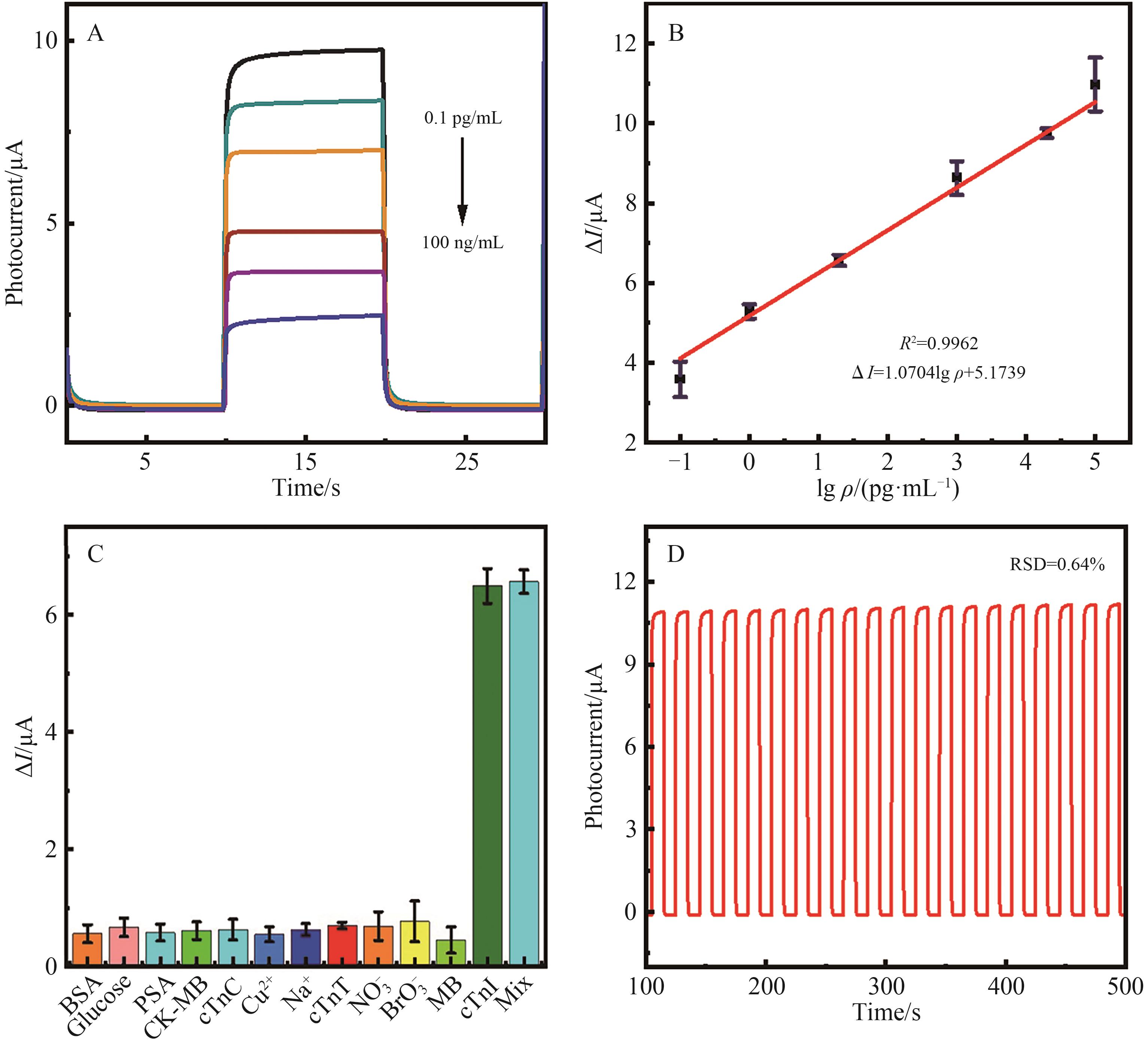
图9 对不同浓度cTnI的光电流响应曲线(A)和相应校准曲线(B);与其他干扰物(100倍)CK-MB、PSA、MB和cTnT、铜离子、硝酸根和溴酸根相比,PEC适体传感器对ρ(cTnI)=10 pg/mL的选择性(C);PEC适体传感器在400 s内重复开/关照明周期对ρ(cTnI)=0.1 pg/mL的稳定性(D)
Fig.9 The photocurrent response curves (A) and corresponding calibration curves (B) of different concentrations of cTnI; Compared with other interferents (100 fold) such as CK-MB, PSA, MB, cTnT, copper ions, nitrate ions, and bromate ions, the PEC aptamer sensor exhibits selectivity for ρ(cTnI)=10 pg/mL (C); The stability of the PEC aptamer sensor for ρ(cTnI)=0.1 pg/mL with repeated on/off illumination cycles within 400 s (D)
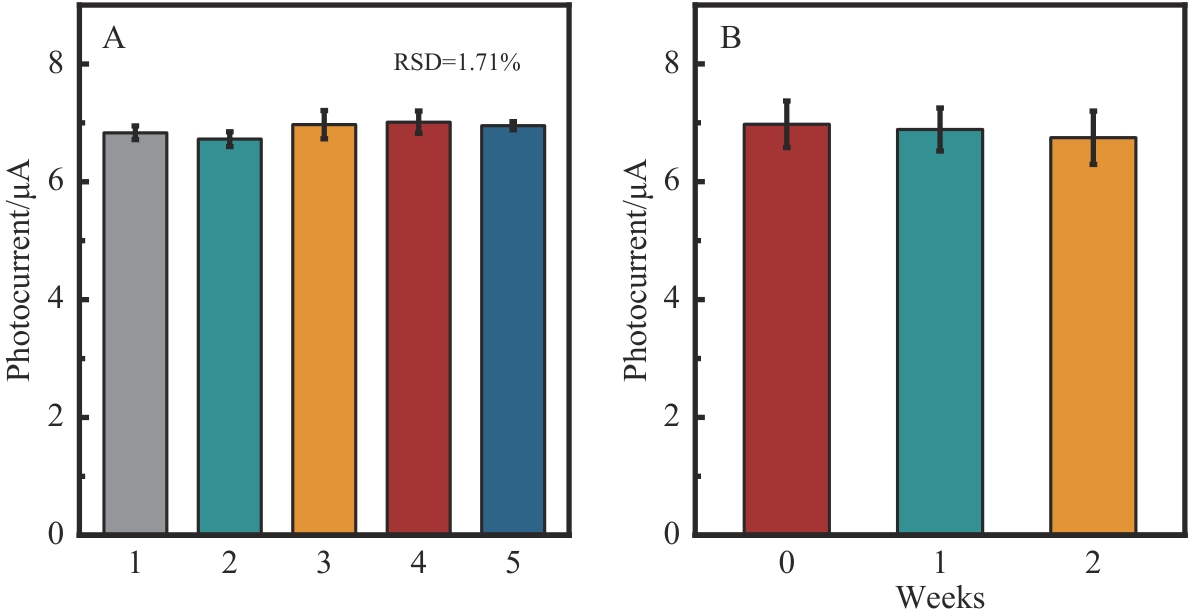
图10 PEC适体传感器的可重复性(A)和长期稳定性(B)
Fig.10 Repeatability (A) and long-term stability (B) of PEC aptamer sensor
| Sample | Addition/(pg·mL-1) | Detection/(pg·mL-1) | Average/(pg·mL-1) | Recovery/% | RSD/%(n=3) | ||
|---|---|---|---|---|---|---|---|
| Human serum | 1.00 | 0.99 | 1.04 | 1.01 | 1.02 | 101.60 | 2.38 |
| 10.00 | 9.53 | 10.21 | 10.38 | 10.04 | 100.40 | 4.45 | |
| 100.00 | 91.70 | 98.24 | 100.20 | 96.52 | 98.32 | 1.87 | |
表1 PEC适体传感器实际样品检测表现
Table 1 Actual sample detection performance of PEC aptamer sensor
| Sample | Addition/(pg·mL-1) | Detection/(pg·mL-1) | Average/(pg·mL-1) | Recovery/% | RSD/%(n=3) | ||
|---|---|---|---|---|---|---|---|
| Human serum | 1.00 | 0.99 | 1.04 | 1.01 | 1.02 | 101.60 | 2.38 |
| 10.00 | 9.53 | 10.21 | 10.38 | 10.04 | 100.40 | 4.45 | |
| 100.00 | 91.70 | 98.24 | 100.20 | 96.52 | 98.32 | 1.87 | |
| [1] | GAO T, ZHOU Z, CHENG D, et al. Electrochemical biosensor for highly sensitive detection of cTnI based on a dual signal amplification strategy of ARGET ATRP and ROP[J]. Talanta, 2024, 266: 125009. |
| [2] | CHEN H, LI Z Y, CHEN J, et al. CRISPR/Cas12a-based electrochemical biosensor for highly sensitive detection of cTnI[J]. Bioelectrochemistry, 2022, 146: 108167. |
| [3] | HONG F, SONG L, ZHU Y Y, et al. Cardiac troponin I, myoglobin, and creatine kinase-Mb as new biomarkers for diagnosis of neonatal hypoxic ischemic encephalopathy[J]. J Biol Regul Homeost Agents, 2019, 33(4): 1201-1207. |
| [4] | HAN G R, GONCHAROV A, ERYILMAZ M, et al. Deep learning-enhanced paper-based vertical flow assay for high-sensitivity troponin detection using nanoparticle amplification[J]. ACS Nano, 2024, 18(41): 27933-27948. |
| [5] | ZHOU Y, YIN H, AI S. Applications of two-dimensional layered nanomaterials in photoelectrochemical sensors: a comprehensive review[J]. Coord Chem Rev, 2021, 447: 214156. |
| [6] | PENG B, ZHANG Z, TANG L, et al. Self-powered photoelectrochemical aptasensor for oxytetracycline cathodic detection based on a dual Z-scheme WO3/g-C3N4/MnO2 photoanode[J]. Anal Chem, 2021, 93(26): 9129-9138. |
| [7] | ZHAO W W, XU J J, CHEN H Y. Photoelectrochemical aptasensing[J]. TrAC Trends Anal Chem, 2016, 82: 307-315. |
| [8] | XIN F F, XU J J, ZHANG J, et al. Nanozyme-assisted ratiometric photoelectrochemical aptasensor over Cu2O nanocubes mediated photocurrent-polarity-switching based on S-scheme FeCdS@FeIn2S4 heterostructure[J]. Biosens Bioelectron, 2023, 237: 115442. |
| [9] | HONG P, LI W, LI J. Applications of aptasensors in clinical diagnostics[J]. Sensors, 2012, 12(2): 1181-1193. |
| [10] | SHI L, YIN Y, ZHANG L C, et al. Design and engineering heterojunctions for the photoelectrochemical monitoring of environmental pollutants: a review[J]. Appl Catal B: Environ, 2019, 248: 405-422. |
| [11] | YU K, HUANG H B, ZENG X Y, et al. CdZnS nanorods with rich sulphur vacancies for highly efficient photocatalytic hydrogen production[J]. Chem Commun, 2020, 56(56): 7765-7768. |
| [12] | YU T, SUN K, WANG K, et al. Ni doped noble-metal-free CdZnNiS photocatalyst for high-efficient photocatalytic hydrogen evolution reduction by visible light driving[J]. Mater Lett, 2019, 239: 159-162. |
| [13] | HUANG X, WILLINGER M G, FAN H, et al. Single crystalline wurtzite ZnO/zinc blende ZnS coaxial heterojunctions and hollow zinc blende ZnS nanotubes: synthesis, structural characterization and optical properties[J]. Nanoscale, 2014, 6(15): 8787-8795. |
| [14] | HSU Y J, LU S Y. One-step preparation of coaxial CdS-ZnS nanowires[J]. Chem Commun, 2004(18): 2102-2103. |
| [15] | HSU Y J, LU S Y, LIN Y F. One-step preparation of coaxial CdS-ZnS and Cd1- xZnxS-ZnS nanowires[J]. Adv Funct Mater, 2005, 15(8): 1350-1357. |
| [16] | XIAO P, JIANG D, JU L, et al. Construction of RGO/CdIn2S4/g-C3N4 ternary hybrid with enhanced photocatalytic activity for the degradation of tetracycline hydrochloride[J]. Appl Surf Sci, 2018, 433: 388-397. |
| [17] | CHEN W, HUANG T, HUA Y X, et al. Hierarchical CdIn2S4 microspheres wrapped by mesoporous g-C3N4 ultrathin nanosheets with enhanced visible light driven photocatalytic reduction activity[J]. J Hazard Mater, 2016, 320: 529-538. |
| [18] | HUANG H B, FANG Z B, YU K, et al. Visible-light-driven photocatalytic H2 evolution over CdZnS nanocrystal solid solutions: interplay of twin structures, sulfur vacancies and sacrificial agents[J]. J Mater Chem A, 2020, 8(7): 3882-3891. |
| [1] | 陈结霞, 刘卓尔, 鹿长宁, 杨可欣, 陈紫艳, 尉艳. 基于ZnS修饰电极构建光电化学生物传感器测定L-半胱氨酸[J]. 应用化学, 2025, 42(3): 321-329. |
| [2] | 姚春莹, 朱晓艳, 刘艳玲. 三维葡萄糖电化学传感器与胶原水凝胶集成实时监测细胞代谢[J]. 应用化学, 2024, 41(1): 156-163. |
| [3] | 刘明言, 石秀顶, 李天国, 王静. 电化学分析方法检测重金属离子研究进展[J]. 应用化学, 2023, 40(4): 463-475. |
| [4] | 周锐, 张自品. 生物样品中小檗碱的电化学分析新方法[J]. 应用化学, 2023, 40(4): 518-526. |
| [5] | 姜士鹏, 周禹希, 孟沛然, 谢炎轩, 宋祉怡, 赵洹影, 孙越. 基于无金属可见光诱导原子转移自由基聚合方法制备人血清白蛋白超微印迹传感器及其性能[J]. 应用化学, 2023, 40(2): 299-308. |
| [6] | 秦丽, 尤晓亭, 唐录华, 李建文, 张寅, 高文惠, 韩俊华. 基于纳米材料修饰的碱性嫩黄O印迹传感器的制备及其应用[J]. 应用化学, 2022, 39(12): 1880-1890. |
| [7] | 郭佳昕, 刘洋, 徐长山, 刘晓男, 程亮. 不同pH值下MgO NPs悬浮液中Mg2+质量浓度的动态变化及其对小麦生长的影响[J]. 应用化学, 2022, 39(9): 1401-1411. |
| [8] | 邵姗, 张剑, 邓凯强, 杨杰, 杨绍明. 镍钴双金属-卟啉有机框架复合纳米材料构建的无酶传感器检测多巴胺[J]. 应用化学, 2022, 39(7): 1098-1107. |
| [9] | 杨琴, 陈宁华, 张宇杰, 叶芝祥, 杨迎春. 铈锆复合氧化物修饰电极的制备及用于水样中Pb2+的检测[J]. 应用化学, 2022, 39(6): 990-999. |
| [10] | 熊海涛, 吴睿, 吴迎春. Nafion-碳纳米管修饰电极电化学发光分析法测定卡马西平[J]. 应用化学, 2021, 38(6): 731-738. |
| [11] | 郭宪厚, 王学亮, 郁章玉. 石墨烯/铂纳米粒子杂化膜测定肾上腺素[J]. 应用化学, 2014, 31(12): 1465-1471. |
| [12] | 于浩, 郑笑晨, 刘冉彤, 金君, 简选. 多壁碳纳米管负载铁氰化铜-铁修饰电极的制备及对亚硝酸根的测定[J]. 应用化学, 2014, 31(11): 1336-1344. |
| [13] | 杨绍明, 查文玲, 孙清, 李红, 李瑞琴, 尚培玲. 基于铁氰化镍的非标记型核酸适配体电化学传感器检测凝血酶[J]. 应用化学, 2014, 31(06): 742-748. |
| [14] | 徐思远, 雷平, 晋冠平. 三聚氰胺基螯合树脂/碳纳米管修饰充蜡石墨电极阳极溶出伏安法测定铅和镉[J]. 应用化学, 2014, 31(02): 206-211. |
| [15] | 安玲玲, 路毛凤, 邓玲玲, 杜江燕. 8-羟基脱氧鸟苷在壳聚糖/石墨烯修饰电极上的电化学及DNA氧化损伤检测[J]. 应用化学, 2014, 31(02): 200-205. |
| 阅读次数 | ||||||
|
全文 |
|
|||||
|
摘要 |
|
|||||
