
Chinese Journal of Applied Chemistry ›› 2025, Vol. 42 ›› Issue (7): 971-981.DOI: 10.19894/j.issn.1000-0518.250116
• Full Papers • Previous Articles Next Articles
Zhen-Zhen MENG2, Jin-Feng YANG1,2( ), Yu-Kang YAN2
Received:2025-03-18
Accepted:2025-06-03
Published:2025-07-01
Online:2025-07-23
Contact:
Jin-Feng YANG
About author:yangjinfeng@shzu.edu.cnSupported by:CLC Number:
Zhen-Zhen MENG, Jin-Feng YANG, Yu-Kang YAN. Application of Near Infrared Aggregation-Induced Emission Fluorescence Probe with Benzopyranitrile in Viscosity Detection and Cell Imaging[J]. Chinese Journal of Applied Chemistry, 2025, 42(7): 971-981.
Add to citation manager EndNote|Ris|BibTeX
URL: http://yyhx.ciac.jl.cn/EN/10.19894/j.issn.1000-0518.250116
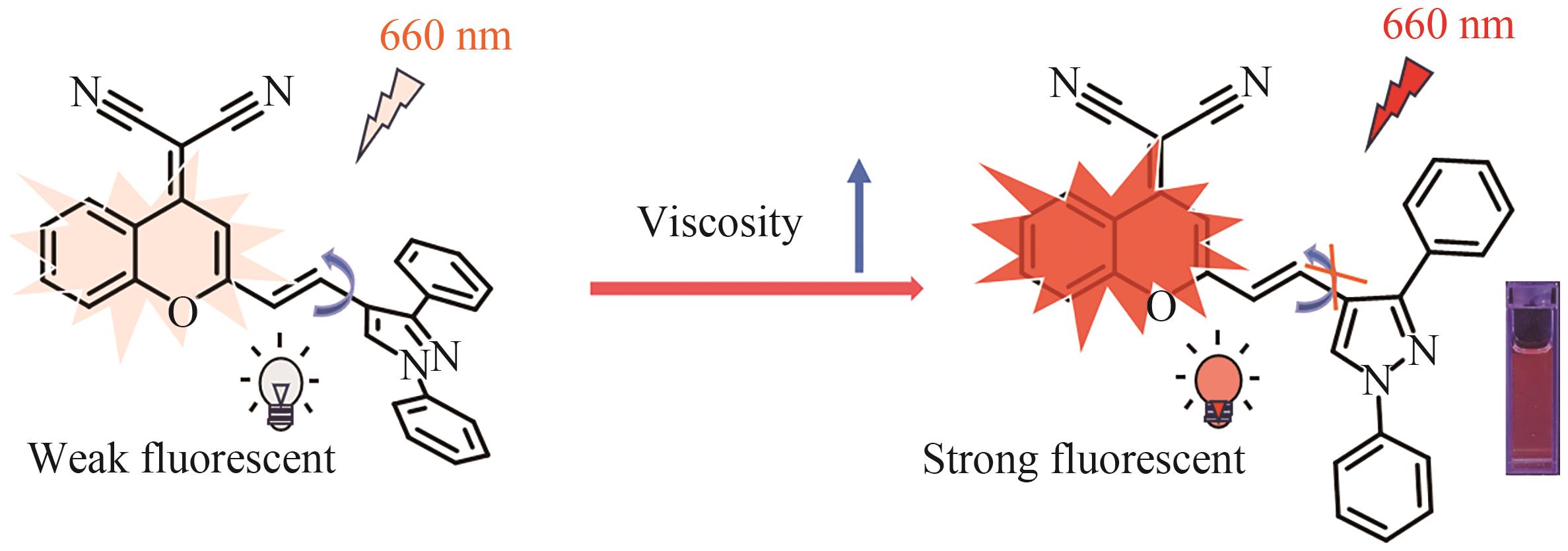
Fig.1 Schematic diagram of DCM-PD response viscosity of fluorescent probe

Fig.2 Synthetic route of fluorescence probe DCM-PD
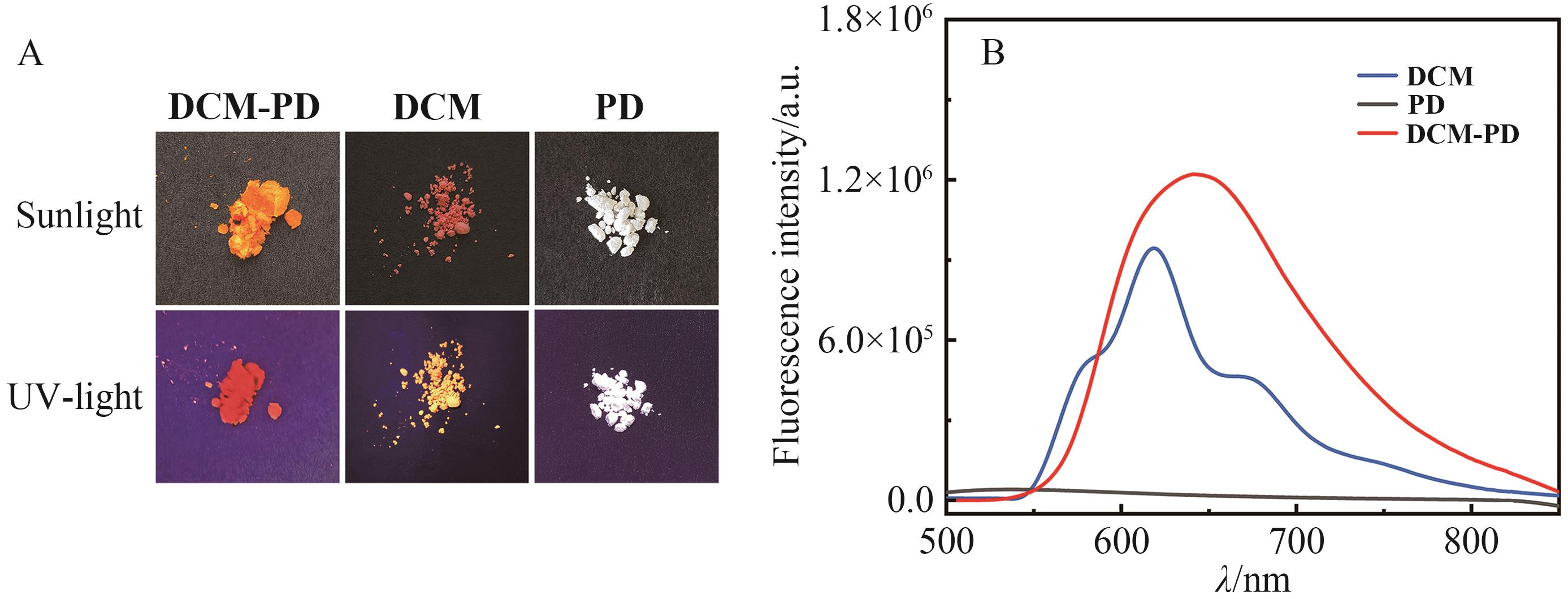
Fig.3 (A) Solid DCM-PD, DCM and PD in sunlight and UV-light (365 nm); (B) Fluorescence spectra of solid DCM, PD and DCM-PD (λex=450 nm)
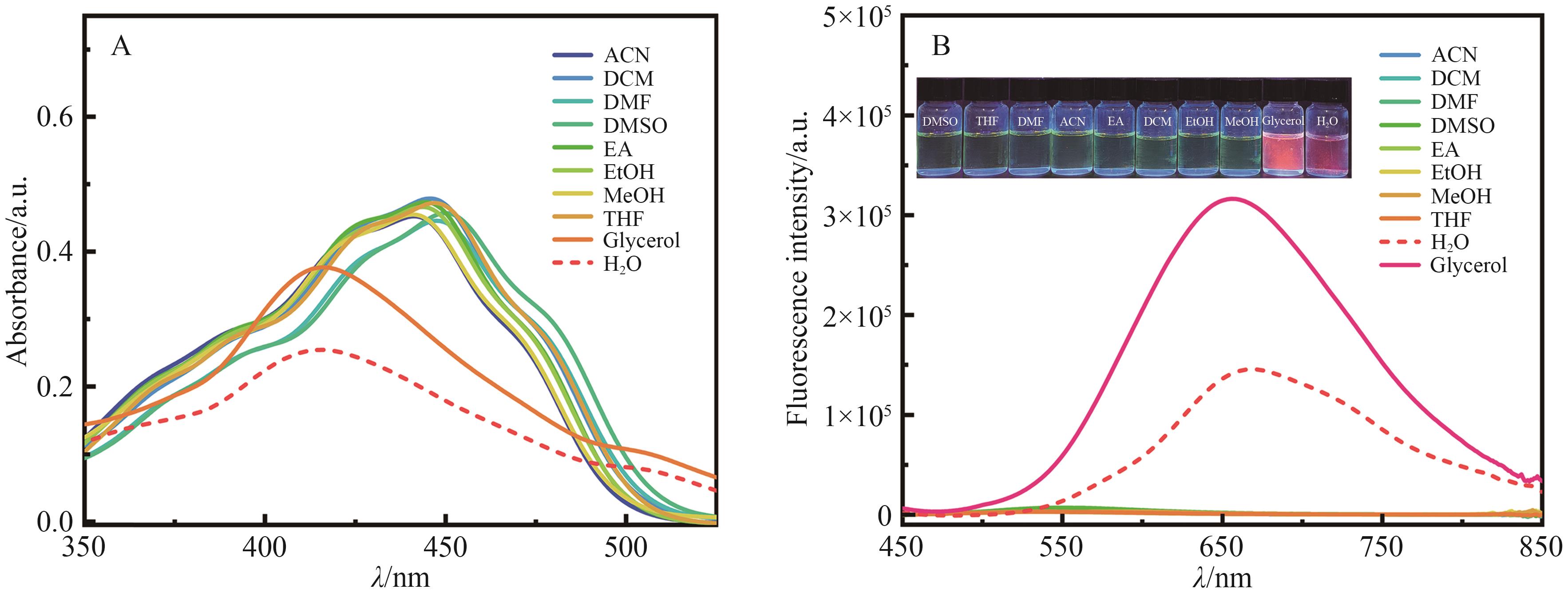
Fig.4 (A) Ultraviolet absorption spectra of probe DCM-PD (10 μmol/L) in different solvents; (B) Fluorescence spectra of probe DCM-PD (10 μmol/L) in different solvents (λex=445 nm); Illustration: fluorescence images of DCM-PD (10 μmol/L) irradiated by 365 nm ultraviolet light in different solvents
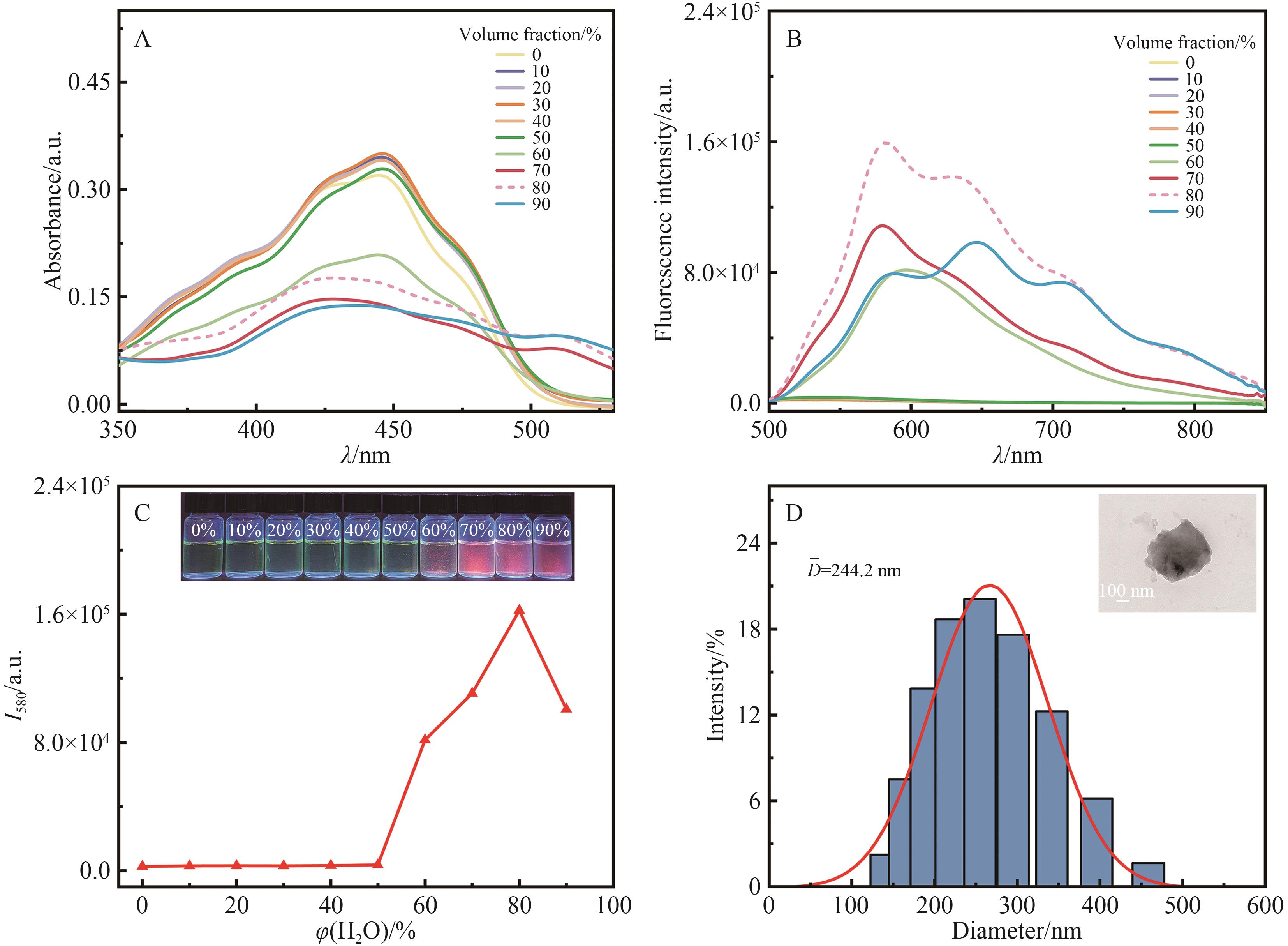
Fig.5 (A) UV absorption spectra of DCM-PD (10 μmol/L) in different φ(H2O); (B) Fluorescence spectra of probe DCM-PD (10 μmol/L) in different φ(H2O) (λex=445 nm); (C) Plot of the maximum fluorescence intensity versus the φ(H2O), illustration: images of DCM-PD (10 μmol/L) in different φ(H2O) under ultraviolet light (365 nm); (D) Dynamic light scattering (DLS) hydrodynamic diameter distribution of DCM-PD (10 μmol/L) in H2O (illustration: TEM image of the DCM-PD)
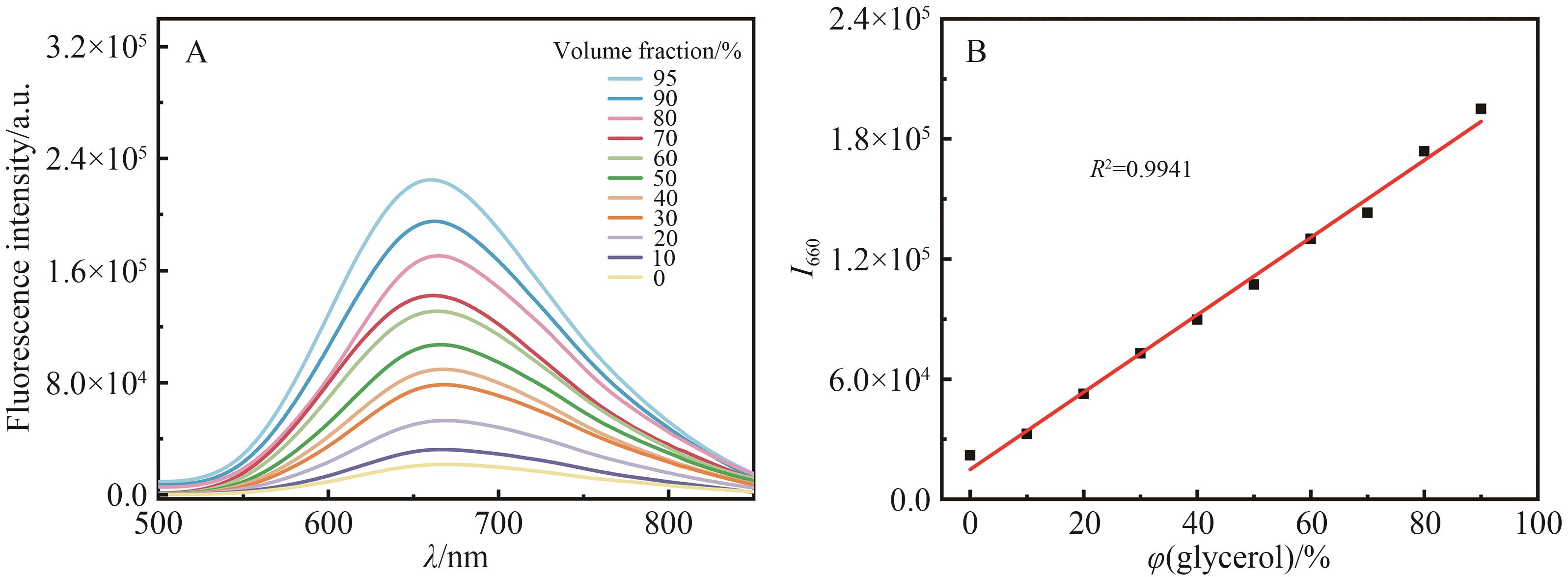
Fig.6 (A) Fluorescence spectra of probe DCM-PD (10 μmol/L) in different φ(glycerol) solution (λex=415 nm); (B) Linear fitting curves of fluorescence intensity of probe DCM-PD (10 μmol/L) at 660 nm and the φ(glycerol) solution
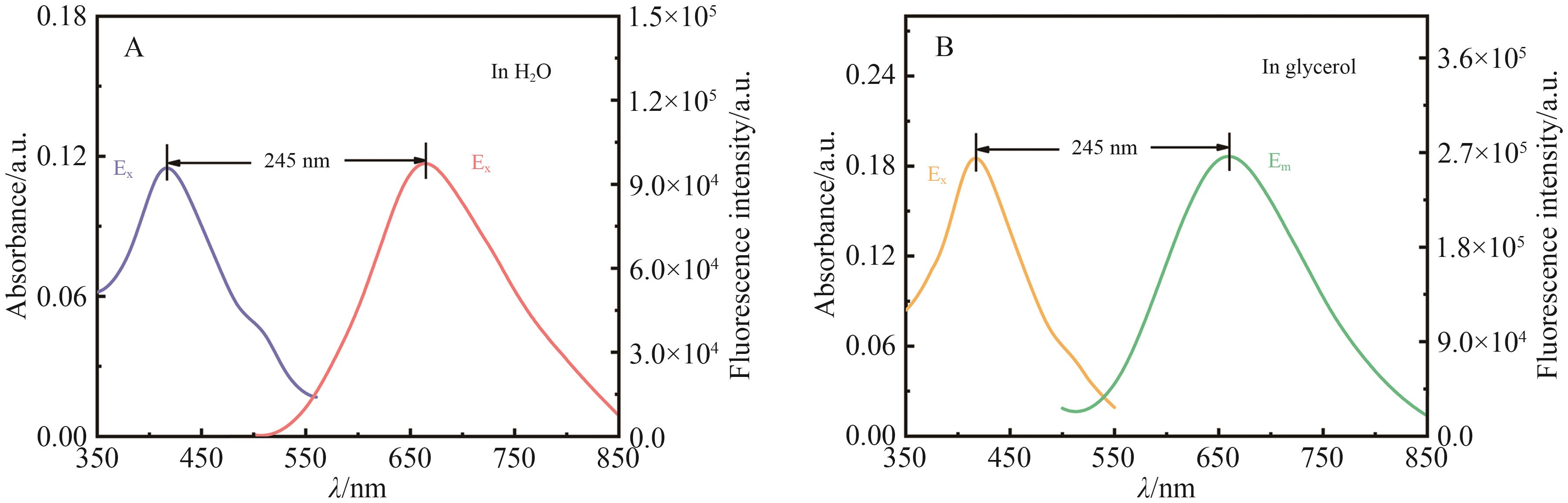
Fig.7 (A) Stokes shift value of probe DCM-PD (10 μmol/L) in water; (B) Stokes shift value of probe DCM-PD (10 μmol/L) in glycerol
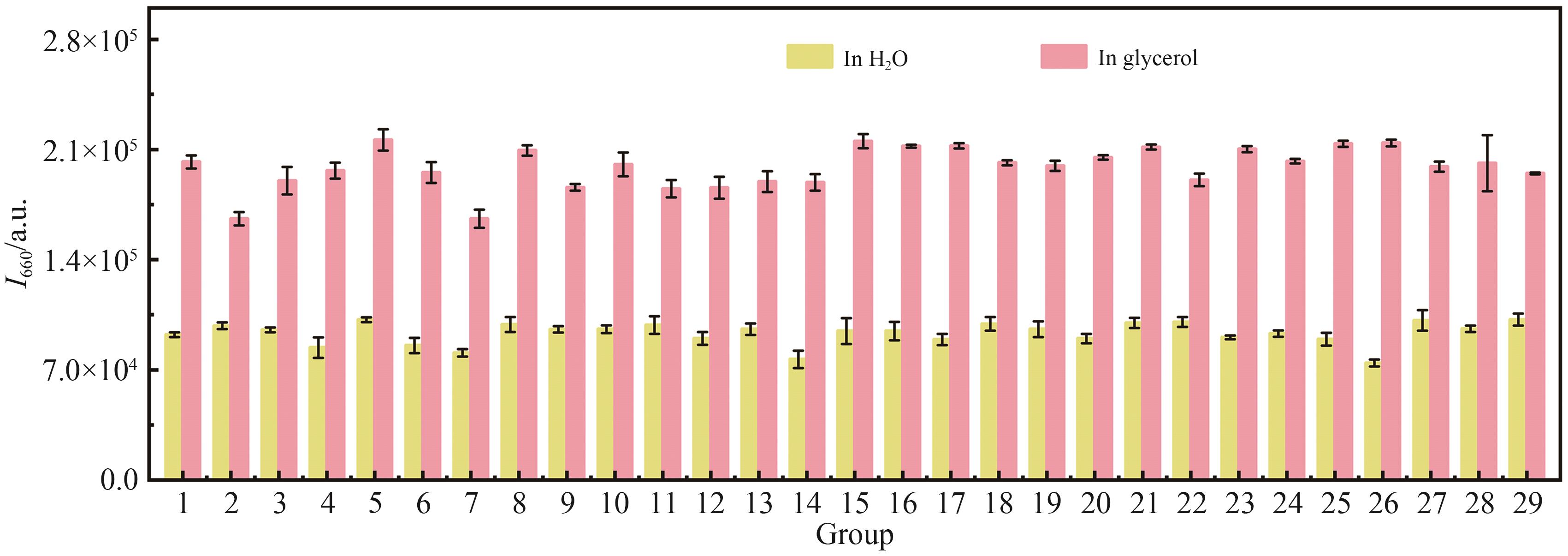
Fig.8 Fluorescence intensity of probe DCM-PD (10 μmol/L) and interference substance (1000 μmol/L) in water and glycerol (λex=415 nm)
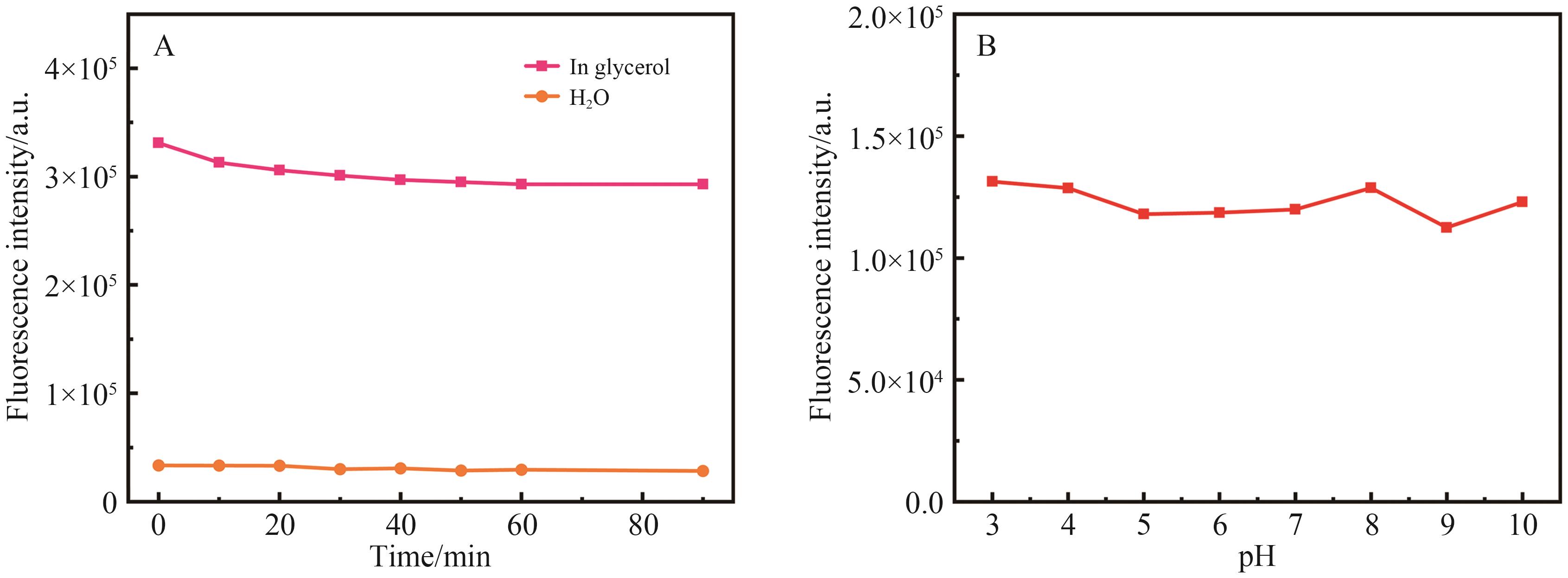
Fig.9 (A) The relationship between the fluorescence intensity of probe DCM-PD (10 μmol/L) in glycerol and water with time; (B) Fluorescence intensity of probe DCM-PD (10 μmol/L) in PBS buffer solution at different pH

Fig.10 Cytotoxicity assays of probe DCM-PD with different concentrations (0~50 μmol/L) for HeLa cells
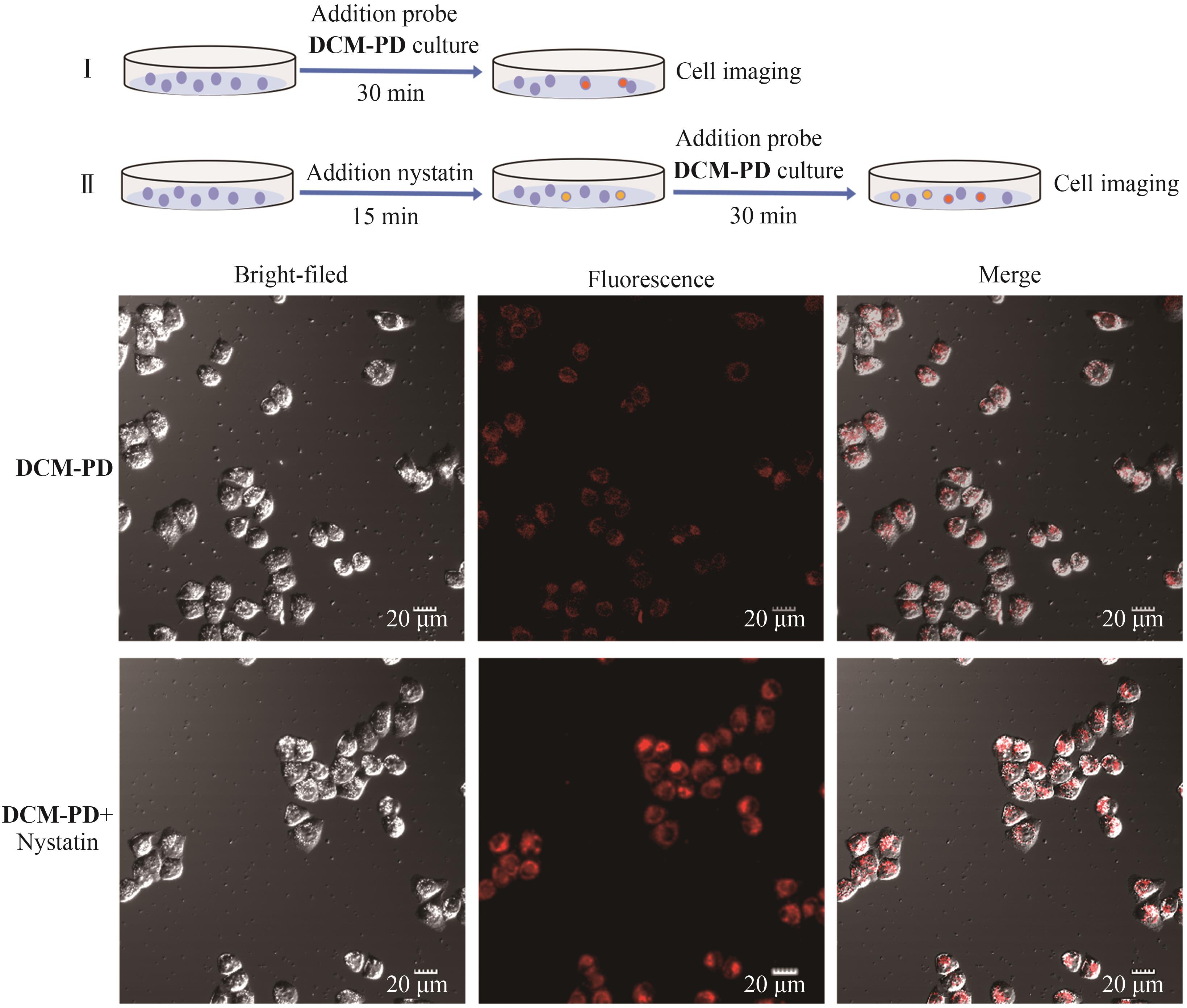
Fig.11 Fluorescence images of HeLa cells
| [1] | MA J B, SUN R, XIA K F, et al. Design and application of fluorescent probes to detect cellular physical microenvironments[J]. Chem Rev, 2024, 124(4): 1738-1861. |
| [2] | SREEJAYA M M, VINEETH M P, AYESHA A, et al. Mechanistic analysis of viscosity-sensitive fluorescent probes for applications in diabetes detection[J]. J Mater Chem B, 2024, 12(12): 2917-2937. |
| [3] | WANG X D, FAN L, WANG S H, et al. Real-time monitoring mitochondrial viscosity during mitophagy using a mitochondria-immobilized near-infrared aggregation-induced emission probe[J]. Anal Chem, 2021, 93(6): 3241-3249. |
| [4] | SHI W J, YAN X H, YANG J R, et al. Development of meso-five-membered heterocycle BODIPY-based AIE fluorescent probes for dual-organelle viscosity imaging[J]. Anal Chem, 2023, 95(25): 9646-9653. |
| [5] | LIU M H, WENG J T, HUANG S M, et al. Water-soluble fluorescent probes for differentiating cancer cells and normal cells by tracking lysosomal viscosity[J]. Chem Commun, 2023, 59(24): 3570-3573. |
| [6] | 赖燕琴, 陈雪, 陈芳, 等. 溶酶体靶向远红光至近红外荧光探针用于监测铁死亡过程中粘度的变化[J]. 有机化学, 2022, 42(9): 2850-2856. |
| LAI Y Q, CHEN X, CHEN F, et al. A lysosome-targeted far-red to near-infrared fluorescent probe for monitoring viscosity change during the ferroptosis process[J]. Chin J Org Chem, 2022, 42(9): 2850-2856. | |
| [7] | WU Y C, YIN C X, ZHANG W J, et, al. Mitochondrial-targeting near-infrared fluorescent probe for visualizing viscosity in drug-induced cells and a fatty liver mouse model[J]. Anal Chem, 2022, 94(12): 5069-5074. |
| [8] | 黄蕊, 叶长青, 李亚军, 等. 线粒体靶向的近红外HClO/ClO-荧光探针的研究进展[J]. 应用化学, 2022, 39(3): 407-424. |
| HUANG R, YE C Q, LI Y J, et al. Progress of mitochondria-targeted near infrared HClO/ClO- fluorescent probes[J]. Chin J Appl Chem, 2022, 39(3): 407-424. | |
| [9] | ZHANG S Y, GONG S Y, HONG J X, et al. Dual-state emissive mitochondrial viscosity probe for long-term imaging of rheumatoid arthritis[J]. Anal Chem, 2025, 97(4): 2318-2325. |
| [10] | 欧阳艾, 罗雨珩, 陆农, 等. 基于粘度响应的线粒体靶向铱(Ⅲ)配合物用于肿瘤的光动力治疗[J]. 无机化学学报, 2021, 37(3): 401-411. |
| OUYANG A, LUO Y H, LU N, et al. Viscosity responsive and mitochondria targeted iridium complexes for photodynamic therapy of tumors[J]. Chin J Inorg Chem, 2021, 37(3): 401-411. | |
| [11] | 余强, 李祥, 马素芳. 吲哚结构的荧光探针在粘度检测及细胞成像中的应用[J]. 分析测试学报, 2023, 42(9): 1151-1156. |
| YU Q, LI X, MA S F. Application of fluorescence probe based on indole in viscosity detection and cell imaging[J]. J Instrumental Anal, 2023, 42(9): 1151-1156. | |
| [12] | 蔡佳利, 薄淑琴, 秦汶, 等. 一种聚四氟乙烯毛细管Ubbelodhe粘度计[J]. 应用化学, 2001, 18(5): 377-379. |
| CAI J L, BO S Q, QIN W, et al. A ubbelodhe viscometer with polytetrafluoroethylene capillary[J]. Chin J Appl Chem, 2001, 18(5): 377-379. | |
| [13] | 张岩, 卢煜松, 刘吴颖, 等. 一种具有激发态分子内质子转移特性的荧光小分子在铜离子检测及细胞成像中的应用[J]. 分析化学, 2024, 52(11): 1726-1734. |
| ZHANG Y, LU Y S, LIU H Y, et al. A fluorescent small molecule with excited state intramolecular proton transfer property for detection of Cu2+ and cellular imaging[J]. Chin J Anal Chem, 2024, 52(11): 1726-1734. | |
| [14] | 高长江, 黄鑫, 田亚洋, 等. 一种近红外快速响应型硫化氢荧光探针的合成及细胞成像[J]. 应用化学, 2025, 42(2): 192-200. |
| GAO C J, HUANG X, TIAN Y Y, et al. Synthesis and cell imaging of a near-infrared fast responsive hydrogen sulfide fluorescent probe[J]. Chin J Appl Chem, 2025, 42(2): 192-200. | |
| [15] | LUO J L, SONG C Y, CHEN Y L, et al. Near-infrared fluorescent probe with pH- and viscosity-switchable performance for the detection of thrombi in live animals and organs[J]. Chem Biomed Imaging, 2024, 2(6): 422-431. |
| [16] | 蔡丰泽, 徐永玲, 周乐, 等. 一种红光发射的粘度荧光探针[J]. 应用化学, 2020, 37(4): 440-446. |
| CAI F Z, XU Y L, ZHOU L, et al. Synthesis and properties of red-emitting fluorescence probe for viscosity detection[J]. Chin J Appl Chem, 2020, 37(4): 440-446. | |
| [17] | LI Q H, ZHENG Z P, CHEN Y, et al. Biotinylated viscosity sensitive cell membrane probe for targeted imaging and precise visualization of tumor cells and tumors[J]. Anal Chem, 2025, 97: 1627-1634. |
| [18] | ZHANG G Q, CHANG H, GAO Z Y, et al. Neuraminidase-activatable NIR fluorescent probe for influenza virus ratiometric imaging in living cells and colorimetric detection on cotton swabs[J]. ACS Mater Lett, 2023, 5(3): 722-729. |
| [19] | SUN H, LI L K, GUO R H, et al. Suppressing ACQ of molecular photosensitizers by distorting the conjugated-plane for enhanced tumor photodynamic therapy[J]. Chem Sci, 2024, 15(3): 940-952. |
| [20] | WANG L J, ZHANG Y C, HUANG X D, et al. ACQ to AIE transformation of quinoline derivatives: modulating substituent electronic effects to alter excited-state reorganization energy distribution[J]. J Mater Chem C, 2023, 11(27): 9308-9315. |
| [21] | LUO J D, XIE Z L, JACKY W Y L, et al. Aggregation-induced emission of 1-methyl-1,2,3,4,5-pentaphenylsilole[J]. Chem Commun, 2001, 18: 1740-1741. |
| [22] | ZHANG J Q, DU Z X, YANG H T, et al. Amorphization-enhanced emission (AEE) of tetraphenylethylene[J]. Chem Mater, 2024, 36: 7127-7134. |
| [23] | TIAN X Y, ZHANG K Z, WANG N, et al. Synthesis of a novel triphenylamine-based multifunctional fluorescent probe for continuous recognition applications[J]. New J Chem, 2023, 47(10): 5033-5047. |
| [24] | KIM J, YOO J Y, KIM B, et al. An AIE-based fluorescent probe to detect peroxynitrite levels in human serum and its cellular imaging[J]. Chem Commun, 2024, 60(41): 5443-5446. |
| [25] | HUANG X Q, ZHANG S Y, LIU Z H, et al. Novel AIE probe for in situ imaging of protein sulfonation to assess cigarette smoke-induced inflammatory damage[J]. Anal Chem, 2023, 95: 1967-1974. |
| [26] | NI X, ZHANG X Y, DUAN X C, et al. Near-infrared afterglow luminescent aggregation-induced emission dots with ultrahigh tumor-to-liver signal ratio for promoted image-guided cancer surgery[J]. Nano Lett, 2019, 19(1): 318-330. |
| [27] | LI H, KIM Y J, JUNG H, et al. Near-infrared (NIR) fluorescence-emitting small organic molecules for cancer imaging and therapy[J]. Chem Soc Rev, 2022, 51: 8957-9008. |
| [28] | YAN C X, ZHU Z R, YAO Y K, et al. Engineering near-infrared fluorescent probes based on modulation of molecular excited states[J]. Acc Mater Res, 2024, 5(1): 64-75. |
| [29] | ZHAO D, HAN H H, ZHU L, et al. Long-wavelength AIE-based fluorescent probes for mitochondria-targeted imaging and photodynamic therapy of hepatoma cells[J]. ACS Appl Bio Mater, 2021, 4(9): 7016-7024. |
| [30] | CHEN J W, CHARLES C W L, JACKY W Y L, et al. Synthesis, light emission, nanoaggregation, and restricted intramolecular rotation of 1,1-substituted 2,3,4,5-tetraphenylsiloles[J]. Chem Mater, 2003, 15: 1535-1546. |
| [31] | GU K Z, XU Y S, LI H, et, al. Real-time tracking and in vivo visualization of β-galactosidase activity in colorectal tumor with a ratiometric near-infrared fluorescent probe[J]. J Am Chem Soc, 2016, 138(16): 5334-5340. |
| [32] | YANG J F, LI M, ZHU W H. Dicyanomethylene-4H-pyran-based NIR fluorescent ratiometric chemosensor for pH measurement[J]. Res Chem Intermed, 2018, 44(7): 3959-3969. |
| [33] | LI B, LI Z R, FAN L, et al. A fluorescent probe for lipid droplet polarity imaging with low viscosity crosstalk[J]. Analyst, 2023, 148: 3285-3294. |
| [1] | Xin-Xin HUANG, You-Sheng SHI, Tao DENG, Chun CAI. Research Progress of Fluorescent Probes Based on Aggregation-Induced Emission for Detection of Biomarkers [J]. Chinese Journal of Applied Chemistry, 2025, 42(8): 1035-1056. |
| [2] | Zhen-Cao WANG, Ning LYU, Liang-Fang CHEN, Yue-Feng RAO. Research Progress of Aggregation-Induced Emission Molecules for Fluorescence Imaging Therapy [J]. Chinese Journal of Applied Chemistry, 2025, 42(6): 741-756. |
| [3] | Da-Wei TONG, Ming KONG, Yu-Bin XIANG. Synthesis, Photophysical Properties, Theoretical Calculation and Cell Imaging of a Tetraphenylethene Imidazole Compound with Methoxy Group [J]. Chinese Journal of Applied Chemistry, 2023, 40(9): 1322-1329. |
| [4] | Yue YANG, Shi-Wen HUANG, Yue TONG, Ze-Da CHEN, Ben-Hua MA, Chuan-Dong DOU. Donor-Acceptor Type Chiral Tetracoordinate Organoboranes and Their Optical Properties [J]. Chinese Journal of Applied Chemistry, 2023, 40(5): 743-748. |
| [5] | Jin-Ping SONG, Qi MA, Xiao-Min LIANG, Jian-Peng SHANG, Chuan DONG. Neodymium and Nitrogen Co‑doped Carbon Dots with High Fluorescence Quantum Yield for Detection of Sulfasalazine and Hela Cell Imaging [J]. Chinese Journal of Applied Chemistry, 2022, 39(11): 1726-1734. |
| [6] | GAO Man, HE Xin, CUI Jingnan, LIU Tao, TIAN Zhenhao, HE Shengui. A Coumarin-Based Fluorescent Probe for Rapid Detection of Endogenous Formaldehyde [J]. Chinese Journal of Applied Chemistry, 2019, 36(9): 1053-1060. |
| [7] | CHENG Jinhua, JIANG Hongji. Study on Self-assembly Behaviors of an Amphiphilic Block Polymer by Terminally Grafting Tetraphenylethene-Based Aggregation-Induced Emission Active Moietys [J]. Chinese Journal of Applied Chemistry, 2019, 36(4): 440-450. |
| [8] | WANG Tao,MA Lamaocao,MA Hengchang. Research Progress on Cell Imaging Based on the Aggregation-induced Emission Fluorescent Probes [J]. Chinese Journal of Applied Chemistry, 2018, 35(10): 1155-1165. |
| [9] | BU Lulu,WANG Qing,XIE Yongshu. Research Progress of Fluorescent Zinc Probes [J]. Chinese Journal of Applied Chemistry, 2017, 34(12): 1355-1369. |
| [10] | WANG Jiaoliang, LONG Liping, XIE Dan. A Coumarin 343 Basded Fluorescent Probe for Fast Sensing of Sulfite Ion [J]. Chinese Journal of Applied Chemistry, 2016, 33(7): 841-847. |
| [11] | WANG Sheng, QIU Na, ZHANG Pengchao, TANG Kun, ZHANG Fuli. Synthesis and Cell markers of Novel Water-soluble Asymmetric Fluorescent Dyes with Nonionic Hydrophilic Group [J]. Chinese Journal of Applied Chemistry, 2016, 33(1): 32-38. |
| [12] | YANG Yang1*, GAO Chaoying1, XU Liang1, DUAN Limei1, LI Bin2. Progress and Applications of Multi-branched Rhodamine Hydrazone Fluorescent Sensors [J]. Chinese Journal of Applied Chemistry, 2014, 31(10): 1123-1134. |
| Viewed | ||||||
|
Full text |
|
|||||
|
Abstract |
|
|||||
