
Chinese Journal of Applied Chemistry ›› 2026, Vol. 43 ›› Issue (2): 195-207.DOI: 10.19894/j.issn.1000-0518.250378
• Full Papers • Previous Articles Next Articles
Li CHEN1,2, Chuan-Qi ZHAO1,2( )
)
Received:2025-10-03
Accepted:2025-12-01
Published:2026-02-01
Online:2026-03-06
Contact:
Chuan-Qi ZHAO
About author:zhaocq@ciac.ac.cnSupported by:CLC Number:
Li CHEN, Chuan-Qi ZHAO. Synthesis of Hydrogen-Bonded Organic Framework Nanoenzyme for Targeting Antibacterial Applications[J]. Chinese Journal of Applied Chemistry, 2026, 43(2): 195-207.
Add to citation manager EndNote|Ris|BibTeX
URL: http://yyhx.ciac.jl.cn/EN/10.19894/j.issn.1000-0518.250378
| Name | Sequence |
|---|---|
| NH2(CH2)6-Linker | NH2(CH2)6-CAACATCATCAACAC |
| Linker-T30-LPS | GTTGTAGTAGTTGTGTTTTTTTTTTTTTTTTTTTTTTTTTTTTTTCCTTCTAACAGAATGTTGTTAGATAGC |
| Linker-T30-LPS-FAM | GTTGTAGTAGTTGTGTTTTTTTTTTTTTTTTTTTTTTTTTTTTTTCCTTCTAACAGAATGTTGTTAGATAGC-FAM |
| Linker-T30-WA | GTTGTAGTAGTTGTGTTTTTTTTTTTTTTTTTTTTTTTTTTTTTT |
Table 1 Oligonucleotids used in the experiment
| Name | Sequence |
|---|---|
| NH2(CH2)6-Linker | NH2(CH2)6-CAACATCATCAACAC |
| Linker-T30-LPS | GTTGTAGTAGTTGTGTTTTTTTTTTTTTTTTTTTTTTTTTTTTTTCCTTCTAACAGAATGTTGTTAGATAGC |
| Linker-T30-LPS-FAM | GTTGTAGTAGTTGTGTTTTTTTTTTTTTTTTTTTTTTTTTTTTTTCCTTCTAACAGAATGTTGTTAGATAGC-FAM |
| Linker-T30-WA | GTTGTAGTAGTTGTGTTTTTTTTTTTTTTTTTTTTTTTTTTTTTT |
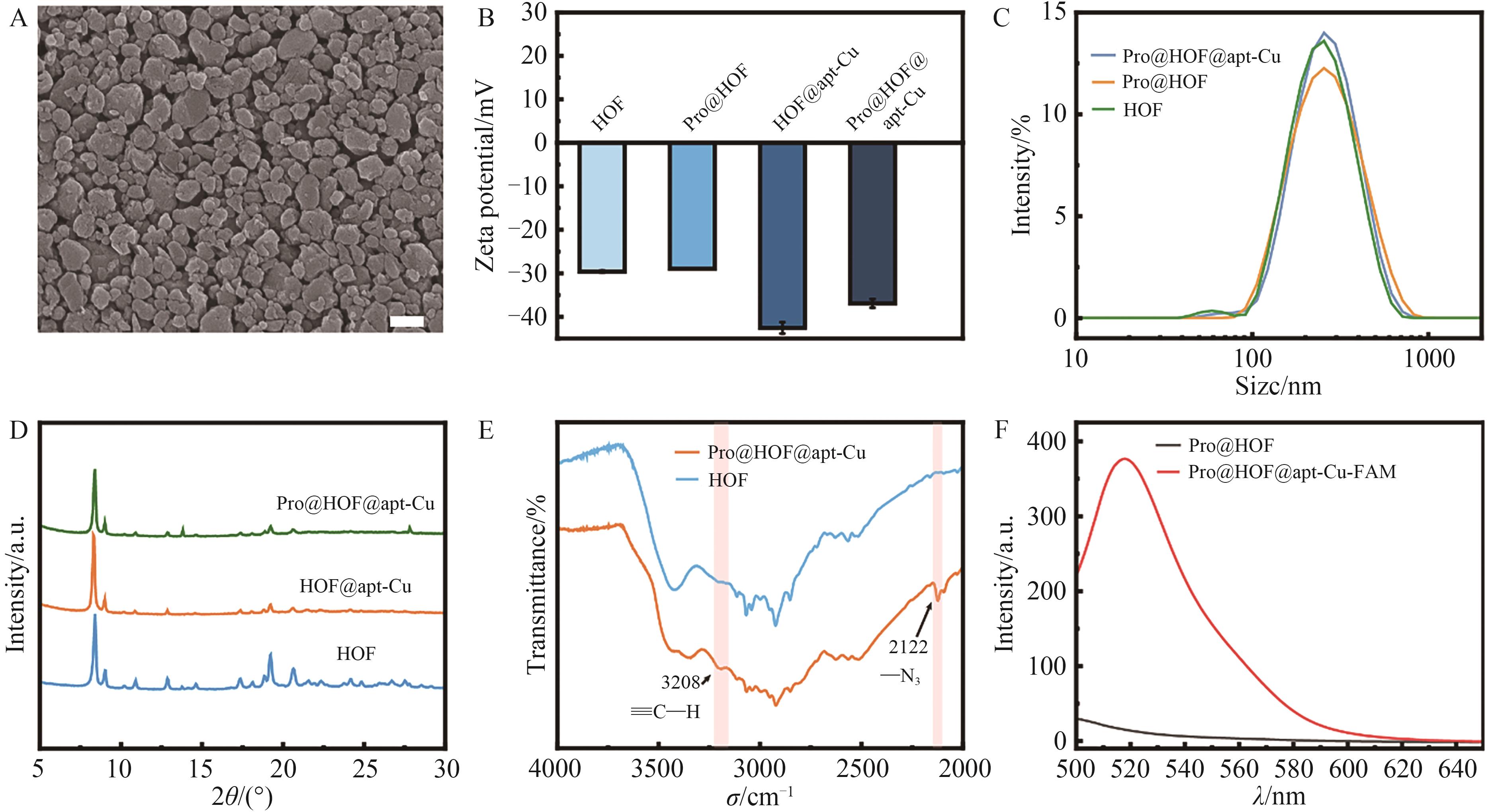
Fig.1 (A) SEM image of Pro@HOF@apt-Cu (scale bar, 300 nm); (B) Zeta potential of HOF, Pro@HOF, HOF@apt-Cu and Pro@HOF@apt-Cu; (C) DLS curves of Pro@HOF@apt-Cu, Pro@HOF and HOF; (D) PXRD patterns of Pro@HOF@apt-Cu, HOF@apt-Cu and HOF; (E) FT-IR specta of Pro@HOF@apt-Cu and HOF; (F) Fluorescence spectra of Pro@HOF and Pro@HOF@apt-Cu-FAM
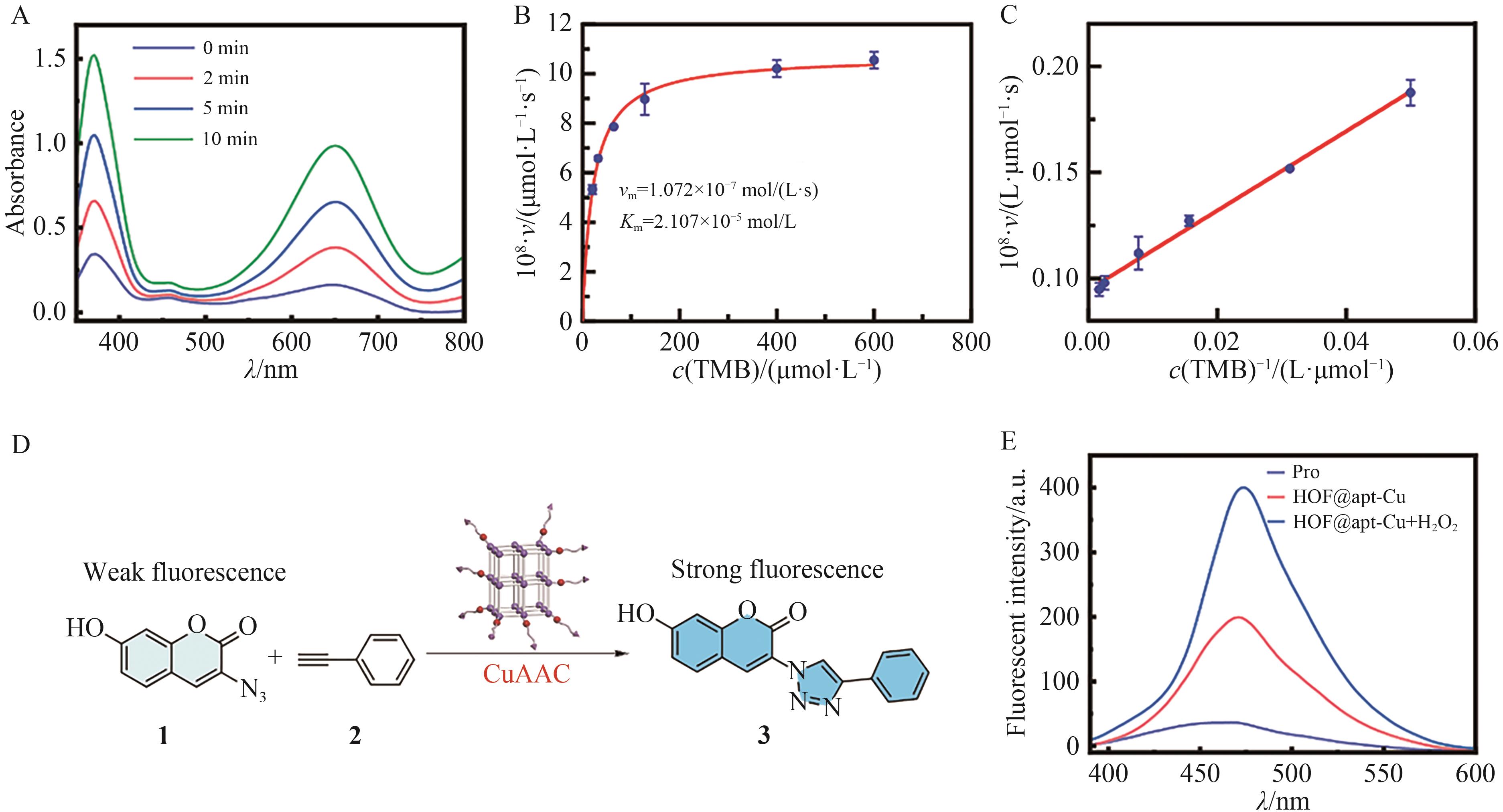
Fig.2 (A) Absorbance of TMB solution with different times; (B) Michaelis-Menten fitting and (C) the associated Lineweaver-Burk fitting curves of HOF@apt-Cu (20 μg/mL); (D) Schematic representation of the bioorthogonal generation of dyes in solution; (E) Fluorescence spectra of the HOF@apt-Cu-catalyzed CuAAC reaction in water. The spectra were obtained by introducing HOF@apt-Cu and HOF@apt-Cu+H2O2 to samples 1 and 2, respectively, and allowing them to react for 30 min
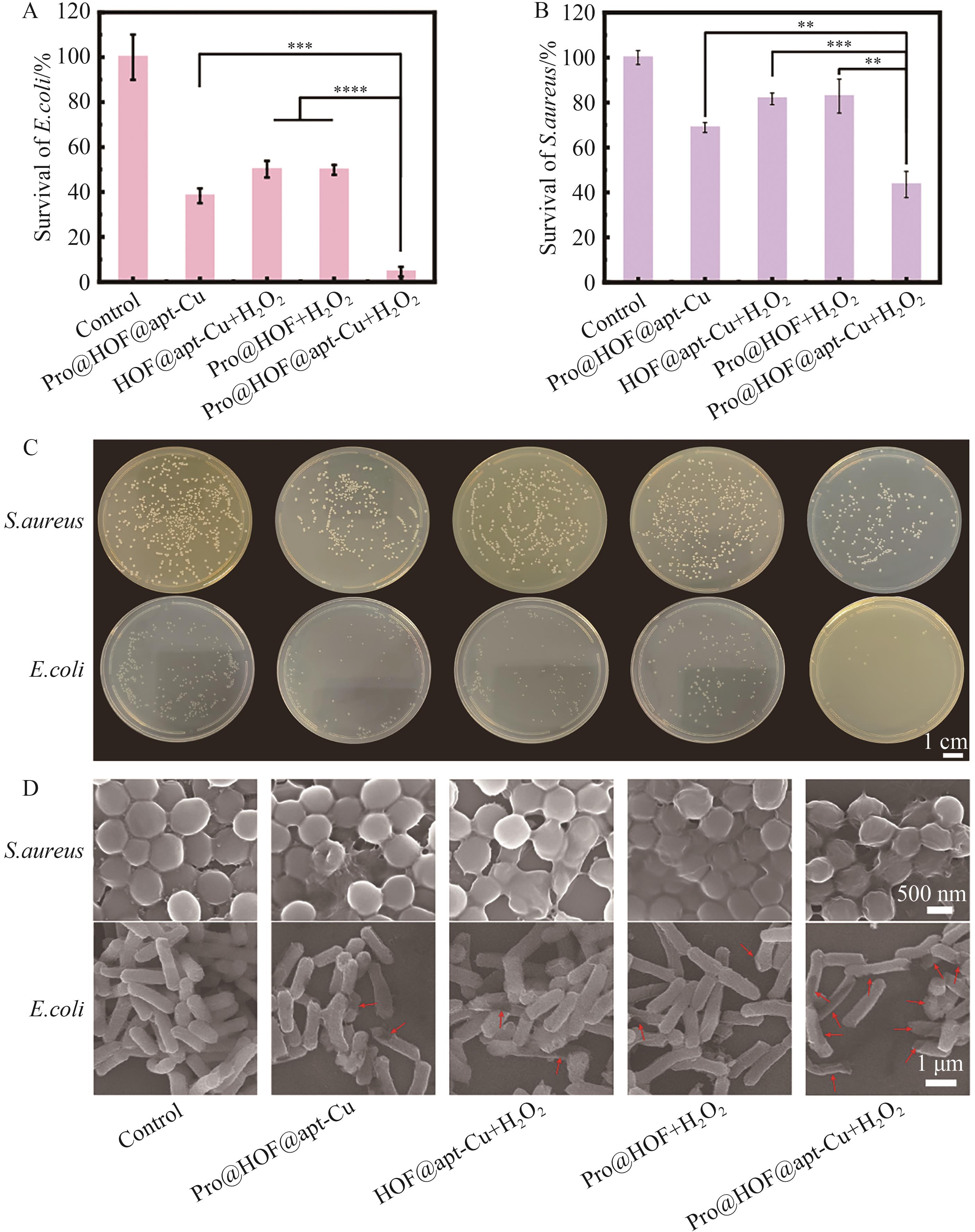
Fig.3 Survival rates of E.coli (A) and S.aureus (B) corresponding to (C) bacterial colonies on agar plates; (C) Photos of bacterial colonies consisting of S.aureus and E.coli after different treatments; (D) SEM images of S.aureus and E.coli samples after different treatments
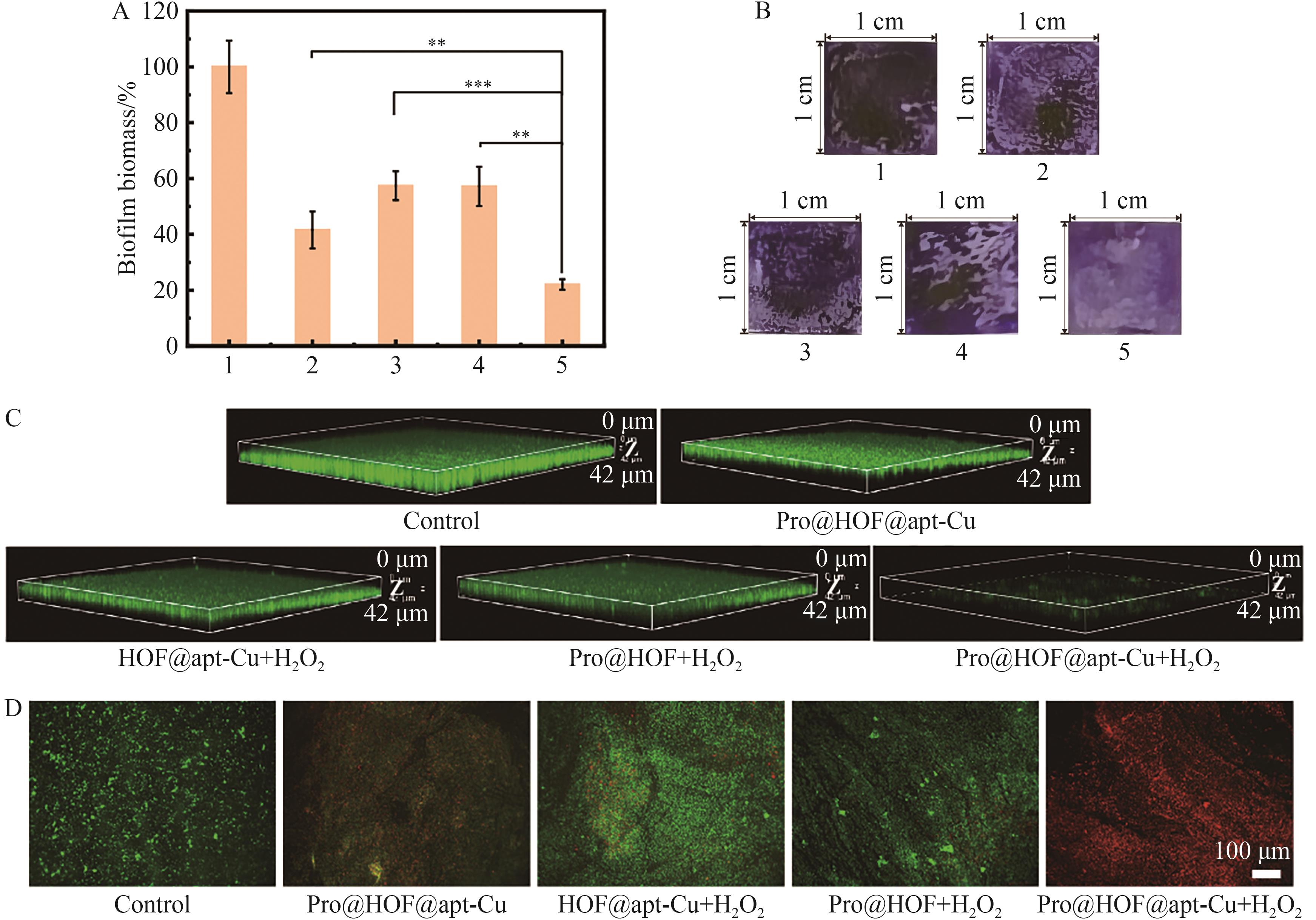
Fig.4 Crystal violet-stained biofilm biomass determined by measuring OD590 (A) and related crystal violet staining pictures (B) treated with different groups: (1) Control, (2) Pro@HOF@apt-Cu, (3) HOF@apt-Cu, (4) Pro@HOF+H2O2, (5) Pro@HOF@apt-Cu+H2O2; (C) Live/dead staining images of biofilms, scale bar, 100 μm; (D) 3D CLSM pictures of biofilms under various treatment settings
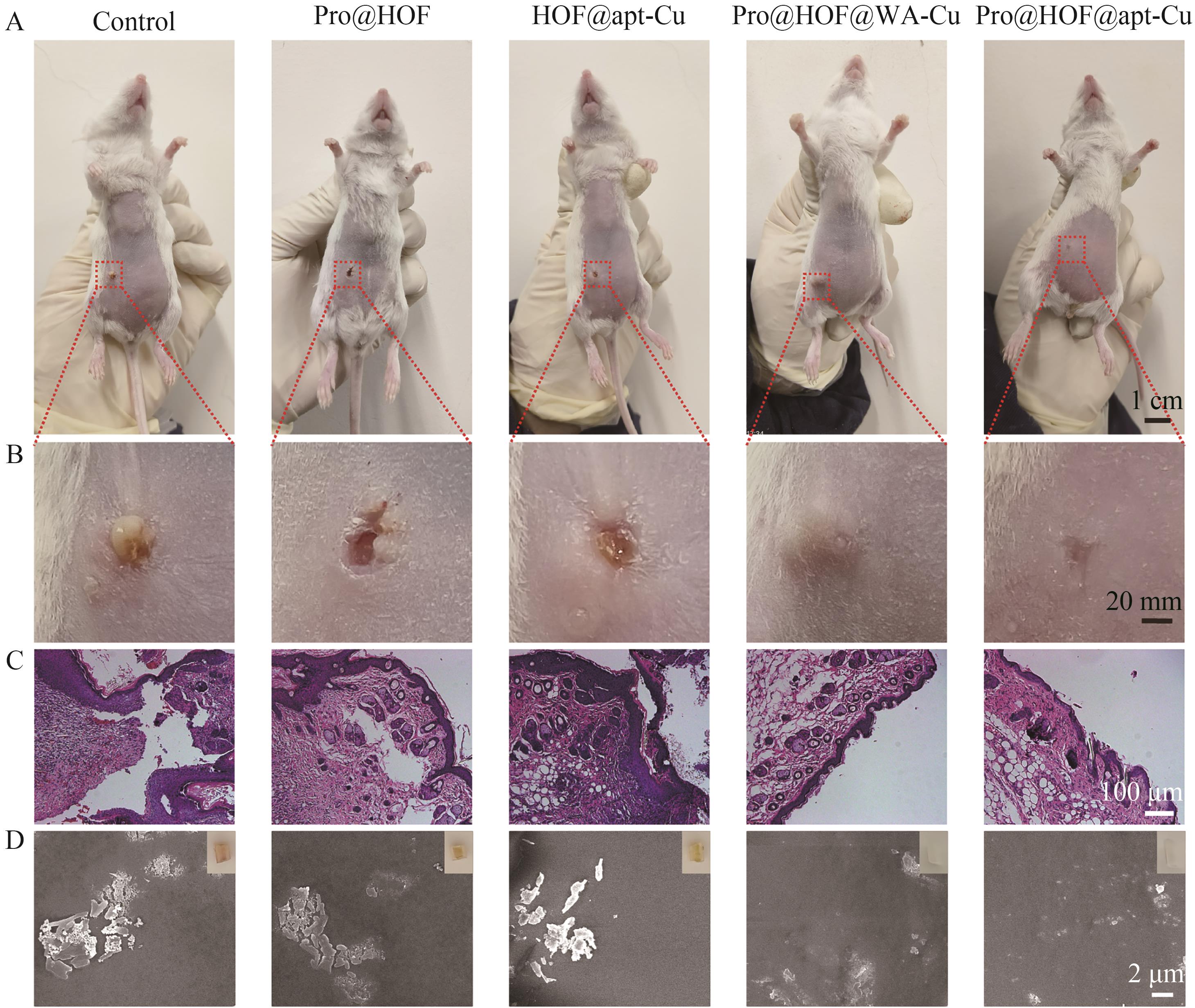
Fig.5 (A) Pictures of mice and (B) magnification photographs of mice after different treatments; (C) Histology images of the wound tissue at the implanted location stained with hematoxylin and eosin; (D) SEM pictures of embedded catheters after different treatments, the embedded catheters were shown in the inset photos, scale bar, 2 μm
| [1] | ANTIMICROBIAL RESISTANCE C. Global burden of bacterial antimicrobial resistance in 2019: a systematic analysis[J]. Lancet, 2022, 399(10325): 629-655. |
| [2] | POOLE K. Pseudomonas aeruginosa: resistance to the max[J]. Front Microbiol, 2011, 2: 65. |
| [3] | SMITH W P J, WUCHER B R, NADELL C D, et al. Bacterial defences: mechanisms, evolution and antimicrobial resistance[J]. Nat Rev Microbiol, 2023, 21(8): 519-534. |
| [4] | KARYGIANNI L, REN Z, KOO H, et al. Biofilm matrixome: extracellular components in structured microbial communities[J]. Trends Microbiol, 2020, 28(8): 668-681. |
| [5] | PRANANTYO D, YEO C K, WU Y, et al. Hydrogel dressings with intrinsic antibiofilm and antioxidative dual functionalities accelerate infected diabetic wound healing[J]. Nat Commun, 2024, 15(1): 954. |
| [6] | GENG W C, SESSLER J L, GUO D S. Supramolecular prodrugs based on host-guest interactions[J]. Chem Soc Rev, 2020, 49(8): 2303-2315. |
| [7] | BIRD R E, LEMMEL S A, YU X, et al. Bioorthogonal chemistry and its applications[J]. Bioconjug Chem, 2021, 32(12): 2457-2479. |
| [8] | HANG H C, YU C, KATO D L, et al. A metabolic labeling approach toward proteomic analysis of mucin-type O-linked glycosylation[J]. Proc Natl Acad Sci USA, 2003, 100(25): 14846-14851. |
| [9] | LIU C, NIU J, CUI T, et al. A motor-based carbonaceous nanocalabash catalyst for deep-layered bioorthogonal chemistry[J]. J Am Chem Soc, 2022, 144(42): 19611-19618. |
| [10] | TORNØE C W, CASPAR C, MELDAL M. Peptidotriazoles on solid phase: [1,2,3]-triazoles by regiospecific copper(Ⅰ)- catalyzed 1,3-dipolar cycloadditions of terminal alkynes to azides[J]. J Org Chem, 2002, 67: 3057-3064. |
| [11] | WANG F, ZHANG Y, LIU Z, et al. A biocompatible heterogeneous MOF-Cu catalyst for in vivo drug synthesis in targeted subcellular organelles[J]. Angew Chem Int Ed, 2019, 58(21): 6987-6992. |
| [12] | WANG Z, NIU J, ZHAO C, et al. A bimetallic metal-organic framework encapsulated with DNAzyme for intracellular drug synthesis and self-sufficient gene therapy[J]. Angew Chem Int Ed, 2021, 60(22): 12431-12437. |
| [13] | ZHAO H, ZHAO C, LIU Z, et al. A polyoxometalate-based pathologically activated assay for efficient bioorthogonal catalytic selective therapy[J]. Angew Chem Int Ed, 2023, 62(32): e202303989. |
| [14] | ZHU J, YOU Y, ZHANG W, et al. Boosting endogenous copper(Ⅰ) for biologically safe and efficient bioorthogonal catalysis via self-adaptive metal-organic frameworks[J]. J Am Chem Soc, 2023, 145(3): 1955-1963. |
| [15] | YOU Y, LIU H, ZHU J, et al. A DNAzyme-augmented bioorthogonal catalysis system for synergistic cancer therapy[J]. Chem Sci, 2022, 13(26): 7829-7836. |
| [16] | YOU Y, DENG Q, WANG Y, et al. DNA-based platform for efficient and precisely targeted bioorthogonal catalysis in living systems[J]. Nat Commun, 2022, 13(1): 1459. |
| [17] | YIN W Y, YU J, LV F T, et al. Functionalized nano-MoS with peroxidase catalytic and near-infrared photothermal activities for safe and synergetic wound antibacterial applications[J]. ACS Nano, 2016, 10(12): 11000-11011. |
| [18] | JIANG P, ZHANG L, LIU X, et al. Tuning oxidant and antioxidant activities of ceria by anchoring copper single-site for antibacterial application[J]. Nat Commun, 2024, 15(1): 1010. |
| [19] | ZHANG D, LI M, CHEN S, et al. Novel palladium hydride surface enabling simultaneous bacterial killing and osteogenic formation through proton capturing and activation of antioxidant system in immune microenvironments[J]. Adv Mater, 2024, 36(31): e2404485. |
| [20] | LIN R B, HE Y, LI P, et al. Multifunctional porous hydrogen-bonded organic framework materials[J]. Chem Soc Rev, 2019, 48(5): 1362-1389. |
| [21] | WANG B, LIN R B, ZHANG Z, et al. Hydrogen-bonded organic frameworks as a tunable platform for functional materials[J]. J Am Chem Soc, 2020, 142(34): 14399-14416. |
| [22] | CHEN G, HUANG S, MA X, et al. Encapsulating and stabilizing enzymes using hydrogen-bonded organic frameworks[J]. Nat Protoc, 2023, 18(7): 2032-2050. |
| [23] | LIU S, SUN Y. Co-encapsulating cofactor and enzymes in hydrogen-bonded organic frameworks for multienzyme cascade reactions with cofactor recycling[J]. Angew Chem Int Ed, 2023, 62(42): e202308562. |
| [24] | TANG Z, LI X, TONG L, et al. A biocatalytic cascade in an ultrastable mesoporous hydrogen-bonded organic framework for point-of-care biosensing[J]. Angew Chem Int Ed, 2021, 60(44): 23608-23613. |
| [25] | YU D, ZHANG H, LIU Z, et al. Hydrogen-bonded organic framework (HOF)-based single-neural stem cell encapsulation and transplantation to remodel impaired neural networks[J]. Angew Chem Int Ed, 2022, 61(28): e202201485. |
| [26] | YIN Q, ZHAO P, SA R J, et al. An Ultra-robust and crystalline redeemable hydrogen-bonded organic framework for synergistic chemo-photodynamic therapy J]. Angew Chem Int Ed, 2018, 57(26): 7691-7696. |
| [27] | YA J, ZHANG H, QIN G, et al. A biocompatible hydrogen-bonded organic framework (HOF) as sonosensitizer and artificial enzyme for in-depth treatment of Alzheimer's disease[J]. Adv Healthc Mater, 2024, 13(29): e2402342. |
| [28] | ZHANG H, YU D, LIU S, et al. NIR-Ⅱ hydrogen-bonded organic frameworks (HOFs) used for target-specific amyloid-β photooxygenation in an Alzheimer's disease model[J]. Angew Chem Int Ed, 2021, 61(2): e202109068. |
| [29] | ZOU Y, LIU H X, CAI L, et al. Strategy to efficient photodynamic therapy for antibacterium: donor-acceptor structure in hydrogen-bonded organic framework[J]. Adv Mater, 2024, 36(35): e2406026. |
| [30] | LIU B T, PAN X H, NIE D Y, et al. Ionic hydrogen-bonded organic frameworks for ion-responsive antimicrobial membranes[J]. Adv Mater, 2020, 32(48): 2005912. |
| [31] | HUANG C, ZHAO C, SUN Y, et al. A hydrogen-bonded organic framework-based mitochondrion-targeting bioorthogonal platform for the modulation of mitochondrial epigenetics[J]. Nano Lett, 2024, 24(29): 8929-8939. |
| [32] | HUANG C, ZHAO C, DENG Q, et al. Hydrogen-bonded organic framework-based bioorthogonal catalysis prevents drug metabolic inactivation[J]. Nat Catal, 2023, 6(8): 729-739. |
| [33] | MAKVANDI P, SONG H, YIU C K Y, et al. Bioengineered materials with selective antimicrobial toxicity in biomedicine[J]. Mil Med Res, 2023, 10(1): 8. |
| [34] | NIU J, WANG L, CUI T, et al. Antibody mimics as bio-orthogonal catalysts for highly selective bacterial recognition and antimicrobial therapy[J]. ACS Nano, 2021, 15(10): 15841-15849. |
| [35] | LV J, LI B, LUO T, et al. Selective photothermal therapy based on lipopolysaccharide aptamer functionalized MoS2 nanosheet-coated gold nanorods for multidrug-resistant pseudomonas aeruginosa infection[J]. Adv Healthc Mater, 2023, 12(15): 2202794. |
| [1] | Ling-Yu LEI, Jing-Xin SU, Ya ZHOU, Yao WANG. Construction and Application Research of a Biomimetic MOF Nanozyme-Mediated Ultrasensitive Photoelectrochemical Sensor for Cardiac Biomarkers [J]. Chinese Journal of Applied Chemistry, 2025, 42(10): 1375-1385. |
| [2] | Xiao-Jing CHAI, Rui-Rui ZHAO, Yuan ZHANG, Chuan DONG, Shao-Min SHUANG. Colorimetric/Fluorometric Detection of Adenosine-5′-Triphosphate Based on Metal-Organic Framework Cu@Sc-MOF Nanozyme [J]. Chinese Journal of Applied Chemistry, 2024, 41(5): 728-738. |
| [3] | Shuang LIU, Si-Ying TENG, Peng HUI, Ya-Bin SUN. Research Progress on Nanozymes in the Treatment of Ophthalmic Diseases [J]. Chinese Journal of Applied Chemistry, 2024, 41(12): 1679-1696. |
| [4] | Jian-Tian LU, Jin-Hui ZOU, Bo-Lin ZHAO, Yu-Wei ZHANG. Research Progress on the Application of Inorganic Nanoparticle Enzyme in the Field of Analytical Sensing [J]. Chinese Journal of Applied Chemistry, 2024, 41(1): 60-86. |
| [5] | ZHAO Yue, MENG Xiang-Qin, YAN Xi-Yun, FAN Ke-Long. Nanozyme: A New Type of Biosafety Material [J]. Chinese Journal of Applied Chemistry, 2021, 38(5): 524-545. |
| [6] | LI Junrong,SHEN Aiguo,HU Jiming. Research Progress of Nanozymes and Its Application in Analysis [J]. Chinese Journal of Applied Chemistry, 2016, 33(11): 1245-1252. |
| Viewed | ||||||
|
Full text |
|
|||||
|
Abstract |
|
|||||
