
Chinese Journal of Applied Chemistry ›› 2026, Vol. 43 ›› Issue (3): 327-346.DOI: 10.19894/j.issn.1000-0518.250404
• Review • Previous Articles
Run-Xin HOU1,2, Na YIN1, Zhi-Yi WU3( ), Sheleg-Valery KONSTANTINOVIC4, Kravchuk-Marina ANATOLYEVN4, Ying-Hui WANG1
Received:2025-10-23
Accepted:2025-12-11
Published:2026-03-01
Online:2026-03-26
Contact:
Zhi-Yi WU
Supported by:CLC Number:
Run-Xin HOU, Na YIN, Zhi-Yi WU, Sheleg-Valery KONSTANTINOVIC, Kravchuk-Marina ANATOLYEVN, Ying-Hui WANG. Recent Advances in Nanozymes for Enhancing Plant Resistance to Abiotic Stress[J]. Chinese Journal of Applied Chemistry, 2026, 43(3): 327-346.
Add to citation manager EndNote|Ris|BibTeX
URL: http://yyhx.ciac.jl.cn/EN/10.19894/j.issn.1000-0518.250404
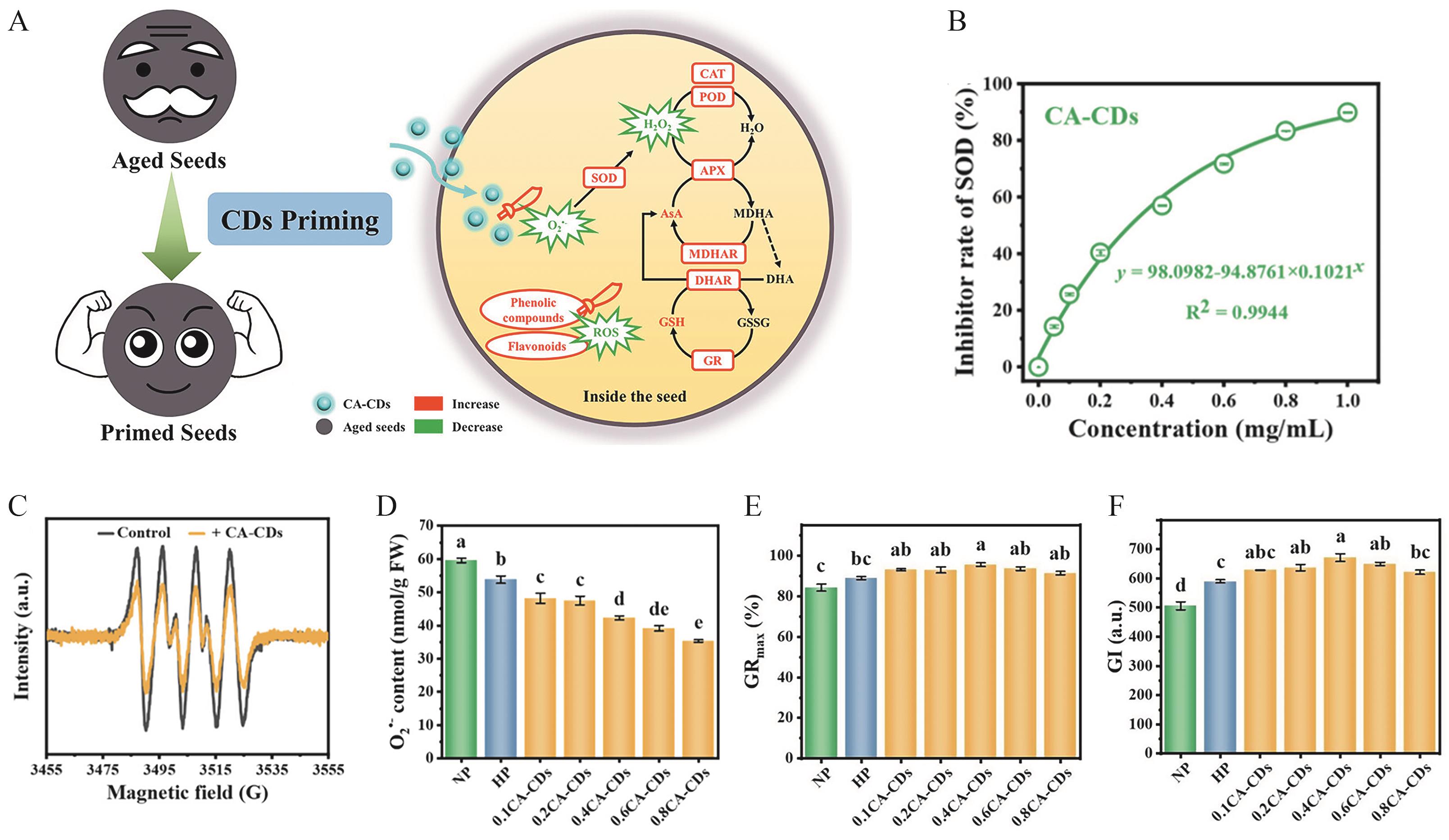
Fig.1 (A) Schematic illustration of the synergistic mechanism by which CA-CDs restore the vigor of naturally aged Chinese cabbage seeds through modulation of ROS homeostasis; (B) SOD-like activity of CA-CDs; (C) Eleetron paramagnetic resonance signal (EPR) spectra of spin adducts generated from O2·- and DMPO in the absence (control) and presence of 0.5 mg/mL CA-CDs; (D) Effect of CA-CDs on O2·- content in aged Chinese cabbage seeds; Rejuvenation effects: GRmax (E) and GI (F)[32]
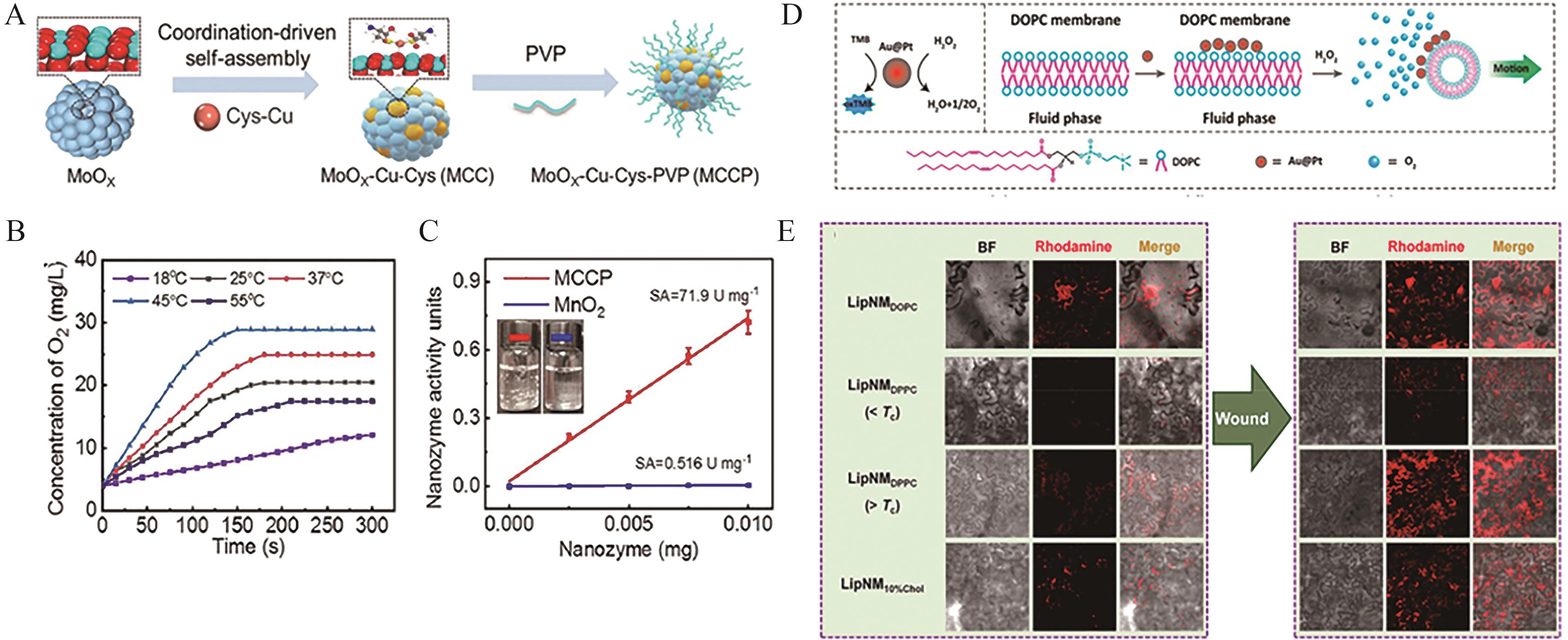
Fig.2 (A) Schematic illustration of the synthesis process of MCCP SAzymes[35]; (B) CAT-like catalytic activity of MCCP at different temperatures (ρ(MCCP)=50 μg/mL, c(H2O2)=1 mmol/L, pH=5.0)[35]; (C) Comparison of CAT-like specific activity (U/mg) between MnO2 nanozymes and MCCP at 25 ℃ (c(H2O2)=20 mmol/L, pH=5.0)[35]; (D) Schematic depiction of the heterogeneous distribution and directional movement of Au@Pt nanoparticles on liquid-phase DOPC liposomes[36]; (E) CLSM images of tobacco leaves infiltrated with LipNMDOPC, LipNMDOPC (>Tc or <Tc, and LipNM10%Chol) following wound treatment[36]
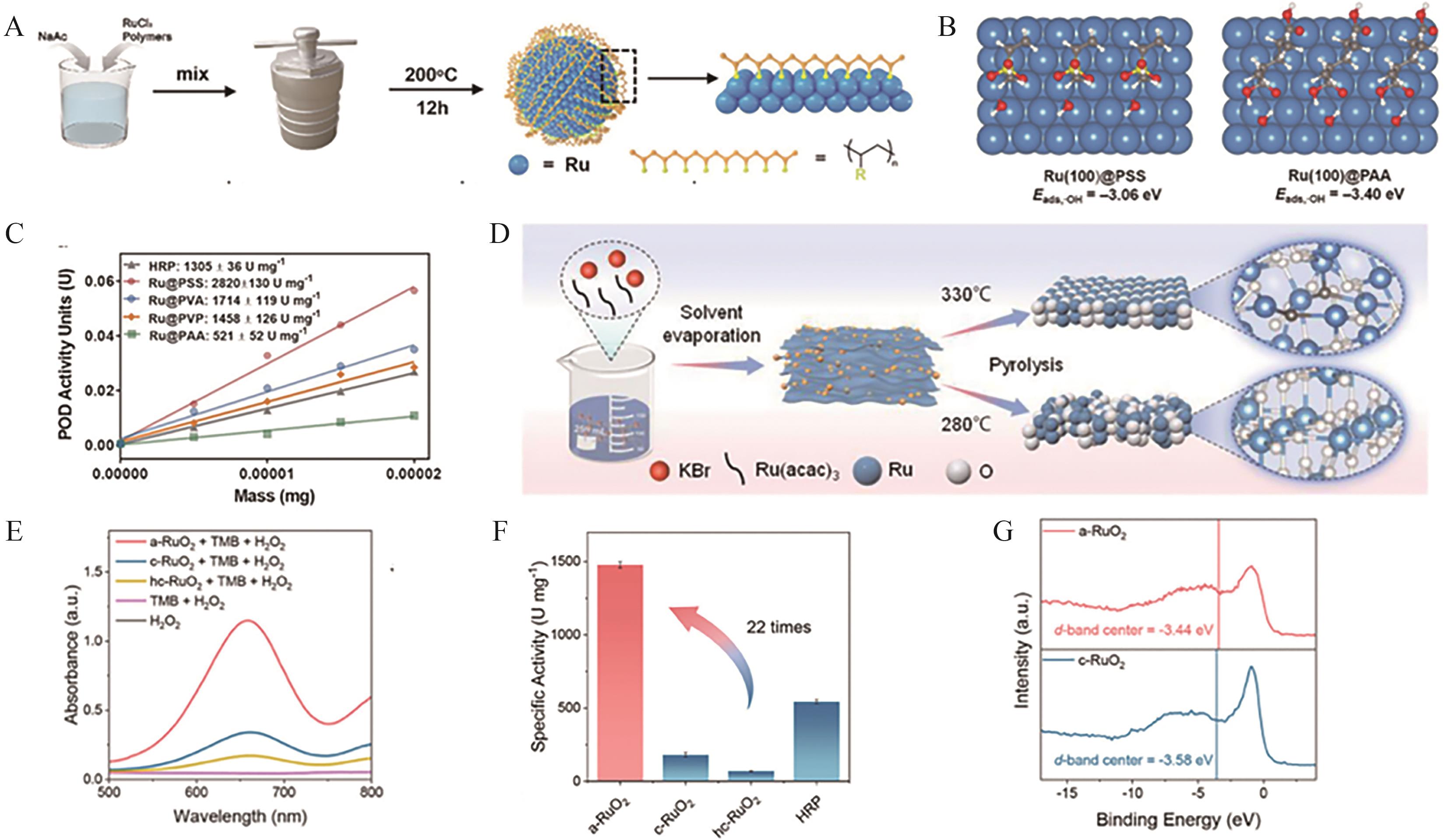
Fig.3 (A) Schematic illustration of the synthesis process of Ru-POD nanozymes with different polymer-coated ligands[42]; (B) Adsorption configurations and energy calculations of hydroxyl groups on Ru(100)@PAA and Ru(100)@PSS surfaces[42]; (C) Comparative analysis of specific activity (U/mg) between Ru-POD nanozymes and horseradish peroxidase (HRP)[42]; (D) Schematic representation of the synthesis of crystalline and amorphous RuO2; (E) UV-Vis absorption spectra of TMB and H2O2 catalyzed by RuO2 nanozymes[43]; (F) Comparison of peroxidase-like specific activity (U/mg) between RuO2 nanozymes and HRP[43]; (G) d-Band XPS valence band spectra of crystalline and amorphous RuO2 nanozymes[43]
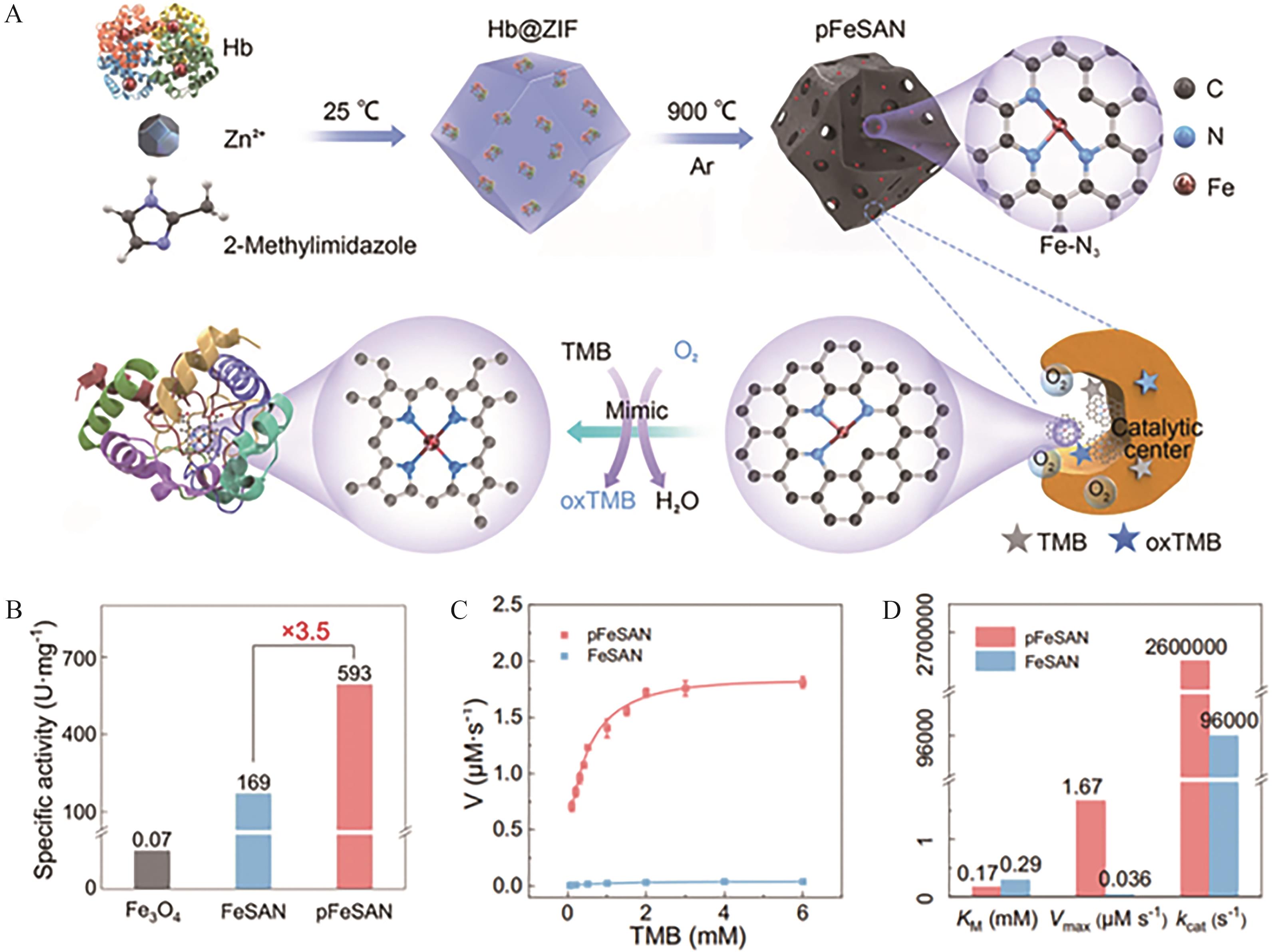
Fig.4 (A) Schematic illustration of the synthesis of porous pFeSAN with Fe-N3 sites and OXD-like activity using Hb@ZIF-8 as a precursor via a two-step method; (B) Comparative analysis of specific activity (U/mg) between pFeSAN and various OXD-like nanozymes; (C) Steady-state kinetic measurements of pFeSAN and FeSAN with TMB as substrate; (D) Kinetic comparison between pFeSAN and FeSAN[45]
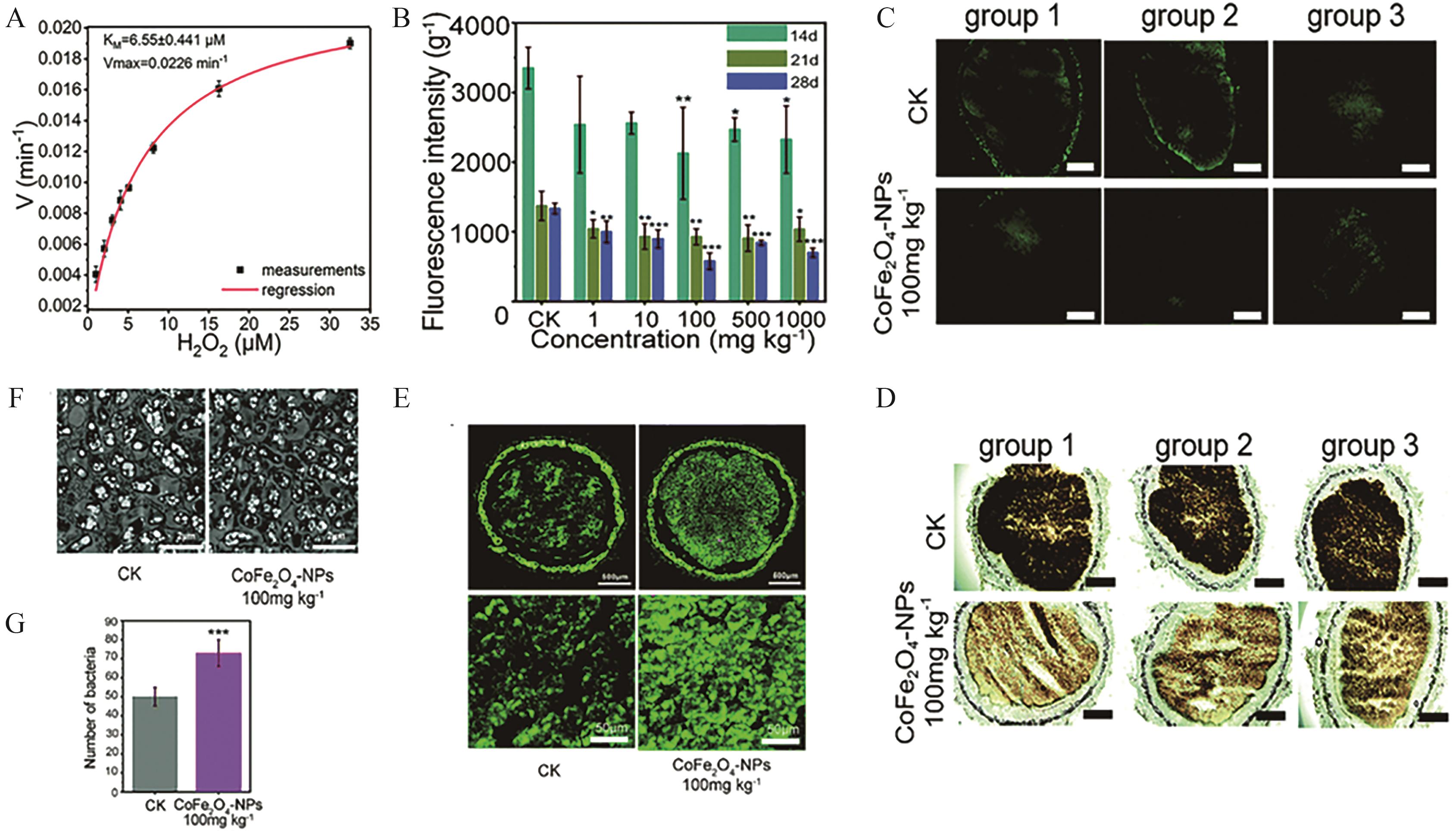
Fig.5 (A) CAT-like enzymatic kinetics of CoFe2O4 nanozyme; (B) ROS accumulation in nodules treated with CoFe2O4 nanozyme at concentrations of 1, 10, 100, 500 and 1000 mg/kg on days 14, 21 and 28 d (DCFH-DA probe); (C) In situ ROS fluorescence staining in nodules (DCFH-DA probe) (scale bar=500 μm); (D) In situ DAB staining of H2O2 in root nodules captured via optical microscopy (scale bar=500 μm); (E) Distribution of dead (red) and live (green) bacteria in root nodules stained with SYTO9/PI; (F) TEM images of rhizobial colonization in nodules; (G) Quantitative analysis of rhizobial colonization based on 100 randomly selected TEM fields[52]
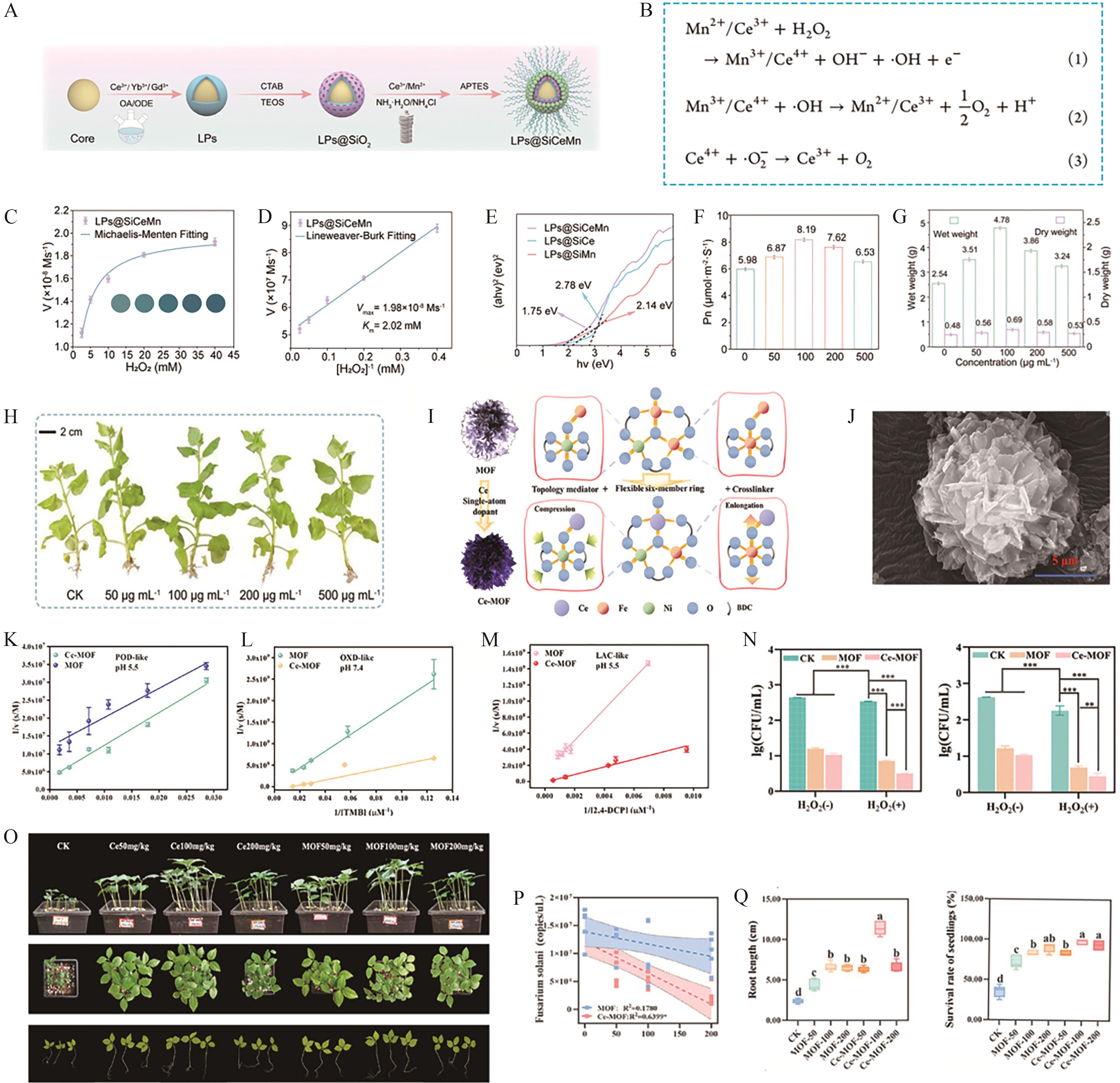
Fig.6 (A) Schematic illustration of the preparation process for LPs@SiCeMn[54]; (B) Redox cycling process (antioxidant mechanism) of LPs@SiCeMn[54]; (C, D) Michaelis-Menten kinetic analysis of LPs@SiCeMn in situ ROS fluorescence staining in nodules (DCFH-DA probe) (scale bar=500 μm)[54]; (E) Tauc plot of LPs@SiCeMn[54]; Nicotiana benthamiana treated with LPs@SiCeMn, its′ photosynthetic rate (Pn) (F), dry/wet mass (G) and Phenotype images of treated Nicotiana benthamiana (H)[54]; (I) Schematic diagram of Ce-doping effects on MOF structure[55]; (J) TEM schematic illustration of the morphology of Ce-MOF[55]; Michaelis-Menten kinetic analysis of multi-enzyme mimetic activities for Ce-MOF and pristine MOF: POD-like activity (K), OXD-like activity (L) and LAC-like activity (M)[55]; (N) In vitro antibacterial activity of Ce-MOF at pH 5.5 (left) and 7.4 (right)[55]; (O) Phenotype images of ginseng treated with Ce-MOF (planted in Fusarium solani-infected soil)[55]; (P) Linear relationship between pathogen density in rhizosphere soil and different concentrations of Ce-MOF[55]; (Q) Seedling root length (cm) and survival rate (%) under each treatment[55]
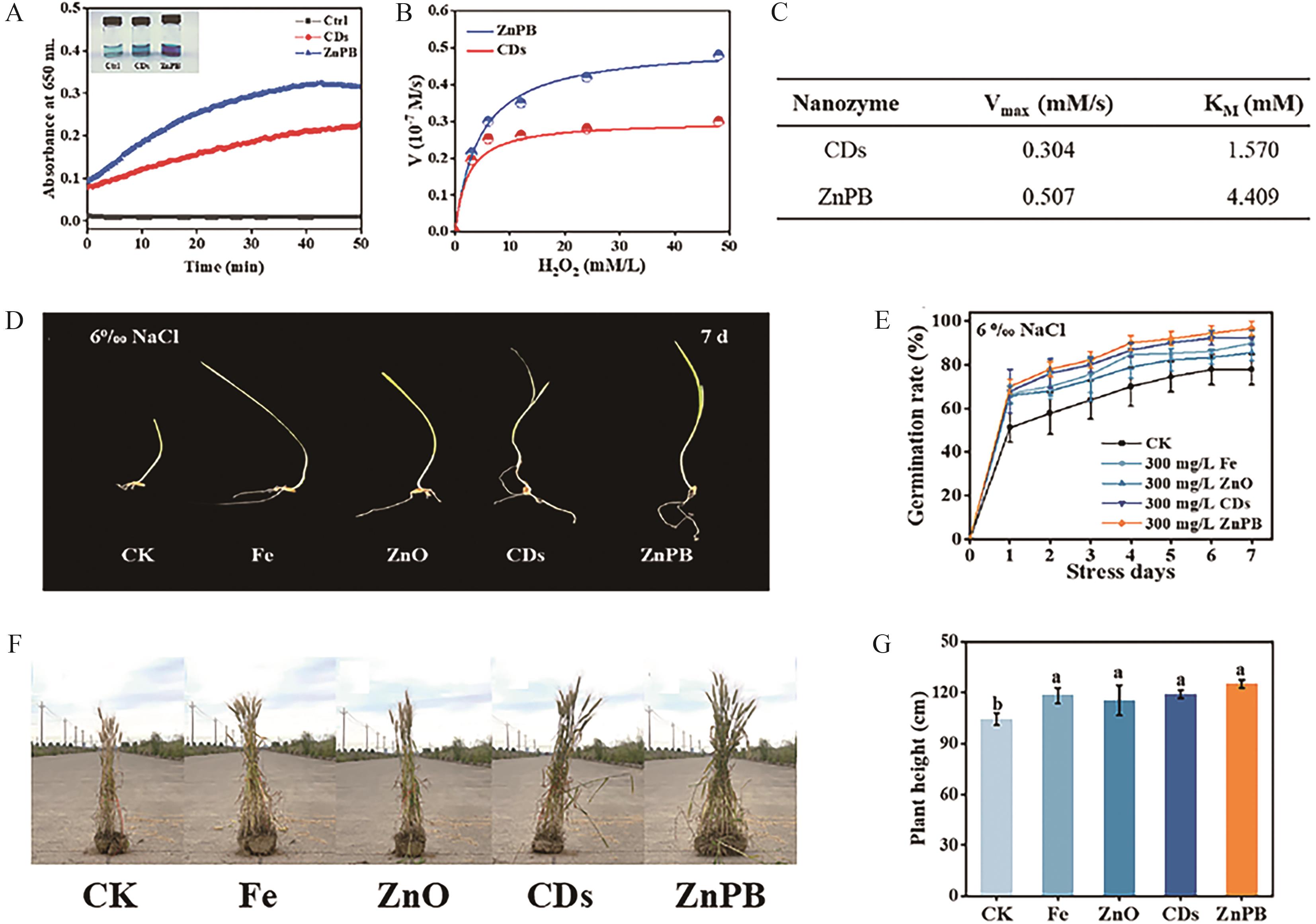
Fig.7 (A) UV-Vis absorption spectra of TMB chromogenic reaction with ZnPB and CDs nanozymes; (B) POD steady-state kinetics of ZnPB and CDs nanozymes at a concentration of 6 μg/mL (substrate: TMB, pH=4.8); (C) Kinetic parameters of POD-like enzyme activity of ZnPB and CDs (substrate: H2O2); (D) Final phenotypic images of wheat treated with four nanozyme materials after 7 days of 6% NaCl salinity stress; (E) Final germination status; (F) Phenotypic images of mature wheat at 18 weeks after sowing in saline-alkali soil, with application of Fe NPs, ZnO NPs, CDs NPs, and ZnPB nanozyme fertilizers, respectively; (G) Plant height of the final mature wheat[71]
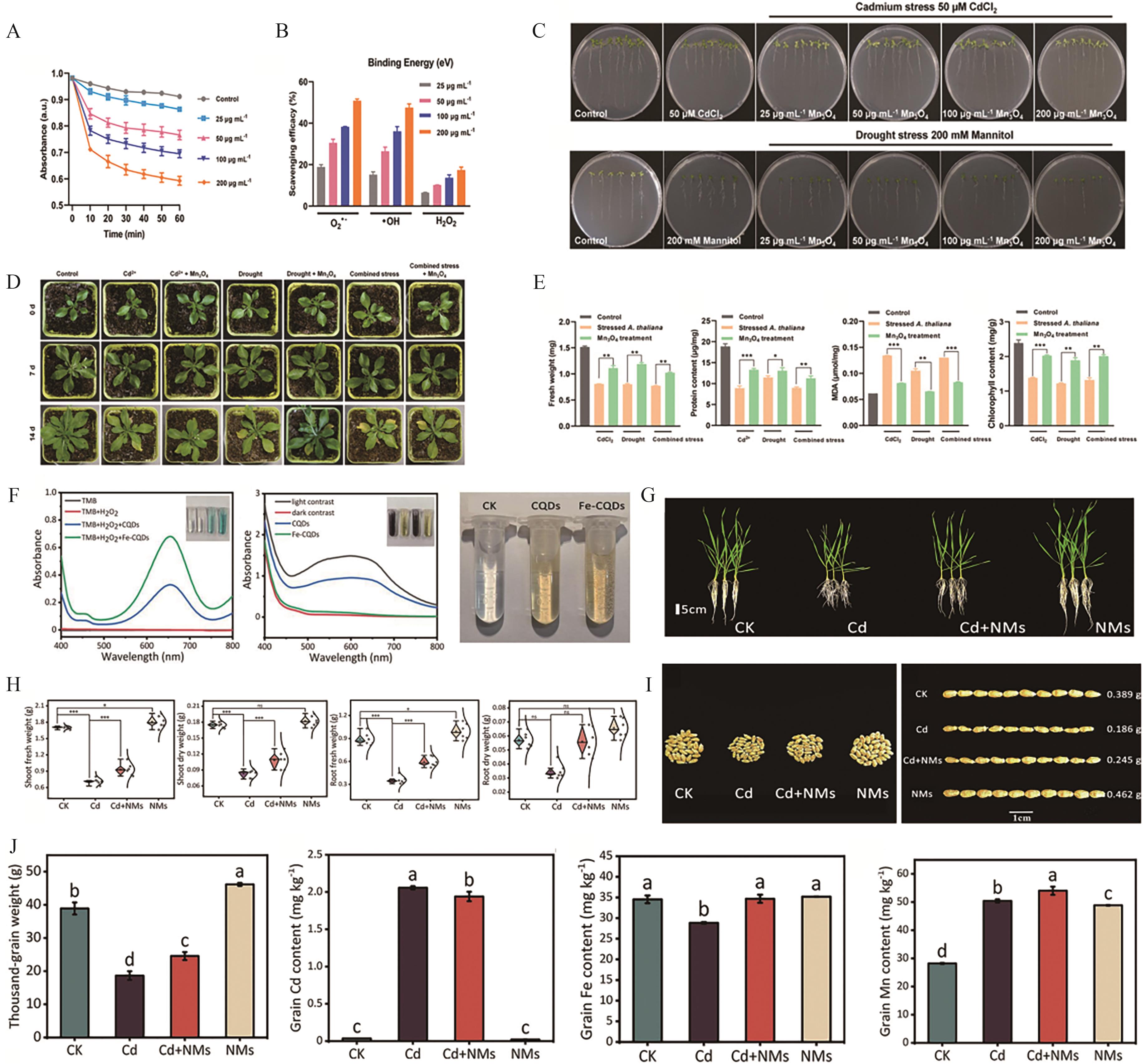
Fig.8 (A) The scavenging capacity of Mn3O4 nanozymes at different concentrations on ABTS radicals[25]; (B) The scavenging capacity of Mn3O4 at different concentrations on O2·-, ·OH, and H2O2[25]; (C) Phenotypic images showing the effects of Mn3O4 nanozyme fertilizer at different concentrations on the growth and development of Arabidopsis seedlings in MS medium containing 50 μmol/L cadmium (simulated cadmium stress) and 200 mmol/L mannitol (simulated drought stress)[25]; (D) Pot experiments of Arabidopsis treated with Mn3O4 nanozyme fertilizer under different treatment conditions[25]; (E) From left to right: fresh weight, protein content, MDA content, and chlorophyll content of Arabidopsis in the pot experiments[25]; (F) From left to right: Validation experiments of POD-like, SOD-like, and CAT-like activities of Fe-CQD[77]; (G) Phenotypic images of wheat seedlings after root application of Fe-CQD[77]; (H) From left to right: Fresh/dry weight of aerial parts and fresh/dry weight of underground parts of corresponding wheat seedlings[77]; (I) Phenotypic images of wheat grains treated with Fe-CQD and harvested in greenhouse[77]; (J) From left to right: thousand-kernel weight of wheat grains and contents of Cd, Fe and Mn trace elements in wheat grains[77]
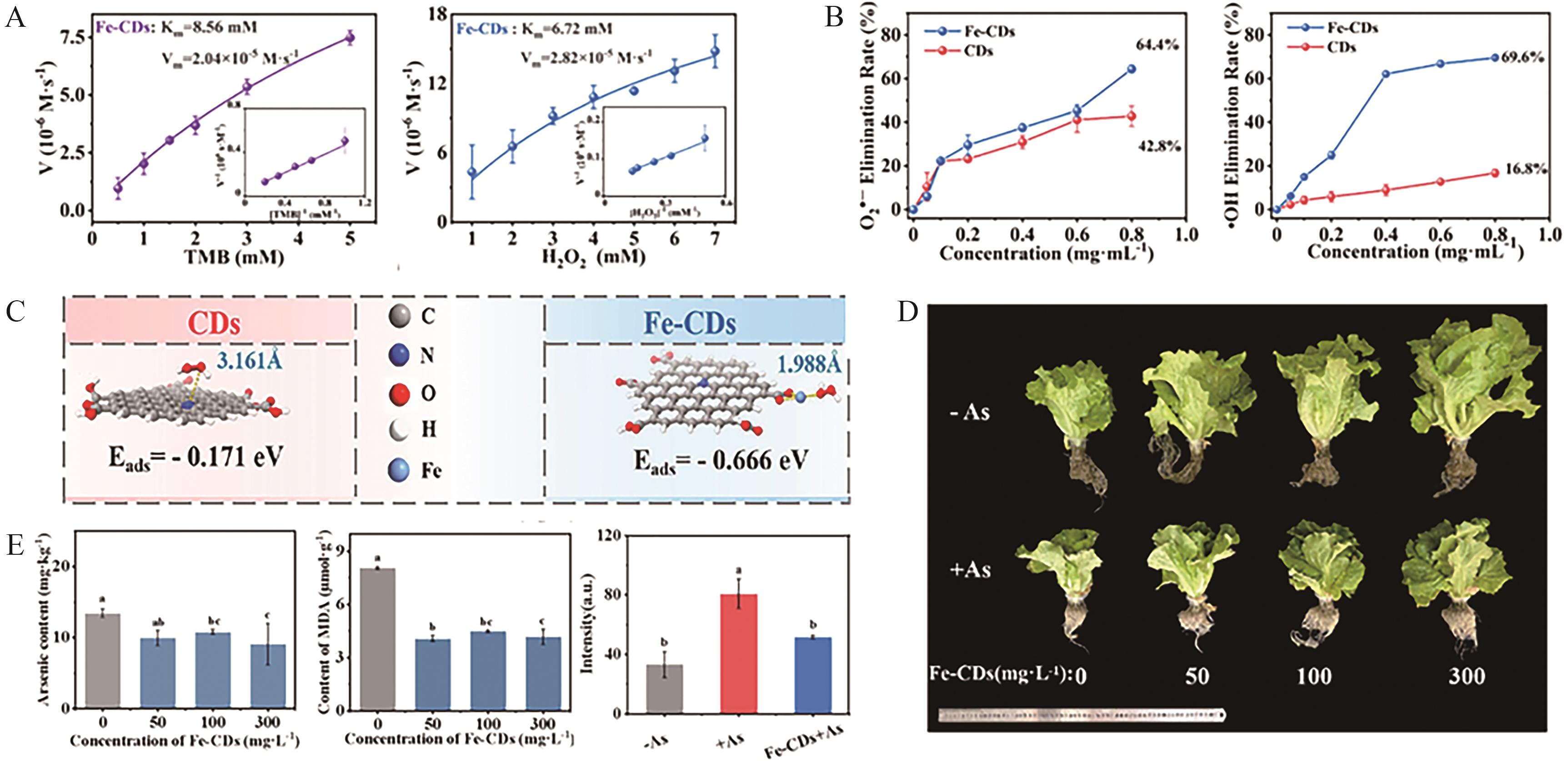
Fig.9 (A) Steady-state kinetic analysis of Fe-CDs nanozymes (with TMB and H2O2 as substrates, respectively); (B) Schematic illustration of the O2·- and ·OH scavenging activities of Fe-CDs nanozymes; (C) DFT calculation models of Fe-CDs nanozymes and CDs, along with their adsorption energies towards H2O2; (D) Morphological images of lettuce leaves following foliar application of Fe-CDs nanozymes at varying concentrations (0, 50, 100 and 300 mg/L), under both As-stressed and non-stressed conditions; (E) From left to right: arsenic content, MDA content, and average ROS fluorescence intensity in lettuce leaves, obtained using DCFH-DA ROS probe staining[82]
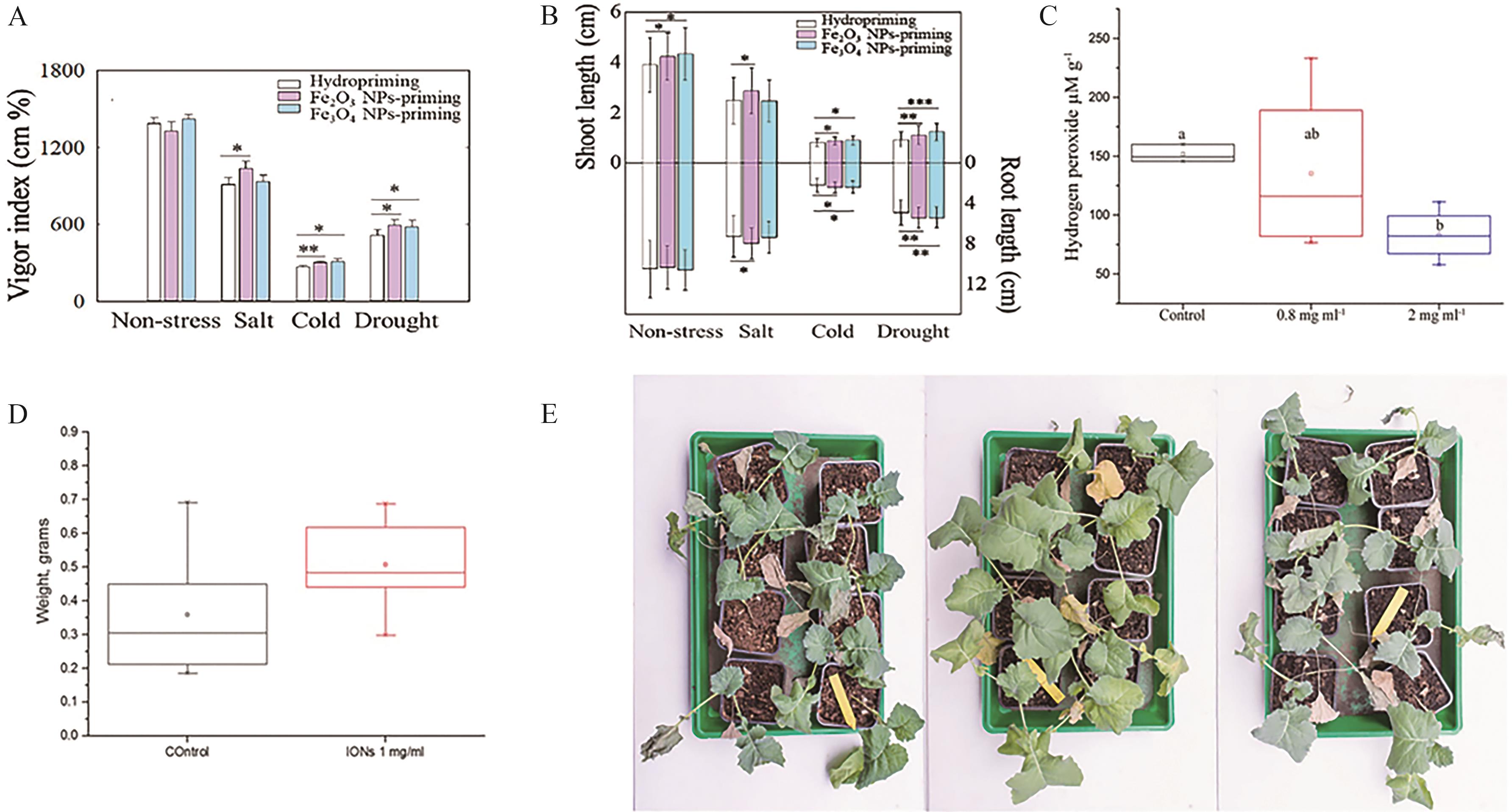
Fig.10 Effects of seed priming with Fe2O3 and Fe3O4 NPs on maize resistance to abiotic stresses (salinity, cold, and drought) during germination: Seedling vigor index (A), shoot and root length of seedlings(B)[92]; (C) Effects of ION-containing or ION-free nutrient solution on plant H2O2 content and fresh weight after 5-day drought stress[93]; (D) Impact of irrigation with or without ION on plant fresh weight[93]; (E) Phenotypic images of plants after rewatering following 5-day drought stress: control (nutrient solution), 0.8 mg/mL ION, 2 mg/mL ION[93]
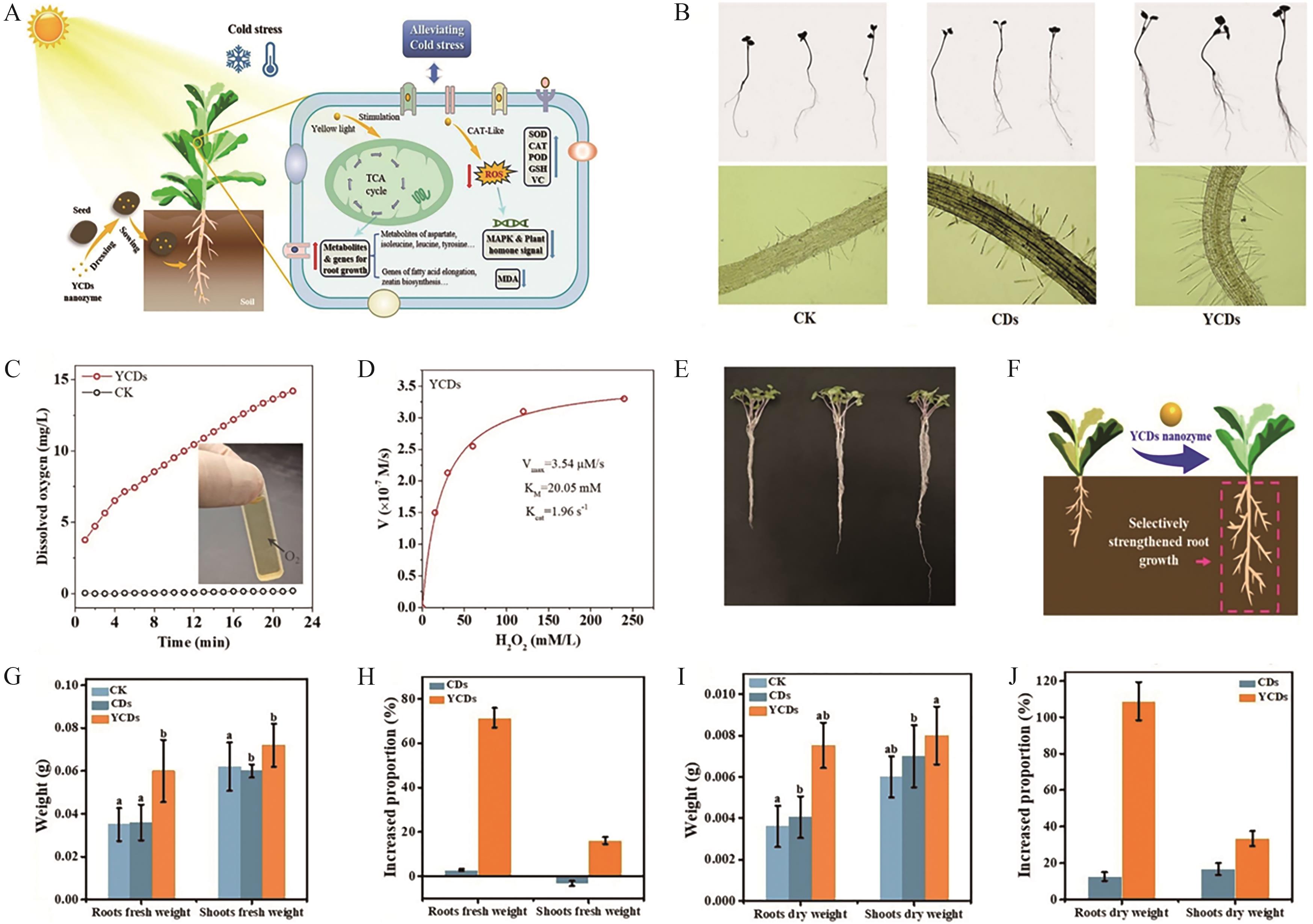
Fig.11 (A) Seed priming with ROS-generating Ag- and Fe-based NPs enhances drought and cold stress tolerance in maize seeds and seedlings; (B) Phenotypic morphology and root microstructural images of rapeseed under different treatment conditions (CK, CDs, and YCDs); (C) Validation of the CAT-like activity of YCDs through dissolved oxygen experiments; (D) Steady-state kinetic analysis of the CAT-like activity of YCDs (substrate: H2O2); (E) Phenotypic images of rapeseed plants after seed fortification with YCDs and subsequent 27-day cold stress treatment at 10 ℃; (F) Schematic model illustrating root growth enhancement in rapeseed; (G) Comparative analysis of final fresh weight; (H) Fresh weight growth rates of roots and shoots; (I) Comparative analysis of final dry weight; (J) Dry weight growth rates of roots and shoots[98]
| [1] | CASTRO B, CITTERICO M, KIMURA S, et al. Stress-induced reactive oxygen species compartmentalization, perception and signalling[J]. Nat Plants, 2021, 7(4): 403-412. |
| [2] | FICHMAN Y, MILLER G, MITTLER R. Whole-plant live imaging of reactive oxygen species[J]. Mol Plant, 2019, 12(9): 1203-1210. |
| [3] | MITTLER R. ROS are good[J]. Trends Plant Sci, 2017, 22(1): 11-19. |
| [4] | PETROV V, HILLE J, MUELLER-ROEBER B, et al. ROS-mediated abiotic stress-induced programmed cell death in plants[J]. Front Plant Sci, 2015, 6(69): 1-16. |
| [5] | ZHANG H, ZHU J, GONG Z, et al. Abiotic stress responses in plants[J]. Nat Rev Genet, 2021, 23(2): 104-119. |
| [6] | WAN N F, FU L W, DAINESE M, et al. Pesticides have negative effects on non-target organisms[J]. Nat Commun, 2025, 16(1): 1360. |
| [7] | BAHOJB N E, ZHANG H F, HE Q, et al. Alternatives for traditional pesticides: exploring the potential of metal complexes for crop management[J]. Coord Chem Rev, 2026, 546: 217061. |
| [8] | SCHULZ R, BUB S, PETSCHICK L L, et al. Applied pesticide toxicity shifts toward plants and invertebrates, even in GM crops[J]. Science, 2021, 372(6537): 81-84. |
| [9] | SU Y, ZHOU X, MENG H, et al. Cost-benefit analysis of nanofertilizers and nanopesticides emphasizes the need to improve the efficiency of nanoformulations for widescale adoption[J]. Nat Food, 2022, 3(12): 1020-1030. |
| [10] | WEI L F, LIU J Y, JIANG G B. Nanoparticle-specific transformations dictate nanoparticle effects associated with plants and implications for nanotechnology use in agriculture[J]. Nat Commun, 2024, 15(1): 7389. |
| [11] | GAO R, XU L G, SUN M Z, et al. Site-selective proteolytic cleavage of plant viruses by photoactive chiral nanoparticles[J]. Nat Catal, 2022, 5(8): 694-707. |
| [12] | WANG D J, SALEH N B, BYRO A, et al. Nano-enabled pesticides for sustainable agriculture and global food security[J]. Nat Nanotechnol, 2022, 17(4): 347-360. |
| [13] | LI C X, HAN Y P, GAO T T, et al. Insecticidal activity of metallic nanopesticides synthesized from natural resources: a review[J]. Environ Chem Lett, 2023, 21(2): 1141-1176. |
| [14] | ZHANG Z Y, LI J Q, YU C, et al. Enhanced control of tomato bacterial wilt using a triple-responsive nanopesticide with self-supplying reactive oxygen species[J]. Adv Funct Mater, 2025: 2504824. |
| [15] | XIANG S Y, WANG J, SHEN Y, et al. Manganese-enhanced nanopesticides augment plant resistance against viral infection via an untapped macroautophagy pathway[J]. Adv Funct Mater, 2025: e00538. |
| [16] | YANG J H, LIU K J, CHEN Y Z, et al. A supramolecular bactericidal material for preventing and treating plant-associated biofilms[J]. Nat Commun, 2025, 16(1): 2627. |
| [17] | ZHAO L J, BAI T H, WEI H, et al. Nanobiotechnology-based strategies for enhanced crop stress resilience[J]. Nat Food, 2022, 3(10): 829-836. |
| [18] | WU H H, LI Z. Recent advances in nano-enabled agriculture for improving plant performance[J]. Crop J, 2022, 10(1): 1-12. |
| [19] | GAO L Z, ZHUANG J, NIE L, et al. Intrinsic peroxidase-like activity of ferromagnetic nanoparticles[J]. Nat Nanotechnol, 2007, 2(9): 577-583. |
| [20] | CHI Y L, CHENG H, SUN D W, et al. Food nanozymology: nanozyme engineering toward future food[J]. Adv Mater, 2025, 37(35): 2505552. |
| [21] | ZHANG R F, YAN X Y, GAO L Z, et al. Nanozymes expanding the boundaries of biocatalysis[J]. Nat Commun, 2025, 16(1): 6817. |
| [22] | LIN Z T, YUAN J L, NIU L X, et al. Oxidase mimicking nanozyme: classification, catalytic mechanisms and sensing applications[J]. Coord Chem Rev, 2024, 520: 216166. |
| [23] | WANG Y Y, GU X Y, ZHAO L J, et al. Nanozymes: an innovative approach to regulating heavy metal accumulation in plants and alleviating toxicity-a comprehensive review[J]. Crit Rev Environ Sci Technol, 2025, 55(10): 732-756. |
| [24] | SHEN X, YANG Z Y, DAI X Y, et al. Calcium hexacyanoferrate nanozyme enhances plant stress resistance by oxidative stress alleviation and heavy metal removal[J]. Adv Mater, 2024, 36(30): 2402745. |
| [25] | YAN Y, WU S C, KANG S M, et al. Mn3O4 nanozyme-based nanofertilizer for plant acclimation to a combination of drought and cadmium stresses[J]. Chem Eng J, 2025, 519: 165545. |
| [26] | WU H H, TITO N, GIRALDO J P. Anionic cerium oxide nanoparticles protect plant photosynthesis from abiotic stress by scavenging reactive oxygen species[J]. ACS Nano, 2017, 11(11): 11283-11297. |
| [27] | LIU Y L, XIAO Z G, CHEN F R, et al. Metallic oxide nanomaterials act as antioxidant nanozymes in higher plants: trends, meta-analysis, and prospect[J]. Sci Total Environ, 2021, 780: 146578. |
| [28] | HUANG Y W, PENG S, LIU Y F, et al. Emerging roles of nanozymes in plant and environmental sectors[J]. J Agric Food Chem, 2024, 72(42): 23008-23023. |
| [29] | COHU C M, ABDEL-GHANY S E, GOGOLIN REYNOLDS K A, et al. Copper delivery by the copper chaperone for chloroplast and cytosolic copper/zinc-superoxide dismutases: regulation and unexpected phenotypes in an Arabidopsis mutant[J]. Mol Plant, 2009, 2(6): 1336-1350. |
| [30] | JIANG J M, ZHANG N, SRIVASTAVA A K, et al. Superoxide dismutase positively regulates Cu/Zn toxicity tolerance in Sorghum bicolor by interacting with Cu chaperone for superoxide dismutase[J]. J Hazard Mater, 2024, 480: 135828. |
| [31] | CHEN F Q, ZHOU Z Y, YANG N, et al. Carbon dots based cascading nanozymes mitigate phytotoxicity in lettuces under imidacloprid stress[J]. Food Chem, 2025, 464: 141926. |
| [32] | ZHOU Z Y, LI W, ZHANG X J, et al. Carbon dot nanozymes rejuvenate aged seeds through ROS homeostasis regulation: athree-dimensional coupled seed priming strategy[J]. ACS Appl Mater Interfaces, 2025, 17(38): 53910-53923. |
| [33] | MHAMDI A, QUEVAL G, CHAOUCH S, et al. Catalase function in plants: a focus on Arabidopsis mutants as stress-mimic models[J]. J Exp Bot, 2010, 61(15): 4197-4220. |
| [34] | WANG B, XUE P, ZHANG Y, et al. OsCPK12 phosphorylates OsCATA and OsCATC to regulate H2O2 homeostasis and improve oxidative stress tolerance in rice[J]. Plant Commun, 2024, 5(3): 100780. |
| [35] | ZHOU J, XU D T, TIAN G, et al. Coordination-driven self-assembly strategy-activated Cu single-atom nanozymes for catalytic tumor-specific therapy[J]. J Am Chem Soc, 2023, 145(7): 4279-4293. |
| [36] | WANG Z F, YAN Y, LI C, et al. Fluidity-guided assembly of Au@Pt on liposomes as a catalase-powered nanomotor for effective cell uptake in cancer cells and plant leaves[J]. ACS Nano, 2022, 16(6): 9019-9030. |
| [37] | LIU J H, LV Y X, LI M, et al. Peroxidase in plant defense: novel insights for cadmium accumulation in rice (Oryza sativa L.)[J]. J Hazard Mater, 2024, 474: 134826. |
| [38] | REHMAN S, ABBAS G, SHAHID M, et al. Effect of salinity on cadmium tolerance, ionic homeostasis and oxidative stress responses in conocarpus exposed to cadmium stress: implications for phytoremediation[J]. Ecotox Environ Safe, 2019, 171: 146-153. |
| [39] | MA L M, WANG Y, CHEN Y Y, et al. Optimizing the electronic structure of iron oxides via nonmetallic dopants for enhanced peroxidase mimetic catalysis[J]. ACS Nano, 2025, 19(31): 28410-28421. |
| [40] | LYU Z Y, DING S C, DU D, et al. Recent advances in biomedical applications of 2D nanomaterials with peroxidase-like properties[J]. Adv Drug Deliv Rev, 2022, 185: 114269. |
| [41] | DONG H J, DU W, DONG J, et al. Depletable peroxidase-like activity of Fe3O4 nanozymes accompanied with separate migration of electrons and Iron ions[J]. Nat Commun, 2022, 13(1): 5365. |
| [42] | FAN H Z, ZHENG J J, XIE J Y, et al. Surface ligand engineering ruthenium nanozyme superior to horseradish peroxidase for enhanced immunoassay[J]. Adv Mater, 2024, 36(10): 2300387. |
| [43] | QIN Z R, JIAO L, HU L J, et al. Amorphous RuO2 nanozymes with an excellent catalytic efficiency superior to natural peroxidases[J]. Small, 2025, 21(24): 2502158. |
| [44] | FU Q R, WEI C, WANG M Z. Transition-metal-based nanozymes: synthesis, mechanisms of therapeutic action, and applications in cancer treatment[J]. ACS Nano, 2024, 18(19): 12049-12095. |
| [45] | CHEN D, XIA Z M, GUO Z X, et al. Bioinspired porous three-coordinated single-atom Fe nanozyme with oxidase-like activity for tumor visual identification via glutathione[J]. Nat Commun, 2023, 14(1): 7127. |
| [46] | DICENZO G C, TESI M, PFAU T, et al. Genome-scale metabolic reconstruction of the symbiosis between a leguminous plant and a nitrogen-fixing bacterium[J]. Nat Commun, 2020, 11(1): 2574. |
| [47] | WANG J, CAO X S, WANG C X, et al. Fe-based nanomaterial-induced root nodulation is modulated by flavonoids toimprove soybean (Glycine max) growth and quality[J]. ACS Nano, 2022, 16(12): 21047-21062. |
| [48] | CAO X S, YUE L, WANG C X, et al. Foliar application with iron oxide nanomaterials stimulate nitrogen fixation, yield, and nutritional quality of soybean[J]. ACS Nano, 2022, 16(1): 1170-1181. |
| [49] | SUJKOWSKA-RYBKOWSKA M. Reactive oxygen species production and antioxidative defense in pea (Pisum sativum L.) root nodules after short-term aluminum treatment[J]. Acta Physiol Plant, 2012, 34(4): 1387-1400. |
| [50] | LI M S, ZHANG P, GUO Z L, et al. Molybdenum nanofertilizer boosts biological nitrogen fixation and yield of soybean through delaying nodule senescence and nutrition enhancement[J]. ACS Nano, 2023, 17(15): 14761-14774. |
| [51] | LI M, ZHANG P, GUO Z, et al. Dynamic transformation of nano-MoS2 in a soil-plant system empowers its multifunctionality on soybean growth[J]. Environ Sci Technol, 2024, 58(2): 1211-1222. |
| [52] | MA J, SONG Z Y, YANG J H, et al. Cobalt ferrite nanozyme for efficient symbiotic nitrogen fixation via regulating reactive oxygen metabolism[J]. Environ Sci-Nano, 2021, 8(1): 188-203. |
| [53] | CHEN Z Q, YE Y H, PENG T, et al. Iron-single sites confined by graphene lattice for ammonia synthesis under mild conditions[J]. ACS Catal, 2023, 13(21): 14385-14394. |
| [54] | HUANG Y R, WANG Q, LI C S, et al. Sunlight broad spectrum-capturing nanophotofertilizer for plant growth multiregulation and second near-infrared imaging[J]. ACS Nano, 2025, 19(37): 33632-33643. |
| [55] | LI Q, CHA Y Y, ZHAN Y, et al. Atomic ce-induced adaptive synergism for self-optimized multi-enzymatic nanozyme design for soil amendment[J]. Small, 2025, 21(39): 2503939. |
| [56] | MITTLER R, ZANDALINAS S I, FICHMAN Y, et al. Reactive oxygen species signalling in plant stress responses[J]. Nat Rev Mol Cell Biol, 2022, 23(10): 663-679. |
| [57] | WASZCZAK C, CARMODY M, KANGASJÄRVI J. Reactive oxygen species in plant signaling[J]. Annu Rev Plant Biol, 2018, 69: 209-236. |
| [58] | SINGH V P, JAISWAL S, WANG Y Y, et al. Evolution of reactive oxygen species cellular targets for plant development[J]. Trends Plant Sci, 2024, 29(8): 865-877. |
| [59] | LIU L L, GUEGUEN-CHAIGNON V, GONÇALVES I R, et al. A secreted metal-binding protein protects necrotrophic phytopathogens from reactive oxygen species[J]. Nat Commun, 2019, 10(1): 4853. |
| [60] | SHEN X, YANG Z Y, DAI X Y, et al. Calcium hexacyanoferrate nanozyme enhances plant stress resistance by oxidative stress alleviation and heavy metal removal[J]. Adv Mater, 2024, 36(30): 2402745. |
| [61] | DING Z H, LIU L W, SONG Q Q, et al. A redox-modulating coating with multi-enzyme activity on engineered nanoparticles: an effective strategy for enhancing the control of plant bacterial diseases[J]. Chem Eng J, 2025, 516: 163990. |
| [62] | YU J, HE J L, LIU Y H, et al. ZIF-8-derived nanozyme loaded with botanical fungicides as an eco-friendly nanopesticide for microenvironment-enhanced synergistic control of ginseng seedling blight[J]. J Agric Food Chem, 2025, 73(17): 10144-10156. |
| [63] | CHEN K Y, HAO M, YUAN T, et al. Biosynthesized Fe-C-dots nanozymes modulate growth, physiological and phytochemical peculiarity to improve saline-alkaline stress tolerance in wheat[J]. Plant Physiol Biochem, 2025, 222: 109777. |
| [64] | YU Z P, DUAN X B, LUO L, et al. How plant hormones mediate salt stress responses[J]. Trends Plant Sci,2020, 25(11): 1117-1130. |
| [65] | PERRI S, MOLINI A, HEDIN L O, et al. Contrasting effects of aridity and seasonality on global salinization[J]. Nat Geosci, 2022, 15(5): 375-381. |
| [66] | ZELM E V, ZHANG Y X, TESTERINK C. Salt tolerance mechanisms of plants[J]. Annu Rev Plant Biol, 2020, 71: 403-433. |
| [67] | WAADT R, SELLER C A, HSU P K, et al. Plant hormone regulation of abiotic stress responses[J]. Nat Rev Mol Cell Biol, 2022, 23(10): 680-694. |
| [68] | SZYMAŃSKA K P, POLKOWSKA-KOWALCZYK L, LICHOCKA M, et al. SNF1-related protein kinases SnRK2.4 and SnRK2.10 modulate ROS homeostasis in plant response to salt stress[J]. International Int J Mol Sci, 2019, 20(1): 143. |
| [69] | KAPPACHERY S, ALHOSANI M, KHAN T A, et al. Modulation of antioxidant defense and PSII components by exogenously applied acetate mitigates salinity stress in Avena sativa[J]. Sci Rep, 2024, 14(1): 620. |
| [70] | MA X X, ZENG X Y, HUANG Y R, et al. Visualizing plant salt stress with a NaCl-responsive fluorescent probe[J]. Nat Protoc, 2025, 20(4): 902-933. |
| [71] | XU W L, FENG Y C, DING Z X, et al. Peroxidase like Zn doped prussian blue facilitates salinity tolerance in winter wheat through seed dressing 11 electronic supplementary information (ESI) available[J]. Int J Biol Macromol, 2024, 267: 131477. |
| [72] | FENG Z, JI S Y, PING J F, et al. Recent advances in metabolomics for studying heavy metal stress in plants[J]. Trac-Trends Anal Chem, 2021, 143: 116402. |
| [73] | GHUGE S A, NIKALJE G C, KADAM U S, et al. Comprehensive mechanisms of heavy metal toxicity in plants, detoxification, and remediation[J]. J Hazard Mater, 2023, 450: 131039. |
| [74] | XU Z H, ZHANG T T, XU Z H, et al. Research progress and prospects of nanozymes in alleviating abiotic stress of crops[J]. J Agric Food Chem, 2025, 73(15): 8694-8714. |
| [75] | YU Y, FOTOPOULOS V, ZHOU K J, et al. The role of gasotransmitter hydrogen sulfide in plant cadmium stress responses[J]. Trends Plant Sci, 2025, 30(1): 35-53. |
| [76] | EL RASAFI T, OUKARROUM A, HADDIOUI A, et al. Cadmium stress in plants: a critical review of the effects, mechanisms, and tolerance strategies[J]. Crit Rev Environ Sci Technol, 2022, 52(5): 675-726. |
| [77] | LU Z W, LI Y, CHEN K Y, et al. Multi-activity ferruginated carbon quantum dots nanozyme improves wheat seedling growth and Cd tolerance[J]. Crop J, 2025, 13(2): 510-523. |
| [78] | SUN D, ZHANG X, YIN Z Y, et al. As-hyperaccumulator Pteris vittata and non-hyperaccumulator Pteris ensiformis under low As-exposure: transcriptome analysis and implication for As hyperaccumulation[J]. J Hazard Mater, 2023, 458: 132034. |
| [79] | LEW T T S, PARK M, CUI J Q, et al. Plant nanobionic sensors for Arsenic detection[J]. Adv Mater, 2021, 33(1): 2005683. |
| [80] | ZULFIQAR F, ASHRAF M. Antioxidants as modulators of arsenic-induced oxidative stress tolerance in plants: an overview[J]. J Hazard Mater, 2022, 427: 127891. |
| [81] | ZHANG J, HAMZA A, XIE Z M, et al. Arsenic transport and interaction with plant metabolism: clues for improving agricultural productivity and food safety[J]. Environ Pollut, 2021, 290: 117987. |
| [82] | XIE M H, LI F Y, LI Y Y, et al. Iron-doped carbon dots nanozyme scavenged reactive oxygen species system for inhibiting effectively the uptake of arsenic in lettuce[J]. Chem Eng J, 2025, 506: 159956. |
| [83] | MUNNÉ-BOSCH S, VILLADANGOS S. Cheap, cost-effective, and quick stress biomarkers for drought stress detection and monitoring in plants[J]. Trends Plant Sci, 2023, 28(5): 527-536. |
| [84] | GUPTA A, RICO-MEDINA A, CAÑO-DELGADO A I. The physiology of plant responses to drought[J]. Science, 2020, 368(6488): 266-269. |
| [85] | CHEN Q, CAO X F, NIE X K, et al. Alleviation role of functional carbon nanodots for tomato growth and soil environment under drought stress[J]. J Hazard Mater, 2022, 423: 127260. |
| [86] | LU Z W, ZHAO A, CHEN K, et al. The alleviating effect of straw-derived nitrogen-doped SiO2 nanozymes for wheat growth under drought stress[J]. ACS Mater Lett, 2025, 7: 3652-3659. |
| [87] | NILE S H, THIRUVENGADAM M, WANG Y, et al. Nano-priming as emerging seed priming technology for sustainable agriculture—recent developments and future perspectives[J]. J Nanobiotechnol, 2022, 20(1): 254. |
| [88] | GUHA T, DAS H, MUKHERJEE A, et al. Elucidating ROS signaling networks and physiological changes involved in nanoscale zero valent iron primed rice seed germination sensu stricto[J]. Free Radic Biol Med, 2021, 171: 11-25. |
| [89] | PAGANO L, MARMIROLI M, VILLANI M, et al. Engineered nanomaterial exposure affects organelle genetic material replication in Arabidopsis thaliana[J]. ACS Nano, 2022, 16(2): 2249-2260. |
| [90] | LIN J J, SUN M Q, SU B L, et al. Immobilization of cadmium in polluted soils by phytogenic iron oxide nanoparticles[J]. Sci Total Environ, 2019, 659: 491-498. |
| [91] | BHATIA A, KHATRI A, YADAV M, et al. Potential of iron oxide nanoparticles in enhancing growth and development of plants: a review[J]. Physiologic Mol Plant Pathol, 2025, 139: 102746. |
| [92] | CHEN S, LIU H L, YANGZONG Z X, et al. Seed priming with reactive oxygen species-generating nanoparticles enhanced maize tolerance to multiple abiotic stresses[J]. Environ Sci Technol, 2023, 57(48): 19932-19941. |
| [93] | PALMQVIST N G M, SEISENBAEVA G A, SVEDLINDH P, et al. Maghemite nanoparticles Acts as nanozymes, improving growth and abiotic stress tolerance in Brassica napus[J]. Nanoscale Res Lett, 2017, 12(1): 631. |
| [94] | KIDOKORO S, SHINOZAKI K, YAMAGUCHI-SHINOZAKI K. Transcriptional regulatory network of plant cold-stress responses[J]. Trends Plant Sci, 2022, 27(9): 922-935. |
| [95] | LI W X, WEN Y S, QUAN J J, et al. Regulation of jasmonic acid signalling in tomato cold stress response: insights into the MYB15-LOXD and MYB15-MYC2-LOXD regulatory modules[J]. Plant Biotechnol J, 2025, 23(10): 4246-4260. |
| [96] | DING Y L, SHI Y T, YANG S H. Advances and challenges in uncovering cold tolerance regulatory mechanisms in plants[J]. New Phyto, 2019, 222(4): 1690-1704. |
| [97] | CHEN S, PAN Z, ZHAO W, et al. Engineering climate-resilient rice using a nanobiostimulant-based “stress training” strategy[J]. ACS Nano, 2023, 17(11): 10760-10773. |
| [98] | DING Z, XU W, FENG Y, et al. Selective photosynthetically active nanozymes alleviate crops cold stress via exclusively enhancing root proliferation[J]. Chem Eng J, 2025, 508: 160428. |
| [1] | Shuang LIU, Si-Ying TENG, Peng HUI, Ya-Bin SUN. Research Progress on Nanozymes in the Treatment of Ophthalmic Diseases [J]. Chinese Journal of Applied Chemistry, 2024, 41(12): 1679-1696. |
| [2] | Jian-Tian LU, Jin-Hui ZOU, Bo-Lin ZHAO, Yu-Wei ZHANG. Research Progress on the Application of Inorganic Nanoparticle Enzyme in the Field of Analytical Sensing [J]. Chinese Journal of Applied Chemistry, 2024, 41(1): 60-86. |
| [3] | LI Junrong,SHEN Aiguo,HU Jiming. Research Progress of Nanozymes and Its Application in Analysis [J]. Chinese Journal of Applied Chemistry, 2016, 33(11): 1245-1252. |
| Viewed | ||||||
|
Full text |
|
|||||
|
Abstract |
|
|||||
