
Chinese Journal of Applied Chemistry ›› 2025, Vol. 42 ›› Issue (8): 1125-1134.DOI: 10.19894/j.issn.1000-0518.240359
• Full Papers • Previous Articles Next Articles
Ling TAI1( ), Zhi-Chao ZHAO1, Xin-Hua JING2, Ji-Xiang CONG1, Fu-Shan CHANG2, Xiao-Bin ZHANG1
Received:2024-11-07
Accepted:2025-06-28
Published:2025-08-01
Online:2025-08-11
Contact:
Ling TAI
About author:tling08@126.comSupported by:CLC Number:
Ling TAI, Zhi-Chao ZHAO, Xin-Hua JING, Ji-Xiang CONG, Fu-Shan CHANG, Xiao-Bin ZHANG. Enhanced Photocatalytic Activity of g-C3N4 Towards Hexavalent Chromium with Ternary Sulfide[J]. Chinese Journal of Applied Chemistry, 2025, 42(8): 1125-1134.
Add to citation manager EndNote|Ris|BibTeX
URL: http://yyhx.ciac.jl.cn/EN/10.19894/j.issn.1000-0518.240359
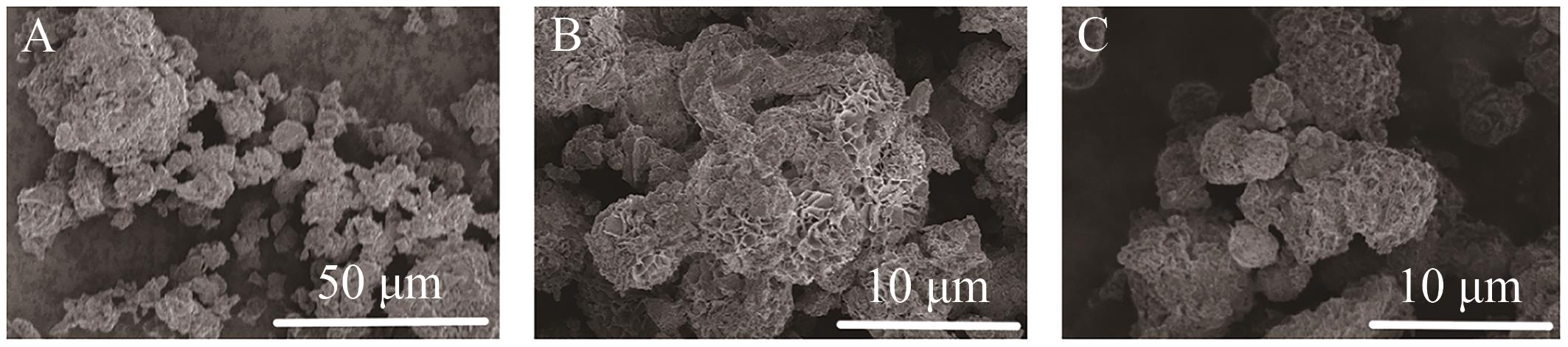
Fig.1 SEM images of g-C3N4(A), g-C3N4/ZnIn2S4(CN/ZIS)(B), and g-C3N4/CaIn2S4(CN/CIS)(C)
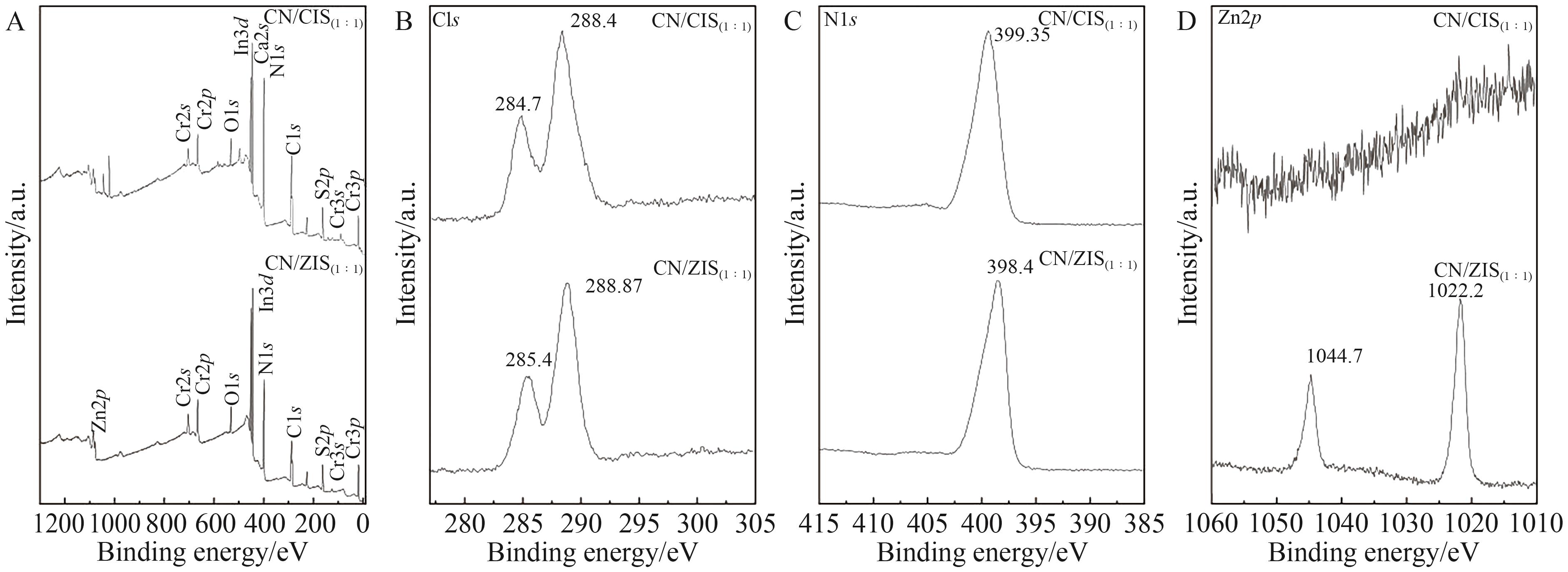
Fig.2 High-resolution XPS spectra of CN/CIS(1∶1) and CN/ZIS(1∶1)
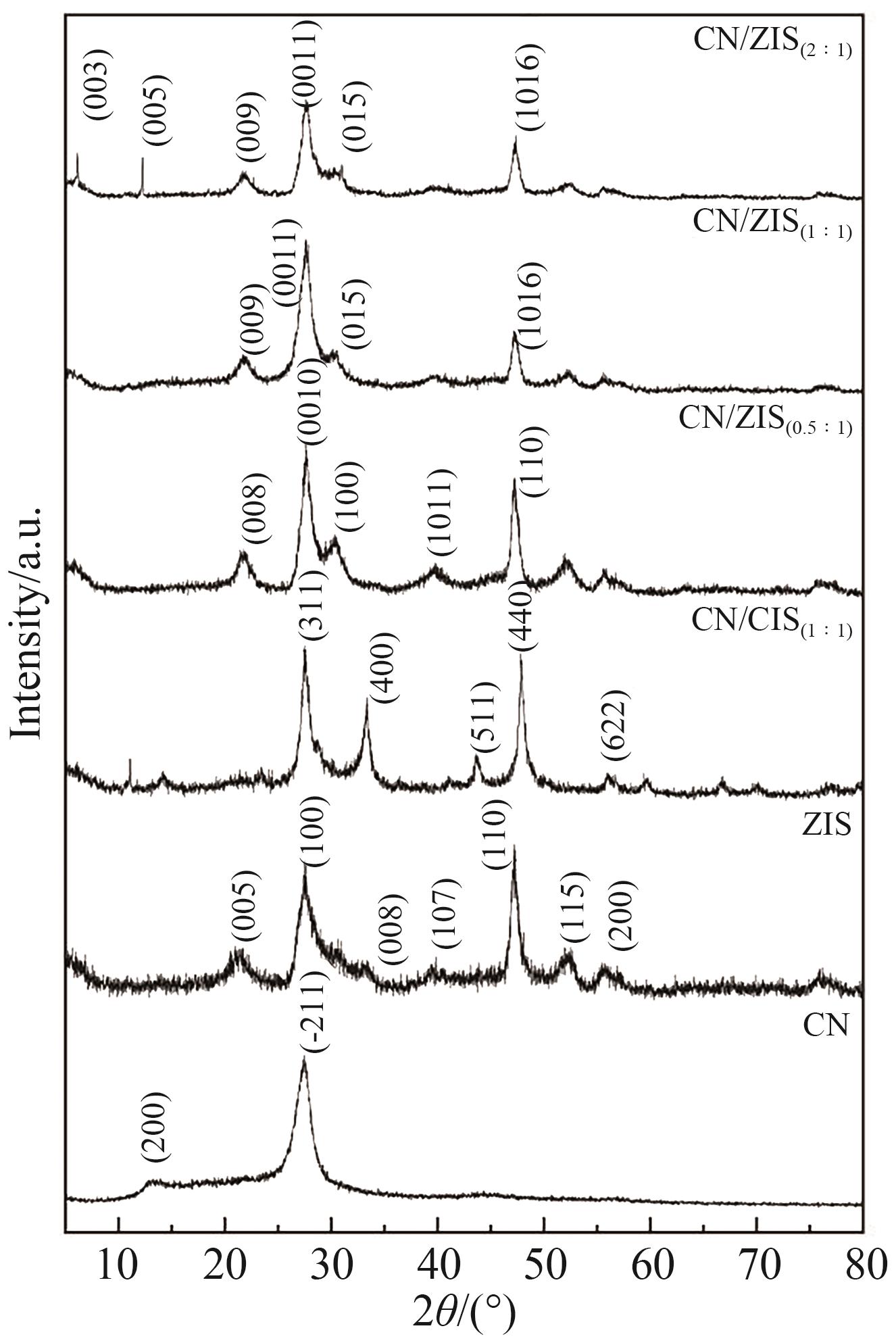
Fig.3 XRD patterns of g-C3N4, ZnIn2S4, CN/CIS and CN/ZIS
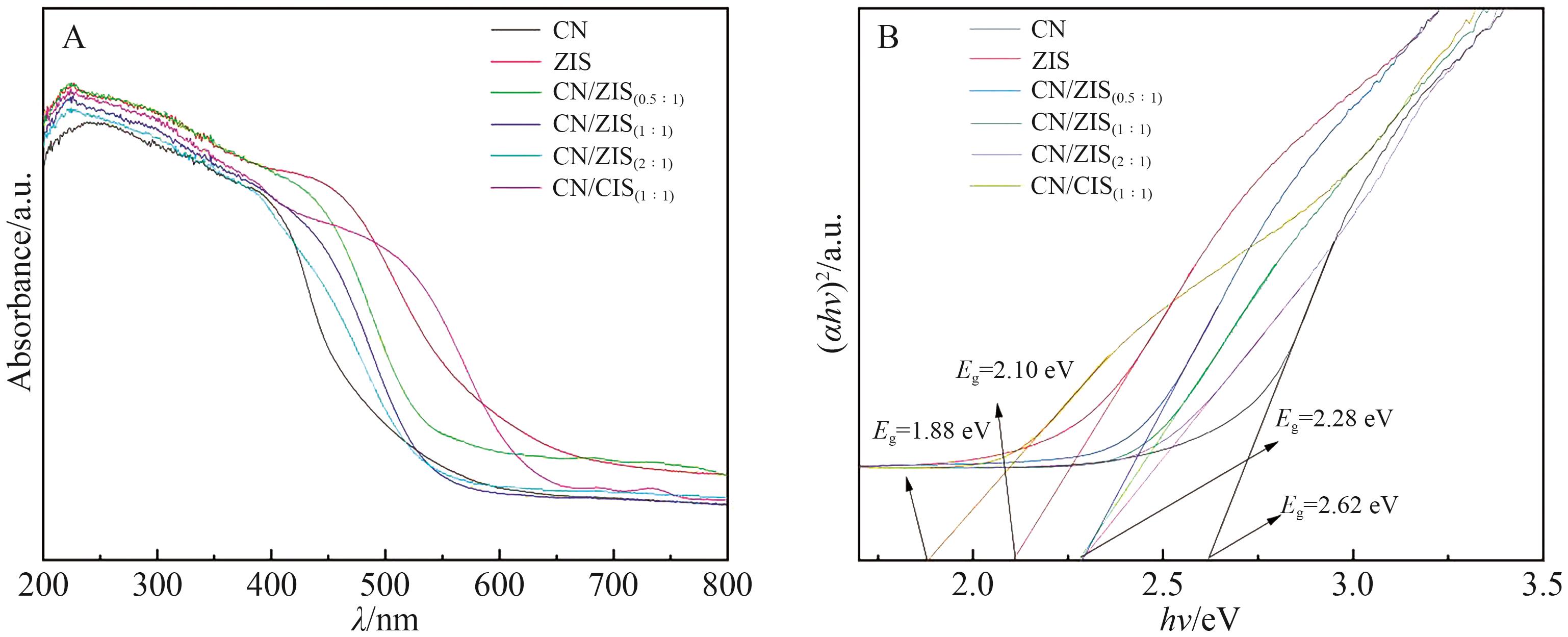
Fig.4 UV-Visdiffuse reflection spectroscopy (DRS) of g-C3N4, ZnIn2S4, g-C3N4/ZnIn2S4 and CaIn2S4 (A) and the band gap energy diagram of g-C3N4, ZnIn2S4, g-C3N4/ZnIn2S4 and g-C3N4/ZnIn2S4 (B)
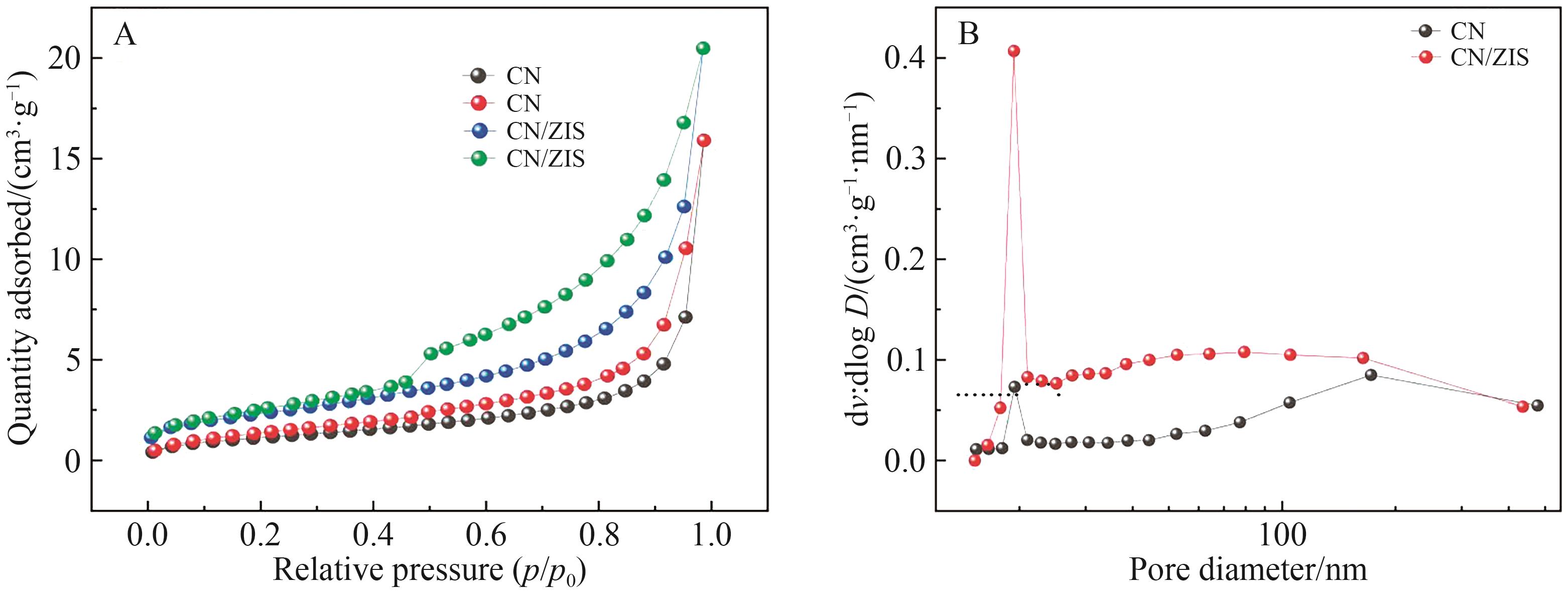
Fig.5 Adsorption-desorption isotherm of N2 pore volume diagram (A) and the pore volume diagram (B) of g-C3N4/ZnIn2S4(CN/ZIS)
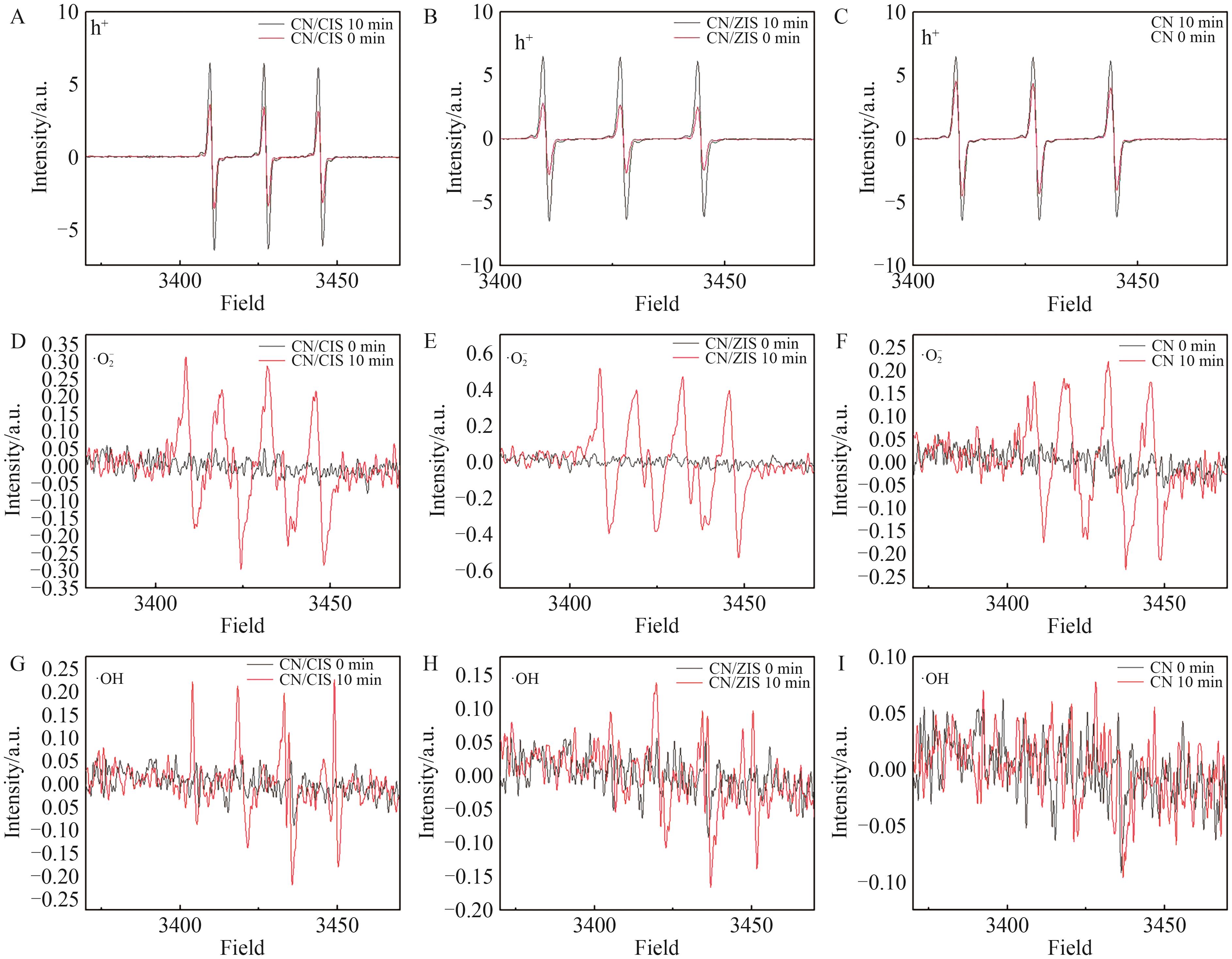
Fig.6 Electron spin resonance spectroscopy with and without visible light irradiation
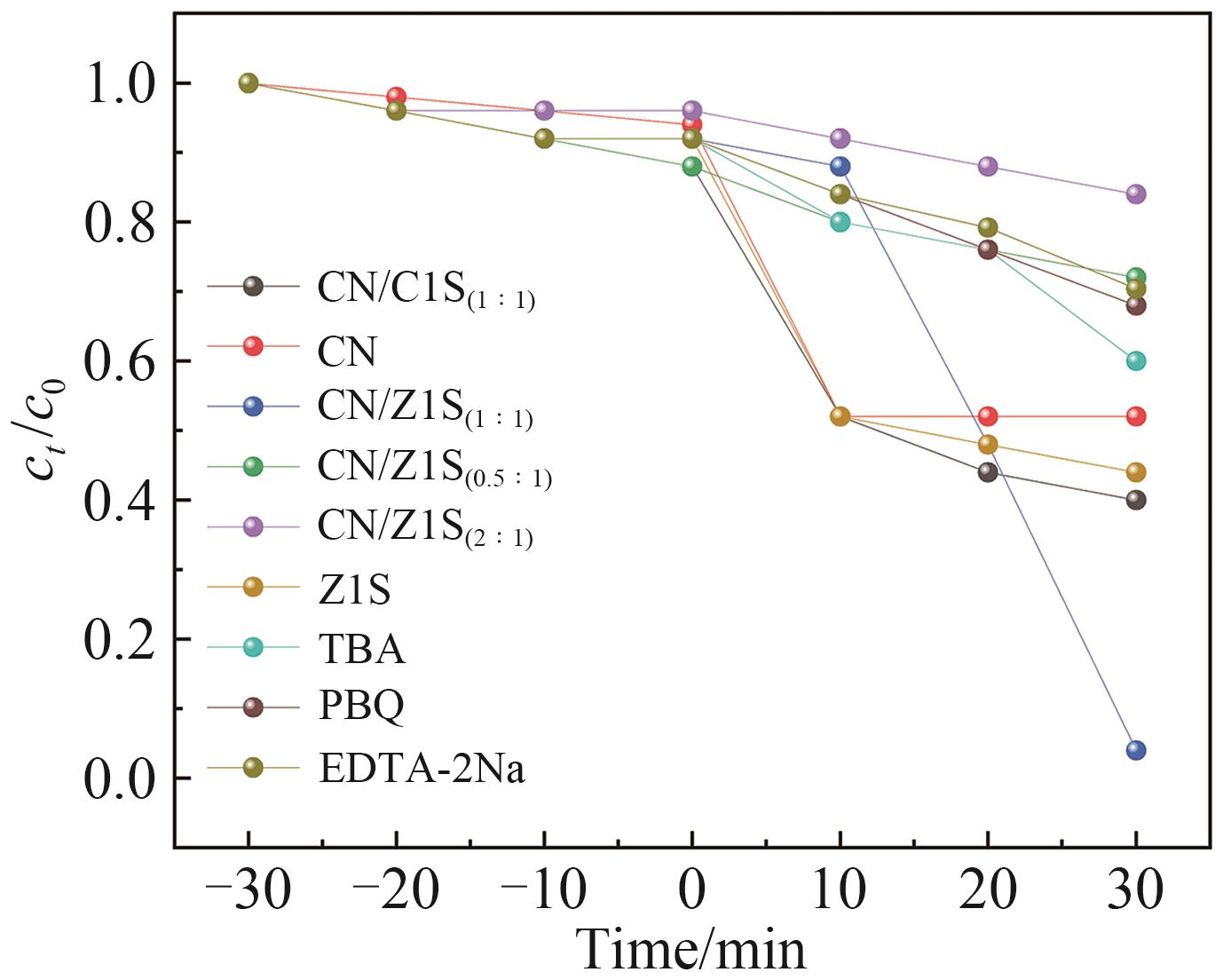
Fig.7 Reduction ability of Cr(Ⅵ) by monomer and composite materials with different mass ratios
| [1] | WANG Y, MA Z, WANG J, et al. Hierarchical CaIn2S4/NiTiO3 heterojunction enhanced removal of hexavalent chromium powered by visible irradiation[J]. Mater Sci Semicond Process, 2025, 190: 109375. |
| [2] | YU H, TAN H, CHEN N, et al. Facile fabrication of heavily N-doped Zn0.67Cd0.33S nanocatalyst with congenital sulfur vacancies for efficient photocatalytic reduction of water and hexavalent chromium[J]. J Photochem Photobiol A, 2024, 457: 115927. |
| [3] | KAR S, GHOSH S, PAL T. MoS2-CdS composite for photocatalytic reduction of hexavalent chromium and thin film optoelectronic device applications[J]. Sci Rep, 2024, 14(1): 18674. |
| [4] | PONSINGH A B, RAJAGOPALAN V. Design and optimization of a photocatalytic system for Cr(Ⅵ) ion reduction using ZnO-NiO nanocomposite by response surface method and their antibacterial studies[J]. Ionics, 2024, 30(10): 6631-6651. |
| [5] | DAI Y, YAN B, LI Y, et al. Efficient photocatalytic removal of Cr6+ by steel slag loaded cellulose nanofiber aerogel[J]. Mater Chem Phys, 2025, 332: 130191. |
| [6] | QIN S, XU R, JIN Q, et al. Efficient photocatalytic reduction of hexavalent chromium by NiCo2S4/BiOBr heterogeneous photocatalysts[J]. Coatings, 2024, 14(12): 1492. |
| [7] | CAO S, LOW J, YU J, et al. Polymeric photocatalysts based on graphitic carbon nitride[J]. Adv Mater, 2015, 27(13): 2150-2176. |
| [8] | ONG W J, TAN L L, NG Y H, et al. Graphitic carbon nitride (g-C3N4)-based photocatalysts for artificial photosynthesis and environmental remediation: are we a step closer to achieving sustainability?[J]. Chem Rev, 2016, 116(7): 7159-7329. |
| [9] | 张永辉, 谢诗宇, 刘明明, 等. 功能化Cu2O光催化研究进展[J]. 分子科学学报, 2022, 38(1): 28-36. |
| ZHANG Y H, XIE S Y, LIU M M, et al. Research progress of functionalized Cu2O photocatalysis[J]. J Mol Sci, 2022, 38(1): 28-36. | |
| [10] | PATTNAIK P S, MOHANTY A U, PARIDA K. A timely update on g-C3N4-based photocatalysts towards the remediation of Cr(Ⅵ) in aqueous streams[J]. RSC Adv, 2024, 14(49): 36816-36834. |
| [11] | LU P, ZHAO H, LI Z, et al. High photocatalytic activity of g-C3N4/CdZnS/MoS2 heterojunction for hydrogen production[J]. Int J Hydrogen Energy, 2024, 82: 776-785. |
| [12] | CHEN M, JIA Y, LI H, et al. Enhanced pyrocatalysis of the pyroelectric BiFeO3/g-C3N4 heterostructure for dye decomposition driven by cold-hot temperature alternation[J]. J Adv Ceram, 2021, 10(2): 1-9. |
| [13] | LIU X, MA L, WANG X, et al. Structuring dual Z-scheme heterojunction and boosting surface reaction by bifunctional NiCoP modified TiO2/g-C3N4 for improving the photocatalytic activity[J]. Int J Hydrogen Energy, 2024, 62: 127-139. |
| [14] | WARY R R, NARZARY M, NIKHIL S, et al. Rational construction of carbon-rich g-C3N4 wrapped over CePO4 nanoro ds: oxygen vacancy mediated 1D/2D Z-scheme photocatalyst towards removal of congo red dye[J]. Colloids Surf A, 2024, 684: 133142. |
| [15] | 张永才, 侯振华, 吴迪, 等. α-Fe2O3/g-C3N4复合物的合成及光催化还原Cr(Ⅵ)的实验设计[J]. 实验室研究与探索, 2023, 42(9): 6-11. |
| ZHANG Y C, HOU Z H, WU D, et al. Design on the synthesis of α-Fe2O3/g-C3N4 composite and its photocatalytic reduction of Cr(Ⅵ)[J]. Res Explo Lab, 2023, 42(9): 6-11. | |
| [16] | 于会娟, 朱闻奇, 李烨, 等. 柠檬酸改性g-C3N4的制备及其光催化还原去除水体中Cr(Ⅵ)的实验研究[J]. 电镀与涂饰, 2023, 42(15): 78-83. |
| YU H J, ZHU W Q, LI Y, et al. Preparation of citric acid-modified g-C3N4 and experimental study on its photocatalytic reduction for Cr(Ⅵ) removal in water[J]. Electroplat Finish, 2023, 42(15): 78-83. | |
| [17] | ZHAO X, MA X, WANG B, et al. Preparation of g-C3N4/PVDF composites membrane for boosting photocatalytic activity in reduction of hexavalent chromium[J]. J Taiwan Inst Chem Eng, 2025, 168: 105894. |
| [18] | WANG J, SUN S, ZHOU R, et al. A review: synthesis, modification and photocatalytic applications of ZnIn2S4[J]. J Mater Sci Technol, 2021, 78: 1-19. |
| [19] | DHIMAN P, SHARMA J, DAWI E A, et al. Integration of Bi2Ti2O7 and CaIn2S4 to form a Z-scheme heterojunction with enhanced charge transfer for superior photocatalytic activity[J]. Ind Eng Chem Res, 2024, 63(35): 14. |
| [20] | 甘建昌, 胡海平, 苏明, 等. 金属硫化物/g-C3N4异质结的构建及其光催化性能改善与应用[J]. 材料导报, 2022, 36(10): 5-14. |
| GAN J C, HU H P, SU M, et al. Construction, photocatalytic performance lmprovement andapplication of metal sulfide/g-C3N4 heterojunctions[J]. Mater Rep, 2022, 36(10): 5-14. | |
| [21] | WANG D Y, CAO M J, FENG Y, et al. Self-assembly of ZnIn2S4 nanosheets on g-C3N4 nanotubes for efficient photocatalytic reduction of Cr(Ⅵ)[J]. Micropor Mesopor Mater, 2022, 330(Suppl C): 111598. |
| [22] | YANG L, ZHAO J, WANG Z, et al. Facile construction of g-C3N4/ZnIn2S4 nanocomposites for enhance Cr(Ⅵ) photocatalytic reduction[J]. Spectrochim Acta Part A, 2022, 276(Suppl C): 121184. |
| [23] | HU J, LU S, MA J, et al. Composite of g-C3N4/ZnIn2S4 for efficient adsorption and visible light photocatalytic reduction of Cr(Ⅵ)[J]. Environ Sci Pollut Res Int, 2022, 29(50): 76404-76416. |
| [24] | CIRENA Z, NIE Y, LI Y, et al. Fe doped g-C3N4 composited ZnIn2S4 promoting Cr(Ⅵ) photoreduction[J]. Chin Chem Lett, 2023, 34(4): 462-467. |
| [25] | XU SY, DAI J,YANG J, et al. Facile synthesis of novel CaIn2S4/ZnIn2S4 composites with efficient performance for photocatalytic reduction of Cr(Ⅵ) under simulated sunlight irradiation[J]. Nanomaterials, 2018, 8(7): 472. |
| [26] | WANG Y Y, JIA S J, DING S Q, et al. Development of palygorskite-CaIn2S4 composite for rapid Cr(Ⅵ) reduction under visible light[J]. J Environ Sci, 2025, 156: 562-575. |
| [27] | 胡杰. ZnIn2S4基复合材料光催化还原六价铬及其机理研究[D]. 常州: 常州大学, 2022. |
| HU J. Photocatalytic reduction and mechanism of hexavalent chromium by ZnIn2S4 based composites[D]. Changzhou: Changzhou University, 2022. | |
| [28] | ARULPRAKASH G, VIJAYARAGHAVAN R. Charge-separated 3D/2D layered heterojunction of NiNb2O6/E-gC3N4 as an efficient photocatalyst for photo-reduction of Cr6+ and photo-oxidation of dyes under visible and sunlight[J]. Appl Surf Sci, 2025, 684: 161938. |
| [29] | GAO Z, CHEN K, WANG L, et al. Aminated flower-like ZnIn2S4 coupled with benzoic acid modified g-C3N4 nanosheets via covalent bonds for ameliorated photocatalytic hydrogen generation[J]. Appl Catal B, 2019, 268: 118462. |
| [30] | QIU P X, YAO J H, CHEN H, et al. Enhanced visible-light photocatalytic decomposition of 2,4-dichlorophenoxyacetic acid over ZnIn2S4/g-C3N4 photocatalyst[J]. J Hazard Mater, 2016, 317: 158-168. |
| [31] | YE X J, ZHU T T, HUI Z Z, et al. Revealing the transfer mechanisms of photogenerated charge carriers over g-C3N4/ZnIn2S4 composite: a model study for photocatalytic oxidation of aromatic alcohols with visible light[J]. J Catal, 2021, 401: 149-159. |
| [32] | DENG X, WANG D, LI H, et al. Boosting interfacial charge separation and photocatalytic activity of 2D/2D g-C3N4/ZnIn2S4 S-scheme heterojunction under visible light irradiation[J]. J Alloy Compd, 2022, 894: 162209. |
| [33] | 胡译文. ZnIn2S4基光催化材料的设计、可控构建及性能强化机制研究[D]. 北京: 北京化工大学, 2024. |
| HU Y W. Design, controllable construction,and performance enhancement mechanism research of ZnIn2S4-based photocatalytic materials[D]. Beijing: Beijing University of Chemical Technology, 2024. | |
| [34] | DELI J, JIE L, CHAOSHENG X, et al. Two-dimensional CaIn2S4/g-C3N4 heterojunction nanocomposite with enhanced visible-light photocatalytic activities: interfacial engineering and mechanism insight[J]. ACS Appl Mater Interfaces, 2015, 7(34): 19234-19242. |
| [35] | WU Z Y, LU Q Y, FU W H, et al. Fabrication of mesoporous Al-SBA-15 as a methylene blue capturer via a spontaneous infiltration route[J]. New J Chem, 2015, 39(2): 985-993. |
| [1] | Zhen-Jian JIA, Xi HAN, Jie ZHANG. Preparation and Photocatalytic Performance of Bismuth Modified TiO2 Photocatalyst [J]. Chinese Journal of Applied Chemistry, 2024, 41(8): 1116-1125. |
| [2] | Sheng-Jie LIU, Yong-Jie YE, Yin-Yi LIU, Shu-Man LIN, Hao-Yuan XIE, Wen-Ting LIU, Wei-Qin XU. Preparation of Uniformly Loaded Cu3P Nanoparticles in Porous Carbon Based on Copper Foam and Their Photocatalytic Performance for Dye Degradation [J]. Chinese Journal of Applied Chemistry, 2022, 39(7): 1090-1097. |
| [3] | Yi-Xin XU, Shuang WANG, Jing QUAN, Wan-Ting GAO, Tian-Qun SONG, Mei YANG. Preparation of Molybdenum Disulfide Quantum Dots/Reduced Graphene Oxide Composites and Their Photocatalytic Degradation of Organic Dyes, Tetracyclines and Cr(VI) [J]. Chinese Journal of Applied Chemistry, 2022, 39(5): 769-778. |
| [4] | Yu-Feng ZHOU, Chuan-Wei ZHOU, Tong-Ze HU, Zhan-Peng DUAN, Hao-Tong WANG, Shu-Yun SHI. Synthesis of Fe/V‑Sb2O3 Composites and UV‑light Catalytic Degradation of Pharmaceutical Wastewater [J]. Chinese Journal of Applied Chemistry, 2022, 39(10): 1572-1578. |
| [5] | ZHAO Xing-Peng, WANG Ya-Qiao, GAO Sheng-Wang, ZHU Jian-Chao, WANG Guo-Ying, XIA Xun-Feng, WANG Hong-Liang, WANG Shu-Ping. Synthesis of BiOBr/CeO2 Composites for Photocatalytic Degradation of Sulfisoxazole [J]. Chinese Journal of Applied Chemistry, 2021, 38(4): 422-430. |
| [6] | LI Yuejun, CAO Tieping, SUN Dawei, ZHAO Yanhui, BAI Benang. Preparation of Ternary Ho3+-TiO2/Bi Plasmonic Composite Fibers for Photocatalytic H2 Production under Visible Light Irradiation [J]. Chinese Journal of Applied Chemistry, 2020, 37(5): 570-578. |
| [7] | HUO ZhaoHui, YANG Xiaoshan, CHEN Xiaoli, ZHANG Gang, YIN Wei, CAO Manli, SHI Lei, QIU Yanxuan. Preparation of Ag/Two-Dimensional Graphitic Carbon Nitride/Reduced Graphene Oxide Composite and Its Photocatalytic Degradation of Antibiotics [J]. Chinese Journal of Applied Chemistry, 2020, 37(4): 471-480. |
| [8] | HEI Jiahui, YANG Lining, LI Jun. Synthesis and Photocatalysis of Metal Complexes with Schiff Base Derived from 2-Thiophene Carboxaldehyde and Ethylenediamine [J]. Chinese Journal of Applied Chemistry, 2019, 36(8): 949-957. |
| [9] | LI Jing,WU Haibo,WANG Yu,YANG Huamei,SONG Ming,DU Xihua,ZHANG Yongcai. Preparation and Enhanced Visible-Light Photocatalytic Activity of Bismuth Tungstate/Graphitic Carbon Nitride Composite Modified by Bi2WO6 Quantum Dots and Nanosheets [J]. Chinese Journal of Applied Chemistry, 2019, 36(11): 1275-1285. |
| [10] | LI Jing, WU Haibo, WANG Yu, YANG Huamei, SONG Ming, DU Xihua, ZHANG Yongcai. Preparation and Enhanced Visible-Light Photocatalytic Activity of Bismuth Tungstate/Graphitic Carbon Nitride Composite Modified by Bi2WO6 Quantum Dots and Nanosheets [J]. Chinese Journal of Applied Chemistry, 2019, 36(11): 0-0. |
| [11] | GU Zhimeng,WANG Ying,ZHAO Min,HAO Qiuhua,SHANG Di,BAI Fengying,XING Yongheng. Synthesis, Structure and Photocatalytic Activity of Triazine-Pyrazole Ruthenium Complexes [J]. Chinese Journal of Applied Chemistry, 2018, 35(2): 206-215. |
| [12] | CHEN Shijie, TANG Xiaojun, CHEN Xi, LI Yingjie, GAO Lidi, WANG Peng. Efficiency and Mechanism of Photocatalytic Oxidation of Norfloxacin in Wastewater by C/Fe-Bi2WO6 [J]. Chinese Journal of Applied Chemistry, 2017, 34(8): 936-945. |
| [13] | LIN Hongyan, SUN Junjun, WANG Qinglin, ZENG Ling, LIU Guocheng, LIN Jiafeng. A Three-Dimensional Zinc Compound Based on One-Dimensional [H2Mo4O14]n2n- Chain and Bis(pyridyl)-Bis(amide) Ligand: Synthesis, Structure and Property [J]. Chinese Journal of Applied Chemistry, 2017, 34(6): 693-699. |
| [14] | XIE Ruyi, ZHANG Linping, XU Hong, ZHONG Yi, SUI Xiaofeng, MAO Zhiping. Preparation of Bi20TiO32/Polyacrylonitrile Composite Nanofibers and Their Photocatalytic Activity for Degradation of Isoproturon [J]. Chinese Journal of Applied Chemistry, 2017, 34(6): 656-663. |
| [15] | FU Dawei, XIE Ruyi, ZHANG Linping, XU Hong, ZHONG Yi, SUI Xiaofeng, MAO Zhiping. Preparation of Hollow Spherical Bismuth Oxyiodide and Its Adsorption and Photocatalytic Degradation of Dyes [J]. Chinese Journal of Applied Chemistry, 2017, 34(5): 590-596. |
| Viewed | ||||||
|
Full text |
|
|||||
|
Abstract |
|
|||||
