
应用化学 ›› 2026, Vol. 43 ›› Issue (1): 53-66.DOI: 10.19894/j.issn.1000-0518.250177
周莹( ), 卜万奎, 张东, 刘品品, 李光跃
收稿日期:2025-04-25
接受日期:2025-09-02
出版日期:2026-01-01
发布日期:2026-01-26
通讯作者:
周莹
基金资助:
Ying ZHOU(), Wan-Kui BU, Dong ZHANG, Pin-Pin LIU, Guang-Yue LI
Received:2025-04-25
Accepted:2025-09-02
Published:2026-01-01
Online:2026-01-26
Contact:
Ying ZHOU
About author:zhouying.yy@163.comSupported by:摘要:
以癸酸(CA)、棕榈酸(PA)和十八醇(OD)为相变材料,膨胀珍珠岩(EP)为吸附介质,采用熔融吸附法制备 CA-PA-OD/EP 定形相变材料,通过傅里叶变换红外光谱(FT-IR)、扫描电子显微镜(SEM)、示差扫描量热法(DSC)和热重分析法(TG)等对定形相变材料的微观结构、热性能和热稳定性进行表征。然后,将定形相变材料与泡沫混凝土结合,制备出蓄热性能好、能够调节室温的相变蓄热泡沫混凝土,并测定其干密度、导热系数等性能参数。最后,采用BIM软件建立建筑模型,利用PKPM绿建软件对相变蓄热泡沫混凝土在建筑墙体中的能耗情况和室内热舒适进行分析。 研究结果表明: 定形相变材料的相变温度为21.03 ℃,相变潜热为93.59 J/g,复合过程保持各组分的化学完整性; TG的结果表明,未封装的定形相变材料在290.5 ℃时残留质量分数为50.12%,封装后的定形相变材料在312.6 ℃时残留质量分数为55.37%; 蓄放热曲线表明,制备的定形相变材料具有调温控温特性。 将相变蓄热泡沫混凝土材料导入绿建中进行节能评价、隔热分析和室内热舒适评价,得出该相变蓄热泡沫混凝土能够减少建筑的能源消耗,且具备较好的保温隔热效果。 定型相变材料及其泡沫混凝土兼具高储热性能、强隔热能力和工程适用性,能有效提升建筑节能与低碳效益。
中图分类号:
周莹, 卜万奎, 张东, 刘品品, 李光跃. 膨胀珍珠岩基储能材料的制备及其对建筑能耗的影响[J]. 应用化学, 2026, 43(1): 53-66.
Ying ZHOU, Wan-Kui BU, Dong ZHANG, Pin-Pin LIU, Guang-Yue LI. Preparation of Expanded Perlite-Based Energy Storage Materials and Their Impact on Building Energy Consumption[J]. Chinese Journal of Applied Chemistry, 2026, 43(1): 53-66.
| Sample | w(Phase change materials)/% | m(CA-PA-OD)/g | m(EP)/g |
|---|---|---|---|
| Ⅰ | 30 | 0.3 | 0.7 |
| Ⅱ | 40 | 0.4 | 0.6 |
| Ⅲ | 50 | 0.5 | 0.5 |
| Ⅳ | 60 | 0.6 | 0.4 |
| Ⅴ | 70 | 0.7 | 0.3 |
| Ⅵ | 80 | 0.8 | 0.2 |
表1 6种相变材料中CA-PA-OD和EP的配比
Table 1 The ratio of CA-PA-OD and EP in 6 phase change materials
| Sample | w(Phase change materials)/% | m(CA-PA-OD)/g | m(EP)/g |
|---|---|---|---|
| Ⅰ | 30 | 0.3 | 0.7 |
| Ⅱ | 40 | 0.4 | 0.6 |
| Ⅲ | 50 | 0.5 | 0.5 |
| Ⅳ | 60 | 0.6 | 0.4 |
| Ⅴ | 70 | 0.7 | 0.3 |
| Ⅵ | 80 | 0.8 | 0.2 |
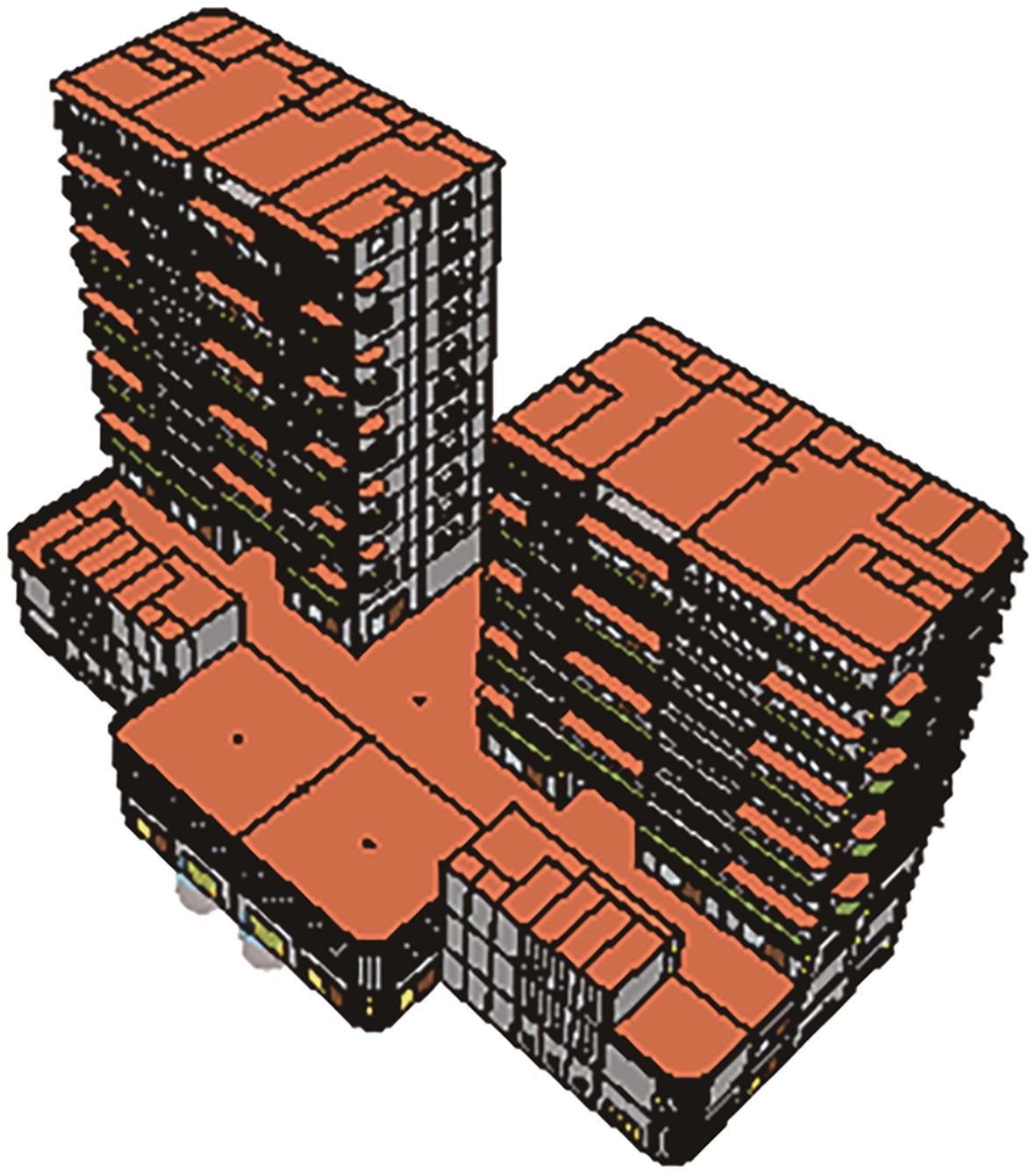
图1 相变储能建筑的模型
Fig.1 Model of phase change energy storage building
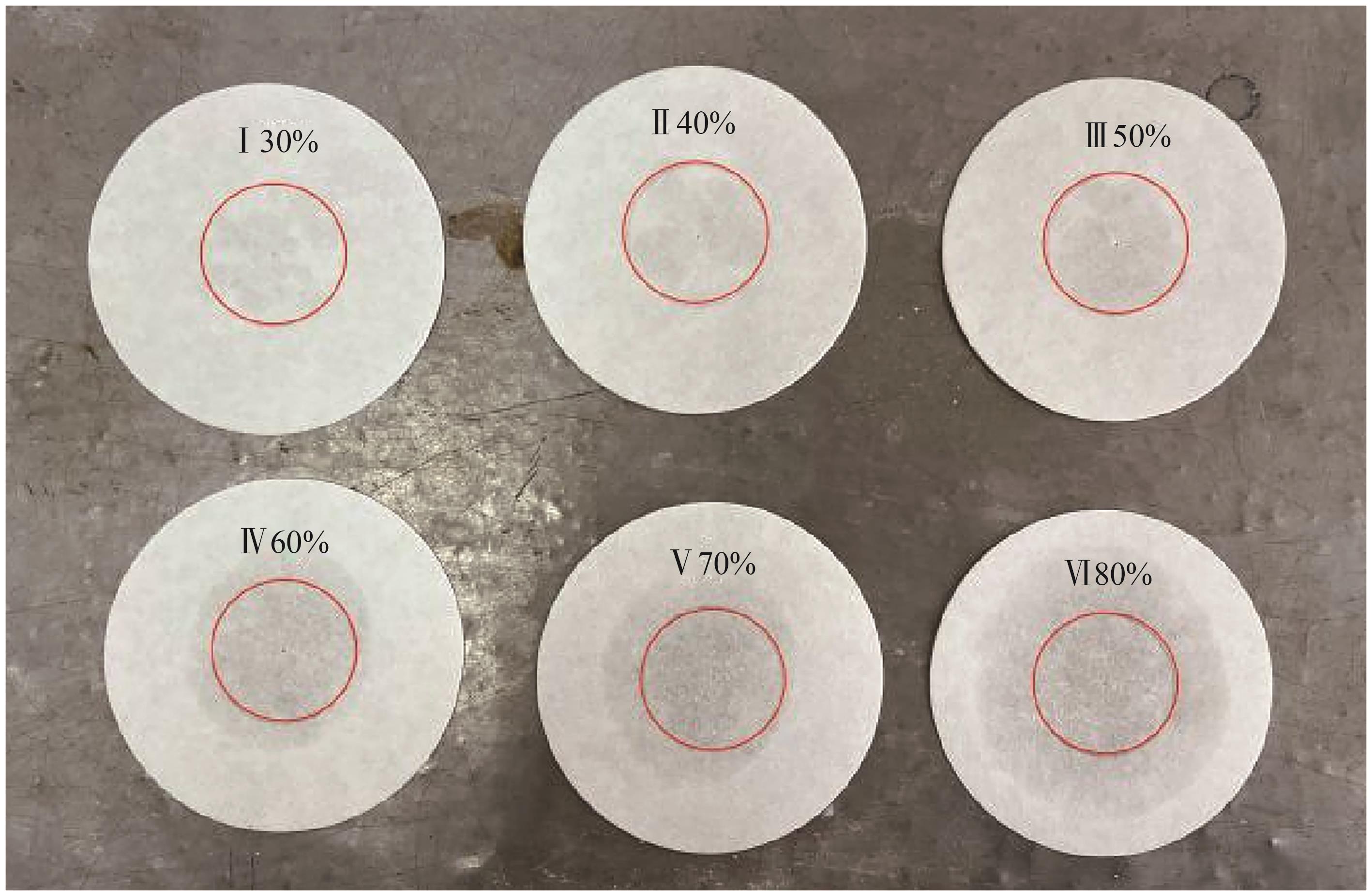
图2 封装前样品Ⅰ、Ⅱ、Ⅲ、Ⅳ、Ⅴ和Ⅵ的渗出现象
Fig.2 Leakage phenomenon of samples Ⅰ, Ⅱ, Ⅲ, Ⅳ, Ⅴand Ⅵ before packaging
| Sample | m(filter paper before leakage)/g | m(filter paper after leakage)/g | Mass change fraction/% |
|---|---|---|---|
| Ⅰ | 0.334 | 0.337 | 1 |
| Ⅱ | 0.337 | 0.341 | 1 |
| Ⅲ | 0.331 | 0.343 | 4 |
| Ⅳ | 0.332 | 0.357 | 8 |
| Ⅴ | 0.340 | 0.374 | 10 |
| Ⅵ | 0.334 | 0.391 | 17 |
表2 封装前样品Ⅰ、Ⅱ、Ⅲ、Ⅳ、Ⅴ和Ⅵ渗出圈实验结果
Table 2 Experimental results of leakage rings of samples Ⅰ, Ⅱ, Ⅲ, Ⅳ, Ⅴand Ⅵ before packaging
| Sample | m(filter paper before leakage)/g | m(filter paper after leakage)/g | Mass change fraction/% |
|---|---|---|---|
| Ⅰ | 0.334 | 0.337 | 1 |
| Ⅱ | 0.337 | 0.341 | 1 |
| Ⅲ | 0.331 | 0.343 | 4 |
| Ⅳ | 0.332 | 0.357 | 8 |
| Ⅴ | 0.340 | 0.374 | 10 |
| Ⅵ | 0.334 | 0.391 | 17 |
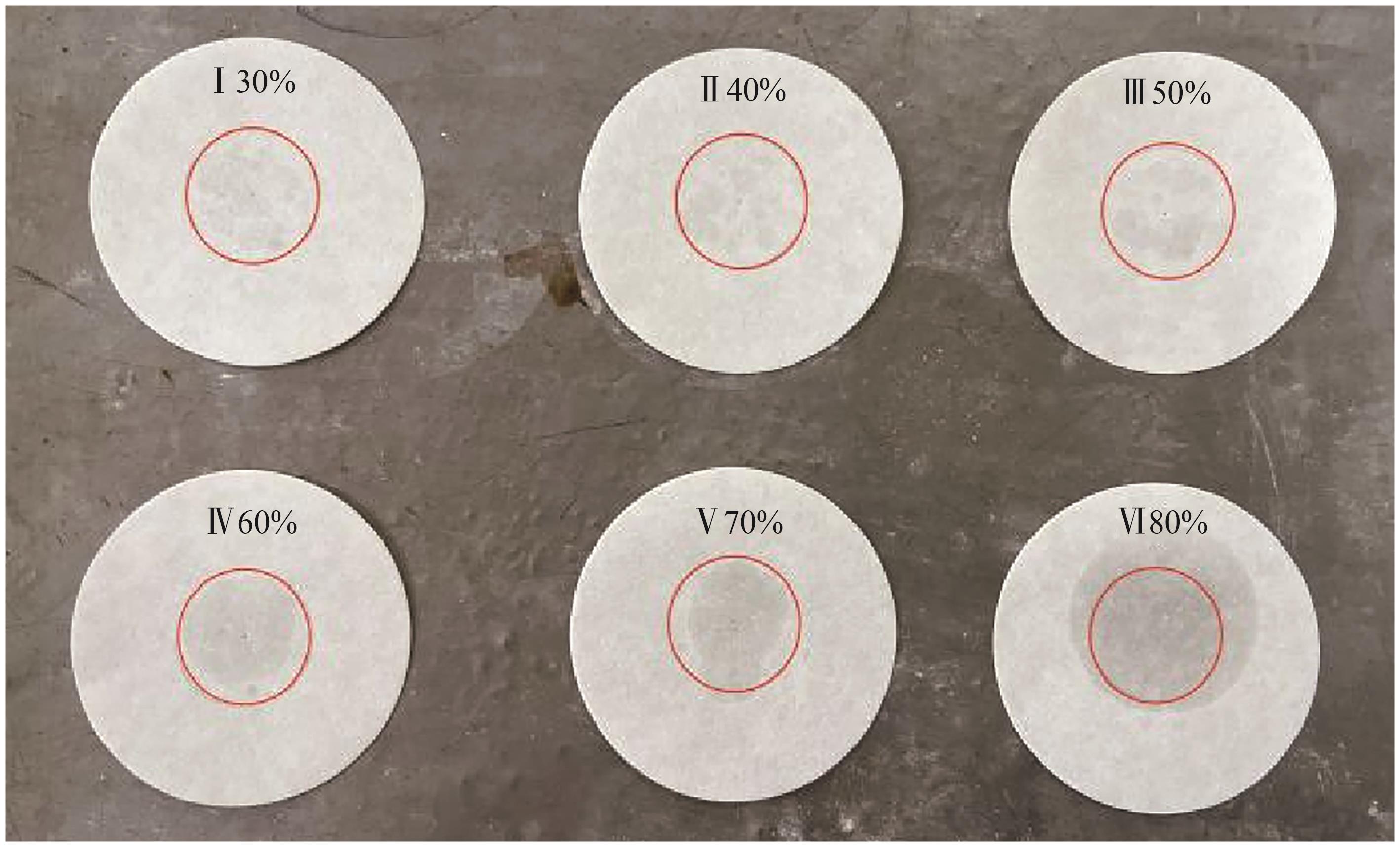
图3 封装后样品Ⅰ、Ⅱ、Ⅲ、Ⅳ、Ⅴ和Ⅵ的渗出现象
Fig.3 Leakage phenomenon of encapsulated samplesⅠ,Ⅱ,Ⅲ,Ⅳ,Ⅴand Ⅵ
| Sample | m(filter paper before leakage)/g | m(filter paper after leakage)/g | Mass change fraction/% |
|---|---|---|---|
| Ⅰ | 0.335 | 0.335 | 0 |
| Ⅱ | 0.334 | 0.335 | 0 |
| Ⅲ | 0.341 | 0.341 | 0 |
| Ⅳ | 0.337 | 0.343 | 2 |
| Ⅴ | 0.334 | 0.340 | 2 |
| Ⅵ | 0.336 | 0.369 | 10 |
表3 封装后样品Ⅰ、Ⅱ、Ⅲ、Ⅳ、Ⅴ和Ⅵ渗出圈实验结果
Table 3 Experimental results of leakage rings of encapsulated samples Ⅰ, Ⅱ, Ⅲ, Ⅳ, Ⅴand Ⅵ
| Sample | m(filter paper before leakage)/g | m(filter paper after leakage)/g | Mass change fraction/% |
|---|---|---|---|
| Ⅰ | 0.335 | 0.335 | 0 |
| Ⅱ | 0.334 | 0.335 | 0 |
| Ⅲ | 0.341 | 0.341 | 0 |
| Ⅳ | 0.337 | 0.343 | 2 |
| Ⅴ | 0.334 | 0.340 | 2 |
| Ⅵ | 0.336 | 0.369 | 10 |
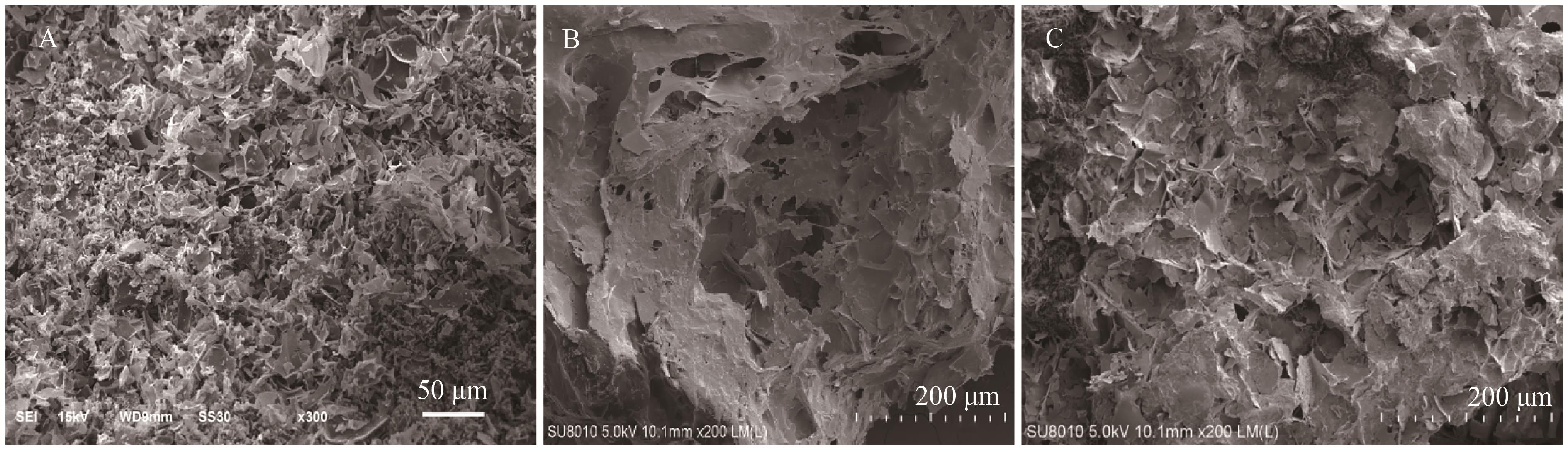
图4 膨胀珍珠岩载体(A)、未封装的CA-PA-OD/EP定形相变复合材料(B)和封装后CA-PA-OD/EP定形相变复合材料(C)的SEM图
Fig.4 SEM images of expanded perlite carrier (A), unencapsulated CA-PA-OD/EP shaped phase change composite material (B) and encapsulated CA-PA-OD/EP shaped phase change composite material (C)
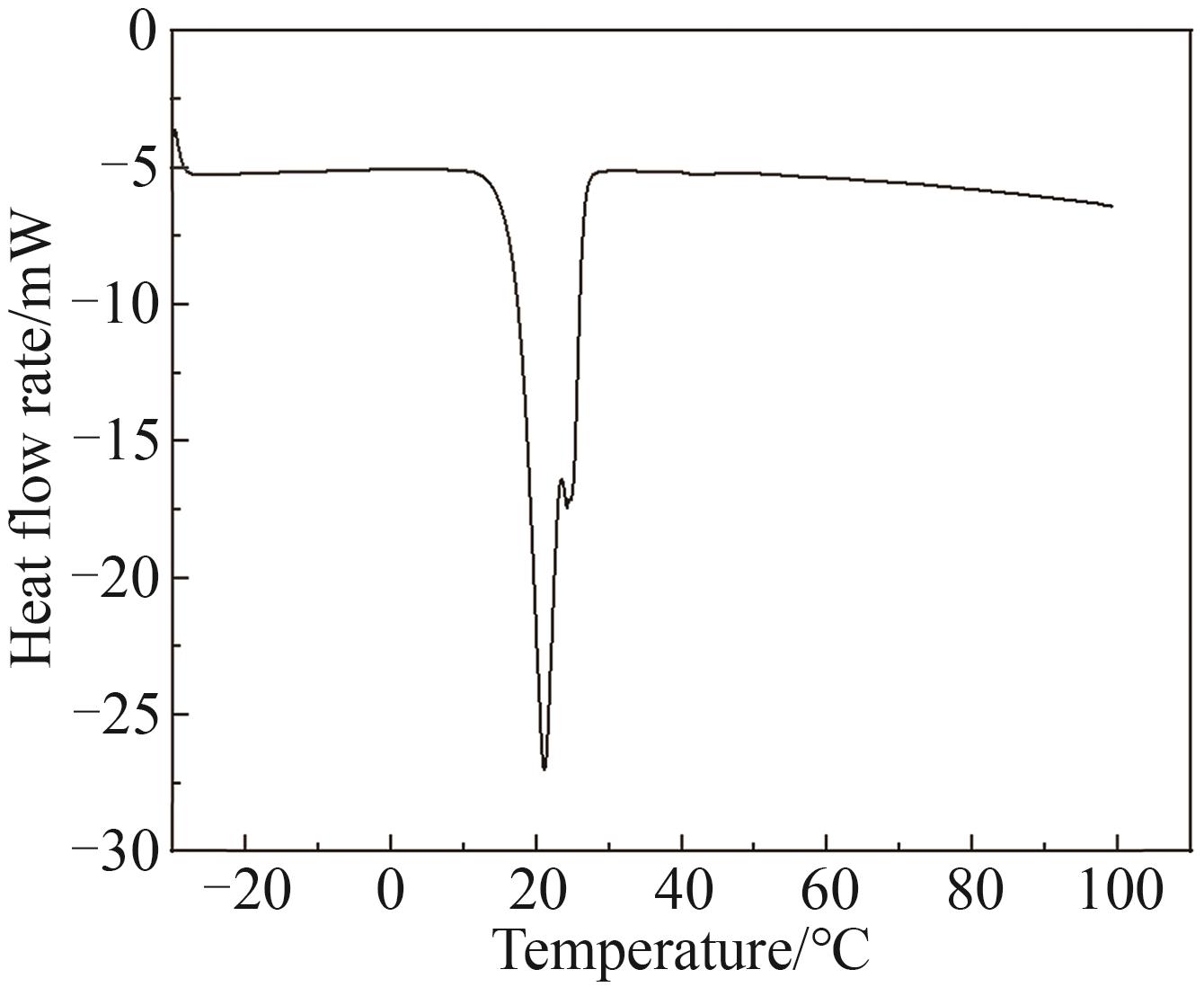
图5 定形相变材料的DSC
Fig.5 DSC of shaped phase cchangematerials
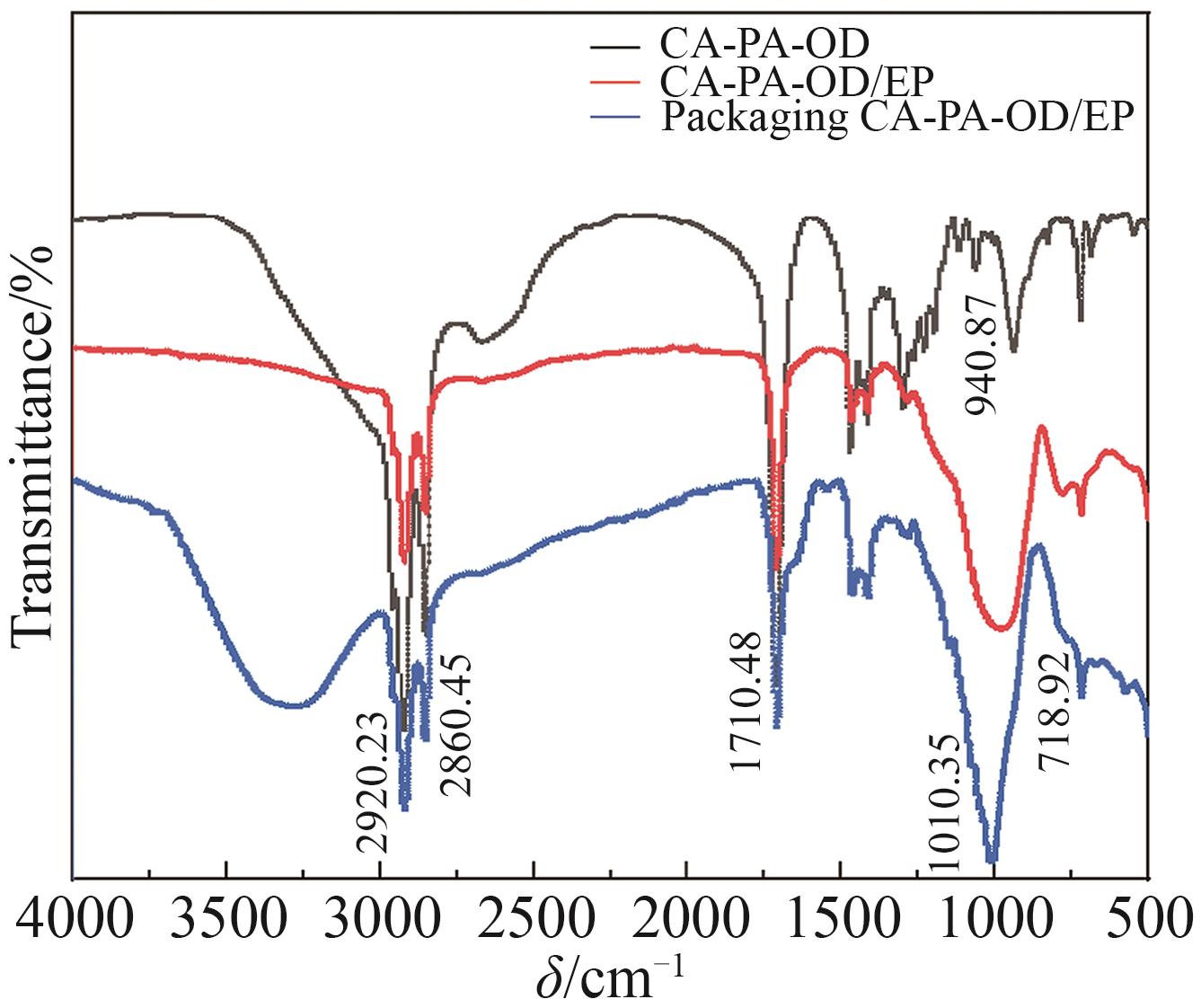
图6 定形相变材料的红外光谱图
Fig.6 Infrared spectrum of shaped phase change material
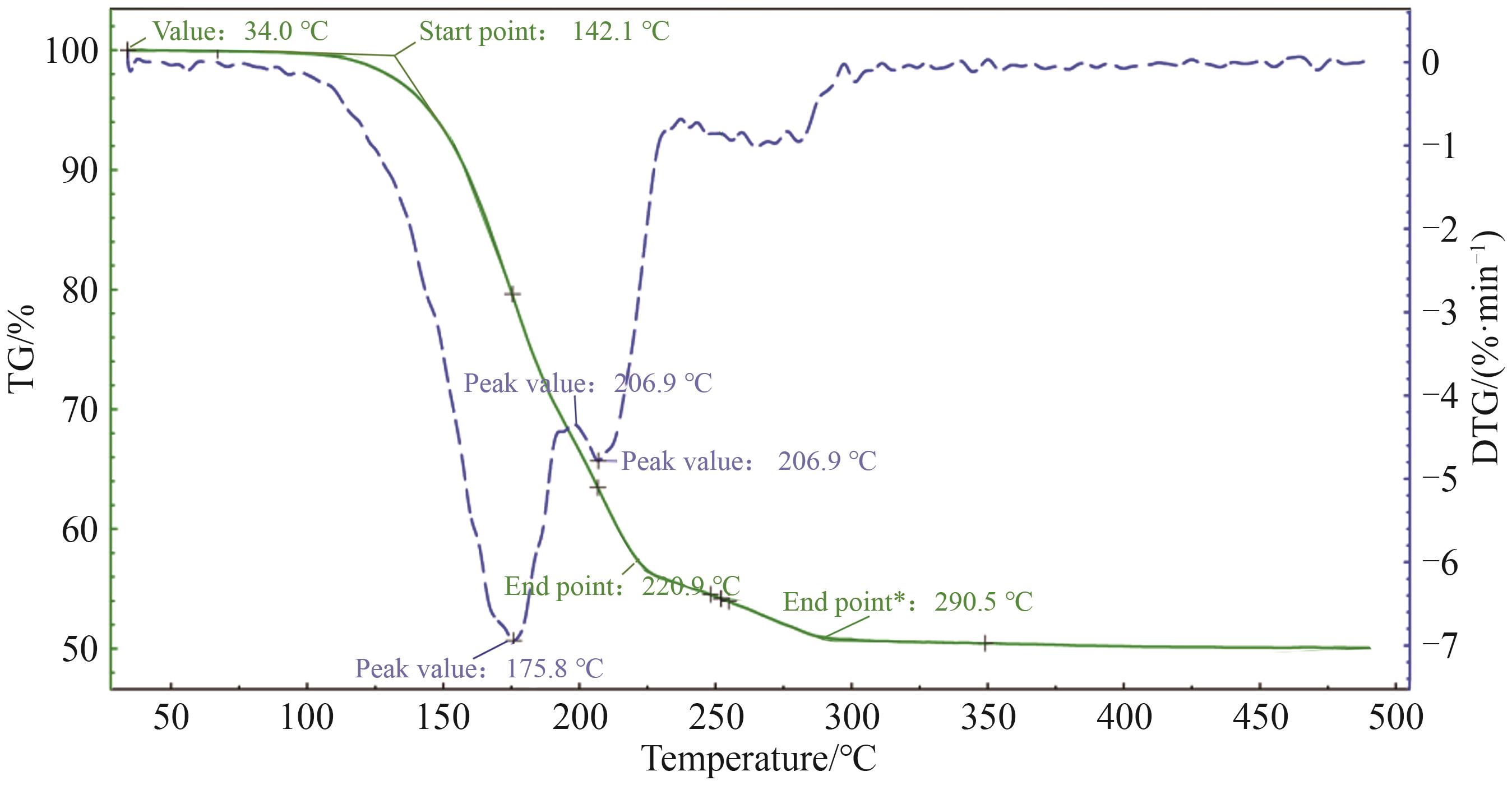
图7 未封装定形相变材料的TG图
Fig.7 TG diagram of unencapsulated shaped phase change material
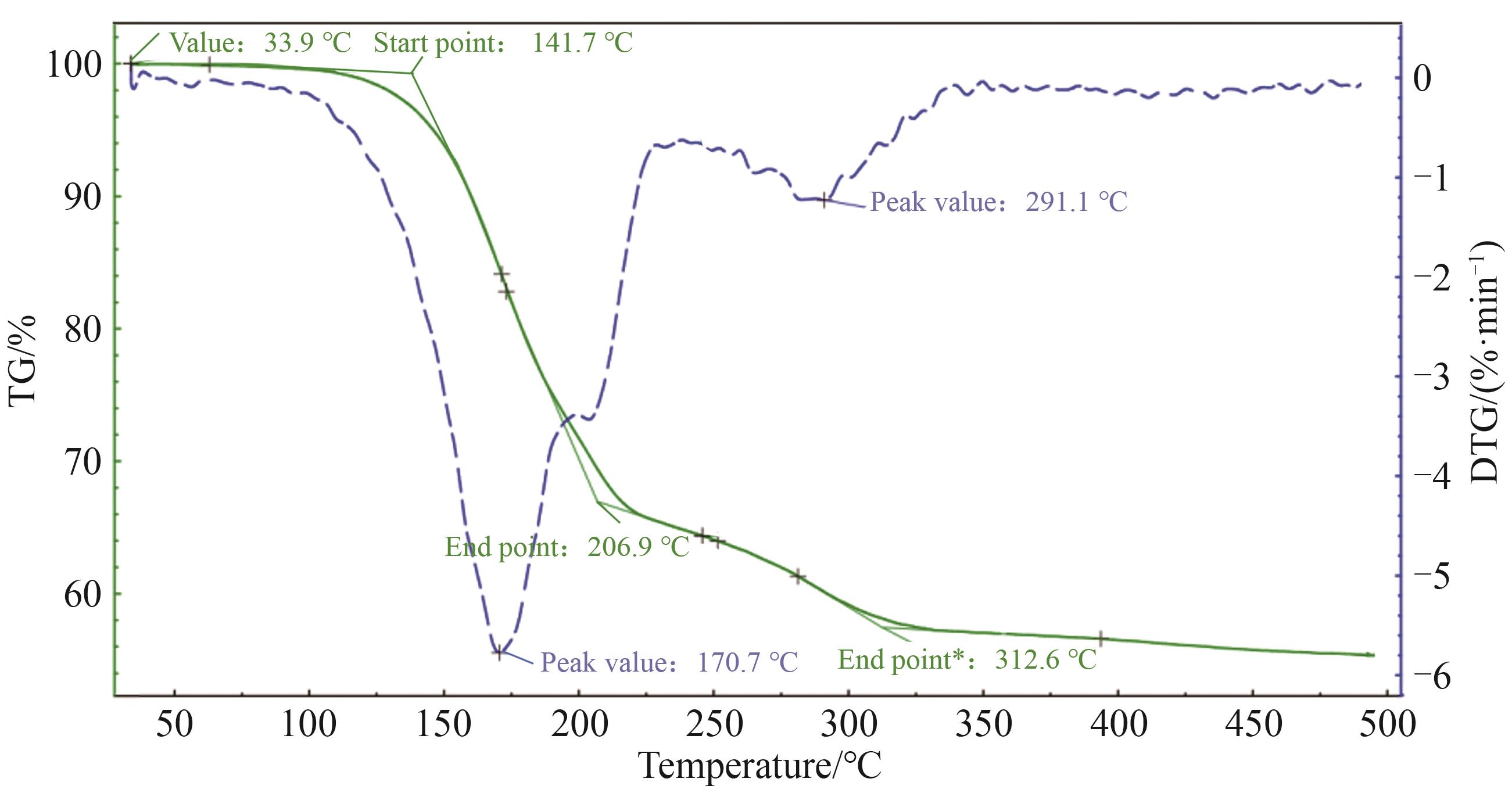
图8 封装后定形相变材料的TG图
Fig.8 TG diagram of shaped phase change material after packaging
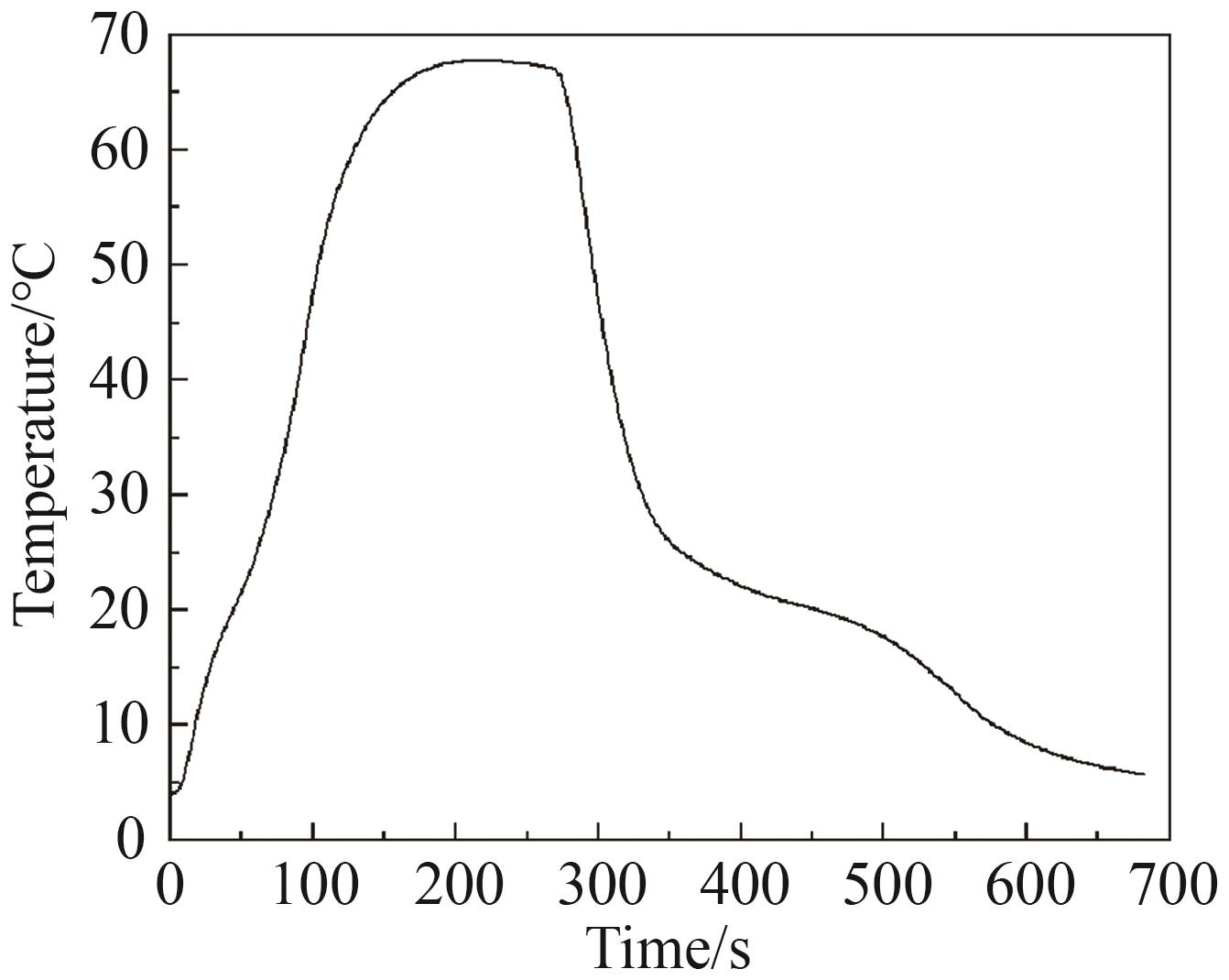
图9 定形相变材料的蓄放热曲线
Fig.9 Thermal storage and release curve of shaped phase change materials
| Dosage/% | Theoretical dry density/(kg·m-3) | Cement/(kg·m-3) | Fly ash/(kg·m-3) | Water/(kg·m-3) | Shaped phase change material/(kg·m-3) | Foaming agent/(kg·m-3) | Water reducer/(kg·m-3) |
|---|---|---|---|---|---|---|---|
| 0 | 500 | 375 | 42 | 208.5 | 0 | 3.75 | 0.54 |
| 5 | 356.54 | 39.61 | 250.2 | 20.85 | 3.75 | 0.54 | |
| 10 | 337.77 | 37.53 | 291.9 | 41.7 | 3.75 | 0.54 | |
| 15 | 319.01 | 35.45 | 333.6 | 62.55 | 3.75 | 0.54 | |
| 20 | 300.24 | 33.36 | 375.3 | 83.4 | 3.75 | 0.54 |
表4 相变蓄热泡沫混凝土配合比
Table 4 Mix proportion of phase change heat storage foam concrete
| Dosage/% | Theoretical dry density/(kg·m-3) | Cement/(kg·m-3) | Fly ash/(kg·m-3) | Water/(kg·m-3) | Shaped phase change material/(kg·m-3) | Foaming agent/(kg·m-3) | Water reducer/(kg·m-3) |
|---|---|---|---|---|---|---|---|
| 0 | 500 | 375 | 42 | 208.5 | 0 | 3.75 | 0.54 |
| 5 | 356.54 | 39.61 | 250.2 | 20.85 | 3.75 | 0.54 | |
| 10 | 337.77 | 37.53 | 291.9 | 41.7 | 3.75 | 0.54 | |
| 15 | 319.01 | 35.45 | 333.6 | 62.55 | 3.75 | 0.54 | |
| 20 | 300.24 | 33.36 | 375.3 | 83.4 | 3.75 | 0.54 |
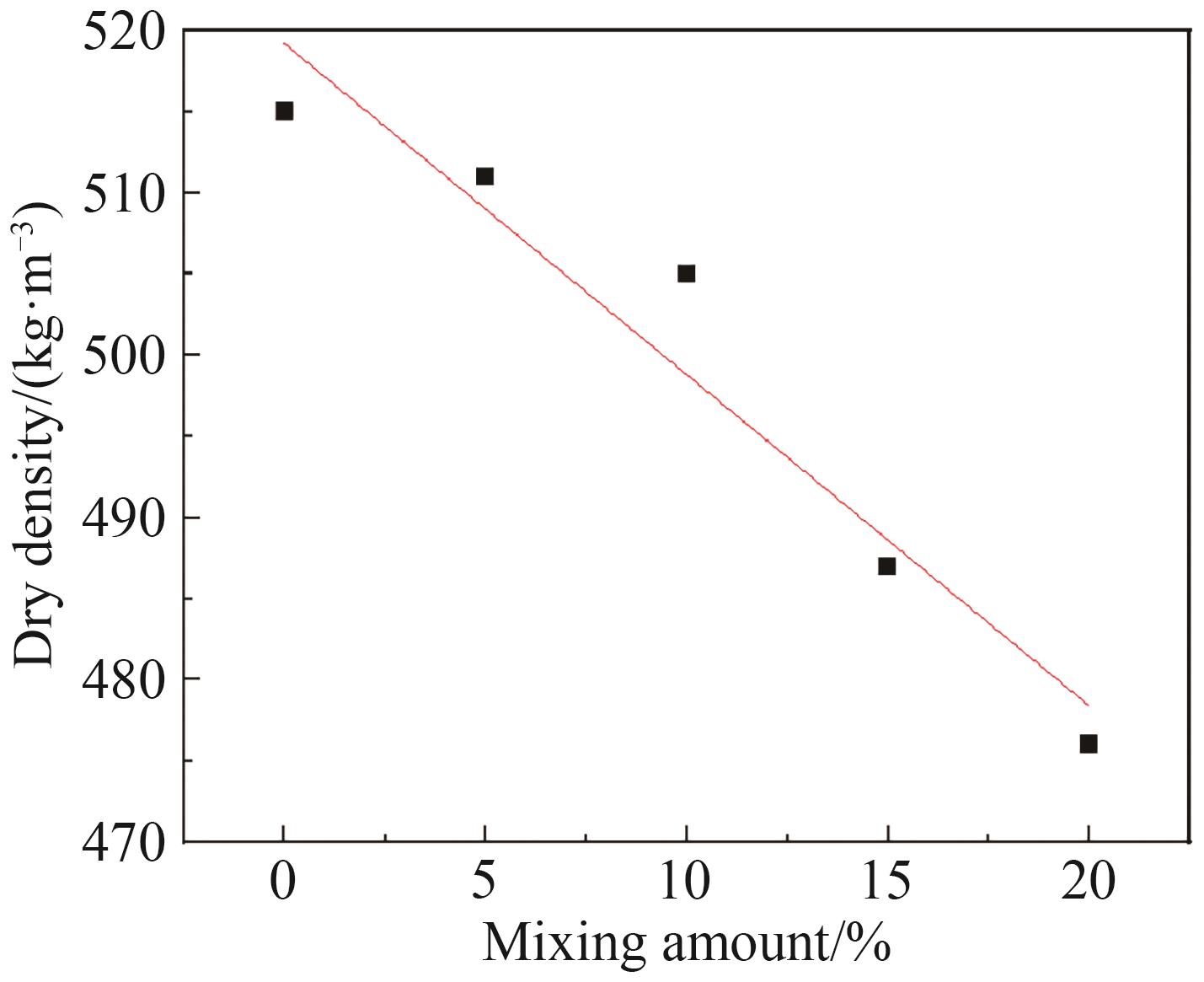
图10 不同掺量相变蓄热泡沫混凝土的干密度
Fig.10 Dry density of phase change heat storage foam concrete with different content
| Dosage/% | Thermal conductivity/(W·m-1·K-1) |
|---|---|
| 0 | 0.078 8 |
| 5 | 0.075 0 |
| 10 | 0.073 0 |
| 15 | 0.069 5 |
| 20 | 0.066 0 |
表5 不同掺量的相变蓄热泡沫混凝土的导热系数
Table 5 Thermal conductivity of phase change thermal storage foam concrete with different content
| Dosage/% | Thermal conductivity/(W·m-1·K-1) |
|---|---|
| 0 | 0.078 8 |
| 5 | 0.075 0 |
| 10 | 0.073 0 |
| 15 | 0.069 5 |
| 20 | 0.066 0 |
| Name of materials for each layer of external wall | Thicknezss/mm | Thermal conductivity/(W·m-1·K-1) | Heat storage coefficient/(W·m-2·K-1) | Thermal resistance/(m2·K·W-1) | Thermal inertia index D=R.S | Correction factor α |
|---|---|---|---|---|---|---|
| Polyethylene waterproof membrane | -- | -- | -- | -- | -- | 1.00 |
| Alkali-resistant glass fiber mesh cloth | -- | -- | -- | -- | -- | 1.00 |
| Thin plaster layer of anti-crack mortar | -- | -- | -- | -- | -- | 1.00 |
| Phase change heat storage foam concrete | 100.0 | 0.060 | 1.169 | 1.667 | 1.95 | 1.00 |
| Adhesive | -- | -- | -- | -- | -- | 1.00 |
| Cement mortar levelling layer | 10.0 | 0.930 | 11.270 | 0.011 | 0.12 | 1.00 |
| Aerated concrete block (B03)-ordinary masonry | 150.0 | 0.110 | 1.640 | 1.091 | 2.24 | 1.25 |
| Sum of all layers of external wall | 260.0 | 2.77 | 4.31 | |||
| External wall thermal resistanceR0=Ri+∑R+Re=2.93 (m2·K)/W | Ri=0.11 (m2·K)/W; Re=0.05 (m2·K)/W | |||||
| External wall heat transfer coefficient | K=1/R0=0.34 W/(m2·K) | |||||
| Solar radiation absorption coefficient | ρ=0.50 | |||||
表6 外墙热工性能判定
Table 6 Determination of thermal performance of exterior walls
| Name of materials for each layer of external wall | Thicknezss/mm | Thermal conductivity/(W·m-1·K-1) | Heat storage coefficient/(W·m-2·K-1) | Thermal resistance/(m2·K·W-1) | Thermal inertia index D=R.S | Correction factor α |
|---|---|---|---|---|---|---|
| Polyethylene waterproof membrane | -- | -- | -- | -- | -- | 1.00 |
| Alkali-resistant glass fiber mesh cloth | -- | -- | -- | -- | -- | 1.00 |
| Thin plaster layer of anti-crack mortar | -- | -- | -- | -- | -- | 1.00 |
| Phase change heat storage foam concrete | 100.0 | 0.060 | 1.169 | 1.667 | 1.95 | 1.00 |
| Adhesive | -- | -- | -- | -- | -- | 1.00 |
| Cement mortar levelling layer | 10.0 | 0.930 | 11.270 | 0.011 | 0.12 | 1.00 |
| Aerated concrete block (B03)-ordinary masonry | 150.0 | 0.110 | 1.640 | 1.091 | 2.24 | 1.25 |
| Sum of all layers of external wall | 260.0 | 2.77 | 4.31 | |||
| External wall thermal resistanceR0=Ri+∑R+Re=2.93 (m2·K)/W | Ri=0.11 (m2·K)/W; Re=0.05 (m2·K)/W | |||||
| External wall heat transfer coefficient | K=1/R0=0.34 W/(m2·K) | |||||
| Solar radiation absorption coefficient | ρ=0.50 | |||||
| Annual total radiation/(MJ·m-2) | Total area of collectors/m2 | Collector tilt angle/(°) | Collector azimuth angle/(°) | Compensation area ratio/% | Annual equivalent electricity consumption of solar heating/(kW·h·a-1) |
|---|---|---|---|---|---|
| 5 250.60 | 3 000.00 | 42.00 | 5.00 | 81.00 | 1 417 662.00 |
表7 太阳能供暖系统
Table 7 Solar heating system
| Annual total radiation/(MJ·m-2) | Total area of collectors/m2 | Collector tilt angle/(°) | Collector azimuth angle/(°) | Compensation area ratio/% | Annual equivalent electricity consumption of solar heating/(kW·h·a-1) |
|---|---|---|---|---|---|
| 5 250.60 | 3 000.00 | 42.00 | 5.00 | 81.00 | 1 417 662.00 |
| Energy type | Designed building | Reference building | ||
|---|---|---|---|---|
| Heating, ventilation and air conditioning/(kW·h) | E1H | 0 | E01H | 0 |
| Lighting energy consumption/(kW·h) | E1L | 35 390.56 | E0L | 42 503.18 |
| Annual total energy consumption/(kW·h) | B1 | 35 390.56 | B0 | 42 503.18 |
| Annual energy consumption per unit area/(kW·h·m-2) | B1/A | 5.54 | B0/A | 6.65 |
| Energy consumption reduction rate | 16.7% | |||
表8 建筑计算结果汇总
Table 8 Summary of building calculation results
| Energy type | Designed building | Reference building | ||
|---|---|---|---|---|
| Heating, ventilation and air conditioning/(kW·h) | E1H | 0 | E01H | 0 |
| Lighting energy consumption/(kW·h) | E1L | 35 390.56 | E0L | 42 503.18 |
| Annual total energy consumption/(kW·h) | B1 | 35 390.56 | B0 | 42 503.18 |
| Annual energy consumption per unit area/(kW·h·m-2) | B1/A | 5.54 | B0/A | 6.65 |
| Energy consumption reduction rate | 16.7% | |||
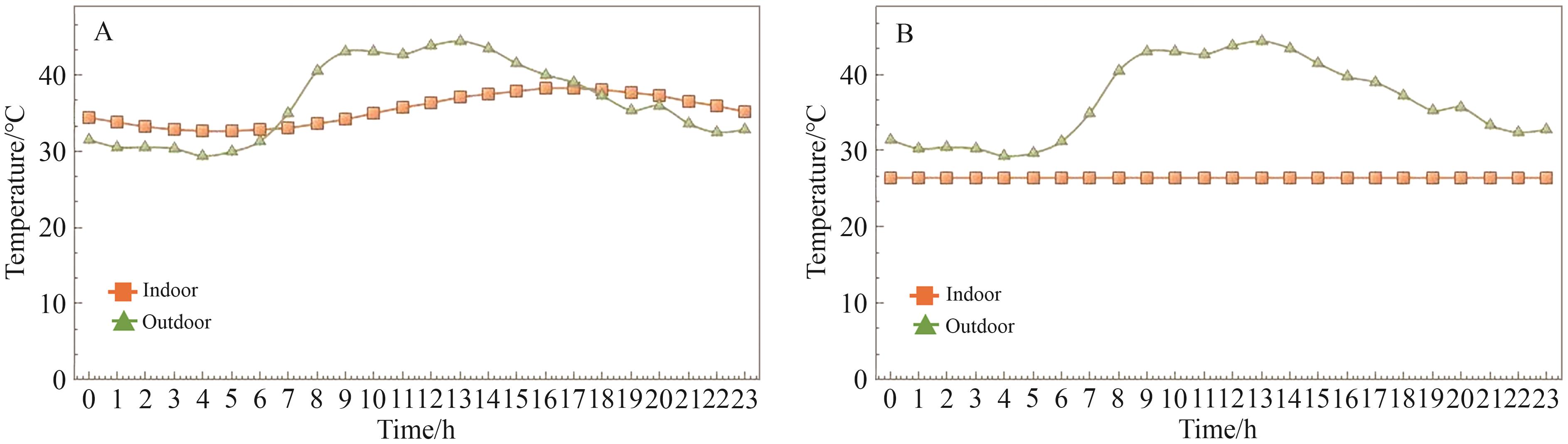
图11 填充墙内外壁面逐自然通风房间(A)及空调房间(B)时温度分布图
Fig.11 Temperature distribution diagram of the inner and outer walls of the infill wall as they face naturally ventilated rooms (A) and air-conditioned rooms (B)
| Room type | Room area/m2 | Summer condition | Winter condition | Overall evaluation index | Up to standard | ||
|---|---|---|---|---|---|---|---|
| Calculated PPD value/% | Calculated PMV value | Calculated PPD value/% | Calculated PMV value | ||||
| Bedroom | 1 471.96 | 5.03 | 0.04 | 12.28 | -0.59 | Ⅱ | No |
| Living room | 1 494.71 | 5.03 | 0.04 | 12.28 | -0.59 | Ⅱ | No |
| Kitchen | 355.36 | 5.03 | 0.04 | 12.28 | -0.59 | Ⅱ | No |
表9 主要功能空间人工冷热源热湿环境整体评价指标汇总表
Table 9 Summary of overall evaluation indicators for artificial cold and heat sources, hot and wet environment in main functional spaces
| Room type | Room area/m2 | Summer condition | Winter condition | Overall evaluation index | Up to standard | ||
|---|---|---|---|---|---|---|---|
| Calculated PPD value/% | Calculated PMV value | Calculated PPD value/% | Calculated PMV value | ||||
| Bedroom | 1 471.96 | 5.03 | 0.04 | 12.28 | -0.59 | Ⅱ | No |
| Living room | 1 494.71 | 5.03 | 0.04 | 12.28 | -0.59 | Ⅱ | No |
| Kitchen | 355.36 | 5.03 | 0.04 | 12.28 | -0.59 | Ⅱ | No |
| [1] | 刘大龙, 李俐瑶, 马茹婷. 居住建筑节能行为的热舒适基础及应用[J]. 建筑科学, 2023, 39(10): 36-42. |
| LIU D L, LI L Y, MA R T. Thermal comfort basis and application of energy-saving behaviors in residential buildings[J]. Build Sci, 2023, 39(10): 36-42. | |
| [2] | 张颖. 布署九大重点任务明确五项保障措施住建部印发《“十四五”建筑节能与绿色建筑发展规划》[J]. 中国勘察设计, 2022(3): 8-9. |
| ZHANG Y. Nine key tasks and five safeguard measures clarified: ministry of Housing and Urban-Rural Development issued the “14th Five-Year” plan for building energy efficiency and green building development[J]. Chin Invest Des, 2022(3): 8-9. | |
| [3] | 李琳, 王宇, 李东旭, 等. 硅藻土基定形相变材料的制备及应用进展[J]. 化工新型材料, 2024, 52(4): 238-243. |
| LI L, WANG Y, LI D X, et al. Progress in preparation and application of diatomite-based shape-stabilized phase change materials[J]. Chem New Mater, 2024, 52(4): 238-243. | |
| [4] | 胡明玉, 李东旭, 吴琼, 等. LA-SA复合相变材料的制备与性能研究[J]. 现代化工, 2023, 43(9): 97-103. |
| HU M Y, LI D X, WU Q, et al. Preparation and properties of LA-SA composite phase change material[J]. Mod Chem Ind, 2023, 43(9): 97-103. | |
| [5] | 张益弘, 陈羽阳, 涂龙龙, 等. 基于水凝胶的定形相变材料制备与性能研究[J]. 高分子学报, 2024(9): 1229-1240. |
| ZHANG Y H, CHEN Y Y, TU L L, et al. Preparation and properties of shape-stabilized phase change material based on hydrogel[J]. Acta Polym Sin, 2024(9): 1229-1240. | |
| [6] | 肖力光, 李赫. 相变储能材料在建筑围护结构领域的应用及研究进展[J]. 化工新型材料, 2024, 52(4): 228-232. |
| XIAO L G, LI H. Application and research progress of phase change energy storage materials in building envelopes[J]. Chem New Mater, 2024, 52(4): 228-232. | |
| [7] | 王若钰, 梁斌, 朱英明, 等. 石蜡基高热导率相变储能材料的制备[J]. 化学试剂, 2023, 45(1): 108-113. |
| WANG R Y, LIANG B, ZHU Y M, et al. Preparation of paraffin-based phase change energy storage material with high thermal conductivity[J]. Chem Reag, 2023, 45(1): 108-113. | |
| [8] | 于文艳, 孟琦, 童浩然. 微胶囊相变材料对砂浆热性能和力学性能的影响[J]. 建筑材料学报, 2023, 26(2): 215-220. |
| YU W Y, MENG Q, TONG H R. Effect of microencapsulated phase change material on thermal and mechanical properties of mortar[J]. J Build Mater, 2023, 26(2) :215-220. | |
| [9] | 胡明玉, 吴琼, 胡佳乐, 等. CaCl2·6H2O/膨胀石墨复合相变材料的制备及研究[J]. 功能材料, 2023, 54(3): 3156-3161. |
| HU M Y, WU Q, HU J L, et al. Preparation and study of CaCl2·6H2O/expanded graphite composite phase change material[J]. J Funct Mater, 2023, 54(3): 3156-3161. | |
| [10] | 庄英, 林韶晖, 冯献社, 等. 二元/三元脂肪酸—脂肪醇共晶相变储能材料模拟分析及实验研究[J]. 信息记录材料, 2023, 24(11): 22-26. |
| ZHUANG Y, LIN S H, FENG X S, et al. Simulation analysis and experimental study on binary/ternary fatty acid-fatty alcohol eutectic phase change energy storage materials[J]. Inf Rec Mater, 2023, 24(11): 22-26. | |
| [11] | 成鑫磊, 穆锐, 孙涛, 等. 固液相变材料的封装制备及在建筑领域的研究进展[J]. 材料导报, 2024(5): 69-83. |
| CHENG X L, MU R, SUN T, et al. Encapsulated preparation of solid-liquid phase change materials and research progress in building applications[J]. Mater Rep, 2024(5): 69-83. | |
| [12] | 赖蔓崎, 王艳, 曹雄金, 等. 建筑围护结构中辐射制冷材料与相变材料耦合应用的研究进展[J]. 化工新型材料, 2024, 52(S02): 332-337. |
| LAI M Q, WANG Y, CAO X J, et al. Research progress on coupled application of radiative cooling materials and phase change materials in building envelopes[J]. New Chem Mater, 2024, 52(S02):332-337. | |
| [13] | PANG Y, CHEN J, SUN J, et al. Cellulose nanofiber-enhanced dynamic hydrogels for high-efficiency phase change encapsulation[J]. Nat Commun, 2024, 15(1): 4821. |
| [14] | DISALE A, NAYAK C, SURYAWANSHI N, et al. Fly ash-based geopolymer encapsulants for thermal energy storage: synergistic effects of metakaolin and silica fume[J]. Cem Concr Compos, 2024, 145: 105370. |
| [15] | LU B, ZHANG Z, ZHU H, et al. Nano-silica reinforced latex coatings for leakage-proof phase change composites[J]. Energy Buildings, 2025, 311: 112005. |
| [16] | 李辉, 陈锋, 匡渝阳, 等. 外掺剂对泡沫混凝土影响及冻融-循环破坏研究[J]. 混凝土, 2023(5): 115-120. |
| LI H, CHEN F, KUANG Y Y, et al. Effects of admixtures on foam concrete and freeze-thaw cyclic damage mechanism[J]. Concrete, 2023(5): 115-120. | |
| [17] | 李琳, 王宇, 马玉莹, 等. 基于正交试验的泡沫混凝土导热性能和孔结构研究[J]. 硅酸盐通报, 2024, 43(8): 2888-2896. |
| LI L, WANG Y, MA Y Y, et al. Thermal conductivity and pore structure of foam concrete based on orthogonal experiments[J]. Silicate Bull, 2024, 43(8): 2888-2896. |
| [1] | 贺洁为, 段绍伟, 李小川. 用于建筑节能形状稳定相变材料的设计与应用[J]. 应用化学, 2024, 41(12): 1780-1789. |
| 阅读次数 | ||||||
|
全文 |
|
|||||
|
摘要 |
|
|||||
