
Chinese Journal of Applied Chemistry ›› 2025, Vol. 42 ›› Issue (9): 1272-1281.DOI: 10.19894/j.issn.1000-0518.240401
• Chemistry Teaching and Experiment Innovation • Previous Articles Next Articles
Yu-Zhou ZHUO1,2( ), Jing HU3
Received:2024-12-09
Accepted:2025-07-21
Published:2025-09-01
Online:2025-09-28
Contact:
Yu-Zhou ZHUO
About author:2703712524@qq.comSupported by:CLC Number:
Yu-Zhou ZHUO, Jing HU. Comprehensive Design of Mineral Medicine Cinnabar Processing for Inorganic Chemistry Experiments in Chinese Medicine Colleges and Universities[J]. Chinese Journal of Applied Chemistry, 2025, 42(9): 1272-1281.
Add to citation manager EndNote|Ris|BibTeX
URL: http://yyhx.ciac.jl.cn/EN/10.19894/j.issn.1000-0518.240401
| 矿物药朱砂炮制实验综合设计(7学时) |
|---|
(一)教学内容分析 知识目标: 1. 掌握朱砂水飞法炮制的基本操作步骤及原理。 2. 掌握朱砂显微结构观察及测试仪器的基本操作。 能力目标: 1. 掌握化学成分分析常见仪器XRF、ICP-MS的基本操作,为以后的工作打下基础。 2. 掌握矿物药炮制增效减毒的基本原理,通过实验对中医药理论有更深刻的理解。 学习态度和价值观目标: 掌握矿物药朱砂炮制的基本方法及仪器操作,初步了解矿物药炮制增效减毒的基本原理,进一步提高学生无机化学学科的实践能力。 (二)教学思路 环节1:学生自主观看朱砂炮制及化学成分分析的相关视频。 环节2:学生自主学习,根据教材及查找的资料撰写实验预习报告。 环节3:实验室现场演示相关仪器的使用方法、实验的注意事项及操作要点演示(1学时)。 环节4:学生分组进行实验操作,对学生进行现场实验操作指导(6学时)。 环节5:实验结束,学生课后撰写实验报告并进行反馈。 (三)教学方法 综合应用讲授法、视频教学法、情景教学法等教学方法,做到讲授与启发并重,让教师成为教学活动的引导者、组织者和参与者,引导学生质疑和探究,使教学转向主动、双向、开放和探究的新模式,最大限度地调动学生的主动性,使学生在学习知识、掌握技能的同时,创新思维和探索精神也得到进一步的发展。 (四)实验内容 (1)课前讲授(1学时);(2)朱砂水飞研磨(1学时);(3)利用SEM观察朱砂显微结构(1学时);(4)朱砂粒径测试(1学时);(5)朱砂主量元素质量分数测试(1学时);(6)朱砂微量元素质量分数测试(2学时)。 (五)教学互动环节设计 课上互动(课堂提问): 1. 通过本次实验,你能归纳出朱砂水飞法研磨的操作要点吗? 2. 为什么朱砂水飞后的悬浊液经过沉淀后要自然晾干而不能用烘箱烘干? 3. XRF、ICP-MS测试朱砂主量和微量元素质量分数的原理是什么? 4. 朱砂炮制前后其显微结构和元素质量分数有哪些主要变化?这些变化对药物吸收及药效可能有什么影响? (六)课程思政 通过矿物药朱砂炮制综合实验使学生掌握中药炮制的基本操作方法,了解中药经过炮制后化学成分变化引起增效减毒的基本原理,从而对中医药理论有初步的认识,培养学生对传统中医药文化的热爱之情,使学生树立弘扬中医药文化的崇高目标。 (七)课外自主学习设计 实验之前,学生自主查资料,观看相关视频,明确实验目的与实验原理,熟悉各个实验环节所用仪器测试的原理及仪器操作规范,提前思考实验中可能出现的安全事故并提出解决方案,最后撰写实验预习报告。 (八)注意事项 因朱砂中含有大量的有害元素Hg,在实验操作过程中应佩戴口罩、手套,以防Hg元素与皮肤接触或吸入肺部引起中毒。 |
Table 1 Experimental teaching design of mineral medicine cinnabar processing
| 矿物药朱砂炮制实验综合设计(7学时) |
|---|
(一)教学内容分析 知识目标: 1. 掌握朱砂水飞法炮制的基本操作步骤及原理。 2. 掌握朱砂显微结构观察及测试仪器的基本操作。 能力目标: 1. 掌握化学成分分析常见仪器XRF、ICP-MS的基本操作,为以后的工作打下基础。 2. 掌握矿物药炮制增效减毒的基本原理,通过实验对中医药理论有更深刻的理解。 学习态度和价值观目标: 掌握矿物药朱砂炮制的基本方法及仪器操作,初步了解矿物药炮制增效减毒的基本原理,进一步提高学生无机化学学科的实践能力。 (二)教学思路 环节1:学生自主观看朱砂炮制及化学成分分析的相关视频。 环节2:学生自主学习,根据教材及查找的资料撰写实验预习报告。 环节3:实验室现场演示相关仪器的使用方法、实验的注意事项及操作要点演示(1学时)。 环节4:学生分组进行实验操作,对学生进行现场实验操作指导(6学时)。 环节5:实验结束,学生课后撰写实验报告并进行反馈。 (三)教学方法 综合应用讲授法、视频教学法、情景教学法等教学方法,做到讲授与启发并重,让教师成为教学活动的引导者、组织者和参与者,引导学生质疑和探究,使教学转向主动、双向、开放和探究的新模式,最大限度地调动学生的主动性,使学生在学习知识、掌握技能的同时,创新思维和探索精神也得到进一步的发展。 (四)实验内容 (1)课前讲授(1学时);(2)朱砂水飞研磨(1学时);(3)利用SEM观察朱砂显微结构(1学时);(4)朱砂粒径测试(1学时);(5)朱砂主量元素质量分数测试(1学时);(6)朱砂微量元素质量分数测试(2学时)。 (五)教学互动环节设计 课上互动(课堂提问): 1. 通过本次实验,你能归纳出朱砂水飞法研磨的操作要点吗? 2. 为什么朱砂水飞后的悬浊液经过沉淀后要自然晾干而不能用烘箱烘干? 3. XRF、ICP-MS测试朱砂主量和微量元素质量分数的原理是什么? 4. 朱砂炮制前后其显微结构和元素质量分数有哪些主要变化?这些变化对药物吸收及药效可能有什么影响? (六)课程思政 通过矿物药朱砂炮制综合实验使学生掌握中药炮制的基本操作方法,了解中药经过炮制后化学成分变化引起增效减毒的基本原理,从而对中医药理论有初步的认识,培养学生对传统中医药文化的热爱之情,使学生树立弘扬中医药文化的崇高目标。 (七)课外自主学习设计 实验之前,学生自主查资料,观看相关视频,明确实验目的与实验原理,熟悉各个实验环节所用仪器测试的原理及仪器操作规范,提前思考实验中可能出现的安全事故并提出解决方案,最后撰写实验预习报告。 (八)注意事项 因朱砂中含有大量的有害元素Hg,在实验操作过程中应佩戴口罩、手套,以防Hg元素与皮肤接触或吸入肺部引起中毒。 |
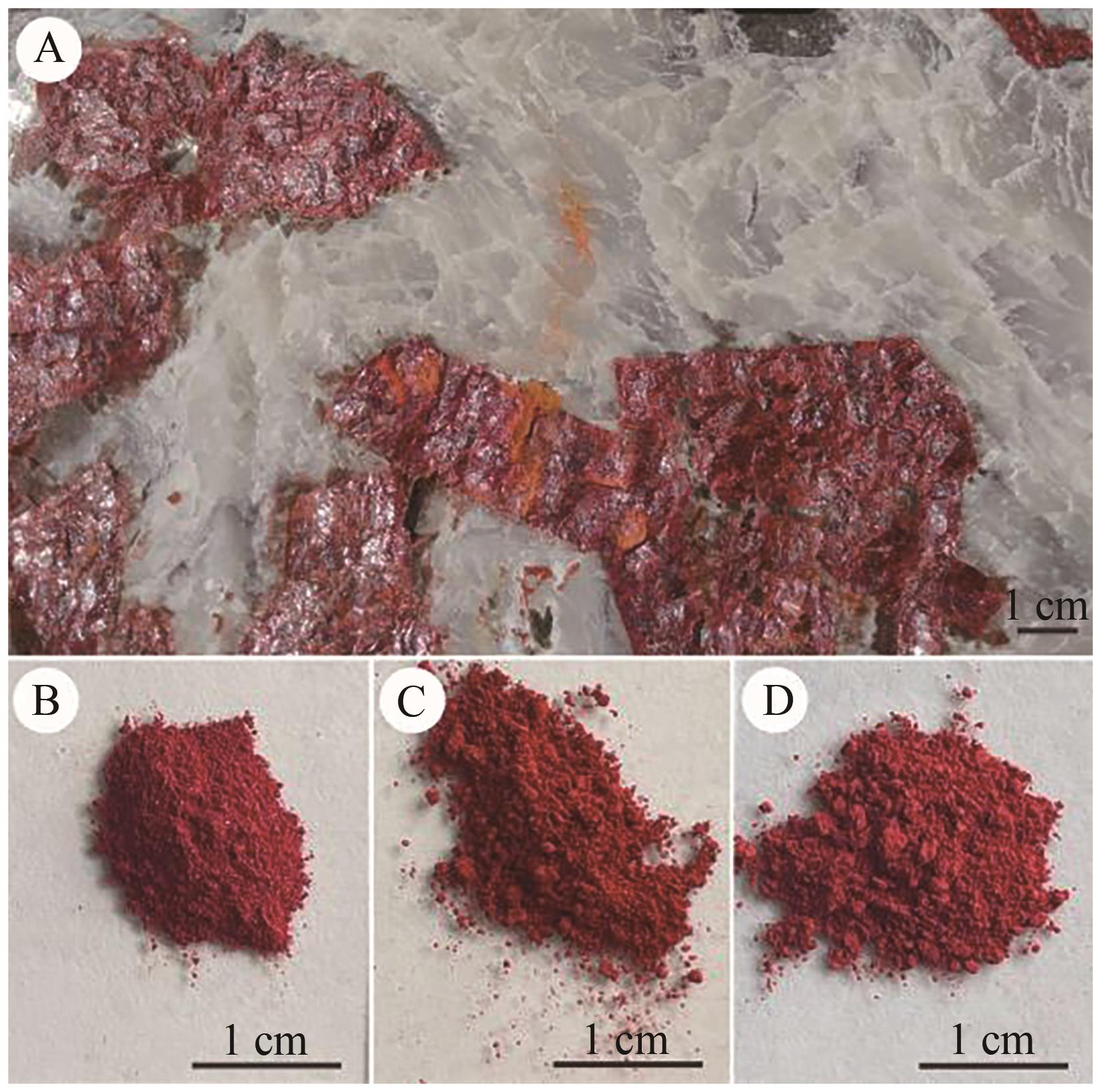
Fig.1 Photos of cinnabar primary ore (A), cinnabar mineral powder (B), cinnabar wate-flying preparation product (C) and cinnabar water-flying preparation product residue (D)
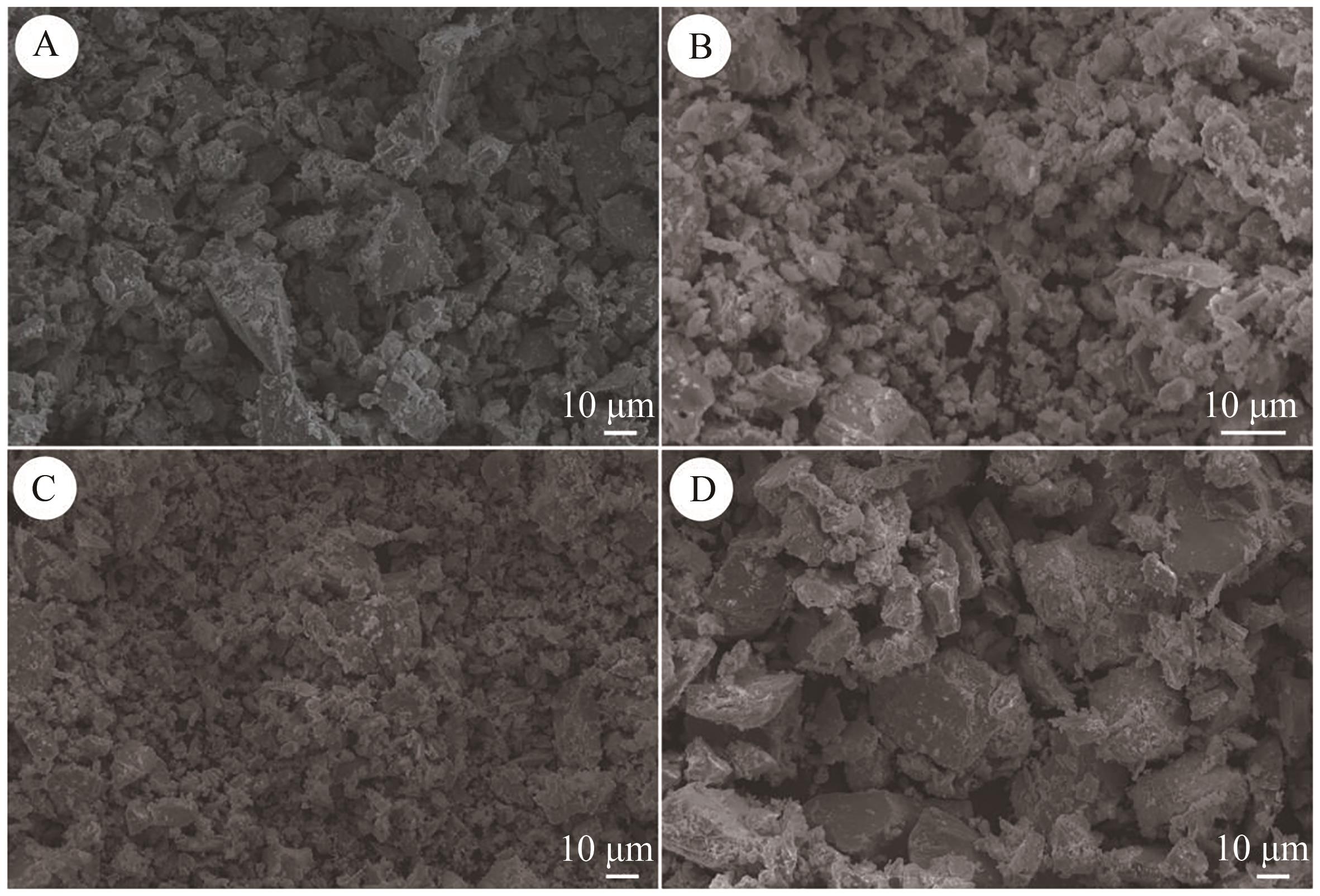
Fig.2 SEM photos of cinnabar mineral particles (A), cinnabar water-flying preparation product (B), cinnabar water-flying preparation product (C) and cinnabar water fly residue (D) samples
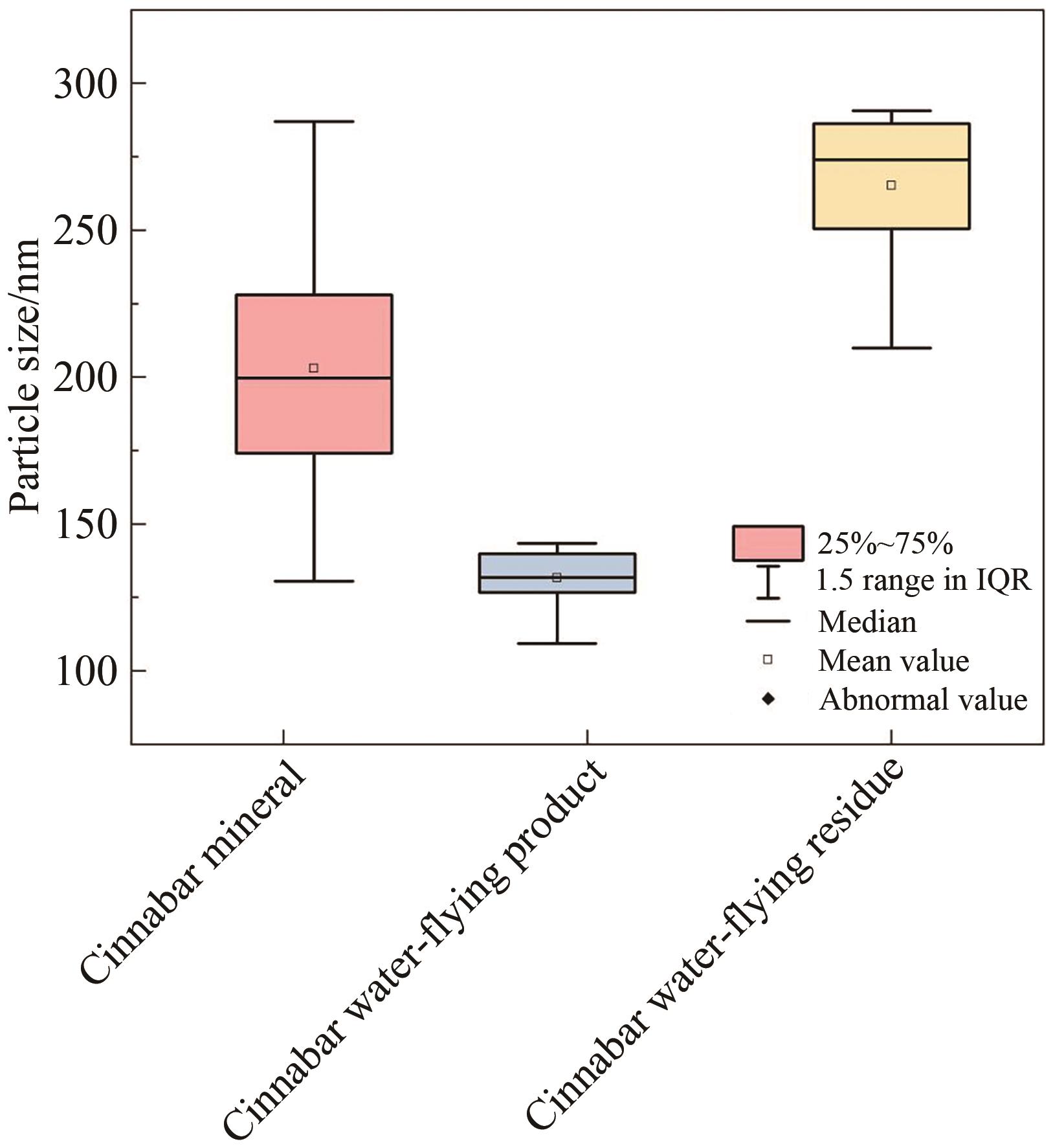
Fig.3 Cinnabar and its processed products particle size distribution box diagram
| Elements | w(cinnabar mineral powder)/% | w(cinnabar water-flying product)/% | w(cinnabar water-flying residual)/% |
|---|---|---|---|
| O | 23.76 | 39.32 | 37.755 |
| Mg | 0.153 | 0.197 | 0.596 |
| Al | 0.073 | 0.141 | 0.081 |
| Si | 0.46 | 0.418 | 1.339 |
| S | 13.74 | 11.89 | 11.4 |
| Ca | 0.476 | 1.34 | 4.651 |
| Fe | 0.238 | 0.428 | 2.83 |
| Se | 0.23 | 0.147 | 0.178 |
| Hg | 60.62 | 45.59 | 39.9 |
Table 2 Main element mass fraction of cinnabar and its processed products
| Elements | w(cinnabar mineral powder)/% | w(cinnabar water-flying product)/% | w(cinnabar water-flying residual)/% |
|---|---|---|---|
| O | 23.76 | 39.32 | 37.755 |
| Mg | 0.153 | 0.197 | 0.596 |
| Al | 0.073 | 0.141 | 0.081 |
| Si | 0.46 | 0.418 | 1.339 |
| S | 13.74 | 11.89 | 11.4 |
| Ca | 0.476 | 1.34 | 4.651 |
| Fe | 0.238 | 0.428 | 2.83 |
| Se | 0.23 | 0.147 | 0.178 |
| Hg | 60.62 | 45.59 | 39.9 |
| Elements | Standard sample 1 | Standard sample 2 | Standard sample 3 | Cinnabar mineral powder | Cinnabar water-flying product | Cinnabar water-flying residual |
|---|---|---|---|---|---|---|
| Li | 0.009 54 | 0.001 09 | 0.002 06 | 0.0000141 | 0.000 121 4 | 0.000 066 |
| V | 0.012 4 | 0.012 1 | 0.010 1 | 0.000 0 | 0.000 053 9 | 0.000 078 |
| Cr | 0.006 83 | 0.001 63 | 0.018 4 | 0.000 059 6 | 0.000 076 7 | 0.000 158 |
| Co | 0.002 81 | 0.001 62 | 0.001 99 | 0.000 003 1 | 0.000 010 2 | 0.000 059 |
| Cu | 0.004 12 | 0.005 14 | 0.003 08 | 0.002 27 | 0.003 26 | 0.014 5 |
| Zn | 0.010 9 | 0.009 06 | 0.008 03 | 0.126 8 | 0.157 0 | 0.230 3 |
| Ga | 0.002 36 | 0.002 02 | 0.001 9 | 0.000 062 5 | 0.000 051 5 | 0.000 061 |
| Ge | 0.000 177 | 0.000 093 1 | 0.000 085 9 | 0.000 417 9 | 0.000 352 | 0.000 361 |
| Rb | 0.011 6 | 0.006 77 | 0.005 71 | 0.000 028 1 | 0.000 038 6 | 0.000 039 9 |
| Sr | 0.013 6 | 0.063 4 | 0.036 4 | 0.000 29 | 0.002 87 | 0.008 7 |
| Y | 0.002 73 | 0.001 97 | 0.001 73 | 0.000 083 5 | 0.000 094 2 | 0.000 184 |
| Zr | 0.017 6 | 0.023 2 | 0.022 7 | 0.000 045 9 | 0.000 602 | 0.009 5 |
| Mo | 0.000 088 7 | 0.000 205 | 0.000 17 | 0.000 185 | 0.000 262 | 0.001 16 |
| Ag | 0.000 020 8 | 0.000 023 1 | 0.000 016 8 | 0.000 152 | 0.000 145 | 0.000 233 |
| Cd | 0.000 01 | 0.000 011 8 | 0.000 007 2 | 0.007 49 | 0.009 47 | 0.022 2 |
| In | 0.000 009 6 | 0.000 004 8 | 0.000 004 | 0.000 062 | 0.000 079 6 | 0.000 156 |
| Sb | 0.000 055 | 0.000 046 9 | 0.000 003 4 | 0.001 3 | 0.001 96 | 0.006 85 |
| Cs | 0.000 813 | 0.000 116 | 0.000 032 5 | 0.000 001 1 | 0.000 006 5 | 0.000 003 5 |
| Ba | 0.048 4 | 0.117 4 | 0.086 | 0.045 9 | 1.055 6 | 1.548 4 |
| La | 0.003 44 | 0.003 81 | 0.005 05 | 0.000 442 | 0.000 519 | 0.000 71 |
| Ce | 0.007 71 | 0.006 67 | 0.010 2 | 0.001 03 | 0.001 09 | 0.001 53 |
| Pr | 0.000 804 | 0.000 781 | 0.001 11 | 0.000 12 | 0.000 121 | 0.000 177 |
| Nd | 0.003 02 | 0.003 | 0.004 14 | 0.000 456 | 0.000 458 | 0.000 655 |
| Sm | 0.000 614 | 0.000 552 | 0.000 651 | 0.000 056 8 | 0.000 055 8 | 0.000 083 |
| Eu | 0.000 139 | 0.000 152 | 0.000 176 | 0.000 007 3 | 0.000 009 | 0.000 013 6 |
| Gd | 0.000 536 | 0.000 457 | 0.000 46 | 0.000 041 9 | 0.000 041 8 | 0.000 063 |
| Tb | 0.000 085 3 | 0.000 064 5 | 0.000 059 3 | 0.000 004 7 | 0.000 004 6 | 0.000 007 3 |
| Dy | 0.000 519 | 0.000 355 | 0.000 306 | 0.000 0191 | 0.000 018 5 | 0.000 034 3 |
| Ho | 0.000 106 | 0.000 067 9 | 0.000 065 6 | 0.000 002 8 | 0.000 002 8 | 0.000 006 5 |
| Er | 0.000 304 | 0.000 184 | 0.000 191 | 0.000 005 8 | 0.000 006 4 | 0.000 016 6 |
| Tm | 0.000 046 3 | 0.000 025 6 | 0.000 028 9 | 0.000 000 5 | 0.000 000 7 | 0.000 002 6 |
| Yb | 0.000 308 | 0.000 164 | 0.000 195 | 0.000 002 4 | 0.000 003 5 | 0.000 019 7 |
| Lu | 0.000 046 7 | 0.000 024 9 | 0.000 029 7 | 0.000 000 3 | 0.000 000 5 | 0.000 003 2 |
| Ta | 0.000 111 | 0.000 090 1 | 0.000 041 5 | 0.000 000 3 | 0.000 001 | 0.000 003 7 |
| W | 0.000 139 | 0.000 055 6 | 0.000 027 5 | 0.000 076 8 | 0.000 052 9 | 0.000 05 |
| Tl | 0.0000 544 | 0.000 027 2 | 0.000 029 | 0.000 064 9 | 0.000 074 3 | 0.000 197 |
| Pb | 0.002 93 | 0.001 35 | 0.001 38 | 0.007 49 | 0.015 4 | 0.032 6 |
| Bi | 0.000 063 | 0.00 0015 | 0.000 001 4 | 0.000 017 | 0.000 023 9 | 0.000 025 |
| Th | 0.001 16 | 0.000 602 | 0.001 13 | 0.000 017 5 | 0.000 025 3 | 0.000 066 |
| U | 0.000 201 | 0.000 19 | 0.000 085 8 | 0.000 015 1 | 0.000 019 7 | 0.000 086 5 |
Table 3 Mass fraction of trace elements in cinnabar and its processed products (%)
| Elements | Standard sample 1 | Standard sample 2 | Standard sample 3 | Cinnabar mineral powder | Cinnabar water-flying product | Cinnabar water-flying residual |
|---|---|---|---|---|---|---|
| Li | 0.009 54 | 0.001 09 | 0.002 06 | 0.0000141 | 0.000 121 4 | 0.000 066 |
| V | 0.012 4 | 0.012 1 | 0.010 1 | 0.000 0 | 0.000 053 9 | 0.000 078 |
| Cr | 0.006 83 | 0.001 63 | 0.018 4 | 0.000 059 6 | 0.000 076 7 | 0.000 158 |
| Co | 0.002 81 | 0.001 62 | 0.001 99 | 0.000 003 1 | 0.000 010 2 | 0.000 059 |
| Cu | 0.004 12 | 0.005 14 | 0.003 08 | 0.002 27 | 0.003 26 | 0.014 5 |
| Zn | 0.010 9 | 0.009 06 | 0.008 03 | 0.126 8 | 0.157 0 | 0.230 3 |
| Ga | 0.002 36 | 0.002 02 | 0.001 9 | 0.000 062 5 | 0.000 051 5 | 0.000 061 |
| Ge | 0.000 177 | 0.000 093 1 | 0.000 085 9 | 0.000 417 9 | 0.000 352 | 0.000 361 |
| Rb | 0.011 6 | 0.006 77 | 0.005 71 | 0.000 028 1 | 0.000 038 6 | 0.000 039 9 |
| Sr | 0.013 6 | 0.063 4 | 0.036 4 | 0.000 29 | 0.002 87 | 0.008 7 |
| Y | 0.002 73 | 0.001 97 | 0.001 73 | 0.000 083 5 | 0.000 094 2 | 0.000 184 |
| Zr | 0.017 6 | 0.023 2 | 0.022 7 | 0.000 045 9 | 0.000 602 | 0.009 5 |
| Mo | 0.000 088 7 | 0.000 205 | 0.000 17 | 0.000 185 | 0.000 262 | 0.001 16 |
| Ag | 0.000 020 8 | 0.000 023 1 | 0.000 016 8 | 0.000 152 | 0.000 145 | 0.000 233 |
| Cd | 0.000 01 | 0.000 011 8 | 0.000 007 2 | 0.007 49 | 0.009 47 | 0.022 2 |
| In | 0.000 009 6 | 0.000 004 8 | 0.000 004 | 0.000 062 | 0.000 079 6 | 0.000 156 |
| Sb | 0.000 055 | 0.000 046 9 | 0.000 003 4 | 0.001 3 | 0.001 96 | 0.006 85 |
| Cs | 0.000 813 | 0.000 116 | 0.000 032 5 | 0.000 001 1 | 0.000 006 5 | 0.000 003 5 |
| Ba | 0.048 4 | 0.117 4 | 0.086 | 0.045 9 | 1.055 6 | 1.548 4 |
| La | 0.003 44 | 0.003 81 | 0.005 05 | 0.000 442 | 0.000 519 | 0.000 71 |
| Ce | 0.007 71 | 0.006 67 | 0.010 2 | 0.001 03 | 0.001 09 | 0.001 53 |
| Pr | 0.000 804 | 0.000 781 | 0.001 11 | 0.000 12 | 0.000 121 | 0.000 177 |
| Nd | 0.003 02 | 0.003 | 0.004 14 | 0.000 456 | 0.000 458 | 0.000 655 |
| Sm | 0.000 614 | 0.000 552 | 0.000 651 | 0.000 056 8 | 0.000 055 8 | 0.000 083 |
| Eu | 0.000 139 | 0.000 152 | 0.000 176 | 0.000 007 3 | 0.000 009 | 0.000 013 6 |
| Gd | 0.000 536 | 0.000 457 | 0.000 46 | 0.000 041 9 | 0.000 041 8 | 0.000 063 |
| Tb | 0.000 085 3 | 0.000 064 5 | 0.000 059 3 | 0.000 004 7 | 0.000 004 6 | 0.000 007 3 |
| Dy | 0.000 519 | 0.000 355 | 0.000 306 | 0.000 0191 | 0.000 018 5 | 0.000 034 3 |
| Ho | 0.000 106 | 0.000 067 9 | 0.000 065 6 | 0.000 002 8 | 0.000 002 8 | 0.000 006 5 |
| Er | 0.000 304 | 0.000 184 | 0.000 191 | 0.000 005 8 | 0.000 006 4 | 0.000 016 6 |
| Tm | 0.000 046 3 | 0.000 025 6 | 0.000 028 9 | 0.000 000 5 | 0.000 000 7 | 0.000 002 6 |
| Yb | 0.000 308 | 0.000 164 | 0.000 195 | 0.000 002 4 | 0.000 003 5 | 0.000 019 7 |
| Lu | 0.000 046 7 | 0.000 024 9 | 0.000 029 7 | 0.000 000 3 | 0.000 000 5 | 0.000 003 2 |
| Ta | 0.000 111 | 0.000 090 1 | 0.000 041 5 | 0.000 000 3 | 0.000 001 | 0.000 003 7 |
| W | 0.000 139 | 0.000 055 6 | 0.000 027 5 | 0.000 076 8 | 0.000 052 9 | 0.000 05 |
| Tl | 0.0000 544 | 0.000 027 2 | 0.000 029 | 0.000 064 9 | 0.000 074 3 | 0.000 197 |
| Pb | 0.002 93 | 0.001 35 | 0.001 38 | 0.007 49 | 0.015 4 | 0.032 6 |
| Bi | 0.000 063 | 0.00 0015 | 0.000 001 4 | 0.000 017 | 0.000 023 9 | 0.000 025 |
| Th | 0.001 16 | 0.000 602 | 0.001 13 | 0.000 017 5 | 0.000 025 3 | 0.000 066 |
| U | 0.000 201 | 0.000 19 | 0.000 085 8 | 0.000 015 1 | 0.000 019 7 | 0.000 086 5 |
| [1] | 姚平平. 工科无机化学中“分子结构和分子间力”的教学思考与探索[J]. 化学教育(中英文), 2021, 42(14): 37-41. |
| YAO P P. Thinking and exploration of molecular structure and intermolecular forces on the teaching of engineering inorganic chemistry[J]. Chin J Chem Educ (Chin Engl), 2021, 42(14): 37-41. | |
| [2] | 徐威, 胡丽华, 张方, 等. 大类招生背景下基础化学课程群建设及其对专业分流影响研究[J]. 化工时刊, 2023, 37(6): 70-73. |
| XU W, HU L H, ZHANG F, et al. Research on the construction of basic chemistry course group and its influence on the distribution of majors under the background of major enrollment[J]. Chem Ind Times, 2023, 37(6): 70-73. | |
| [3] | 刘晓瑭, 余林梁, 陈洁. 基于OBE理论构建无机化学课程思政教学体系及教学实践[J]. 化学教育(中英文), 2023, 44(6): 17-23. |
| LIU X T, YU L L, CHEN J. Systematic construction of course ideological and political education and teaching practice of inorganic chemistry based on OBE[J]. Chin J Chem Educ (Chin Engl),2023, 44(6): 17-23. | |
| [4] | 樊红霞, 牛子嵘, 周花蕾, 等. 新背景下多元教学模式在无机化学教学中的实践与探索[J]. 化学教育(中英文), 2022, 43(6): 49-54. |
| FAN H X, NIU Z R, ZHOU H L, et al. Practice and exploration of multiple teaching modes in inorganic chemistry under new situation[J]. Chin J Chem Educ (Chin Engl), 2022, 43(6): 49-54. | |
| [5] | 高乔, 李德慧, 林喆. 高等中医药院校无机化学课程思政建设的探索与实践[J]. 高教学刊, 2024, 10(5): 161-163, 168. |
| GAO Q, LI D H, LIN Z. Exploration and practice of ideological and political construction of inorganic chemistry course in Chinese medicine colleges[J]. J Higher Educ, 2024, 10(5): 161-163, 168. | |
| [6] | 卓鱼周, 刘晓琴, 王贤书, 等. 朱砂及其不同炮制品的显微结构及主微量元素含量差异性研究[J]. 中国药学杂志, 2023, 58(21): 1922-1930. |
| ZHUO Y Z, LIU X Q, WANG X S, et al. Microstructure and content difference of main and trace elements in cinnabaris and its different processed products[J]. Chin Pharm J, 2023, 58(21): 1922-1930. | |
| [7] | 王开心, 刘曼婷, 彭胡麟玥, 等. 《中华人民共和国药典》2020版一部收载矿物药及含 矿物药中成药的质量标准分析与探讨[J]. 中华中医药学刊, 2023, 41(1): 92-98, 280. |
| WANG K X, LIU M T, PENG H L Y, et al. Analysis and discussion on quality standards of mineral drugs and Chinese patent medicines containing mineral drugs in 2020 edition of Chinese pharmacopoeia[J]. Chin Arch Tradit Chin Med, 2023, 41(1): 92-98, 280. | |
| [8] | 卓鱼周, 刘晓琴, 王樱静, 等. 矿物药朱砂原生矿石显微结构及51种微量元素含量分析[J]. 药物分析杂志, 2022, 42(12): 2069-2081. |
| ZHUO Y Z, LIU X Q, WANG Y J, et al. Analysis on microstructure and 51 trace elements content of cinnabar primary ore[J]. Chin J Pharm Anal, 2022, 42(12): 2069-2081. | |
| [9] | 李胜荣. 结晶学与矿物学[M]. 第1版. 北京: 地质出版社, 2008: 170. |
| LI S R. Crystallography and mineralogy[M]. First edition. Beijing: Geological Press, 2008: 170. | |
| [10] | 卓鱼周. 右江盆地卡林型金矿--汞矿矿床成因机制对比研究[D]. 北京: 中国科学院大学, 2019. |
| ZHUO Y Z. Comparative study on genetic mechanism of Carlin-type gold and mercury deposits in Youjiang Basin[D]. Beijing: University of Chinese Academy of Sciences, 2019. | |
| [11] | 卓鱼周, 刘晓琴, 张文会, 等. 基于微量元素-硫同位素示踪技术的朱砂产地差异性分析[J]. 中国实验方剂学杂志, 2022, 28(23): 182-188. |
| ZHUO Y Z, LIU X Q, ZHANG W H, et al. Origin difference analysis of cinnabaris based on trace element-sulfur isotope tracing technique[J]. Chin J Exp Tradit Med Form, 2022, 28(23): 182-188. | |
| [12] | 刘雯, 冯旭, 覃洁萍, 等. 中医药高等院校仪器分析教学改革探讨[J]. 教育现代化, 2019, 6(23): 33-34. |
| LIU X, FENG X, QIN J P, et al. Discussion on teaching reform of instrument analysis in Chinese medicine colleges and universities[J]. Educ Mode, 2019, 6(23): 33-34. | |
| [13] | 杨怀霞, 吴培云. 无机化学[M]. 第2版. 北京: 中国医药科技出版社, 2021: 7. |
| YANG H X, WU P Y. Inorganic chemistry[M]. Second edition. Beijing: China Press of Traditional Chinese Medicine, 2021: 7. | |
| [14] | 张卫, 宰建陶, 马荔, 等. 元素化学教学内容与模式的重构策略[J]. 化学教育(中英文), 2024, 45(4): 34-41. |
| ZHANG W, ZAI J T, MA L, et al. Reconstruction strategy of teaching content and mode of element chemistry[J]. Chin J Chem Educ (Chin Engl), 2024, 45(4): 34-41. | |
| [15] | 程迪, 王玲. 中医药思维在高校中药学专业无机化学教学中的应用[J]. 中医药管理杂志, 2019, 27(9): 22-23. |
| CHENG D, WANG L. Application of traditional Chinese medicine thinking in inorganic chemistry teaching of Chinese pharmacy major in colleges and universities[J]. J Tradit Chin Med Mana, 2019, 27(9): 22-23. | |
| [16] | 王知斌, 吴丽红, 王蒙, 等. 中药化学在培养中药学人才药物创新能力中的应用[J]. 创新创业理论研究与实践, 2023, 6(4): 71-73. |
| WANG Z B, WU L H, WANG M, et al. Application of Chinese medicine chemistry in the cultivation of pharmaceutical innovation ability of Chinese pharmaceutical talents[J]. Theory Pract Innovation Entrepreneurship, 2023, 6(4): 71-73. |
| [1] | De-Hui LI, Jing YANG, Qiao GAO, Zhe LIN, Shou-Ning GUAN. Construction and Practice of Project-Based Teaching Mode of Inorganic Chemistry for Pharmacy Major [J]. Chinese Journal of Applied Chemistry, 2025, 42(9): 1265-1271. |
| [2] | Qiao GAO, Xue-Rui DONG, Hao-Ming LUO, Zhe LIN. Exploration and Practice of the Mixed Teaching Mode of Inorganic Chemistry Integration Course in Pharmacy [J]. Chinese Journal of Applied Chemistry, 2025, 42(8): 1155-1161. |
| [3] | Rui-Fang WU, Guo-Mei ZHANG, Yong-Zhao WANG, Yan ZHANG, Song-Bai WANG. Ideological and Political Teaching Exploration of Inorganic Chemistry Experiment Based on Anionic Charge Measurement Experiment in Potassium Trioxalatoferrate(Ⅲ) [J]. Chinese Journal of Applied Chemistry, 2025, 42(6): 850-856. |
| [4] | Hai-Xin LONG, Zhou ZHOU, Xiao-Qian CHEN, Xi-Rong REN, Shuang MENG. Exploration on Ideological and Political Teaching of Inorganic Chemistry Course Based on Modular-Design-An Example of “Chemical Power Supply” [J]. Chinese Journal of Applied Chemistry, 2025, 42(2): 264-272. |
| [5] | Xin DAI. Application of Problem-Based Learning Teaching Mode in Inorganic Chemistry Teaching [J]. Chinese Journal of Applied Chemistry, 2024, 41(5): 739-744. |
| Viewed | ||||||
|
Full text |
|
|||||
|
Abstract |
|
|||||
