
Chinese Journal of Applied Chemistry ›› 2025, Vol. 42 ›› Issue (12): 1679-1690.DOI: 10.19894/j.issn.1000-0518.250082
• Full Papers • Previous Articles Next Articles
Hai-Di SU1, Shi-Xin CHEN1, Ying TIAN2, Zu-Yin CAO1, Hong-Fei ZHOU3, Chun-Long XIA3, Bo CUI4, Hui-Min SHAO4, Nai-Shun BU1( ), Cong LI3()
Received:2025-02-27
Accepted:2025-09-08
Published:2025-12-01
Online:2025-12-30
Contact:
Nai-Shun BU,Cong LI
Supported by:CLC Number:
Hai-Di SU, Shi-Xin CHEN, Ying TIAN, Zu-Yin CAO, Hong-Fei ZHOU, Chun-Long XIA, Bo CUI, Hui-Min SHAO, Nai-Shun BU, Cong LI. Preparation of Porous Aromatic Framework-Based Ion-Imprinted Polymers and Their Application for Ultrasensitive Detection and Efficient Removal of Mercury[J]. Chinese Journal of Applied Chemistry, 2025, 42(12): 1679-1690.
Add to citation manager EndNote|Ris|BibTeX
URL: http://yyhx.ciac.jl.cn/EN/10.19894/j.issn.1000-0518.250082

Fig.1 Synthetic route to LNU-21
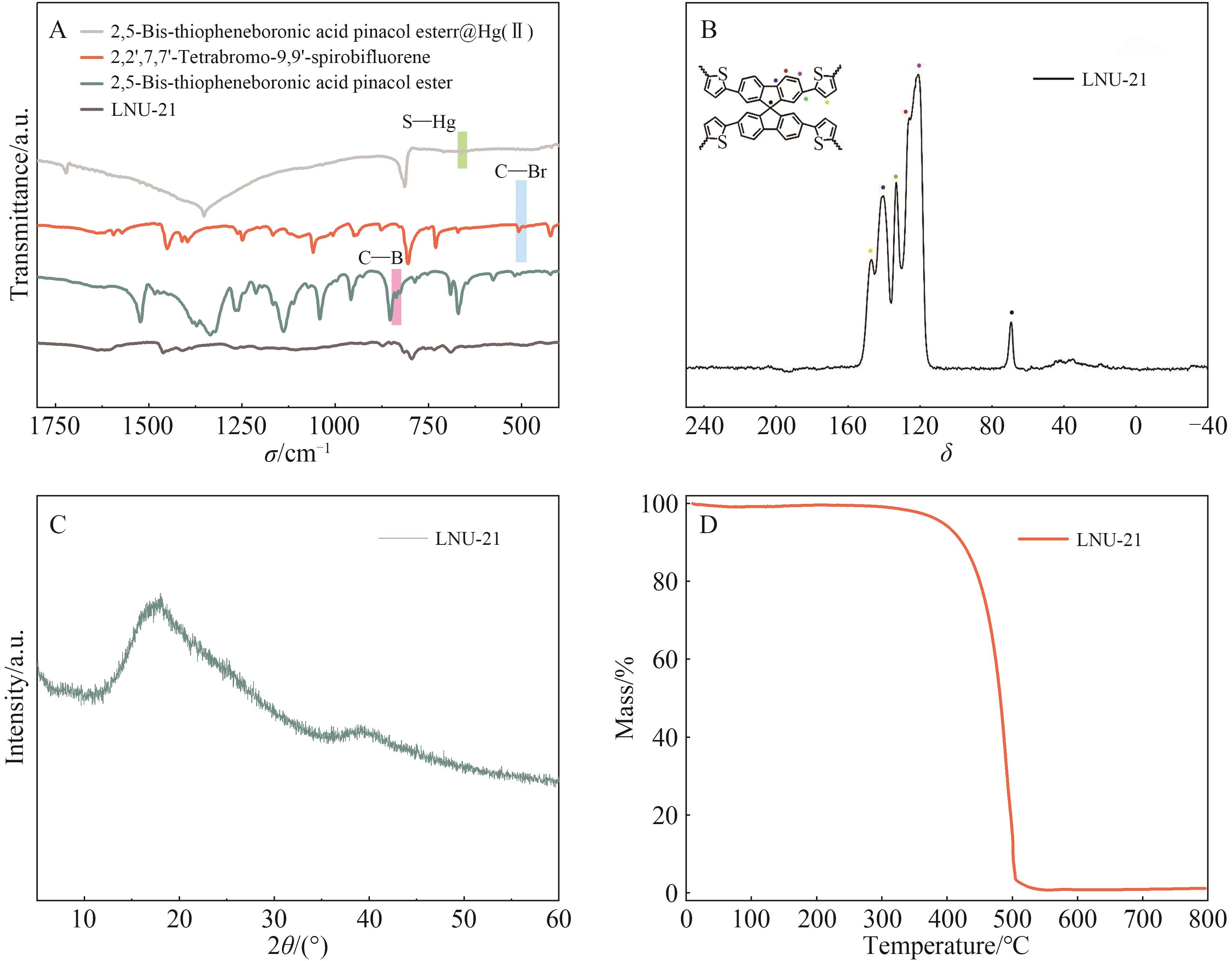
Fig.2 FT-IR spectra of LNU-21 and its monomers (A); Solid 13C NMR profile of LNU-21 (B); XRD pattern of LNU-21 powder (C); TGA curve of LNU-21 (D)
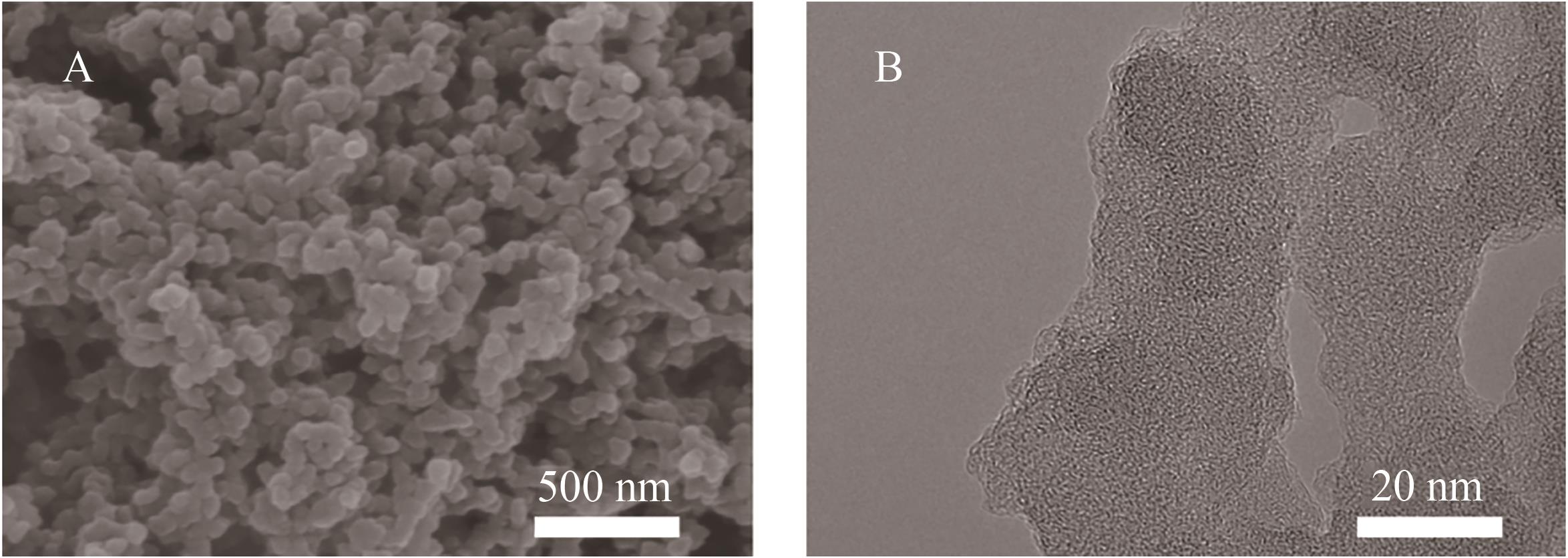
Fig.3 SEM (A) and TEM (B) images of LNU-21
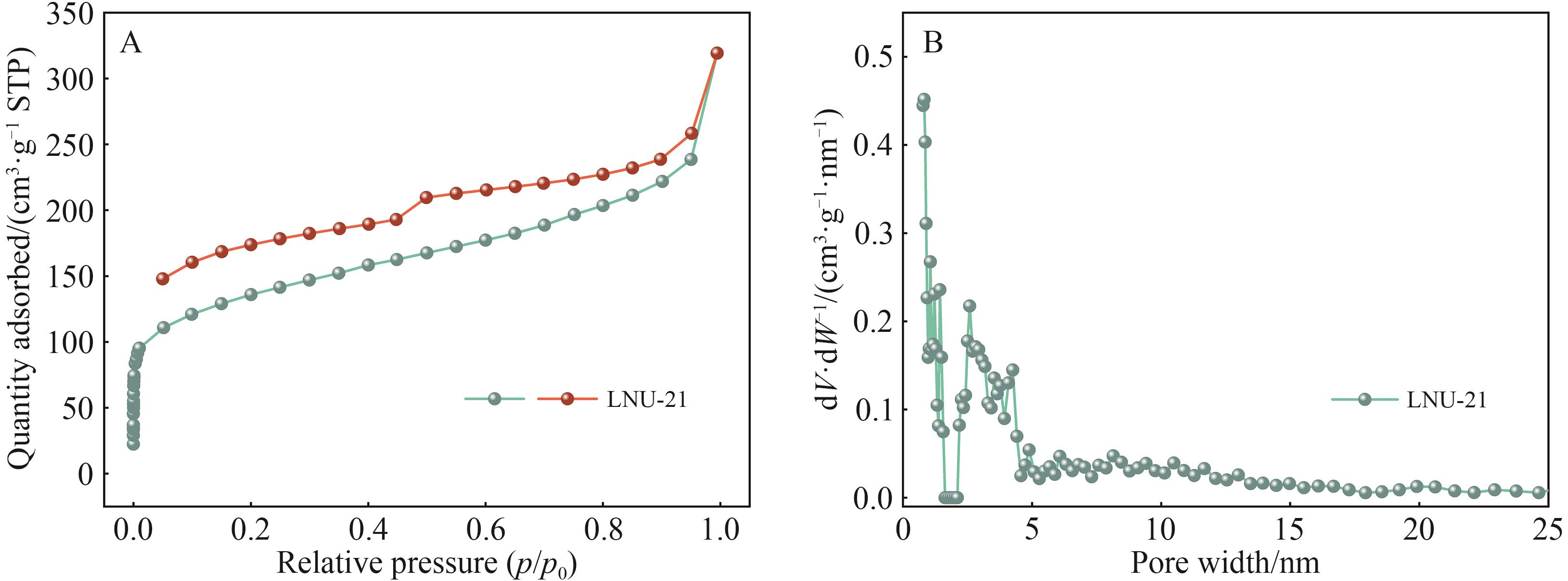
Fig.4 Porosity (A) and pore size distribution (B) of LNU-21
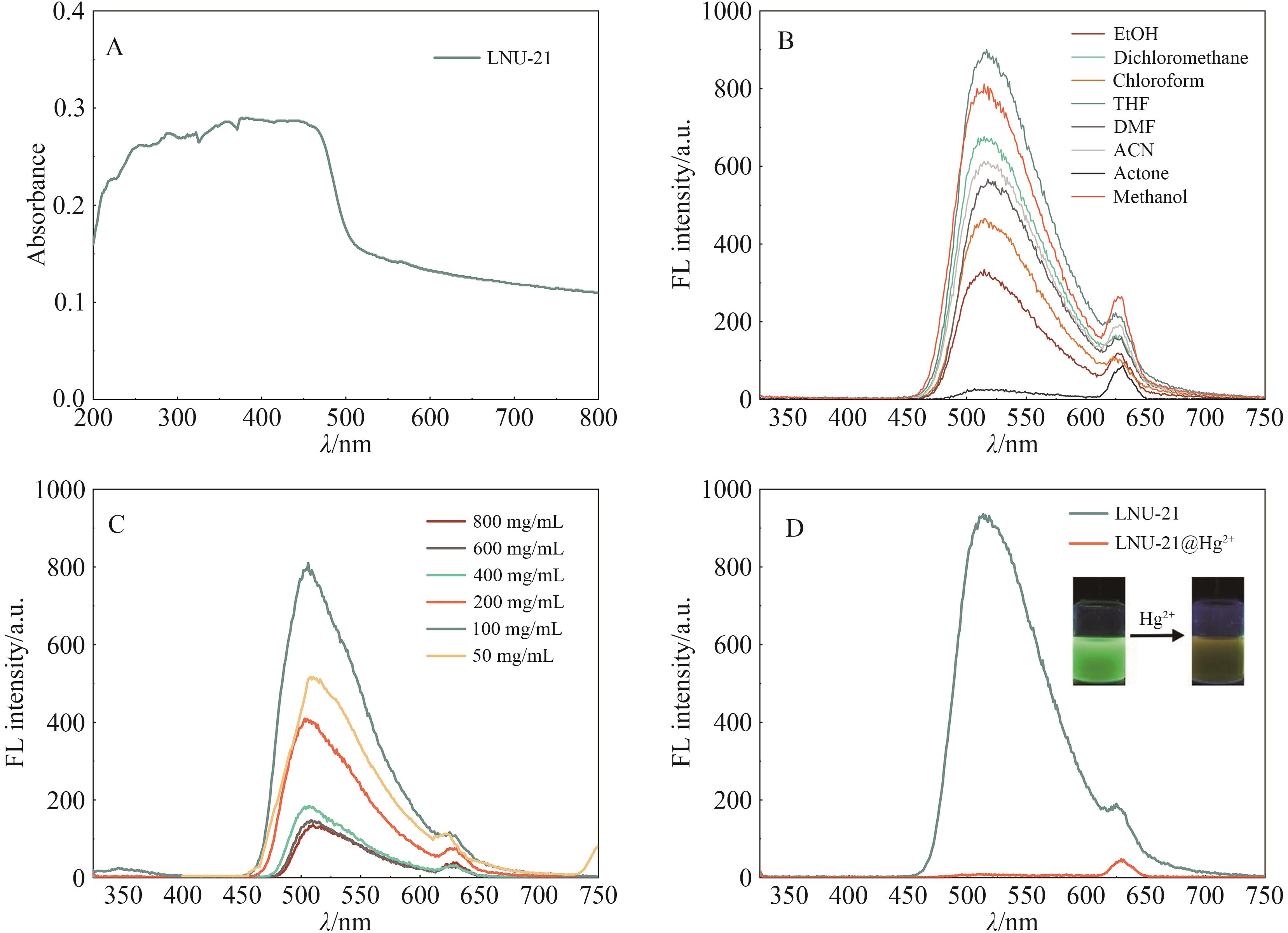
Fig.5 UV spectrum of solid LNU-21 (A); Fluorescence intensity of LNU-21 in different solvents (B); Fluorescence intensity of LNU-21 in different concentrations of tetrahydrofuran solvents (C); Fluorescence intensity of LNU-21 before and after the addition of mercury ions (D)
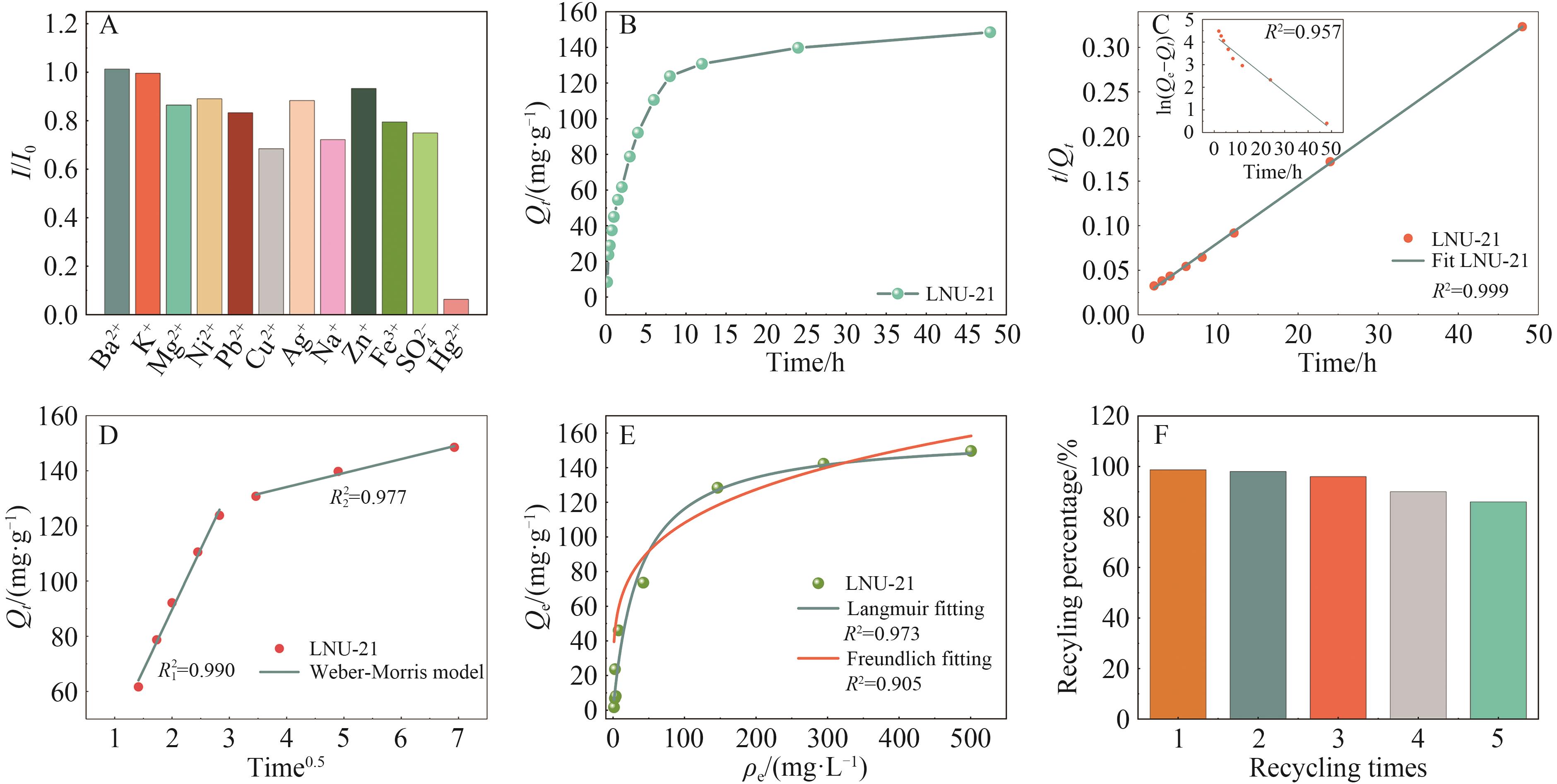
Fig.6 Fluorescence selectivity (A); Effect of time on the adsorption of Hg2+ (B); Fitting with the Pseudo-second-order kinetic model (C) (Inset: Fitting with the Pseudo-first-order kinetic model); Fitting with the Weibull-Morris model (D); Fitting with the Langmuir and Freundlich model (E); Recycling efficiency of LNU-21 (F)
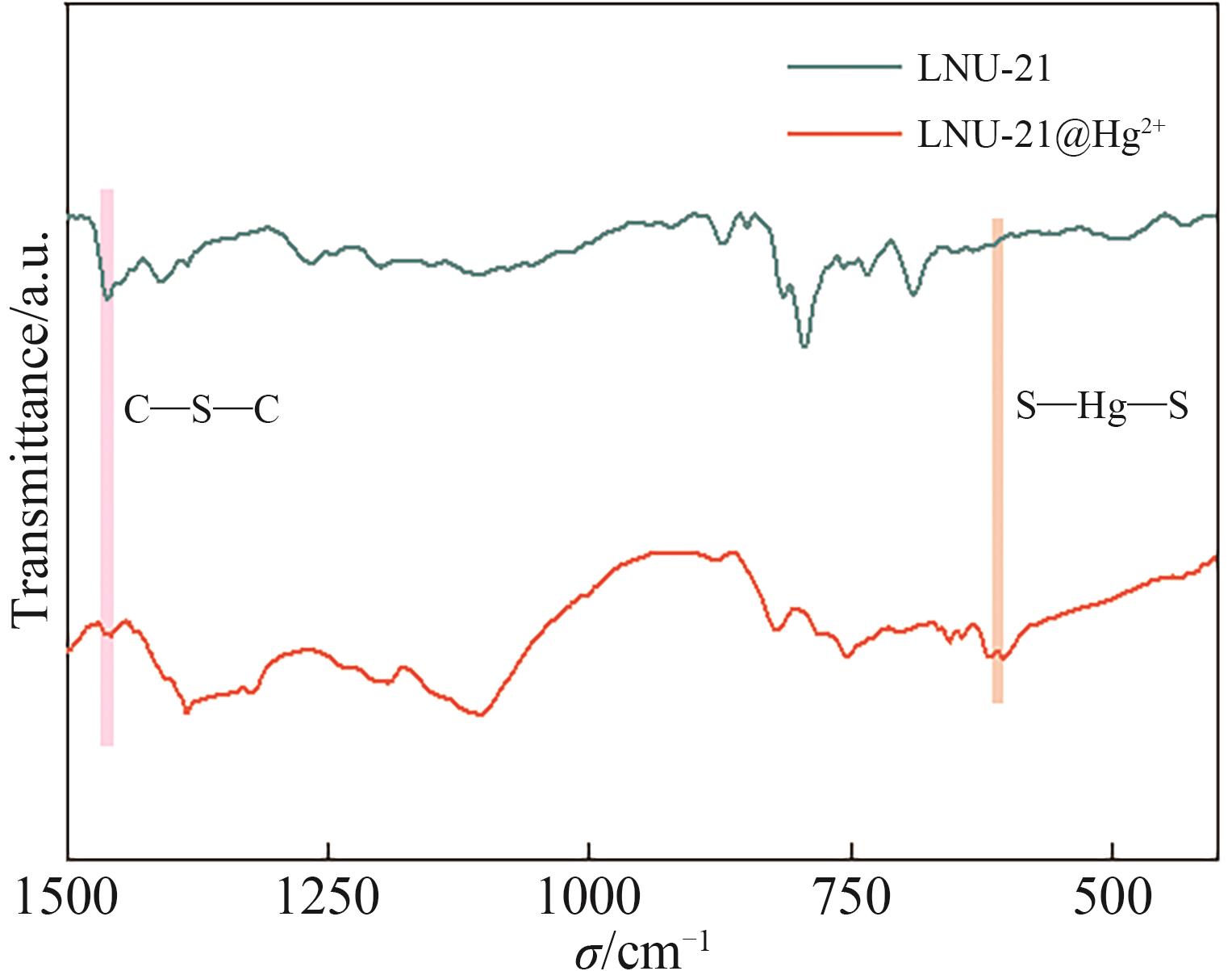
Fig.7 FT-IR spectra of LNU-21 before and after adsorption of mercury ions
| [1] | 韩晓刚, 严炜鑫, 王一鸣, 等. 一种重金属螯合吸附剂的制备及其对镍离子和六价铬的吸附性能[J]. 电镀与涂饰, 2024, 43(8): 142-150. |
| HAN X G, YAN W X, WANG Y M, et al. Preparation of a heavy metal chelating adsorbent and its adsorption properties for nickel ions and hexavalent chromium[J]. Electroplat Finish, 2024, 43(8): 142-150. | |
| [2] | 李军, 脱新颖, 马利邦, 等. 黄河兰州城区段饮用水源地土壤重金属污染生态与健康概率风险评估[J]. 环境化学, 2024, 43(11): 3746-3759. |
| LI J, TUO X Y, MA L B, et al. Probability risk assessment of soil heavy metal pollution in the drinking water source of the Lanzhou section of the Yellow River[J]. Environ Chem, 2024, 43(11): 3746-3759. | |
| [3] | SUN S, LI C X, ZHANG C, et al. Effect of sediments on bioaccumulation of mercury in fish body in the water-level-fluctuating zone of the Three Gorges Reservoir Area[J]. Environ Sci, 2017, 38(4): 1689-1696. |
| [4] | 庞子君, 覃智, 陈啊聪, 等. 污废水中污染物去除的功能材料研究进展:元素物质-合成改性-工艺工程的尺度效应[J]. 应用化学, 2024, 41(2): 190-216. |
| PANG Z J, TAN Z, CHEN A C, et al. Research progress on functional materials for pollutant removal in wastewater and wastewater: scale effects of elemental substances-synthetic modification-process engineering[J]. Chin J Appl Chem, 2024, 41(2): 190-216. | |
| [5] | 张涛, 王成尘, 李立新, 等. 食品中汞的人体生物有效性与健康危害研究[J]. 科学通报, 2024, 69(32): 4716-4729. |
| ZHANG T, WANG C C, LI L X, et al. Human bioavailability and health hazards of mercury in food[J]. Sci Bull, 2024, 69(32): 4716-4729. | |
| [6] | LIU N T, WU F, WANG D Y, et al. Mercury speciation, distribution, and potential sources in surface waters of the Yangtze and Yellow River source basins of tibetan plateau during Wet Season[J]. Environ Sci, 2022, 43(11): 5064-5072. |
| [7] | PAN K, XU J, LI F, et al. The association between mercury exposure during pregnancy and adverse birth outcomes: a systematic review and meta-analysis[J]. Environ Res, 2025, 264: 120357. |
| [8] | SALLES F J, PEREIRA E C, DE OLIVEIRA A S, et al. Blood mercury concentrations in preschool children and potential risk factors in São Paulo, Brazil[J]. Environ Pollut, 2024, 363: 125112. |
| [9] | DO AMARAL K D, SILVA G S, ARAÚJO A S, et al. Development of a novel method based on extraction mediated by a semipermeable membrane to determine Cd and Cr in sugar by graphite furnace atomic absorption spectrometry[J]. Food Chem, 2025, 463: 141527. |
| [10] | DE ALMEIDA T, NICOLAU A S, SCHIRRU R, et al. Development of a deep neural network and a PSO algorithm to predict ore hardness using X-ray diffraction and atomic emission spectroscopy[J]. Miner Eng, 2024, 213: 108760. |
| [11] | 左方涛, 徐威, 赵爱武. 基于功能化Fe3O4@Ag纳米粒子快速检测Hg2+的SERS方法[J]. 化学学报, 2019, 77(4): 379-386. |
| ZUO F T, XU W, ZHAO A W. SERS method for rapid detection of Hg2+ based on functionalized Fe3O4@Ag nanoparticles[J]. Acta Chim Sin, 2019, 77(4): 379-386. | |
| [12] | PANTHI G, PARK M. Synthesis of metal nanoclusters and their application in Hg2+ ions detection: a review[J]. J Hazard Mater, 2022, 424(Pt C): 127565. |
| [13] | LEERMAKERS M, BAEYENS W, QUEVAUVILLER P, et al. Mercury in environmental samples: speciation, artifacts and validation[J]. TrAC Trends Anal Chem, 2005, 24(5): 383-393. |
| [14] | SINGH H, BAMRAH A, BHARDWAJ S K, et al. Nanomaterial-based fluorescent sensors for the detection of lead ions[J]. J Hazard Mater, 2021, 407: 124379. |
| [15] | 周叶红, 张旭艺, 芦冬涛, 等. 基于氮化碳量子点/罗丹明B系统检测汞离子的比率荧光探针[J]. 应用化学, 2023, 40(11): 1550-1557. |
| ZHOU Y H, ZHANG X Y, LU D T, et al. Ratiometric fluorescent probe for the detection of mercury ions based on the carbon nitride quantum dots/rhodamine B system[J]. Chin J Appl Chem, 2023, 40(11): 1550-1557. | |
| [16] | 汪慧, 韩雍, 王应强. 可视化辅助碳点荧光比色法检测水中痕量汞离子[J]. 分析试验室, 2020, 39(2): 218-224. |
| WANG H, HAN Y, WANG Y Q. Visualization-assisted carbon dot fluorescence colorimetric detection of trace mercury ions in water[J]. Anal Labo, 2020, 39(2): 218-224. | |
| [17] | 严炜鑫, 王一鸣, 蔡建刚, 等. 重金属螯合吸附剂的制备和吸附性能研究[J]. 电镀与精饰, 2024, 46(9): 26-33. |
| YAN W X, WANG Y M, CAI J G, et al. Preparation and adsorption properties of heavy metal chelating adsorbents[J]. Plat Finish, 2024, 46(9): 26-33. | |
| [18] | 汪振文, 王会才, 杨继斌, 等. 吸附法去除水中重金属复合污染物的研究状况[J]. 稀有金属, 2020, 44(1): 87-99. |
| WANG Z W, WANG H C, YANG J B, et al. Research status on the removal of heavy metal composite pollutants in water by adsorption method[J]. Rare Met, 2020, 44(1): 87-99. | |
| [19] | DING S Y, DONG M, WANG Y W, et al. Thioether-based fluorescent covalent organic framework for selective detection and facile removal of mercury(Ⅱ)[J]. J Am Chem Soc, 2016, 138(9): 3031-3037. |
| [20] | WANG X, LI Y, QIAN Y, et al. Mechanically robust atomic oxygen-resistant coatings capable of autonomously healing damage in low earth orbit space environment[J]. Adv Mater, 2018, 30(36): 1803854. |
| [21] | HE J, YEE K K, XU Z, et al. Thioether side chains improve the stability, fluorescence, and metal uptake of a metal-organic framework[J]. Chem Mater, 2011, 23(11): 2940-2947. |
| [22] | 郭勤, 张凯钧, 陈自娇, 等. 原位聚合包覆SiO2纳米纤维棉的制备及重金属吸附性能[J]. 硅酸盐通报, 2023, 42(11): 4082-4091. |
| GUO Q, ZHANG K J, CHEN Z J, et al. Preparation and heavy metal adsorption properties of in-situ polymerization coated SiO2 nanofiber cotton[J]. Silicate Bull, 2023, 42(11): 4082-4091. | |
| [23] | LI Q, SUN L, ZHANG Y, et al. Characteristics of equilibrium, kinetics studies for adsorption of Hg(Ⅱ) and Cr(Ⅵ) by polyaniline/humic acid composite[J]. Desalination, 2011, 266(1/2/3): 188-194. |
| [24] | DU Y J, LUO X Y, YE X H, et al. Molecular imprinted photoresponse hybrid biocatalyst for ultrasensitive glutamate detection[J]. Int J Biol Macromol, 2025, Mar 25: 142540. |
| [25] | ADAMPOUREZARE M, NAZHAD DOLATABADI J E, ASADPOUR-ZEYNALI K. An electrochemical paper-based microfluidic device modified with molecularly imprinted polymer-coated ZnFe2O4@MIL-101(Cr)@SiO2 for ultrasensitive and highly selective detection of streptomycin[J]. Microchem J, 2025, 212: 113168. |
| [26] | MONIER M, ELSAYED N H, ABDEL-LATIF D. Synthesis and application of ion-imprinted resin based on modified melamine-thiourea for selective removal of Hg(Ⅱ)[J]. Polym Int, 2015, 64(10): 1465-1474. |
| [27] | FU Q, ZHANG T, SUN X, et al. Pyridine-based covalent organic framework for efficient and selective removal of Hg(Ⅱ) from water: adsorption behavior and adsorption mechanism investigations[J]. Chem Eng J, 2023, 454: 140154. |
| [28] | YZE L H, YUSOF N A, MAAMOR N, et al. Fabrication and characterization of molecularly imprinted polymer for Hg(Ⅱ) ion[J]. Asian J Chem, 2014, 26(16): 5029-5032. |
| [29] | LIU S. Preparation of nanocellulose grafted molecularly imprinted polymer for selective adsorption Pb(Ⅱ) and Hg(Ⅱ)[J]. Chemosphere, 2023, 316: 137832. |
| [30] | ZHU Z, QIN Y, LIU S, et al. A novel COP adsorbent built up by thiophene group: rapid and selective adsorption toward trace hazardous Hg(Ⅱ)[J]. Sep Purif Technol, 2025, 353: 128482. |
| [31] | LI J, LIN G, ZENG B, et al. Enhanced Hg(Ⅱ) efficient and selective removal by post-functional Ti-MOF with 2,5 thiophene dicarboxylic acid[J]. Process Saf Environ Prot, 2023, 176: 696-705. |
| [32] | WANG L, LIU J, WANG J, et al. Bifunctional thiophene-based covalent organic frameworks for Hg2+ removal and I2 vapor adsorption[J]. Chem Eng J, 2023, 473: 145405. |
| [33] | HWU J R, BOHARA K P, KAPOOR M, et al. Generation of quaternary carbons in cycloalkanones and lactones with arynes through a domino process[J]. J Org Chem, 2024, 89(24): 18393-18399. |
| [34] | HOLST J R, STÖCKEL E, ADAMS D J, et al.. High surface area networks from tetrahedral monomers: metal-catalyzed coupling, thermal polymerization, and “click” chemistry[J]. Macromol, 2010, 43(20): 8531-8538. |
| [35] | WANG B, WU K, LIU T, et al. Feasible synthesis of bifunctional polysilsesquioxane microspheres for robust adsorption of Hg(Ⅱ) and Ag(Ⅰ): behavior and mechanism[J]. J Hazard Mater, 2023, 442: 130121. |
| [36] | YAN X, GE H. Preparation of metal organic frameworks modified chitosan composite with high capacity for Hg(Ⅱ) adsorption[J]. Int J Biol Macromol, 2023, 232: 123329. |
| [37] | WANG Z, ZHANG A, GUO Z, et al. Efficient Hg(Ⅱ) adsorption of polyphenol functionalized poly(pyrrole methane)s: the role of acid doped ions[J]. Sep Purif Technol, 2024, 330: 125481. |
| [38] | GUO X, LIU A, LU J, et al. Adsorption mechanism of hexavalent chromium on biochar: kinetic, thermodynamic, and characterization studies[J]. ACS Omega, 2020, 5(42): 27323-27331. |
| [39] | SONG X, TIAN D, QIU Y, et al. Improving poisoning resistance of electrocatalysts via alloying strategy for high-performance lithium-sulfur batteries[J]. Energy Storage Mater, 2021, 41: 248-254. |
| [40] | ZHAO C X, LIU J N, LI B Q, et al. Multiscale construction of bifunctional electrocatalysts for long-lifespan rechargeable zinc-air batteries[J]. Adv Funct Mater, 2020, 30(36): 2003619. |
| [41] | KANDAMBETH S, JIA J, WU H, et al. Covalent organic frameworks as negative electrodes for high-performance asymmetric supercapacitors[J]. Adv Energy Mater, 2020, 10(38): 2001673. |
| [42] | GIANNOZZI P, ANDREUSSI O, BRUMME T, et al. Advanced capabilities for materials modelling with quantum ESPRESSO[J]. J Phys: Condens Matter, 2017, 29(46): 465901. |
| [43] | HUANG Y, LI X, CHEN L, et al. Synthesis of a magnetic crown ether ion imprinted polymer material for the selective adsorption of lithium[J]. New J Chem, 2023, 47(6): 3134-3139. |
| [44] | ABBAS K, ZNAD H, AWUAL M R. A ligand anchored conjugate adsorbent for effective mercury(Ⅱ) detection and removal from aqueous media[J]. Chem Eng J, 2018, 334: 432-443. |
| [45] | WANG B, WU K, LIU T, et al. Synthesis of hyperbranched polyamine dendrimer/chitosan/silica composite for efficient adsorption of Hg(Ⅱ)[J]. Int J Biol Macromol, 2023, 230: 123135. |
| [46] | JI C, REN Y, YU H, et al. Highly efficient and selective Hg(Ⅱ) removal from water by thiol-functionalized MOF-808: kinetic and mechanism study[J]. Chem Eng J, 2022, 430: 132960. |
| [47] | SHENASHEN M A, EL-SAFTY S A, ELSHEHY E A. Architecture of optical sensor for recognition of multiple toxic metal ions from water[J]. J Hazard Mater, 2013, 260: 833-843. |
| [48] | YOKOI T, KUBOTA Y, TATSUMI T. Amino-functionalized mesoporous silica as base catalyst and adsorbent[J]. Appl Catal A, 2012, 421/422: 14-37. |
| [49] | 史豪, 王雅, 赵尉伶, 等. 表面活性剂改性的磁性纳米颗粒对重金属吸附特征[J]. 材料导报, 2025, 39(6): 58-65. |
| SHI H, WANG Y, ZHAO W L, et al. Adsorption characteristics of heavy metals by magnetic nanoparticles modified with surfactants[J]. Mater Rep, 2025, 39(6): 58-65. | |
| [50] | 李录. 多孔氧化镁/氢氧化镁的可控制备及重金属吸附性能研究[D]. 福州: 福建师范大学, 2021. |
| LI L. Controllable preparation of porous magnesium oxide/magnesium hydroxide and heavy metal adsorption properties[D]. Fuzhou: Fujian Normal University, 2021. | |
| [51] | YOON S Y, JANG S B, WONG K T, et al. Sulfur-anchored palm shell waste-based activated carbon for ultrahigh sorption of Hg(Ⅱ) for in-situ groundwater treatment[J]. J Hazard Mater, 2021, 417: 125995. |
| [52] | ZHANG B, ZHENG H, YANG K, et al. Bottom-up synthesis of a sulfhydryl-modified heteroporous covalent organic framework for ultrafast removal of trace Hg(Ⅱ) from water[J]. Chemosphere, 2024, 360: 142410. |
| [53] | WANG Y, NAKANO T, CHEN X, et al. Studies on adsorption properties of magnetic composite prepared by one-pot method for Cd(Ⅱ), Pb(Ⅱ), Hg(Ⅱ), and As(Ⅲ): mechanism and practical application in food[J]. J Hazard Mater, 2024, 466: 133437. |
| [54] | 李佶衡, 彭良琼, 郭丽君, 等. 固液吸附等温线模型与热力学参数计算[J]. 皮革科学与工程, 2023, 33(6): 36-43. |
| LI Z H, PENG L Q, GUO L J, et al. Solid-liquid adsorption isotherm model and thermodynamic parameter calculation[J]. Leather Sci Eng, 2023, 33(6): 36-43. | |
| [55] | YUAN F, YAN D, ZHANG J, et al. DMF promoted embedded of melamine inside HKUST-1 for efficient Hg(Ⅱ) adsorption with regenerability[J]. Sep Purif Technol, 2024, 335: 126211. |
| [56] | MAHAPATRA U, MANNA A K, CHATTERJEE A. A critical evaluation of conventional kinetic and isotherm modeling for adsorptive removal of hexavalent chromium and methylene blue by natural rubber sludge-derived activated carbon and commercial activated carbon[J]. Bioresour Technol, 2022, 343: 126135. |
| [57] | SILVA M N D, SANTANA I L D, GUEDES G A J C, et al. Conversion of agro-industrial wastes as highly efficient adsorbents in the removal of pollutants: characterization and study of dye adsorption in water[J]. Chem Eng Sci, 2025, 309: 121442. |
| [58] | BAHIRAEI A, BEHIN J. Sonochemical immobilization of MnO2 nanoparticles on NaP-zeolite for enhanced Hg(Ⅱ) adsorption from water[J]. J Environ Chem Eng, 2020, 8(3): 103790. |
| [59] | 赵传起, 巩思诺, 陈宇轩, 等. Zn-Fe共活化磁性生物炭吸附四环素与重金属铬的性能比较与机理分析[J]. 农业环境科学学报, 2025, 44(8): 2201-2210. |
| ZHAO C Q, GONG S N, CHEN Y X, et al. Comparison and mechanism analysis of the adsorption of tetracycline and heavy metal chromium by Zn-Fe co-activated magnetic biochar[J]. J Agro Environ Sci, 2025, 44(8): 2201-2210. | |
| [60] | 殷虹蝶, 江寒梅, 于超俊, 等. 原位硒化衍生新型Cu2O-Cu2Se纳米复合物用于高速吸附重金属离子Cr(Ⅵ)[J]. 环境化学, 2025, 44(2): 638-645. |
| YIN J D, JIANG H M, YU C J, et al. In situ selenization-derived novel Cu2O-Cu2Se nanocomposites for high-speed adsorption of heavy metal ions Cr(Ⅵ)[J]. Environ Chem, 2025, 44(2): 638-645. | |
| [61] | CHEN J, ZENG W, HUANG H, et al. Tunable porosity and Hg(Ⅱ) adsorption performance in dual heteroatom functionalized conjugated micro-mesoporous poly(aniline)s[J]. Sep Purif Technol, 2025, 363: 131997. |
| [62] | WANG J, LIU T, WANG B, et al. Synthesis of polyhydroxyl-capped PAMAM dendrimer/silica composites for the adsorption of aqueous Hg(Ⅱ) and Ag(Ⅰ)[J]. Chin Chem Lett, 2024, 35(12): 109900. |
| [63] | XU Y N, ZHANG Y, LIU Y, et al. Bioinspired zinc-mediated umpolung thiolation of alkyl electrophiles: reaction development, scope and mechanism[J]. Sci China Chem, 2024, 67(3): 898-907. |
| [64] | MEI L, SUN M Z, YANG R J, et al. Metallic 1T/1T′ phase TMD nanosheets with enhanced chemisorption sites for ultrahigh-efficiency lead removal[J]. Nat Commun, 2024,15(1): 7770. |
| [65] | LI Y, WANG X, XU S, et al. Green synthesis of in-situ S-doped graphyne for Hg(Ⅱ) adsorption and energy storage from efficient mechanochemical reaction of calcium carbide and tetrabromothiophene[J]. Sep Purif Technol, 2025, 353: 128596. |
| [1] | Yue ZHANG, Rui LIANG, Can-Nan ZHAO, Chun-Mei LI. Construction of Graphene Oxide-DNA Nanoprobe for Adenosine 5-Triphosphate Detection and Drug Delivery [J]. Chinese Journal of Applied Chemistry, 2024, 41(1): 118-127. |
| [2] | XU Rui, YANG Qing, LI Yanbin, GAO Baojiao. Preparation of Thiocyanate Anion-Imprinted Microspheres via Inverse Suspension Polymerization and Their Ion Recognition Characteristics [J]. Chinese Journal of Applied Chemistry, 2015, 32(8): 931-939. |
| Viewed | ||||||
|
Full text |
|
|||||
|
Abstract |
|
|||||
