应用化学 ›› 2025, Vol. 42 ›› Issue (12): 1701-1710.DOI: 10.19894/j.issn.1000-0518.240397

• 研究论文 • 上一篇    下一篇

基于网络药理学和分子对接探究侧柏叶对运动性哮喘的治疗机制

王鹏1, 张朝法1(), 梁思捷2   

  1. 1.徐州医科大学体育部,徐州 221000
    2.徐州医科大学附属医院,徐州 221000
  • 收稿日期:2024-12-06 接受日期:2025-11-07 出版日期:2025-12-01 发布日期:2025-12-30
  • 通讯作者: 张朝法
  • 作者简介:w01028781205@163.com
  • 基金资助:
    江苏省卫健委重点项目(ZD2022064)

Exploring the Therapeutic Mechanism of Platycladus Orientalis Leaves on Exercise-Induced Asthma Based on Network Pharmacology and Molecular Docking

Peng WANG1, Chao-Fa ZHANG1(), Si-Jie LIANG2   

  1. 1.Sports Department,Xuzhou Medical University,Xuzhou 221000,China
    2.Affiliated Hospital,Xuzhou Medical University,Xuzhou 221000,China
  • Received:2024-12-06 Accepted:2025-11-07 Published:2025-12-01 Online:2025-12-30
  • Contact: Chao-Fa ZHANG
  • Supported by:
    the Key Project of Jiangsu Provincial Health Commission(ZD2022064)

摘要:

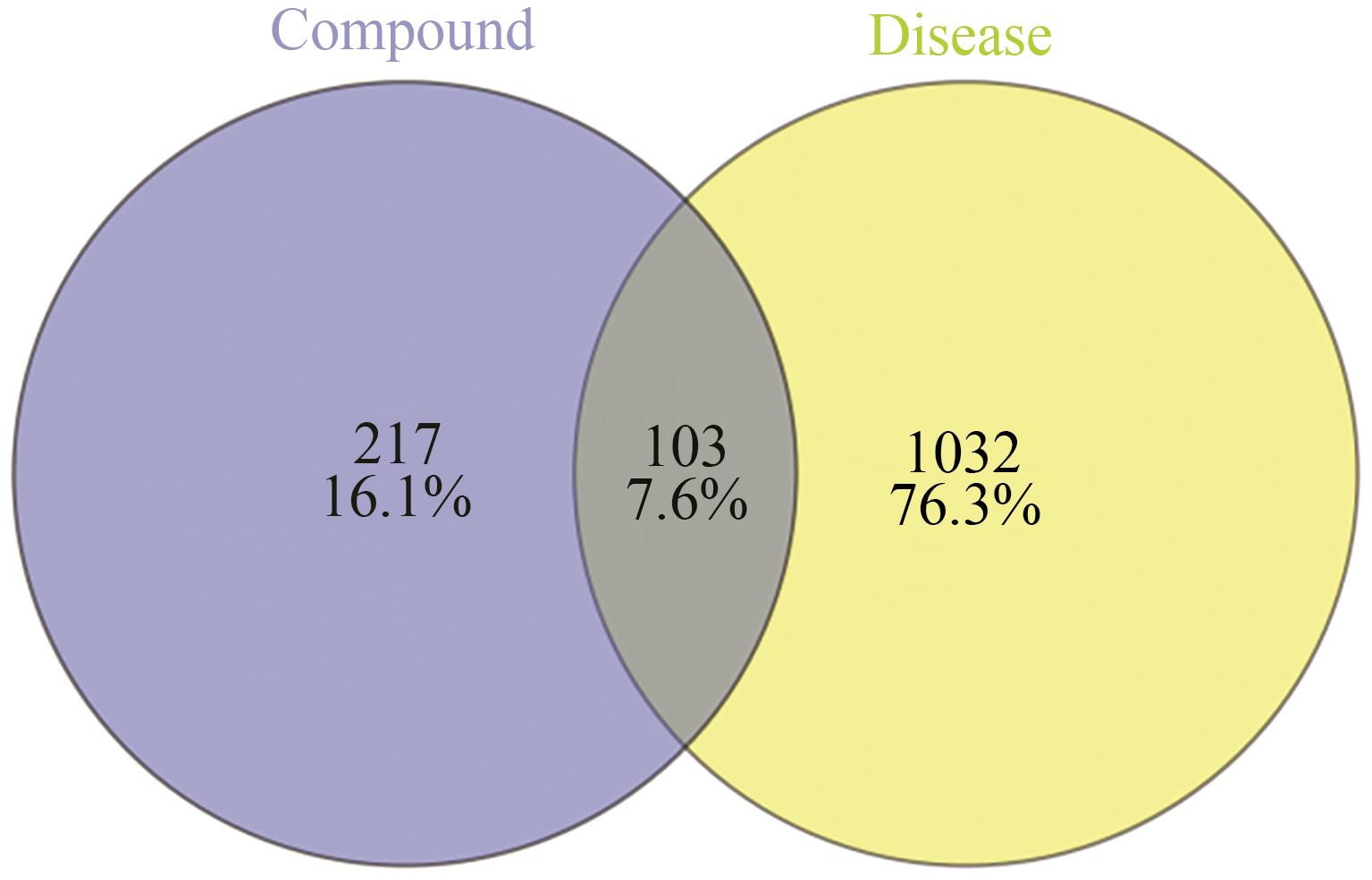
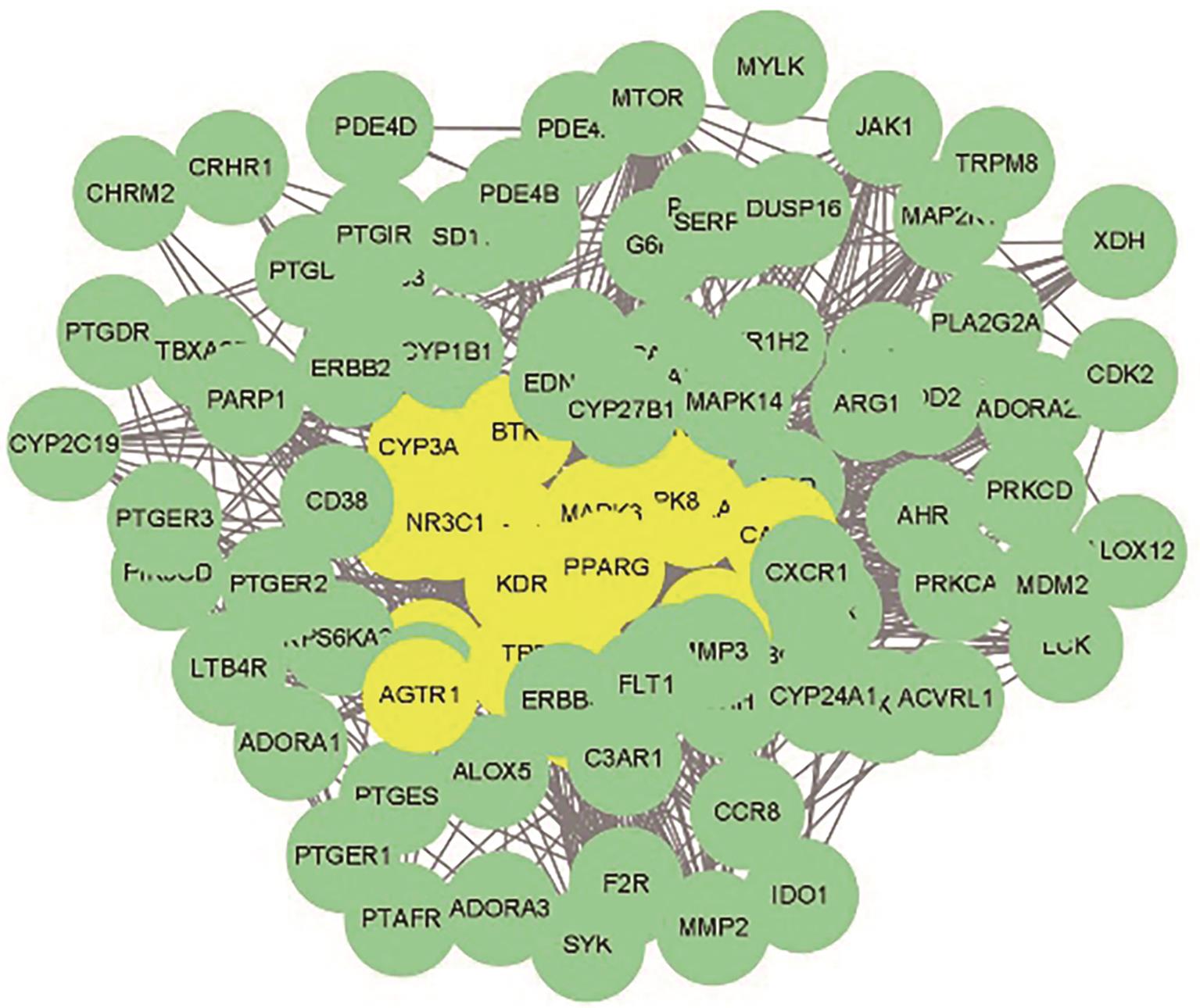
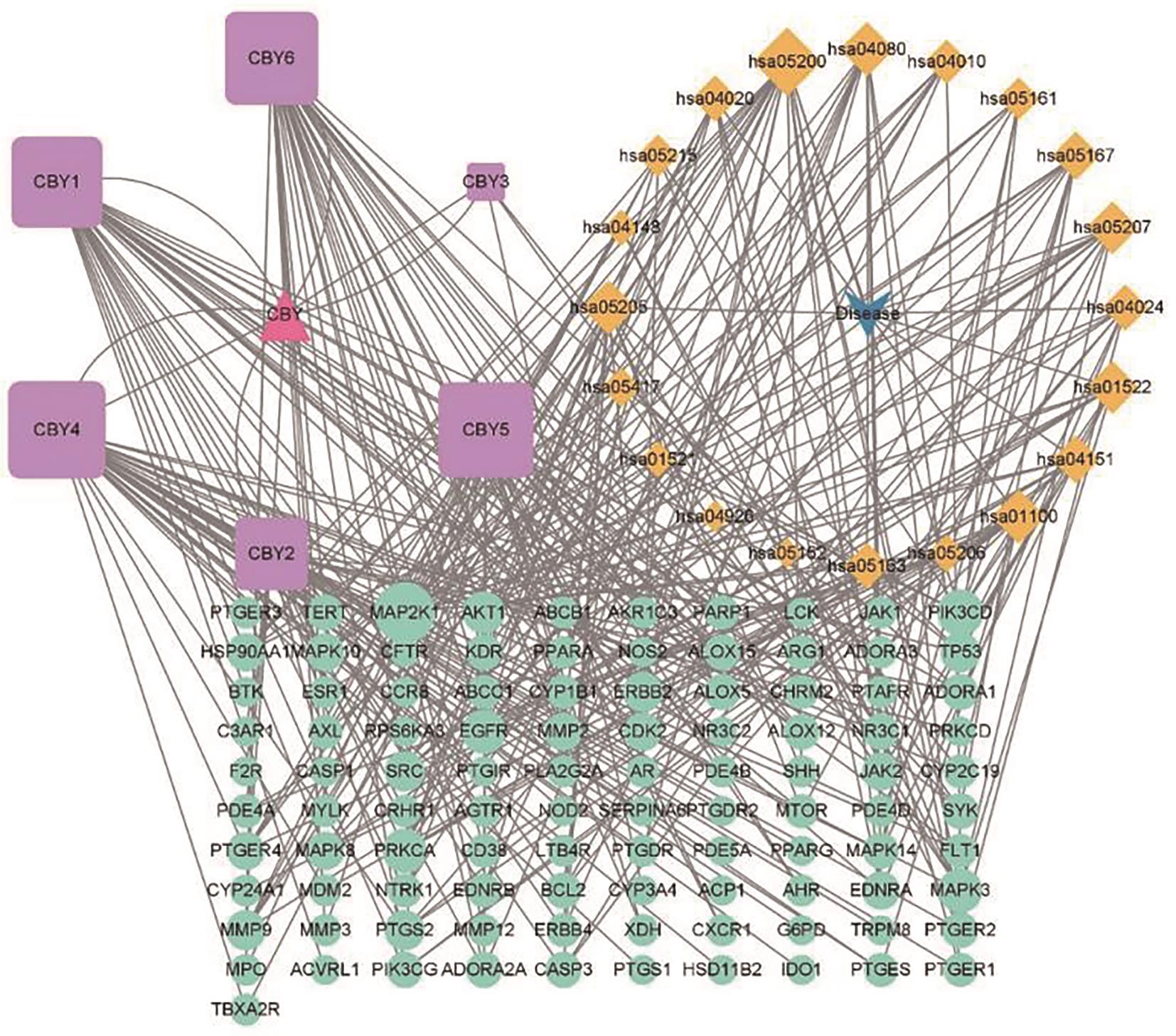
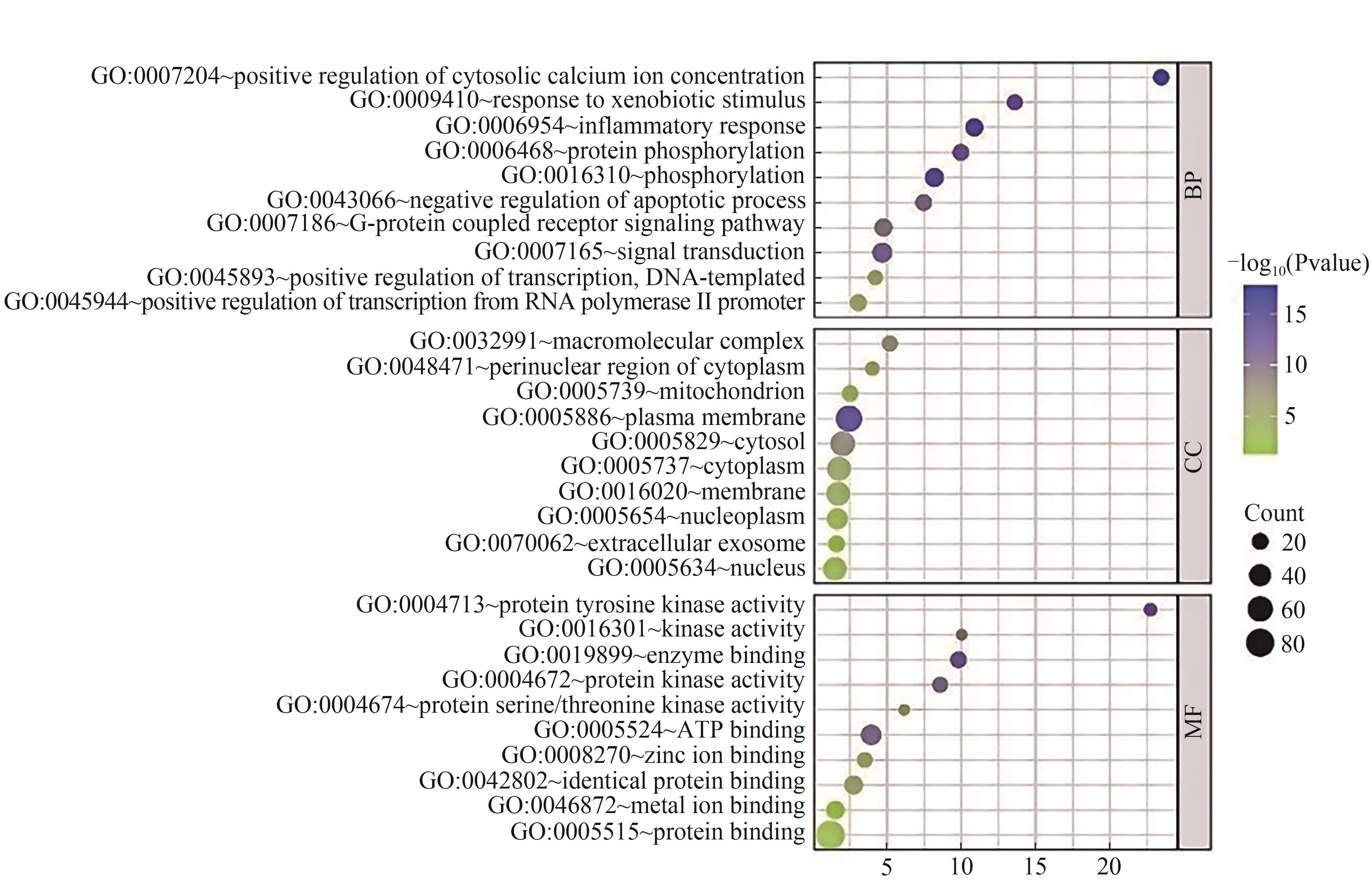
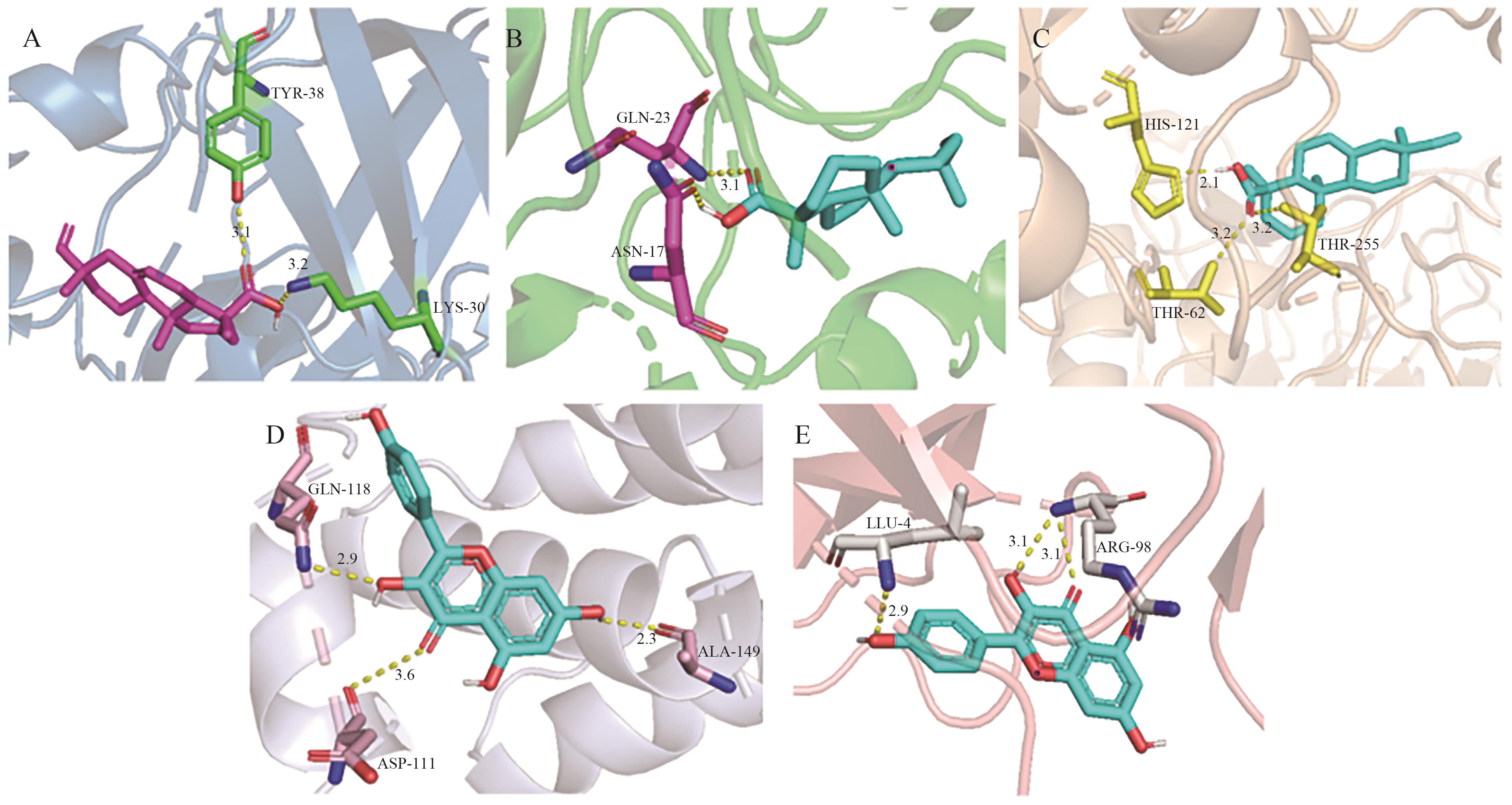
通过中药系统药理学数据库与分析平台检索侧柏叶的化学成分,筛选出具有治疗潜力的活性成分,并利用GeneCards数据库查找与运动性哮喘相关的潜在靶点; 借助Venny 2.1.0数据库确定侧柏叶与运动性哮喘之间的共同作用靶点; 基于这些共同作用靶点,利用Cytoscape 3.9.1软件构建“运动性哮喘-靶点-侧柏叶成分-通路”的相互作用网络图; 最后,利用String数据库构建共同作用靶点的互作网络,通过Divid数据库进行KEGG和基因本体(GO)富集分析,利用AutoDock Tools 1.5.7软件进行分子对接分析,以预测这些分子间的结合模式和亲和力。 研究结果表明: 侧柏叶的有效活性成分主要包括异海松酸、山奈酚和槲皮素等; 侧柏叶与运动性哮喘的共同靶点有103个,核心靶点有23个。 侧柏叶作用于AKT1、TP53、BCL2、PTGS2和CASP3等关键靶点调控癌症的发病途径、代谢途径、PI3K-Akt等信号通路达到治疗运动性哮喘的目的,且获体内外实验验证。

关键词: 侧柏叶, 运动性哮喘, 网络药理学, 信号通路

Abstract:

This study uses network pharmacology and molecular docking techniques to investigate the therapeutic mechanism of platycladus orientalis leaves (side-bai-ye) on exercise-induced asthma, aiming to provide richer theoretical support and new strategies for the treatment of this disease. First, the chemical components of platycladus orientalis leaves were retrieved from the TCMSP database, and active components with therapeutic potential were screened. Gene Cards database was then used to identify potential targets associated with exercise-induced asthma, and the Venny 2.1.0 database was employed to determine the common action targets between platycladus orientalis leaves and exercise-induced asthma. Next, based on the common action targets, the “exercise-induced asthma-targets-platycladus orientalis components-pathways” interaction network was constructed using Cytoscape 3.9.1 software. Finally, the interaction network of common action targets was built using the String database, followed by kyoto encyclopedia of genes and genomes (KEGG) and gene ontology (GO) enrichment analysis using the Divid database. Molecular docking analysis was performed using AutoDock Tools 1.5.7 software to predict the binding modes and affinities between these molecules. The results showed that the effective active components of platycladus orientalis leaves mainly include Isorhamnetin, Kaempferol, and Quercetin. There are 103 common targets between platycladus orientalis leaves and exercise-induced asthma, with 23 core targets. GO and KEGG enrichment analyses suggest that platycladus orientalis leaves treat exercise-induced asthma by regulating cancer-related pathways, metabolic pathways, PI3K-Akt signaling, and other signaling pathways. Molecular docking analysis revealed that AKT1, TP53, BCL2, PTGS2, and CASP3 may be key targets for platycladus orientalis leaves in treating exercise-induced asthma, mediating the cancer-related pathways, metabolic pathways, and other signaling pathways through active components such as Isorhamnetin, Kaempferol, and Quercetin, thus exerting a multi-target and multi-pathway synergistic therapeutic effect. In vivo and in vitro experiments further confirmed that the active components of platycladus orientalis leaves can participate in the treatment process of exercise-induced asthma by regulating the expression of core target proteins.

Key words: Platycladus orientalis leaves, Exercise-induced asthma, Network pharmacology, Signaling pathways

中图分类号: