
应用化学 ›› 2025, Vol. 42 ›› Issue (8): 1105-1114.DOI: 10.19894/j.issn.1000-0518.250026
邢梓鑫1, 马秀兰1, 刘哲鹏2, 傅鹏琨1, 宋慧荞1, 杨昳津1, 聂丽蓉1( )
)
收稿日期:2025-01-24
接受日期:2025-05-27
出版日期:2025-08-01
发布日期:2025-08-11
通讯作者:
聂丽蓉
作者简介:第一联系人:共同第1作者
基金资助:
Zi-Xin XING1, Xiu-Lan MA1, Zhe-Peng LIU2, Peng-Kun FU1, Hui-Qiao SONG1, Yi-Jin YANG1, Li-Rong NIE1()
Received:2025-01-24
Accepted:2025-05-27
Published:2025-08-01
Online:2025-08-11
Contact:
Li-Rong NIE
About author:l.r.nie@usst.edu.cnSupported by:摘要:
布比卡因属酰胺类局麻药,麻醉效果较强。 但因其半衰期短,单次注射镇痛时效有限,增加剂量易引发不良反应,持续小剂量输注又会加重患者不适与医护负担,限制了其临床应用。 针对上述问题,采用自发乳化法制备布比卡因微乳,并以羟丙基甲基纤维素(HPMC)为凝胶基质制备了一种适用于经皮给药途径的布比卡因微乳凝胶。 以粒径和载药量等理化指标优化微乳凝胶的处方工艺,并开展药效学研究。 结果显示,微乳凝胶的最优处方为: 药用大豆油-Tween 80-Span 80-无水乙醇-水相比为9∶10.5∶4.5∶10∶66(体积比); HPMC质量分数为0.4%。 优化后的微乳粒径为(64.58±0.29) nm,聚合物分散性指数(PDI)为0.198±0.096,载药量为96.95 mg/g,黏度为(8.43±0.28) Pa·s,pH值为7.49,稳定性良好,透射电子显微镜显示微乳呈球状形态。 与游离药物相比,微乳和微乳凝胶的经皮渗透量显著提高,且微乳凝胶能延长小鼠痛阈值,对皮肤无刺激性。 布比卡因微乳凝胶制备工艺简便可控,成品稳定、铺展性优且无刺激性,预期有良好的临床应用前景。
中图分类号:
邢梓鑫, 马秀兰, 刘哲鹏, 傅鹏琨, 宋慧荞, 杨昳津, 聂丽蓉. 布比卡因微乳凝胶制剂的研制及质量评价[J]. 应用化学, 2025, 42(8): 1105-1114.
Zi-Xin XING, Xiu-Lan MA, Zhe-Peng LIU, Peng-Kun FU, Hui-Qiao SONG, Yi-Jin YANG, Li-Rong NIE. Preparation and Quality Evaluation of Bupivacaine Microemulsion Gel[J]. Chinese Journal of Applied Chemistry, 2025, 42(8): 1105-1114.
| Allergic reactions from stimuli | Score | |
|---|---|---|
| Erythema | No erythema | 0 |
| Barely visible erythema (mild) | 1 | |
| Visible erythema (moderate) | 2 | |
| Clearly visible large erythema (severe) | 3 | |
| Purple-red erythema with some degree of scab formation | 4 | |
| Edema | No edema | 0 |
| Barely visible edema (mild) | 1 | |
| Visible edema (moderate) | 2 | |
| Visible edema with a bulge of about 1 mm (severe) | 3 | |
| Severe edema with a bulge greater than 1 mm | 4 | |
| Cumulative maximum score | 8 |
表1 皮肤刺激性评分标准
Table 1 Skin irritation scoring criteria
| Allergic reactions from stimuli | Score | |
|---|---|---|
| Erythema | No erythema | 0 |
| Barely visible erythema (mild) | 1 | |
| Visible erythema (moderate) | 2 | |
| Clearly visible large erythema (severe) | 3 | |
| Purple-red erythema with some degree of scab formation | 4 | |
| Edema | No edema | 0 |
| Barely visible edema (mild) | 1 | |
| Visible edema (moderate) | 2 | |
| Visible edema with a bulge of about 1 mm (severe) | 3 | |
| Severe edema with a bulge greater than 1 mm | 4 | |
| Cumulative maximum score | 8 |
| Score | Irritation evaluation indicators |
|---|---|
| 0~0.49 | Non-irritating |
| 0.50~2.99 | Mildly irritating |
| 3.00~5.99 | Moderately irritating |
| 6.00~8.00 | Severely irritating |
表2 皮肤刺激性强度评判标准
Table 2 Criteria for judging the intensity of skin irritation
| Score | Irritation evaluation indicators |
|---|---|
| 0~0.49 | Non-irritating |
| 0.50~2.99 | Mildly irritating |
| 3.00~5.99 | Moderately irritating |
| 6.00~8.00 | Severely irritating |
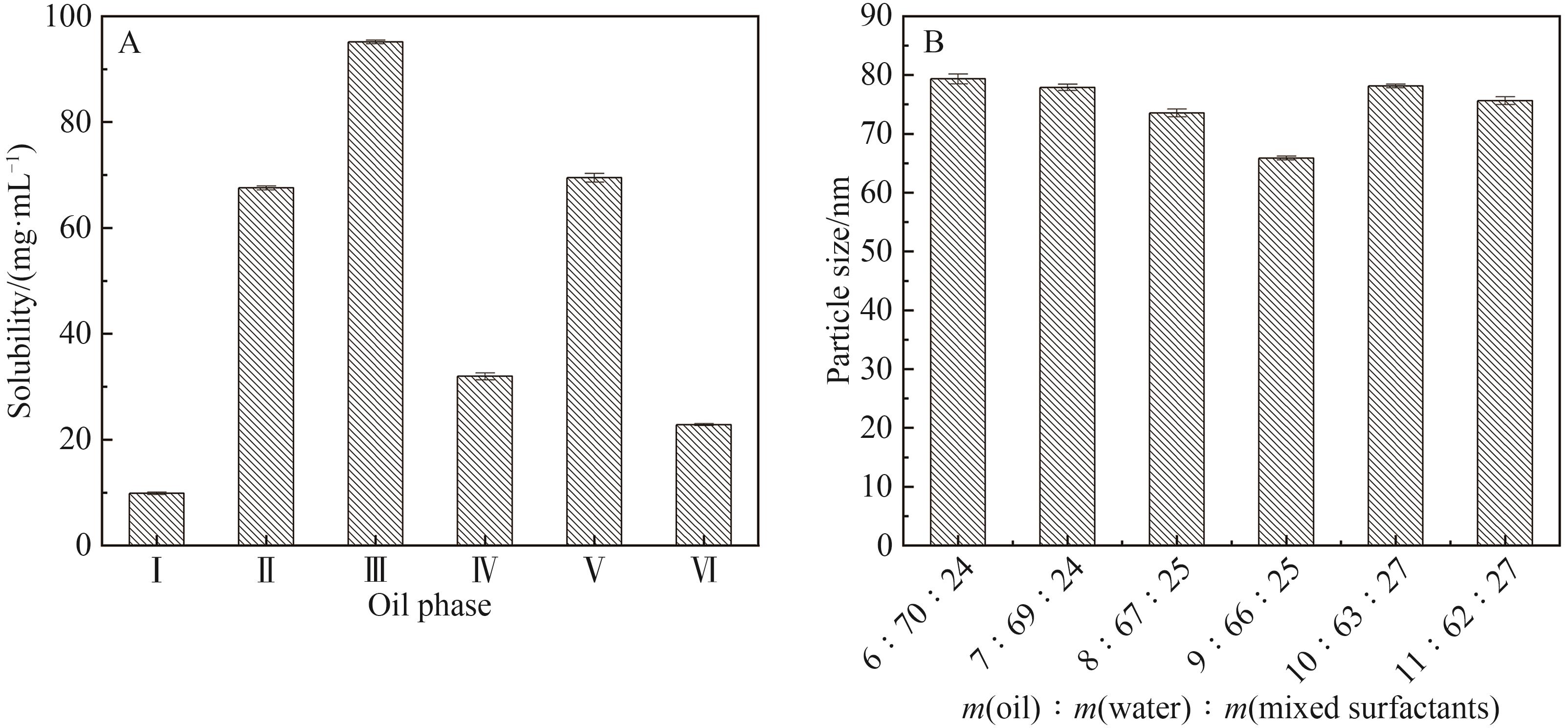
图1 (A)布比卡因在不同油相中的溶解度(Ⅰ.油酸; Ⅱ.肉豆蔻酸异丙酯; Ⅲ.药用大豆油; Ⅳ.油酸-肉豆蔻酸异丙酯(1∶1); Ⅴ.肉豆蔻酸异丙酯-药用大豆油(1∶1); Ⅵ.油酸-药用大豆油(1∶1)); (B)不同比例的空白微乳粒径
Fig.1 (A) Solubility of bupivacaine in different oil phases (Ⅰ.oleic acid; Ⅱ.isopropyl myristate; Ⅲ.medicated soybean oil; Ⅳ.oleic acid-isopropyl myristate (1∶1); Ⅴ.isopropyl myristate-medicated soybean oil (1∶1); Ⅵ.oleic acid-medicated soybean oil (1∶1)); (B) Particle size of blank microemulsions with different ratios
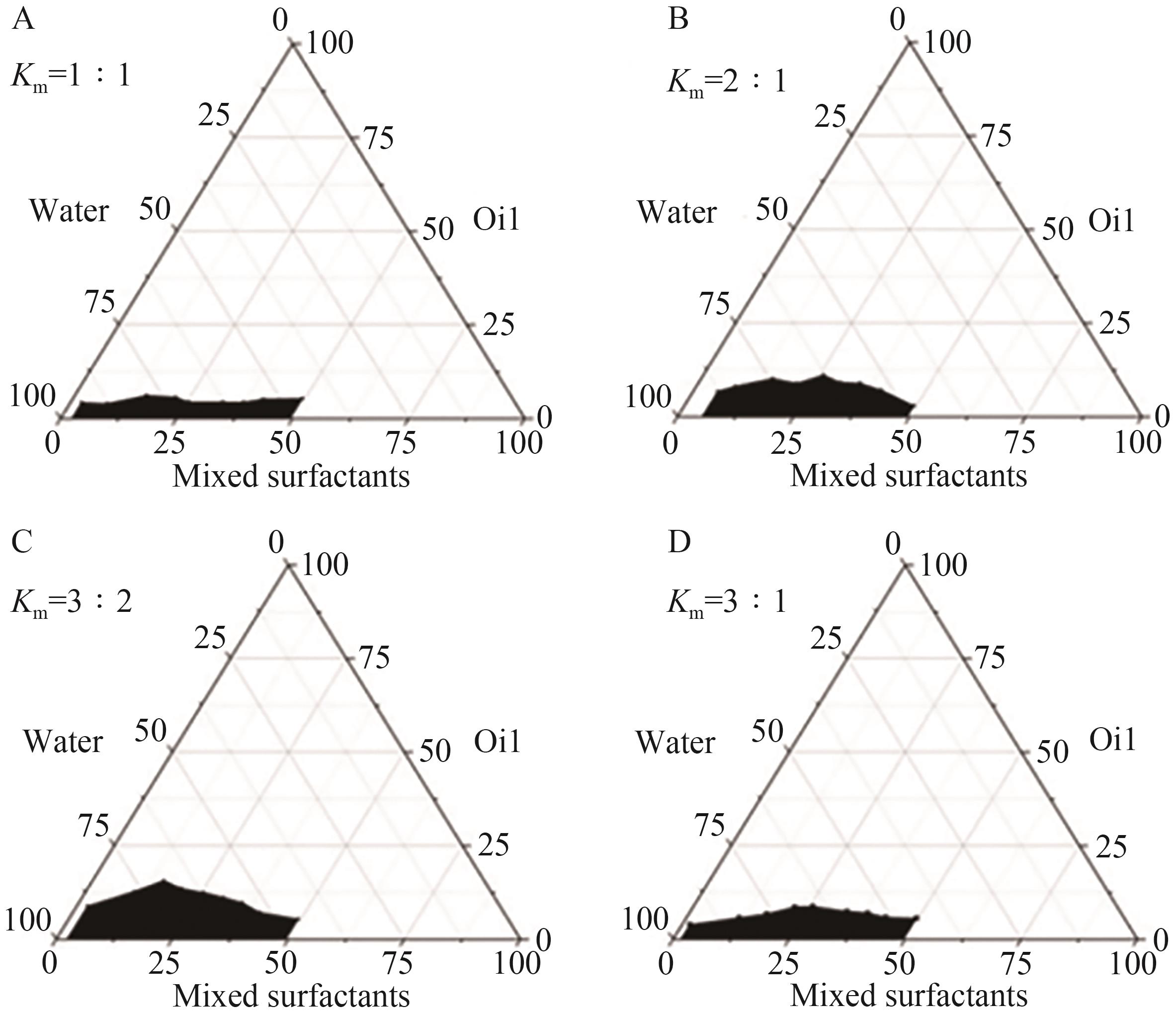
图2 不同Km值的伪三元相图
Fig.2 Pseudo-ternary phase diagrams for different values of Km
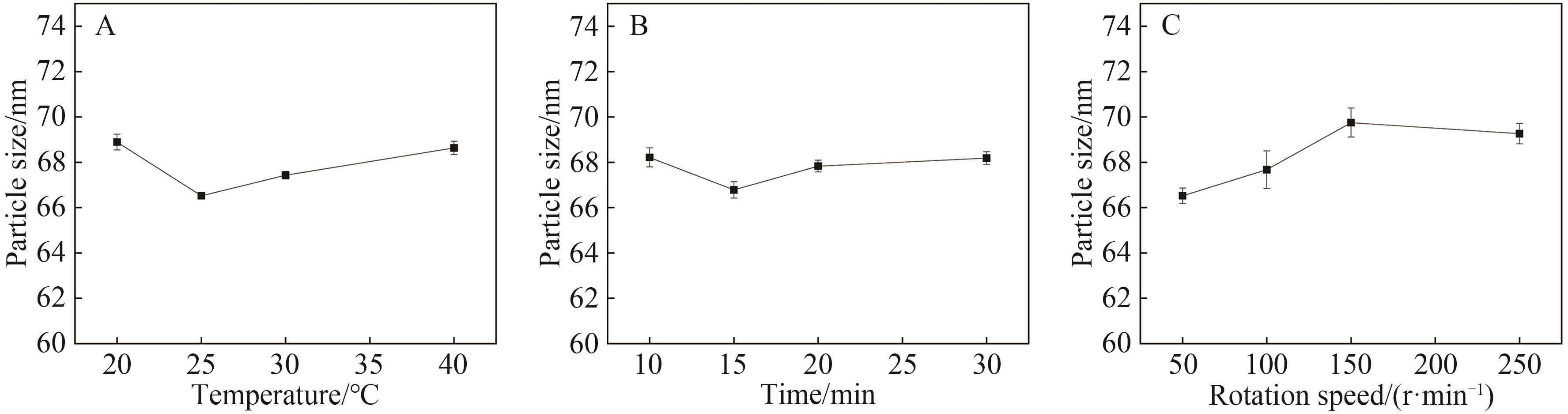
图3 搅拌温度(A)、搅拌时间(B)和搅拌转速(C)对粒径的影响
Fig.3 Effect of stirring temperature (A), mixing time (B) and stirring speed (C) on particle size
| w/% | R2 | JS/(μg·cm-2·h-1) |
|---|---|---|
| 0.4 | 0.999 3 | 295.87 |
| 0.6 | 0.999 1 | 279.46 |
| 0.8 | 0.998 8 | 265.28 |
表3 不同HPMC用量对渗透率的影响
Table 3 Effect of different HPMC dosages on permeability
| w/% | R2 | JS/(μg·cm-2·h-1) |
|---|---|---|
| 0.4 | 0.999 3 | 295.87 |
| 0.6 | 0.999 1 | 279.46 |
| 0.8 | 0.998 8 | 265.28 |
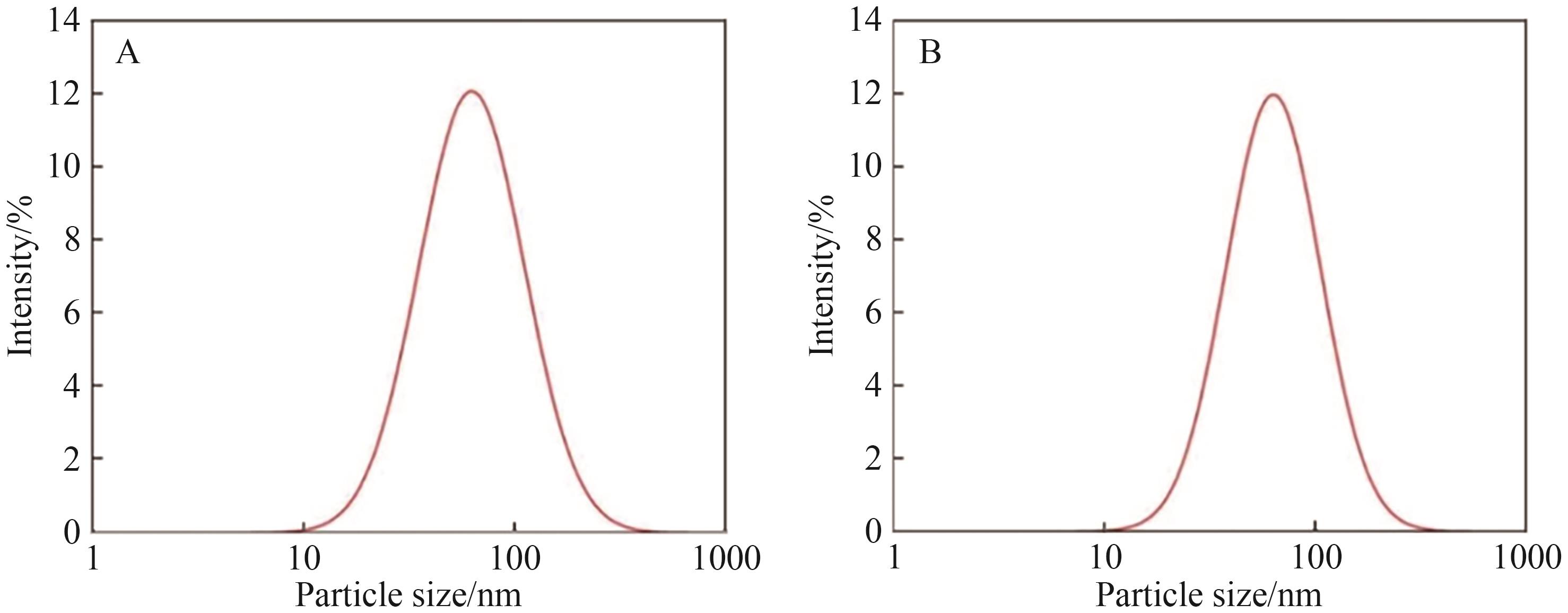
图4 空白微乳(A)和BUP微乳(B)的粒径
Fig.4 Particle size of blank microemulsion (A) and bupivacaine microemulsion (B)
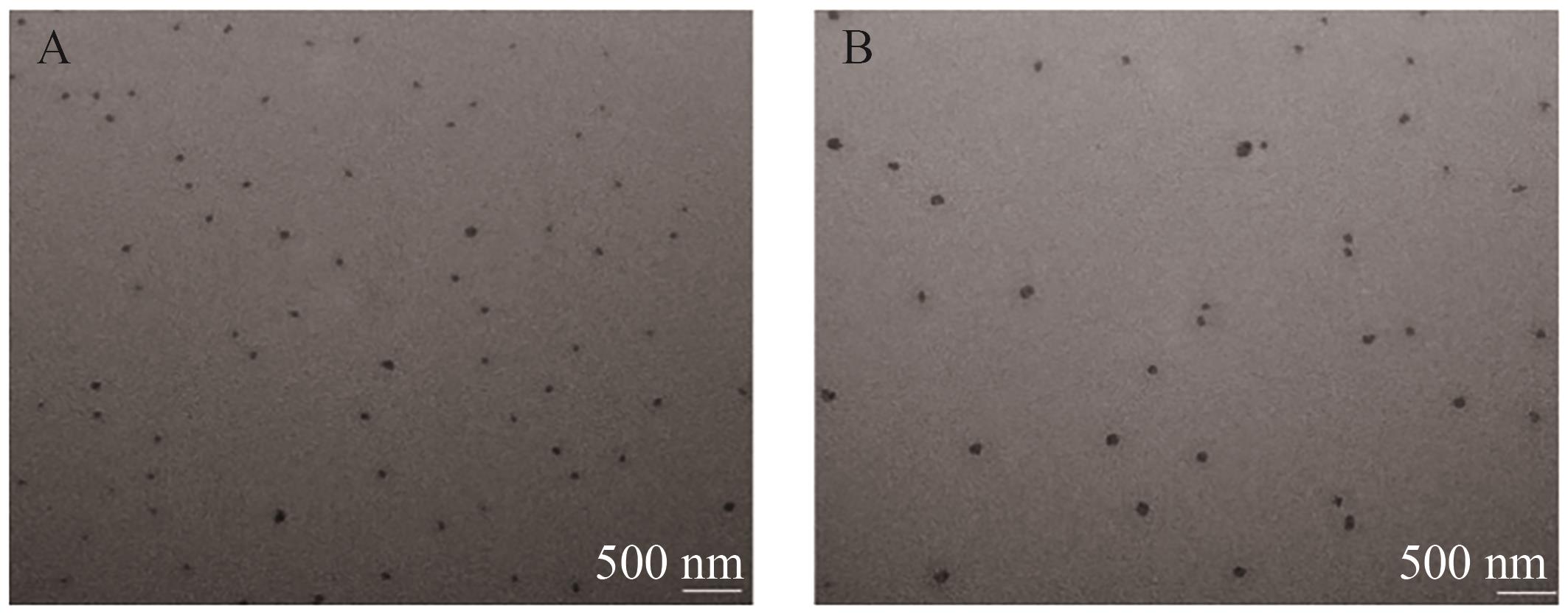
图5 空白微乳(A)和BUP微乳(B)的TEM图
Fig.5 TEM images of blank microemulsion (A) and bupivacaine microemulsion (B)
| Conditions | Time/d | w/% | Viscosity/(Pa·s) | pH |
|---|---|---|---|---|
| 65 ℃ | 0 | 100 | 8.36±0.35 | 7.42 |
| 5 | 101.23 | 8.41±0.17 | 7.41 | |
| 10 | 101.69 | 8.39±0.24 | 7.38 | |
| 4500 Lx | 0 | 100 | 8.47±0.21 | 7.48 |
| 5 | 100.89 | 8.36±0.19 | 7.47 | |
| 10 | 101.45 | 8.42±0.32 | 7.44 |
表4 BUP微乳凝胶的稳定性
Table 4 Stability of BUP-ME-GEL
| Conditions | Time/d | w/% | Viscosity/(Pa·s) | pH |
|---|---|---|---|---|
| 65 ℃ | 0 | 100 | 8.36±0.35 | 7.42 |
| 5 | 101.23 | 8.41±0.17 | 7.41 | |
| 10 | 101.69 | 8.39±0.24 | 7.38 | |
| 4500 Lx | 0 | 100 | 8.47±0.21 | 7.48 |
| 5 | 100.89 | 8.36±0.19 | 7.47 | |
| 10 | 101.45 | 8.42±0.32 | 7.44 |
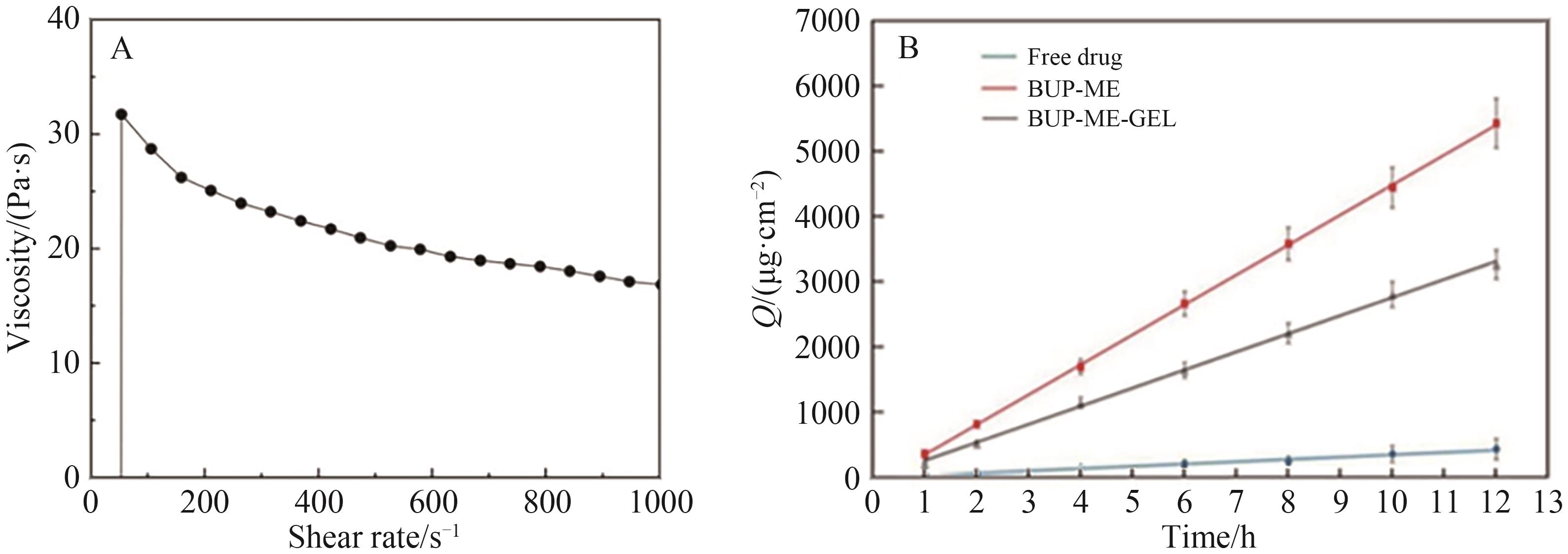
图6 (A) BUP微乳凝胶黏度; (B)不同BUP制剂单位面积累计经皮渗透量
Fig.6 (A) Bupivacaine microemulsion gel viscosity; (B) Cumulative transdermal penetration of different bupivacaine preparations per unit area
| Bupivacaine preparations | R2 | JS/(μg·cm-2·h-1) |
|---|---|---|
| Bupivacaine | 0.997 6 | 41.07 |
| BUP-ME | 0.998 9 | 481.23 |
| BUP-ME-GEL | 0.999 3 | 295.87 |
表5 不同BUP制剂体外透皮吸收结果
Table 5 Results of transdermal absorption of different bupivacaine preparations in vitro
| Bupivacaine preparations | R2 | JS/(μg·cm-2·h-1) |
|---|---|---|
| Bupivacaine | 0.997 6 | 41.07 |
| BUP-ME | 0.998 9 | 481.23 |
| BUP-ME-GEL | 0.999 3 | 295.87 |
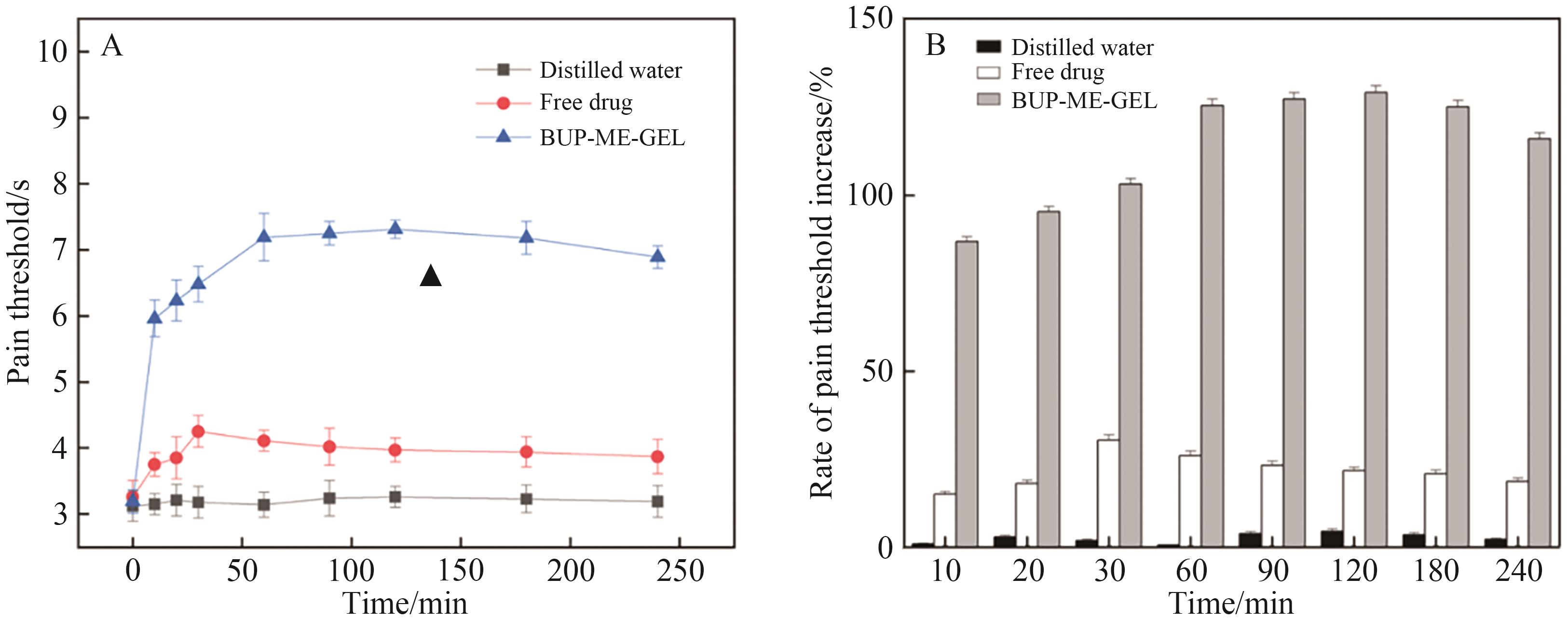
图7 (A)不同组别对小鼠甩尾实验的影响(4 h 内); (B)不同制剂组对小鼠的痛阈值提高率
Fig.7 (A) Effects of different groups on tail flick test in mice (within 4 h); (B) Increase rate of pain threshold in mice treated with different preparation groups
| 1 h | 12 h | 24 h | 48 h | 72 h | |
|---|---|---|---|---|---|
| Saline | 0/0/0/0 | 0/0/0/0 | 0/0/0/0 | 0/0/0/0 | 0/0/0/0 |
| Blank preparation | 0/0/0/0 | 0/0/0/0 | 0/0/0/0 | 0/0/0/0 | 0/0/0/0 |
| BUP-ME-GEL | 0/0/0/0 | 0/0/0/0 | 0/0/0/0 | 0/0/0/0 | 0/0/1/0 |
表6 不同受试物的皮肤刺激性评分表(红斑)
Table 6 Skin irritation scale (erythema) for different subjects
| 1 h | 12 h | 24 h | 48 h | 72 h | |
|---|---|---|---|---|---|
| Saline | 0/0/0/0 | 0/0/0/0 | 0/0/0/0 | 0/0/0/0 | 0/0/0/0 |
| Blank preparation | 0/0/0/0 | 0/0/0/0 | 0/0/0/0 | 0/0/0/0 | 0/0/0/0 |
| BUP-ME-GEL | 0/0/0/0 | 0/0/0/0 | 0/0/0/0 | 0/0/0/0 | 0/0/1/0 |
| 1 h | 12 h | 24 h | 48 h | 72 h | |
|---|---|---|---|---|---|
| Saline | 0/0/0/0 | 0/0/0/0 | 0/0/0/0 | 0/0/0/0 | 0/0/0/0 |
| Blank preparation | 0/0/0/0 | 0/0/0/0 | 0/0/0/0 | 0/0/0/0 | 0/0/0/0 |
| BUP-ME-GEL | 0/0/0/0 | 0/0/0/0 | 0/0/0/0 | 0/0/0/0 | 0/0/0/0 |
表7 不同受试物的皮肤刺激性评分表(水肿)
Table 7 Skin irritation rating scale (edema) for different subjects
| 1 h | 12 h | 24 h | 48 h | 72 h | |
|---|---|---|---|---|---|
| Saline | 0/0/0/0 | 0/0/0/0 | 0/0/0/0 | 0/0/0/0 | 0/0/0/0 |
| Blank preparation | 0/0/0/0 | 0/0/0/0 | 0/0/0/0 | 0/0/0/0 | 0/0/0/0 |
| BUP-ME-GEL | 0/0/0/0 | 0/0/0/0 | 0/0/0/0 | 0/0/0/0 | 0/0/0/0 |
| Saline | Blank preparation | BUP-ME-GEL | |
|---|---|---|---|
| Score | 0 | 0 | 0.25 |
| Stimulus intensity | Non-irritating | Non-irritating | Non-irritating |
表8 不同受试物的皮肤刺激性评判结果
Table 8 Skin irritation evaluation results for different subjects
| Saline | Blank preparation | BUP-ME-GEL | |
|---|---|---|---|
| Score | 0 | 0 | 0.25 |
| Stimulus intensity | Non-irritating | Non-irritating | Non-irritating |
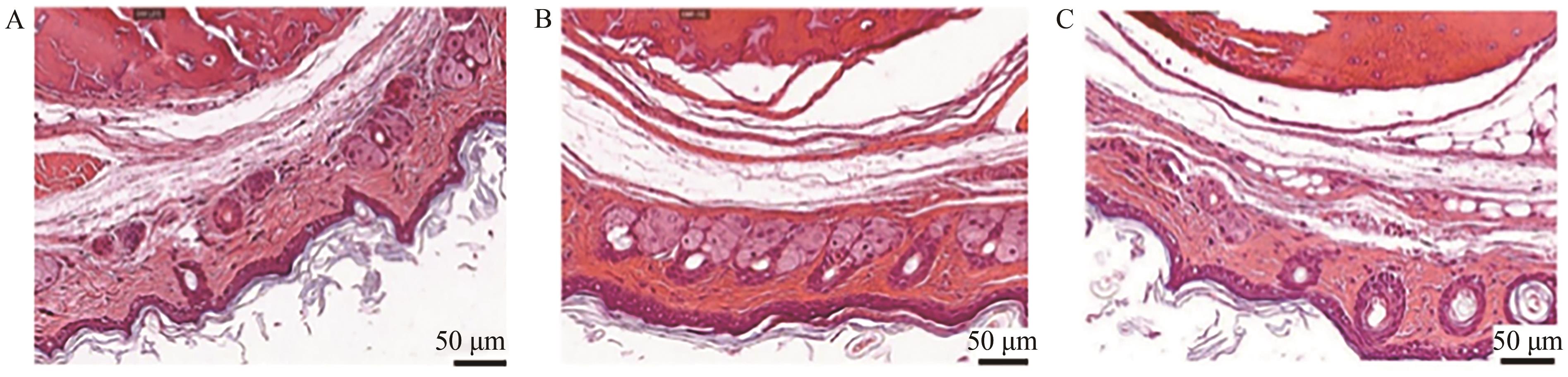
图8 皮肤组织切片染色图A. Normal saline; B. Blank preparation; C. Bupivacaine microemulsion gel preparation
Fig.8 Staining picture of skin tissue section
| [1] | KAHVECI M, ABUT F Y Ç, ERDEM G. Impact of ultrasonography-guided transversus abdominis plane block and local anesthetic infiltration in the surgical field on postoperative analgesic requirements for laparoscopic cholecystectomy procedures[J]. Istanbul Med J, 2024, 25(4): 269-273. |
| [2] | ILFELD B M, SESSLER D I. Liposomal bupivacaine in peripheral nerve blocks: duration and meaningful differences[J]. Anesthesiology, 2024, 141(4): 638-642. |
| [3] | KULKARNI S S, TAYADE D N, KANE P P, et al. Major complications following central neuraxial block-a multi-centre observational study in Maharashtra (MGMM CNB study)[J]. Indian J Anaesth, 2023, 67(Suppl 1): S15-S28. |
| [4] | WENTAO D, YU Y, PEIPEI Z, et al. Synthesis of nanocapsules blended polymeric hydrogel loaded with bupivacaine drug delivery system for local anesthetics and pain management[J]. Drug Deliv, 2022, 29(1): 399-412. |
| [5] | 马秀兰, 韩佳琦, 刘哲鹏. 局部麻醉药经皮给药的研究进展[J]. 实用药物与临床, 2022, 25(6): 557-562. |
| MA X L, HAN J Q, LIU Z P. Research progress in transdermal administration of local anesthetics[J]. Pract Pharm Clin Rem, 2022, 25(6): 557-562 | |
| [6] | WU C A, KEPP O, KROEMER G, et al. Direct cytotoxic and indirect, immune-mediated effects of local anesthetics against cancer[J]. Front Oncol, 2022, 11: 821785. |
| [7] | 曾慧琳, 邓艾平, 王奕, 等. 布比卡因长效制剂的研究进展[J]. 中南药学, 2016, 14(12): 1342-1346. |
| ZENG H L, DENG A P, WANG Y, et al. Research progress in the long-acting formulations of bupivacaine[J]. Cent South Pharm, 2016, 14(12): 1342-1346. | |
| [8] | 张黄丽, 殷昌生, 贾晓姝, 等. 布比卡因脂质体术后镇痛应用进展[J]. 武警医学, 2023, 34(6): 530-534. |
| ZHANG H L, YIN C S, JIA X S, et al. Progress in postoperative analgesia with bupivacaine liposome[J]. Med J Chin People's Armed Police Forces, 2023, 34(6): 530-534. | |
| [9] | ZHANG W, WU M, SHEN C, et al. A new long-acting analgesic formulation for postoperative pain management[J]. Int J Pharm, 2024, 664: 124599. |
| [10] | SUN M, OSIPITAN O O, SULICZ E, et al. Preparation and optimization of an ultraflexible liposomal gel for lidocaine transdermal delivery[J]. Materials, 2022, 15(14): 4895. |
| [11] | JI M, LIU G, CUI Y, et al. Safety and efficacy concerns of modern strategies of local anesthetics delivery[J]. Biotech, 2020, 10(8): 333. |
| [12] | TOBE M, SUTO T, SAITO S. The history and progress of local anesthesia: multiple approaches to elongate the action[J]. J Anesth, 2018, 32(4): 632-636. |
| [13] | LI J, ZENG M, SHAN H, et al. Microneedle patches as drug and vaccine delivery platform[J]. Curr Med Chem, 2017, 24(22): 2413-2422. |
| [14] | VIRANI A, PURI V, MOHD H, et al. Effect of penetration enhancers on transdermal delivery of oxcarbazepine, an antiepileptic drug using microemulsions[J]. Pharmaceutics, 2023, 15(1): 183. |
| [15] | GU Y, TANG X, YANG M, et al. Transdermal drug delivery of triptolide-loaded nanostructured lipid carriers: preparation, pharmacokinetic, and evaluation for rheumatoid arthritis[J]. Int J Pharm, 2019, 554: 235-244. |
| [16] | 刘丰硕, 董茜, 赵忠夫, 等. 自黏性经皮给药SIS/C5静电纺丝膜的结构及性能调控[J]. 应用化学, 2022, 39(10): 1523-1532. |
| LIU F S, DONG X, ZHAO Z F, et al. Structure and performance modulation of self-adhesive SIS/C5 electrospun membranes for transdermal drug delivery[J]. Chin J Appl Chem, 2022, 39(10): 1523-1532. | |
| [17] | RAO J, MCCLEMENTS D J. Formation of flavor oil microemulsions, nanoemulsions and emulsions: influence of composition and preparation method[J]. J Agric Food Chem, 2011, 59(9): 5026-5035. |
| [18] | OSKOUEI S S, ARAMAN A O, ERGINER Y O, et al. Preparation, optimization, and in vitro drug release study of microemulsions of posaconazole[J]. J Drug Deliv Sci Technol, 2023, 79: 104090. |
| [19] | 刘明钰, 代婧伟. 水凝胶:探索医疗未来的创新材料[J]. 应用化学, 2024, 41(10): 1511-1518. |
| LIU M Y, DAI J W. Hydrogels: exploring innovative materials for the future of medicine[J]. Chin J Appl Chem, 2024, 41(10): 1511-1518. | |
| [20] | NIU J, YUAN M, GAO P, et al. Microemulsion-based keratin-chitosan gel for improvement of skin permeation/retention and activity of curcumin[J]. Gels, 2023, 9(7): 587. |
| [21] | 丁杨, 钱珊珊, 郭健, 等. 基于双位点同步微透析技术的青藤碱微乳凝胶皮肤及血液药代动力学研究[J]. 南京中医药大学学报, 2022, 38(11): 1050-1055. |
| DING Y, QIAN S S, GUO J, et al. Pharmacokinetic study of skin and blood of sinomenine-loaded microemulsion gel based on double sites simultaneous microdialysis[J]. J Nanjing Univ Tradit Chin Med, 2022, 38(11): 1050-1055. | |
| [22] | BACHU R D, STEPANSKI M, ALZHRANI R M, et al. Development and evaluation of a novel microemulsion of dexamethasone and tobramycin for topical ocular administration[J]. J Ocul Pharm Ther, 2018, 34(4): 312-324. |
| [23] | FURQAN A M, LAKSHMI V P, KAJAL P P, et al. Lidocaine tripotassium phosphate complex laden microemulsion for prolonged local anaesthesia: in vitro and in vivo studies[J]. Colloids Surf B: Biointerfaces, 2020, 185: 110632. |
| [24] | LIXIA L, MENGXUE H, CHUNLIN F, et al. Preparation, characterization, ex vivo transdermal properties and skin irritation evaluation of 1,8-cineole nanoemulsion gel[J]. Int J Pharm, 2022, 624: 121982. |
| [25] | 何芮, 王晓娜, 王歆悦, 等. 钙离子通道阻滞剂自乳化给药系统的形成机理[J]. 高等学校化学学报, 2015, 36(1): 131-141. |
| HE R, WANG X N, WANG X Y, et al. Insight into the formation mechanisms behind self-emulsifying drug delivery systems of calcium channel blockers[J]. Chem J Chin Univ, 2015, 36(1): 131-141. |
| [1] | 王野谌, 邱智东, 张衍旭, 王俪颖, 王茂旭, 董雪莲. 基于指纹图谱、量值传递及化学计量学的薏苡竹叶散质量评价[J]. 应用化学, 2024, 41(3): 422-436. |
| [2] | 高英鑫, 徐伟, 张衍旭, 王野谌, 董雪莲. 灰色关联分析结合色度法评价不同产地黄连质量[J]. 应用化学, 2022, 39(6): 1000-1010. |
| 阅读次数 | ||||||
|
全文 |
|
|||||
|
摘要 |
|
|||||
