
Chinese Journal of Applied Chemistry ›› 2025, Vol. 42 ›› Issue (5): 597-620.DOI: 10.19894/j.issn.1000-0518.240418
• Review •
Lei LI1, Meng-Zhu DING1, Fang-Fang WANG1,2( ), Wei HUANG1()
Received:2024-12-18
Accepted:2025-04-03
Published:2025-05-01
Online:2025-06-05
Contact:
Fang-Fang WANG,Wei HUANG
About author:iamffwang2@njtech.edu.cn; iamwhuang@njtech.edu.cnSupported by:CLC Number:
Lei LI, Meng-Zhu DING, Fang-Fang WANG, Wei HUANG. Research Progress of Self-Assembled Monolayers in Inversed Perovskite Solar Cells[J]. Chinese Journal of Applied Chemistry, 2025, 42(5): 597-620.
Add to citation manager EndNote|Ris|BibTeX
URL: http://yyhx.ciac.jl.cn/EN/10.19894/j.issn.1000-0518.240418
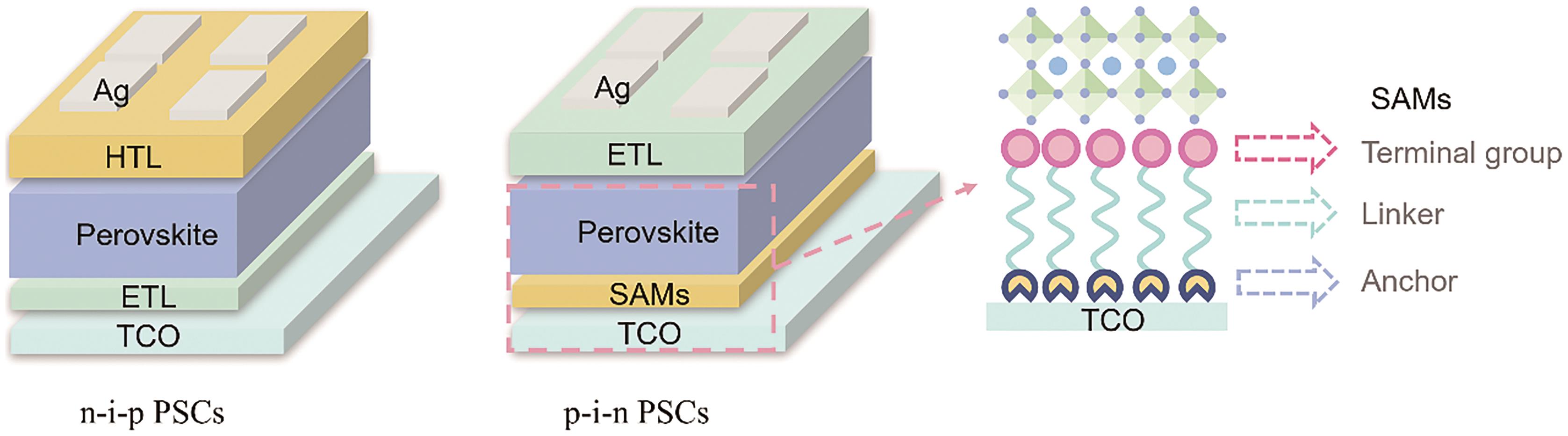
Fig.1 Schematic of PSCs device structure and self-assembled monolayer (SAMs) structural composition
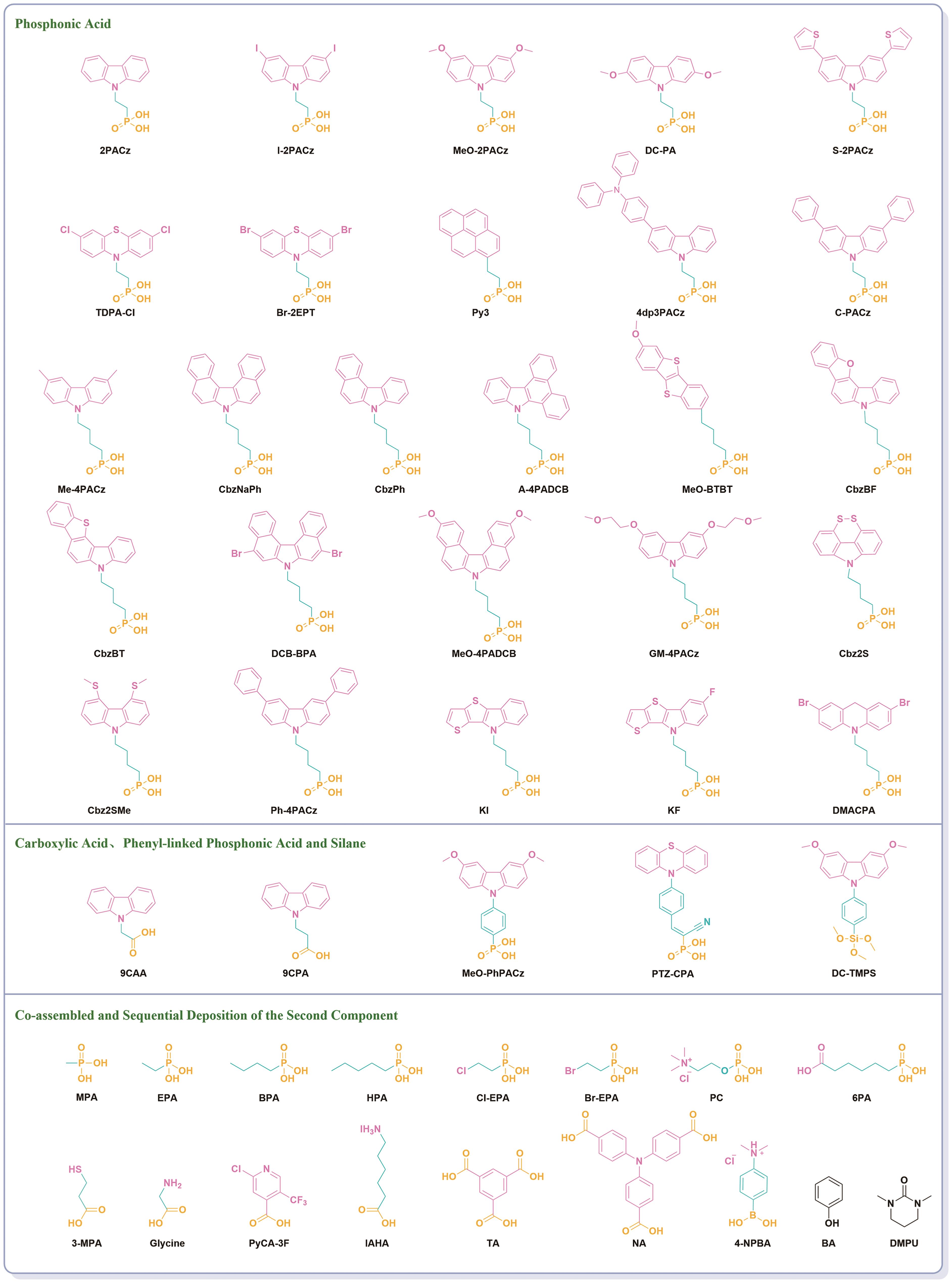
Fig.2 The molecular structures of SAMs with different groups used in iPSCs
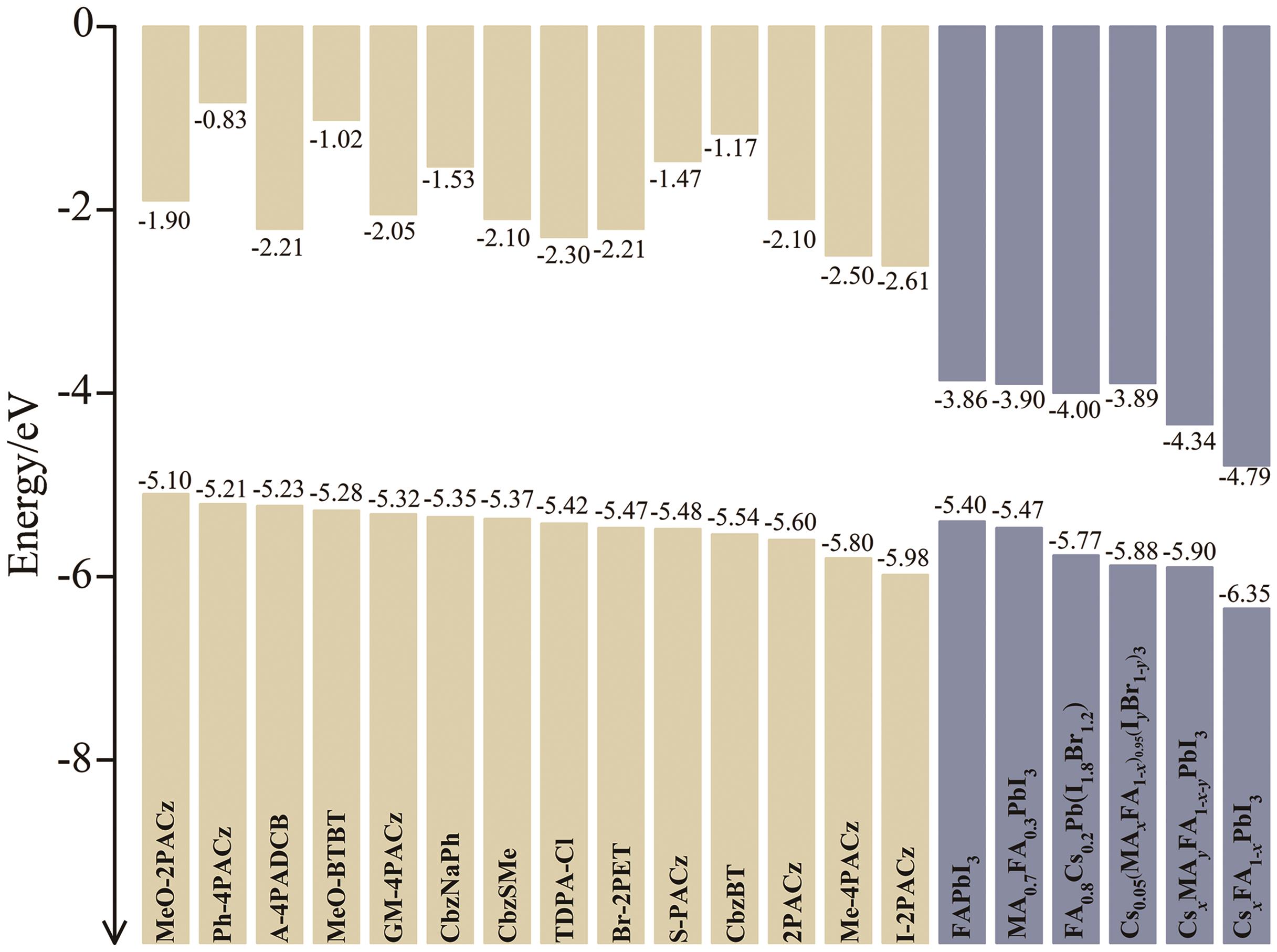
Fig.3 Energy level alignment of SAMs and the perovskite layer
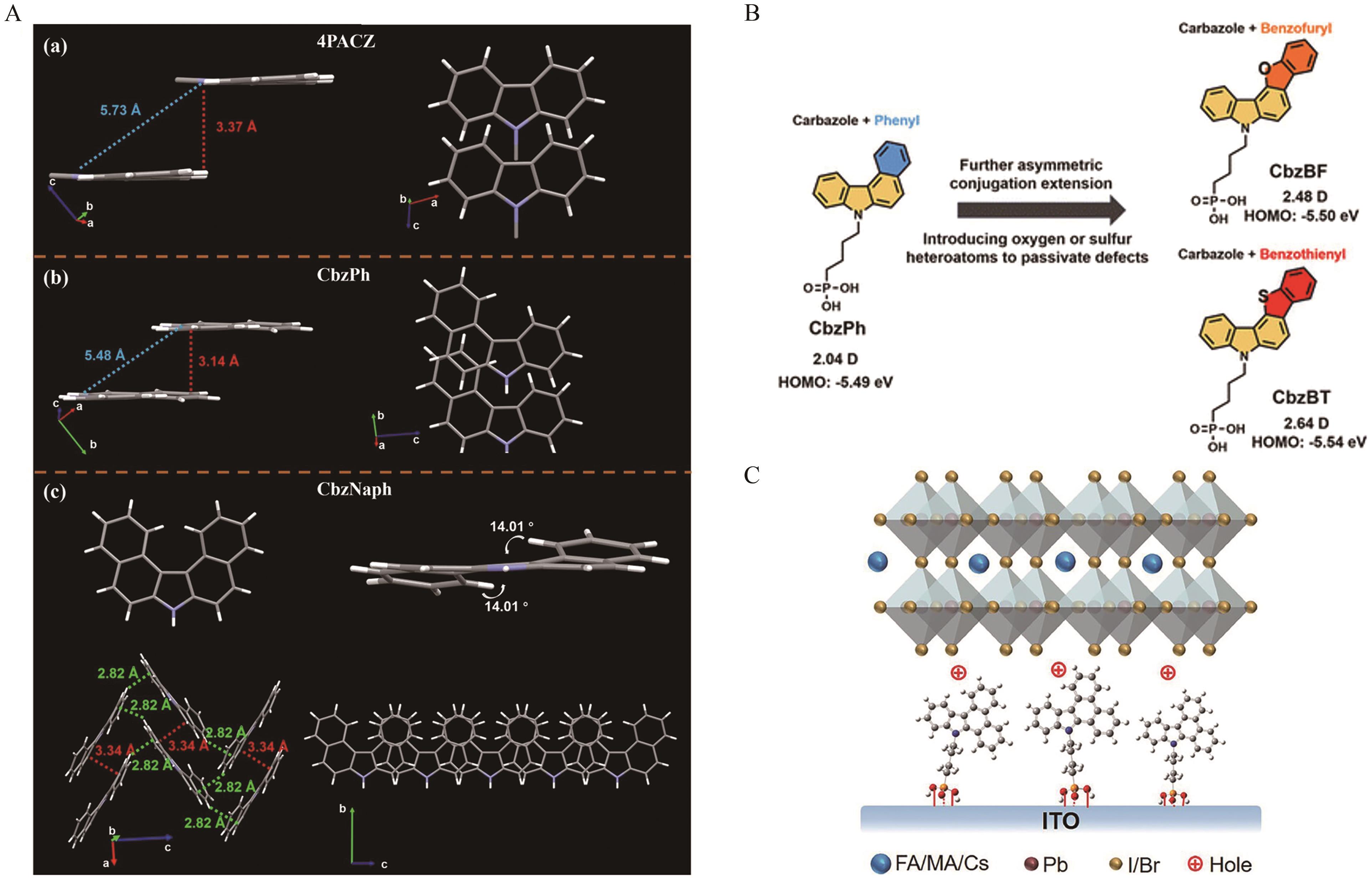
Fig.4 (A)Molecular packing patterns of π-backbones in single crystals, corresponding to: (a) 4PACz (pristine carbazole), (b) CbzPh (7H-benzo[c]carbazole), and (c) CbzNaph (7H-dibenzo[c,g]carbazole). The dihedral angles were measured through the plane defined by the central pyrrole ring and the outermost benzene ring[54]; (B) Molecular structures, calculated dipole moments and HOMO energy levels of CbzPh, CbzBF and CbzBT[55]; (C) Schematic representation of A-4PADCB as the hole-selective layer (HSL) between ITO and perovskite[56]
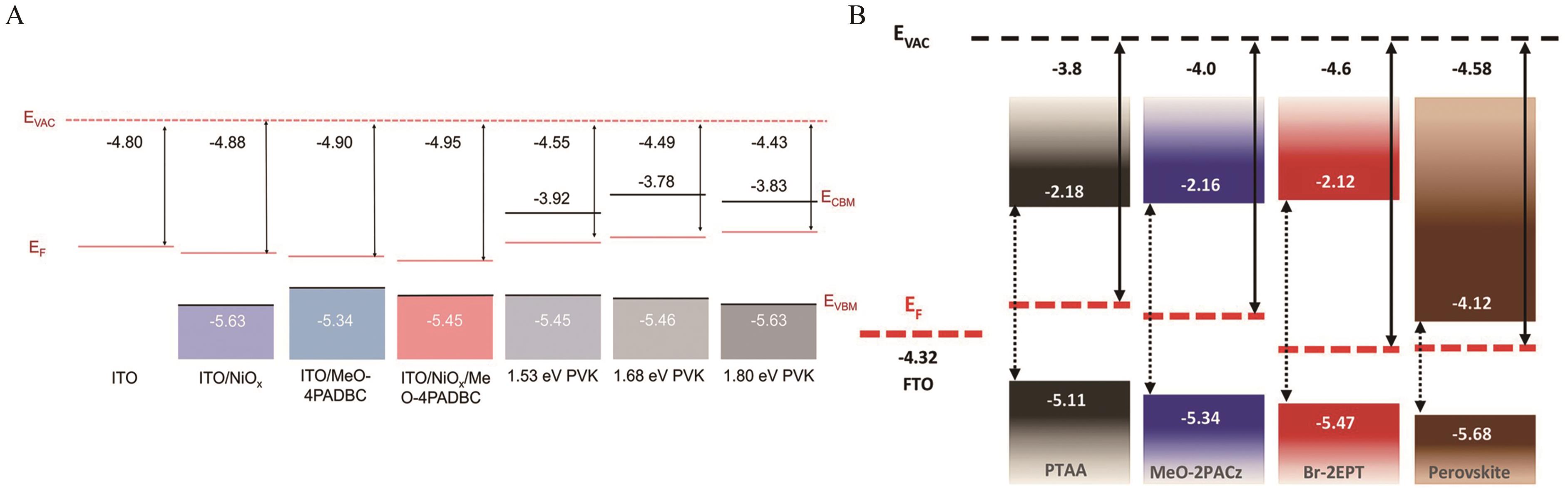
Fig.5 (A) Energy level diagram between different hole transport layers (HTL) and the perovskite[39]; (B) Energetic alignment of different HTL contacts and CsMAFA perovskite with reference to the vacuum level, where the red dashed lines represent the Fermi energy levels measured by UPS[52]
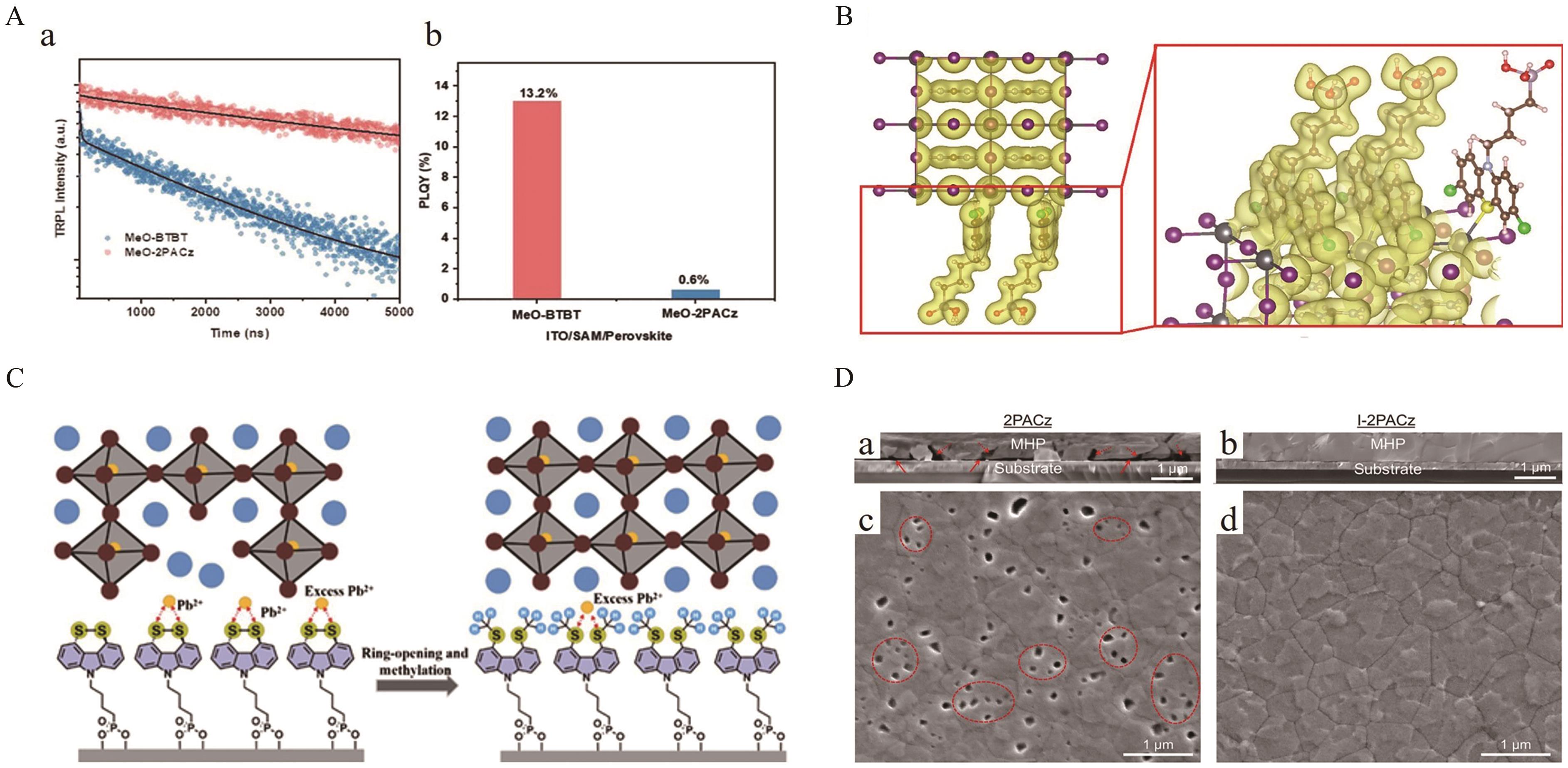
Fig.6 (A) Characterization of perovskite films: (a) Time-resolved photoluminescence spectra, (b) photoluminescence quantum yield [58]; (B) Interfacial orbital distribution of TDPA-Cl and perovskite from the DFT calculation. The inset shows the orbital overlap between TDPA-Cl and perovskite[59]; (C) Schematic illustration of interaction of Cbz2S and Cbz2SMe as HSLs with the perovskite[60]; (D) Cross-sectional SEM images of 1000-h-tested iPSCs with SAMs: (a) 2PACz and (b) I-2PACz, dashed and solid arrows in (a) mark pores and delamination, respectively. SEM images of fracture surfaces (MHP side) of 1000-h-tested iPSCs with SAMs: (c) 2PACz and (d) I-2PACz. Dashed ovals in (c) mark some examples of in-grain microscopic pores[42]
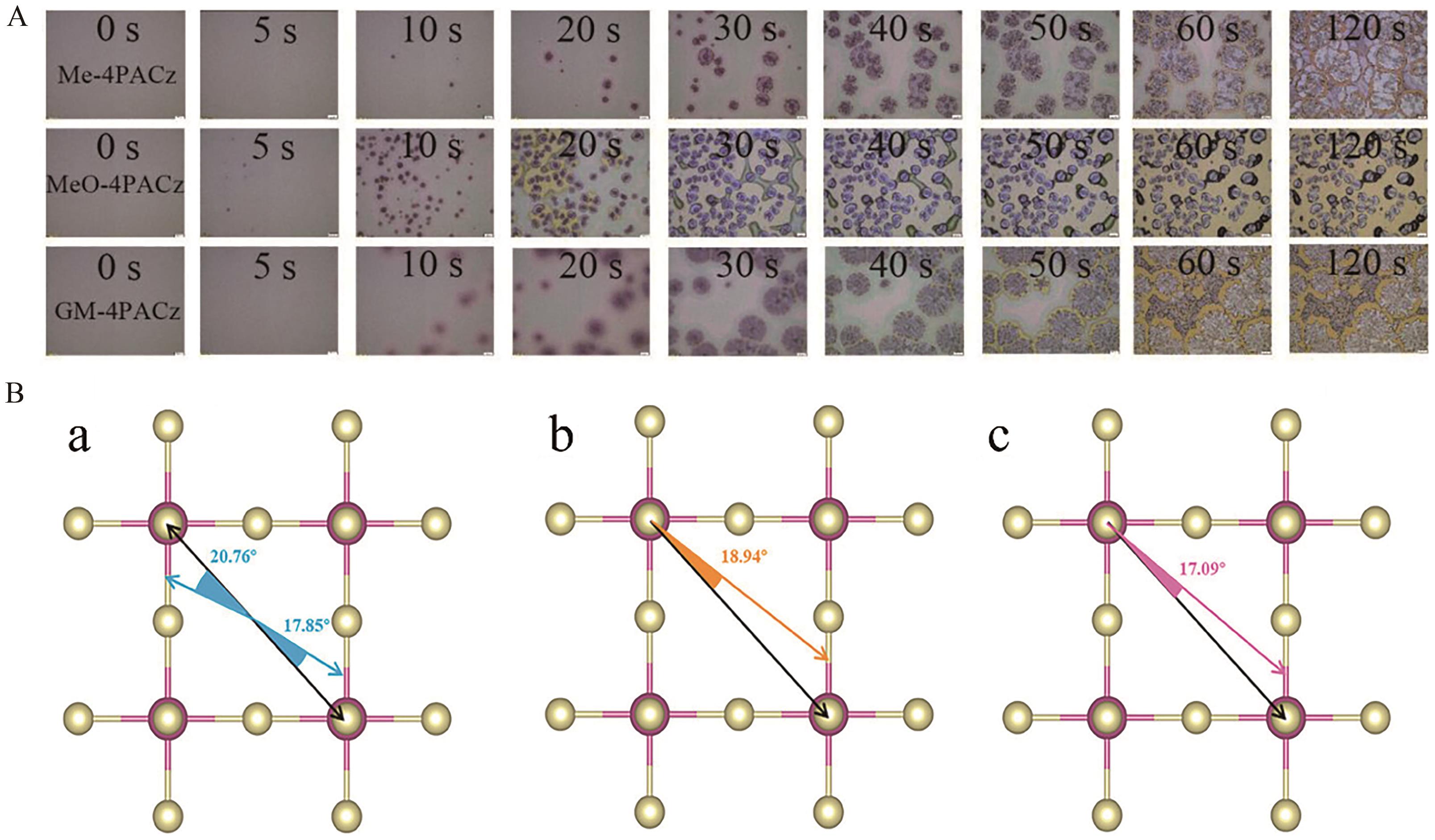
Fig.7 (A) Photographs of the precursor perovskite films on Me-/MeO-/GM-4PACz substrates after annealing for different times [61]; (B) The deviation angles of (a) 2PACz/I atom, (b) 9CPA/I atom and (c) 9CAA/I atom[62]
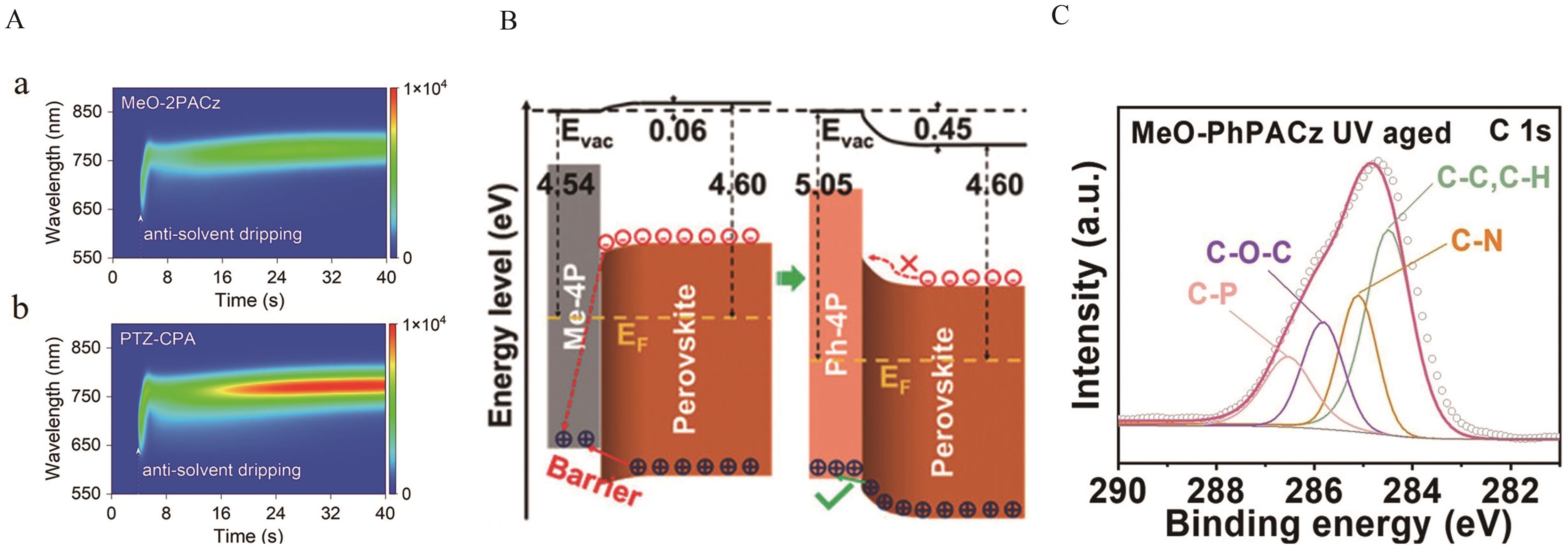
Fig.8 (A) (a) In situ PL spectra for FAPbI3 perovskite films deposited on MeO-2PACz and PTZ-CPA during the spin-coating process[64]; (B) Energy level diagrams of FTO/Me-4PACz/perovskite and FTO/Ph-4PACz/perovskite[65]; (C) X-ray photoelectron spectroscopy (XPS) of the C1s region with 365 nm UV light irradiation for 24 h[66]
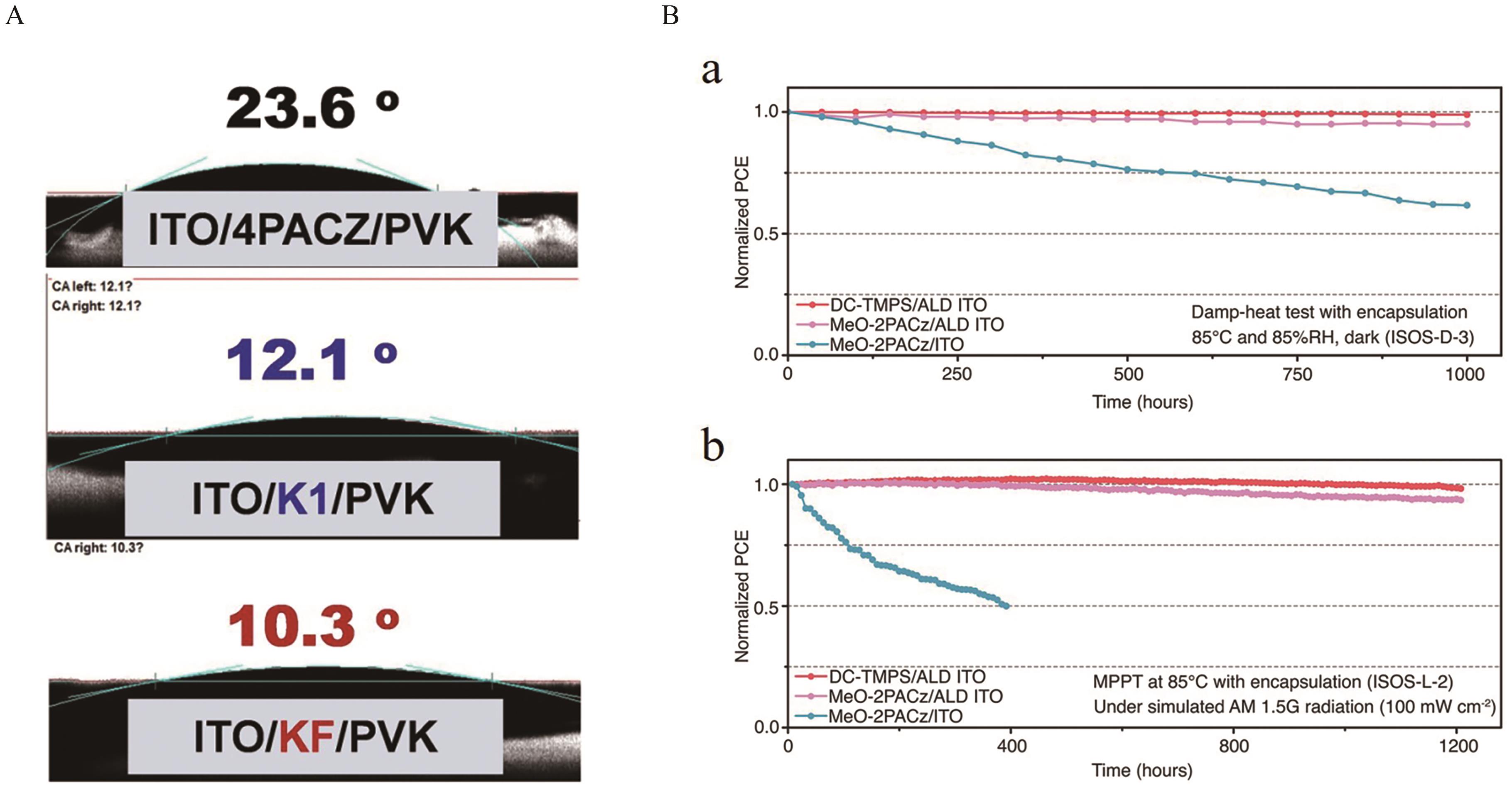
Fig.9 (A) Contact angles with respect to perovskite precursor droplets on SAMs-modified substrates[68]; (B) Long-term stability studies of the iPSCs: (a) Damp-heat stability for the most-stable encapsulated iPSCs using ITO with MeO-2PACz and ALD ITO with DC-TMPS and MeO-2PACz; (b) MPP of the most-stable encapsulated iPSCs measured at 85 ℃ using ITO with MeO-2PACz and ALD ITO with DC-TMPS and MeO-2PACz under simulated AM1.5 G illumination (100 mW/cm2)[69]
| Molecular name | HOMO/eV | Device structure | Perovskite bandgap/eV | VOC/V | JSC/(mA·cm-2) | FF/% | PCE/% | Ref. |
|---|---|---|---|---|---|---|---|---|
| Me-4PACz | -5.80 | ITO/2PACz/Perovskite/C60/BCP/Cu(Ag) | 1.68 | 1.220 | 20.70 | 82.00 | 20.80 | [ |
2-T: Ag/AZO/a-Si(p)/a-Si(i)/c-Si(n)/a-Si(i)/nc-SiO x (n)/ITO/Me-4PACz/ Perovskite/LiF/C60/SnO2/IZO/Ag/LiF | Top cell: 1.68 Bottom cell: Si | 1.900 | 9.26 | 79.52 | 29.15 | |||
| 2PACz | -5.60 | ITO/2PACz/Perovskite/C60/BCP/Cu(Ag) | 1.60 | 1.188 | 21.90 | 80.20 | 20.80 | [ |
| MeO-2PACz | -5.10 | ITO/MeO-2PACz/Perovskite/C60/BCP/Cu(Ag) | 1.63 | 1.144 | 22.20 | 80.50 | 20.20 | |
| MeO-4PADCB | -5.34 | ITO/NiO x /MeO-4PADCB/Perovskite/CF3-PEAI+MAI/C60/BCP/Ag | 1.53 | 1.190 | 25.40 | 84.60 | 25.60 | [ |
| I-2PACz | -5.98 | ITO/I-2PACz/Perovskite/C60/BCP/Ag | 1.55 | 1.163 | 25.43 | 85.80 | 25.39 | [ |
| Br-2EPT | -5.47 | TCO/Br-2EPT/Perovskite/C60/BCP/Cu | 1.56 | 1.090 | 25.11 | 82.00 | 22.44 | [ |
| CbzPh | -5.36 | ITO/CbzPh/Perovskite/PI/C60/BCP/Ag | 1.56 | 1.120 | 23.43 | 73.06 | 19.20 | [ |
| CbzNaPh | -5.35 | ITO/CbzNaph/Perovskite/PI/C60/BCP/Ag | 1.170 | 24.69 | 83.39 | 24.10 | ||
| CbzBF | -5.50 | ITO/CbzBF/Perovskite/PI/C60/BCP/Ag | 1.56 | 1.090 | 24.00 | 83.04 | 21.72 | [ |
| CbzBT | -5.54 | ITO/CbzBT/Perovskite/PI/C60/BCP/Ag | 1.161 | 24.54 | 84.41 | 24.04 | ||
| A-4PADCB | -5.23 | ITO/A-4PADCB/Perovskite/C60/BCP/Ag | 1.55 | 1.186 | 25.39 | 83.14 | 25.05 | [ |
| DCB-BPA | -5.56 | ITO/DCB-BPA/Perovskite/C60/BCP/Cu | 1.77 | 1.330 | 17.75 | 82.70 | 19.53 | [ |
4-T: ITO/DCB-BPA/Perovskite/C60/SnO2/IZO/ transparent electrode/glass/ ITO/PEDOT:PSS/Perovskite/C60/BCP/Cu | Top cell: 1.77 Bottom cell: 1.25 | - | - | - | 26.90 | |||
| MeO-BTBT | -5.28 | ITO/MeO-BTBT/Perovskite/PI/C60/BCP/Ag | 1.56 | 1.160 | 24.87 | 85.28 | 24.53 | [ |
| TDPA-Cl | -5.42 | ITO/TDPA-Cl/Perovskite/C60/BCP/Ag | 1.55 | 1.151 | 23.90 | 81.40 | 22.40 | [ |
| Cbz2S | -5.45 | ITO/Cbz2S/Perovskite/PI/C60/BCP/Ag | 1.55 | 0.997 | 24.15 | 80.20 | 19.23 | [ |
| Cbz2SMe | -5.37 | ITO/Cbz2SMe/Perovskite/PI/C60/BCP/Ag | 1.55 | 1.172 | 25.16 | 82.82 | 24.42 | |
| GM-4PACz | -5.32 | ITO/GM-4PACz/Perovskite/PC61BM/BCP/Ag | 1.58 | 1.210 | 25.43 | 82.75 | 25.52 | [ |
| 9CPA | -5.19 | FTO/9CPA/Perovskite/C60/BCP/Ag | 1.25 | 0.890 | 32.50 | 76.00 | 22.10 | [ |
| 9CAA | -5.35 | FTO/9CAA/Perovskite/C60/BCP/Ag | 0.890 | 32.80 | 79.00 | 23.10 | ||
| 4dp3PACz | -5.77 | ITO/4dp3PACz/Perovskite/GuBr/C60/BCP/Ag | 1.77 | 1.214 | 17.80 | 79.44 | 17.17 | [ |
| PTZ-CPA | -5.40 | ITO/PTZ-CPA/Perovskite/F-PEAI/C60/BCP/Ag | 1.54 | 1.180 | 25.58 | 83.98 | 25.35 | [ |
| Ph-4PACz | -5.21 | FTO/Al2O3-NPs/Ph-4PACz/Perovskite /PDI/PCBM/BCP/Ag | 1.55 | 1.207 | 25.18 | 84.23 | 25.60 | [ |
| MeO-PhPACz | -5.61 | ITO/MeO-PhPACz/Perovskite/C60/BCP/Ag | 1.68 | 1.215 | 20.59 | 84.28 | 21.10 | [ |
| C-2PACz | -5.46 | ITO/C-2PACz/Perovskite/C60/BCP/Ag | 1.56 | 1.050 | 22.45 | 77.37 | 18.16 | [ |
| S-2PACz | -5.48 | ITO/S-2PACz/Perovskite/C60/BCP/Ag | 1.050 | 22.70 | 78.65 | 18.65 | ||
| K1 | -5.47 | ITO/K1/Perovskite/C60/BCP/Ag | - | 1.172 | 25.17 | 83.62 | 24.66 | [ |
| KF | -5.49 | ITO/KF/Perovskite/C60/BCP/Ag | 1.187 | 25.27 | 83.37 | 25.02 | ||
| DC-TMPS | -5.23 | ITO/ALD ITO/DC-TMPS/Perovskite /PEAI/C60/ZnO/Au | 1.55 | 1.180 | 25.10 | 84.10 | 24.80 | [ |
| Py3 | -5.47 | ITO/Py3/Perovskite/LiF/C60/BCP/Ag | - | 1.180 | 26.00 | 85.10 | 26.10 | [ |
Table 1 SAMs molecules used for HSL and corresponding device parameters
| Molecular name | HOMO/eV | Device structure | Perovskite bandgap/eV | VOC/V | JSC/(mA·cm-2) | FF/% | PCE/% | Ref. |
|---|---|---|---|---|---|---|---|---|
| Me-4PACz | -5.80 | ITO/2PACz/Perovskite/C60/BCP/Cu(Ag) | 1.68 | 1.220 | 20.70 | 82.00 | 20.80 | [ |
2-T: Ag/AZO/a-Si(p)/a-Si(i)/c-Si(n)/a-Si(i)/nc-SiO x (n)/ITO/Me-4PACz/ Perovskite/LiF/C60/SnO2/IZO/Ag/LiF | Top cell: 1.68 Bottom cell: Si | 1.900 | 9.26 | 79.52 | 29.15 | |||
| 2PACz | -5.60 | ITO/2PACz/Perovskite/C60/BCP/Cu(Ag) | 1.60 | 1.188 | 21.90 | 80.20 | 20.80 | [ |
| MeO-2PACz | -5.10 | ITO/MeO-2PACz/Perovskite/C60/BCP/Cu(Ag) | 1.63 | 1.144 | 22.20 | 80.50 | 20.20 | |
| MeO-4PADCB | -5.34 | ITO/NiO x /MeO-4PADCB/Perovskite/CF3-PEAI+MAI/C60/BCP/Ag | 1.53 | 1.190 | 25.40 | 84.60 | 25.60 | [ |
| I-2PACz | -5.98 | ITO/I-2PACz/Perovskite/C60/BCP/Ag | 1.55 | 1.163 | 25.43 | 85.80 | 25.39 | [ |
| Br-2EPT | -5.47 | TCO/Br-2EPT/Perovskite/C60/BCP/Cu | 1.56 | 1.090 | 25.11 | 82.00 | 22.44 | [ |
| CbzPh | -5.36 | ITO/CbzPh/Perovskite/PI/C60/BCP/Ag | 1.56 | 1.120 | 23.43 | 73.06 | 19.20 | [ |
| CbzNaPh | -5.35 | ITO/CbzNaph/Perovskite/PI/C60/BCP/Ag | 1.170 | 24.69 | 83.39 | 24.10 | ||
| CbzBF | -5.50 | ITO/CbzBF/Perovskite/PI/C60/BCP/Ag | 1.56 | 1.090 | 24.00 | 83.04 | 21.72 | [ |
| CbzBT | -5.54 | ITO/CbzBT/Perovskite/PI/C60/BCP/Ag | 1.161 | 24.54 | 84.41 | 24.04 | ||
| A-4PADCB | -5.23 | ITO/A-4PADCB/Perovskite/C60/BCP/Ag | 1.55 | 1.186 | 25.39 | 83.14 | 25.05 | [ |
| DCB-BPA | -5.56 | ITO/DCB-BPA/Perovskite/C60/BCP/Cu | 1.77 | 1.330 | 17.75 | 82.70 | 19.53 | [ |
4-T: ITO/DCB-BPA/Perovskite/C60/SnO2/IZO/ transparent electrode/glass/ ITO/PEDOT:PSS/Perovskite/C60/BCP/Cu | Top cell: 1.77 Bottom cell: 1.25 | - | - | - | 26.90 | |||
| MeO-BTBT | -5.28 | ITO/MeO-BTBT/Perovskite/PI/C60/BCP/Ag | 1.56 | 1.160 | 24.87 | 85.28 | 24.53 | [ |
| TDPA-Cl | -5.42 | ITO/TDPA-Cl/Perovskite/C60/BCP/Ag | 1.55 | 1.151 | 23.90 | 81.40 | 22.40 | [ |
| Cbz2S | -5.45 | ITO/Cbz2S/Perovskite/PI/C60/BCP/Ag | 1.55 | 0.997 | 24.15 | 80.20 | 19.23 | [ |
| Cbz2SMe | -5.37 | ITO/Cbz2SMe/Perovskite/PI/C60/BCP/Ag | 1.55 | 1.172 | 25.16 | 82.82 | 24.42 | |
| GM-4PACz | -5.32 | ITO/GM-4PACz/Perovskite/PC61BM/BCP/Ag | 1.58 | 1.210 | 25.43 | 82.75 | 25.52 | [ |
| 9CPA | -5.19 | FTO/9CPA/Perovskite/C60/BCP/Ag | 1.25 | 0.890 | 32.50 | 76.00 | 22.10 | [ |
| 9CAA | -5.35 | FTO/9CAA/Perovskite/C60/BCP/Ag | 0.890 | 32.80 | 79.00 | 23.10 | ||
| 4dp3PACz | -5.77 | ITO/4dp3PACz/Perovskite/GuBr/C60/BCP/Ag | 1.77 | 1.214 | 17.80 | 79.44 | 17.17 | [ |
| PTZ-CPA | -5.40 | ITO/PTZ-CPA/Perovskite/F-PEAI/C60/BCP/Ag | 1.54 | 1.180 | 25.58 | 83.98 | 25.35 | [ |
| Ph-4PACz | -5.21 | FTO/Al2O3-NPs/Ph-4PACz/Perovskite /PDI/PCBM/BCP/Ag | 1.55 | 1.207 | 25.18 | 84.23 | 25.60 | [ |
| MeO-PhPACz | -5.61 | ITO/MeO-PhPACz/Perovskite/C60/BCP/Ag | 1.68 | 1.215 | 20.59 | 84.28 | 21.10 | [ |
| C-2PACz | -5.46 | ITO/C-2PACz/Perovskite/C60/BCP/Ag | 1.56 | 1.050 | 22.45 | 77.37 | 18.16 | [ |
| S-2PACz | -5.48 | ITO/S-2PACz/Perovskite/C60/BCP/Ag | 1.050 | 22.70 | 78.65 | 18.65 | ||
| K1 | -5.47 | ITO/K1/Perovskite/C60/BCP/Ag | - | 1.172 | 25.17 | 83.62 | 24.66 | [ |
| KF | -5.49 | ITO/KF/Perovskite/C60/BCP/Ag | 1.187 | 25.27 | 83.37 | 25.02 | ||
| DC-TMPS | -5.23 | ITO/ALD ITO/DC-TMPS/Perovskite /PEAI/C60/ZnO/Au | 1.55 | 1.180 | 25.10 | 84.10 | 24.80 | [ |
| Py3 | -5.47 | ITO/Py3/Perovskite/LiF/C60/BCP/Ag | - | 1.180 | 26.00 | 85.10 | 26.10 | [ |
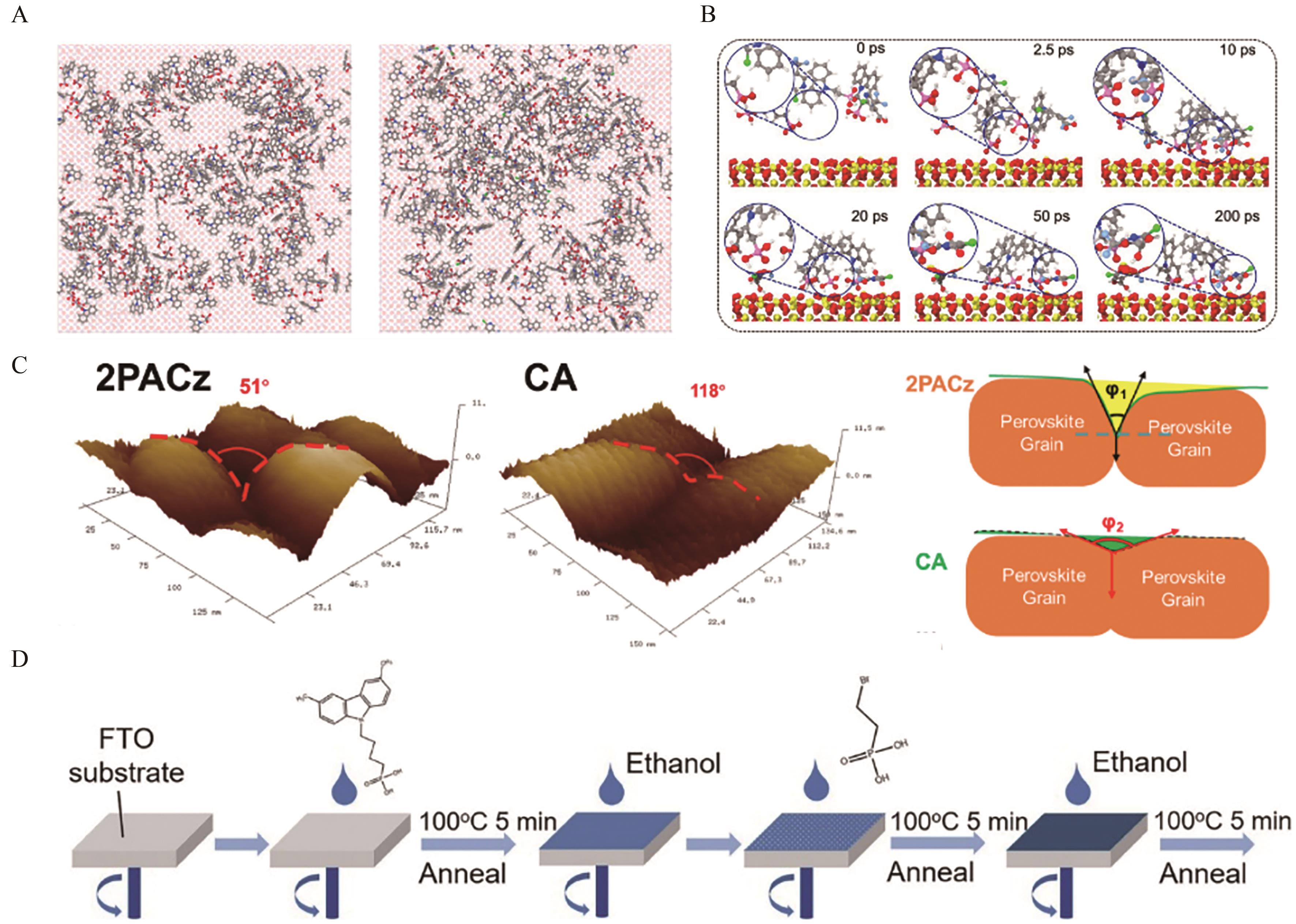
Fig.10 (A) Top views of equilibrated molecular representations of control and mixed systems; (B) Successive steps along an AIMD trajectory showcasing the interactions between the two molecules. The interfacial structures within small circles are magnified in larger circle areas; (C) High-resolution atomic force microscope (AFM) images of the buried interfaces of 2PACz- and CA-based perovskite thin films, along with corresponding models[71]; (D) Schematic diagram of the sequential deposition process[48]
| Molecular name | HOMO/eV | Device structure | Perovskite bandgap/eV | VOC/V | JSC/(mA·cm-2) | FF/% | PCE/% | Ref. | |
|---|---|---|---|---|---|---|---|---|---|
| 2PACz | PyCA-3F | -5.50 | ITO/2-PACz/PyCA-3F/Perovskite/ C60/BCP/Cu | 1.53 | 1.170 | 25.22 | 86 | 25.12 | [ |
| Me-4PACz | -5.80 | 2-T: ITO/2PACz/Me-2PACz/Perovskite/ ALD SnO x /Au/PEDOT:PSS /Perovskite/C60/BCP/Cu | top cell: 1.78 bottom cell: - | 2.150 | 15.81 | 80.49 | 27.34 | [ | |
4-T: ITO/2PACz/Me-2PACz/Perovskite/ ALD-SnO x /ITO/Glass/ITO/ PEDOT:PSS/Perovskite/C60/BCP/Cu | top cell: 1.78 bottom cell: - | - | - | - | 28.05 | ||||
| Me-4PACz | EPA | - | FTO/Me-4PACz/EPA/Perovskite/ PCBM/BCP/Ag | 1.56 | 1.150 | 24.32 | 80.32 | 22.48 | [ |
| Br-EPA | - | FTO/Me-4PACz/Br-EPA/Perovskite/PCBM/BCP/Ag | 1.200 | 25.10 | 83.54 | 25.16 | |||
Table 2 Performance parameters of sequential deposition strategy as HSL
| Molecular name | HOMO/eV | Device structure | Perovskite bandgap/eV | VOC/V | JSC/(mA·cm-2) | FF/% | PCE/% | Ref. | |
|---|---|---|---|---|---|---|---|---|---|
| 2PACz | PyCA-3F | -5.50 | ITO/2-PACz/PyCA-3F/Perovskite/ C60/BCP/Cu | 1.53 | 1.170 | 25.22 | 86 | 25.12 | [ |
| Me-4PACz | -5.80 | 2-T: ITO/2PACz/Me-2PACz/Perovskite/ ALD SnO x /Au/PEDOT:PSS /Perovskite/C60/BCP/Cu | top cell: 1.78 bottom cell: - | 2.150 | 15.81 | 80.49 | 27.34 | [ | |
4-T: ITO/2PACz/Me-2PACz/Perovskite/ ALD-SnO x /ITO/Glass/ITO/ PEDOT:PSS/Perovskite/C60/BCP/Cu | top cell: 1.78 bottom cell: - | - | - | - | 28.05 | ||||
| Me-4PACz | EPA | - | FTO/Me-4PACz/EPA/Perovskite/ PCBM/BCP/Ag | 1.56 | 1.150 | 24.32 | 80.32 | 22.48 | [ |
| Br-EPA | - | FTO/Me-4PACz/Br-EPA/Perovskite/PCBM/BCP/Ag | 1.200 | 25.10 | 83.54 | 25.16 | |||
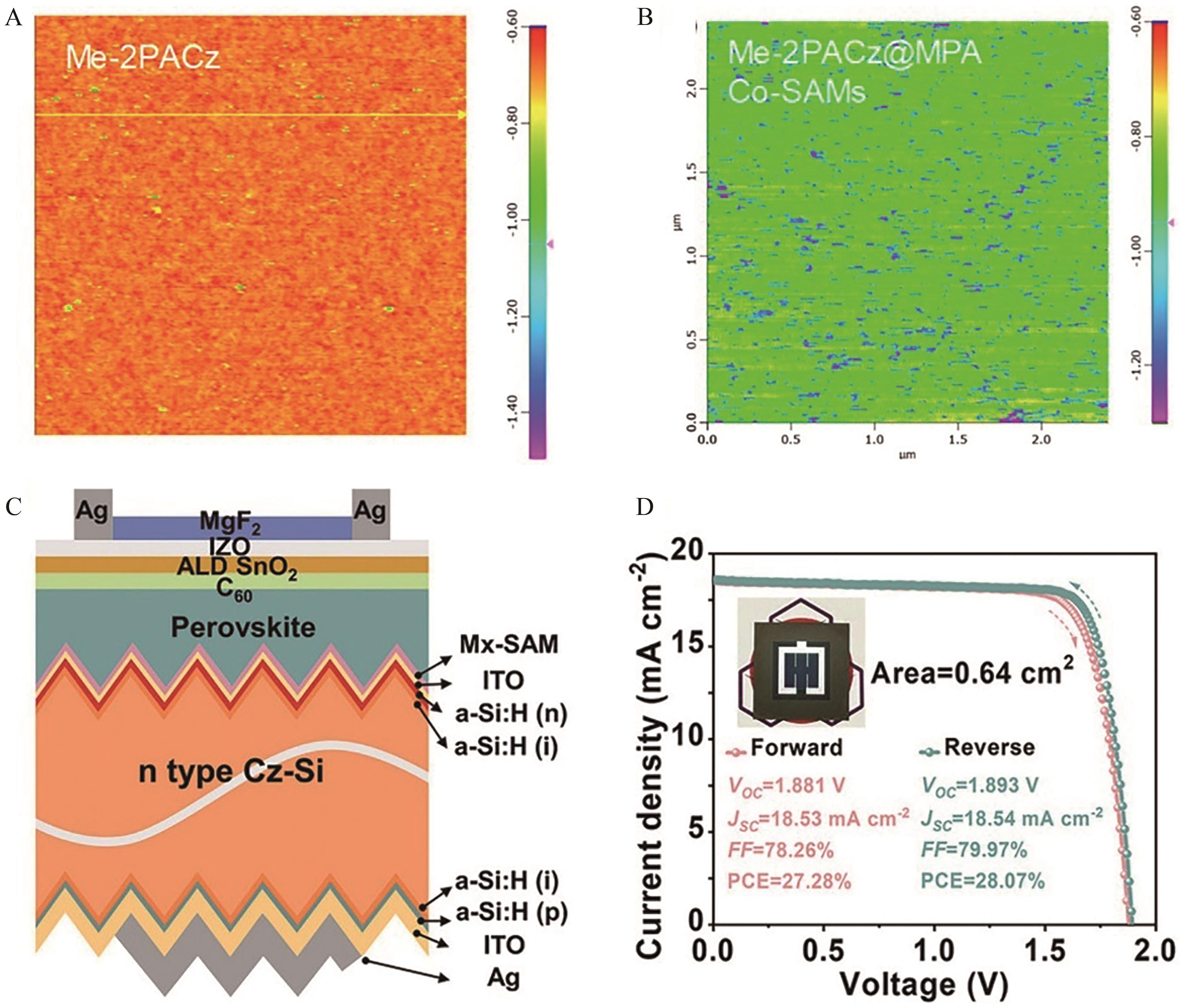
Fig.11 KPFM surface potential images of (A) single-SAMs and (B) Co-SAMs[75]; (C) A schematic illustration of the perovskite/silicon tandem solar cells(P/S-TSCs); (D) Along with the J-V curves measured under forward and reverse scanning directions for the champion P/S-TSCs. The inset features a photograph of the P/S-TSCs[78]
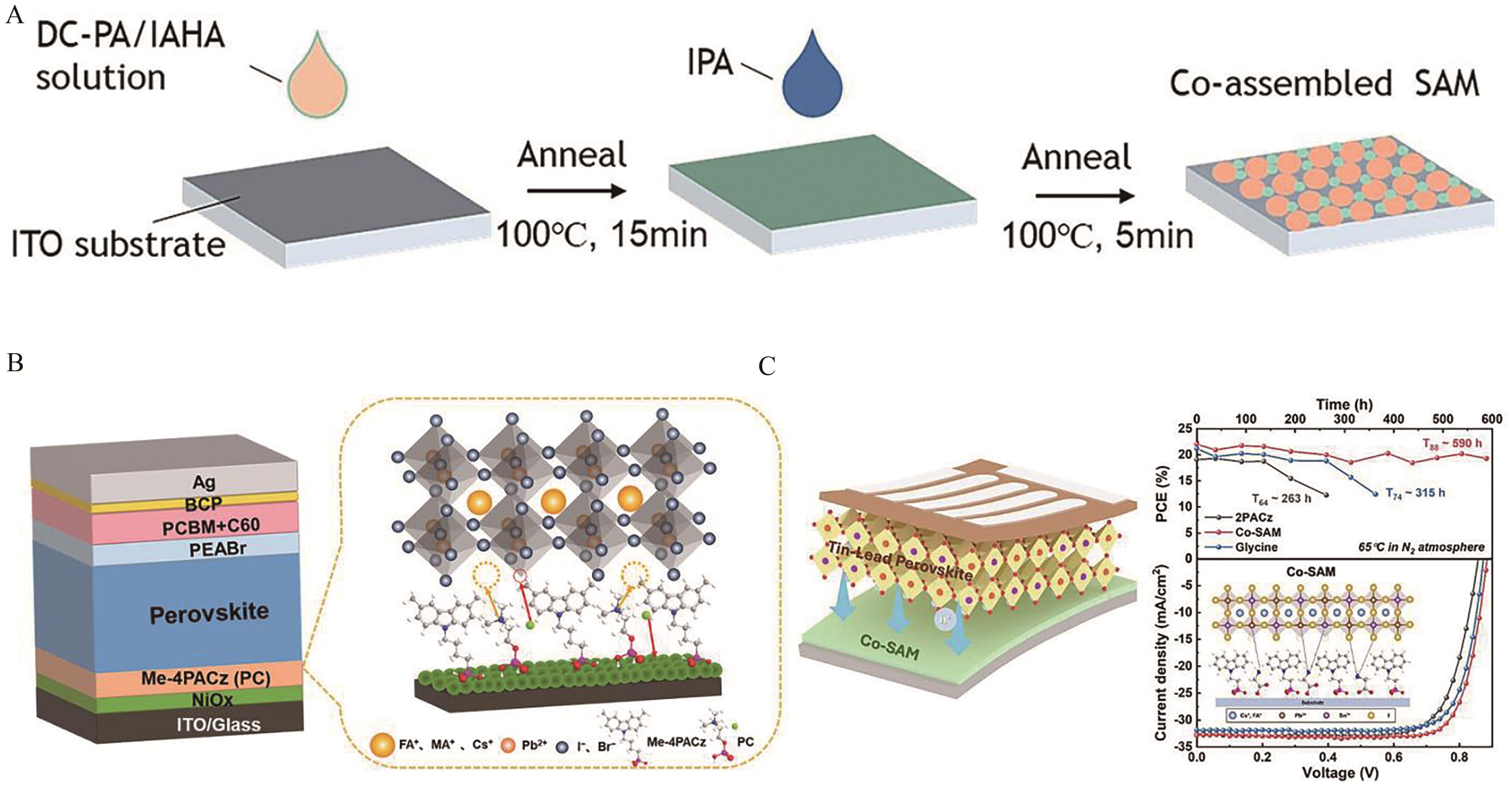
Fig.12 (A) Schematic diagram of the fabrication of Co-SAMs monolayers[79]; (B) Schematic diagram of the inverted device structure and the interaction of Co-SAMs with NiO x and perovskite films[46]; (C) Schematic diagram of the lattice structure and stability tests of Sn-Pb perovskite films coated on ITO/2PACz and ITO/Co-SAMs[47]
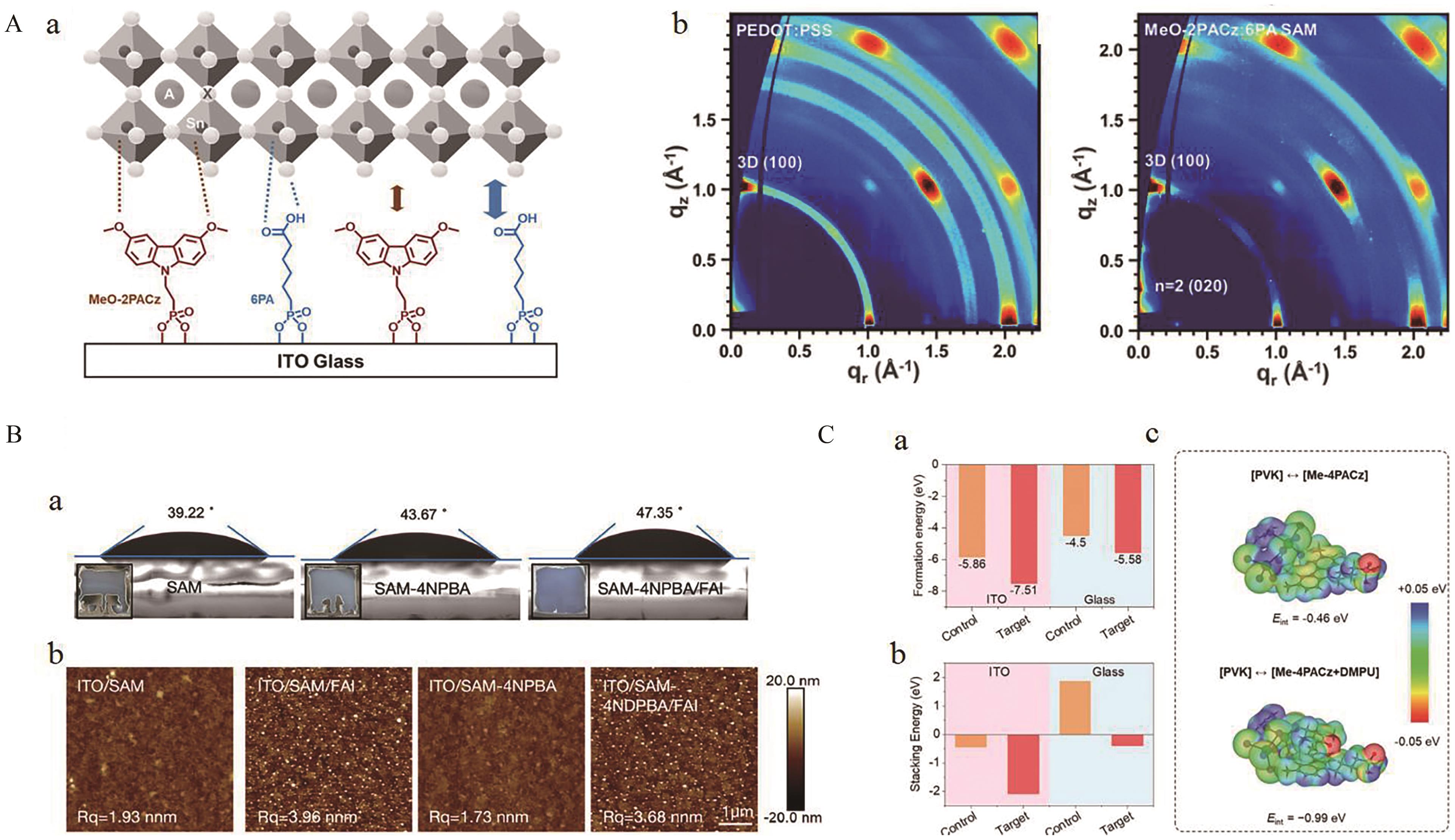
Fig.13 (A) (a) Schematic illustration of the interaction between tin perovskite and MeO-2PACz and 6PA; (b) GIWAXS images of tin perovskite films on PEDOT:PSS and Co-SAMs substrates at an incidence angle of 0.20 (°)[80]; (B) (a) Contact angle tests of perovskite precursor solutions on ITO/SAM, ITO/SAM-4NPBA, and SAM-4NPBA/FAI substrates, with corresponding images of perovskite films after spin-coating shown below; (b) AFM topography images of ITO/SAM, ITO/SAM/FAI, ITO/SAM-4NPBA, and SAM-4NPBA/FAI substrates[81]; (C) (a) DFT calculations of Me-4PACz with and without DMPU additive strategy on ITO and glass. Interface formation energy of Me-4PACz on glass/ITO surfaces; (b) Stacking energy of Me-4PACz on glass/ITO surfaces; (c) Electrostatic potential (ESP) distribution and interaction energy between perovskite and Me-4PACz, perovskite and Me-4PACz+DMPU[82]
| Molecular name | HOMO/ eV | Device structure | Perovskite bandgap/eV | VOC/V | JSC/(mA·cm-2) | FF/% | PCE/% | Ref. | |
|---|---|---|---|---|---|---|---|---|---|
| 2PACz | 3-MPA | -5.64 | FTO/2-PACz(3-MPA)/Perovskite/C60/BCP/Ag | 1.54 | 1.160 | 25.90 | 84.2 | 25.3 | [ |
| Glycine | -5.87 | ITO/2-PACz(Glycine)/Perovskite/EDAI2/PCBM/C60/BCP/Ag | 1.26 | 0.880 | 32.85 | 80.8 | 23.46 | [ | |
| Me-4PACz | BA | -5.61 | ITO/Me-4PACz(BA)/Perovskite/PI/PCBM/BCP/Ag | 1.53 | 1.168 | 25.90 | 81.48 | 24.65 | [ |
| NA | -5.68 | ITO/Me-4PACz(NA)/Perovskite/PI/PCBM/BCP/Ag | 1.201 | 26.30 | 84.50 | 26.69 | |||
| TA | -5.65 | ITO/Me-4PACz(TA)/Perovskite/PI/PCBM/BCP/Ag | 1.179 | 26.10 | 82.84 | 25.49 | |||
| PC | -5.43 | ITO/NiO x /Me-4PACz(PC)/Perovskite/PEABr/PCBM/C60/BCP/Ag | 1.55 | 1.175 | 25.88 | 82.54 | 25.09 | [ | |
| MeO-PhPACz | -5.62 | 2-T: Ag/ITO/a-Si:H(p)/a-Si:H(i)/n-type Cz-Si/a-Si:H(i)/a-Si:H(n)/ITO/Me-4PACz:MeO-PhPACz/Perovskite/C60/ALD SnO2/IZO/Ag/MgF2 | top cell: 1.68 bottom cell: Si | 1.893 | 18.54 | 79.97 | 28.07 | [ | |
| DMPU | -5.51 | ITO/Me-4PACz(DMPU)/Perovskite/C60/BCP/Ag | 1.67 | 1.230 | 21.40 | 85.00 | 22.40 | [ | |
| MeO-2PACz | MPA | — | ITO/NiO x /MeO-2PACz(MPA)/Al2O3/Perovskite/PEAI/PCBM/BCP/Ag | 1.60 | 1.216 | 23.87 | 81.50 | 23.68 | [ |
| 6PA | — | ITO/MeO-2PACz(6PA)/Perovskite /ICBA/BCP/Ag | 1.40 | 0.829 | 17.60 | 64.50 | 9.40 | [ | |
| DC-PA | IAHA | -5.37 | ITO/DC-PA(IAHA)/Perovskite/C60/BCP/Ag | 1.49 | 1.160 | 24.66 | 82.45 | 23.59 | [ |
| DMACPA | 4-NPBA | -5.47 | ITO/DMACPA(4-NPBA)/FAI/Perovskite/C60/BCP/Ag | 1.54 | 1.180 | 24.18 | 88.35 | 25.29 | [ |
| MeO-2PACz | 2-PACz | -5.9 | PET/ITO/MB-NiO x /Perovskite/C60/ALD-SnO2/Au/PEDOT:PSS/Perovskite/C60/BCP/Cu | top cell: 1.75 bottom cell:1.22 | 2.000 | 15.80 | 78.30 | 24.70 | [ |
Table 3 Performance parameters of Co-assembled monolayers Co-SAMs strategy as HSL
| Molecular name | HOMO/ eV | Device structure | Perovskite bandgap/eV | VOC/V | JSC/(mA·cm-2) | FF/% | PCE/% | Ref. | |
|---|---|---|---|---|---|---|---|---|---|
| 2PACz | 3-MPA | -5.64 | FTO/2-PACz(3-MPA)/Perovskite/C60/BCP/Ag | 1.54 | 1.160 | 25.90 | 84.2 | 25.3 | [ |
| Glycine | -5.87 | ITO/2-PACz(Glycine)/Perovskite/EDAI2/PCBM/C60/BCP/Ag | 1.26 | 0.880 | 32.85 | 80.8 | 23.46 | [ | |
| Me-4PACz | BA | -5.61 | ITO/Me-4PACz(BA)/Perovskite/PI/PCBM/BCP/Ag | 1.53 | 1.168 | 25.90 | 81.48 | 24.65 | [ |
| NA | -5.68 | ITO/Me-4PACz(NA)/Perovskite/PI/PCBM/BCP/Ag | 1.201 | 26.30 | 84.50 | 26.69 | |||
| TA | -5.65 | ITO/Me-4PACz(TA)/Perovskite/PI/PCBM/BCP/Ag | 1.179 | 26.10 | 82.84 | 25.49 | |||
| PC | -5.43 | ITO/NiO x /Me-4PACz(PC)/Perovskite/PEABr/PCBM/C60/BCP/Ag | 1.55 | 1.175 | 25.88 | 82.54 | 25.09 | [ | |
| MeO-PhPACz | -5.62 | 2-T: Ag/ITO/a-Si:H(p)/a-Si:H(i)/n-type Cz-Si/a-Si:H(i)/a-Si:H(n)/ITO/Me-4PACz:MeO-PhPACz/Perovskite/C60/ALD SnO2/IZO/Ag/MgF2 | top cell: 1.68 bottom cell: Si | 1.893 | 18.54 | 79.97 | 28.07 | [ | |
| DMPU | -5.51 | ITO/Me-4PACz(DMPU)/Perovskite/C60/BCP/Ag | 1.67 | 1.230 | 21.40 | 85.00 | 22.40 | [ | |
| MeO-2PACz | MPA | — | ITO/NiO x /MeO-2PACz(MPA)/Al2O3/Perovskite/PEAI/PCBM/BCP/Ag | 1.60 | 1.216 | 23.87 | 81.50 | 23.68 | [ |
| 6PA | — | ITO/MeO-2PACz(6PA)/Perovskite /ICBA/BCP/Ag | 1.40 | 0.829 | 17.60 | 64.50 | 9.40 | [ | |
| DC-PA | IAHA | -5.37 | ITO/DC-PA(IAHA)/Perovskite/C60/BCP/Ag | 1.49 | 1.160 | 24.66 | 82.45 | 23.59 | [ |
| DMACPA | 4-NPBA | -5.47 | ITO/DMACPA(4-NPBA)/FAI/Perovskite/C60/BCP/Ag | 1.54 | 1.180 | 24.18 | 88.35 | 25.29 | [ |
| MeO-2PACz | 2-PACz | -5.9 | PET/ITO/MB-NiO x /Perovskite/C60/ALD-SnO2/Au/PEDOT:PSS/Perovskite/C60/BCP/Cu | top cell: 1.75 bottom cell:1.22 | 2.000 | 15.80 | 78.30 | 24.70 | [ |
| 1 | WANG F, CAO Y, CHEN C, et al. Materials toward the upscaling of perovskite solar cells: progress, challenges, and strategies[J]. Adv Funct Mater, 2018, 28(52): 1803753. |
| 2 | LI F, JEN A K Y. Interface engineering in solution-processed thin-film solar cells[J]. Acc Mater Res, 2022, 3(3): 272-282. |
| 3 | ISIKGOR F H, ZHUMAGALI S T, MERINO L V, et al. Molecular engineering of contact interfaces for high-performance perovskite solar cells[J]. Nat Rev Mater, 2023, 8(2): 89-108. |
| 4 | KOJIMA A, TESHIMA K, SHIRAI Y, et al. Organometal halide perovskites as visible-light sensitizers for photovoltaic cells[J]. J Am Chem Soc, 2009, 131(17): 6050-6051. |
| 5 | GREEN M A, DUNLOP E D, YOSHITA M, et al. Solar cell efficiency tables (version 64)[J]. Prog Photovolt: Res Appl, 2024, 32(7): 425-441. |
| 6 | WANG F, LI M, TIAN Q, et al. Monolithically-grained perovskite solar cell with Mortise-Tenon structure for charge extraction balance[J]. Nat Commun, 2023, 14(1): 3216. |
| 7 | SUN R, CHEN S, HE Q, et al. A stepwise melting-polymerizing molecule for hydrophobic grain-scale encapsulated perovskite solar cell[J]. Adv Mater, 2024, 37(3): 2410395. |
| 8 | LI M, SUN R, CHANG J, et al. Orientated crystallization of FA-based perovskite via hydrogen-bonded polymer network for efficient and stable solar cells[J]. Nat Commun, 2023, 14(1): 573. |
| 9 | WANG H, WANG J, HE Q, et al. Interface dipole management of D-A-Type molecules for efficient perovskite solar cells[J]. Angew Chem Int Ed, 2024, 63(30): e202404289. |
| 10 | TIAN Q, CHANG J, WANG J, et al. Self-polymerized spiro-type interfacial molecule toward efficient and stable perovskite solar cells[J]. Angew Chem Int Ed, 2024, 136(20): e202318754. |
| 11 | CHEN C, LIU S, LI Z, et al. Accurately stoichiometric regulating oxidation states in hole transporting material to enhance the hole mobility of perovskite solar cells[J]. Sol RRL, 2020, 4(6): 2000127. |
| 12 | SUN R, TIAN Q, LI M, et al. Over 24% efficient poly(vinylidene fluoride) (PVDF)-coordinated perovskite solar cells with a photovoltage up to 1.22 V[J]. Adv Funct Mater, 2023, 33(6): 2210071. |
| 13 | XU W, ZHAO G, LI M, et al. Tailored polymeric hole-transporting materials inducing high-quality crystallization of perovskite for efficient inverted photovoltaic devices[J]. Small, 2022, 18(21): 2106632. |
| 14 | LI M, CHANG J, SUN R, et al. Underlying interface defect passivation and charge transfer enhancement via sulfonated hole-transporting materials for efficient inverted perovskite solar cells[J]. ACS Appl Mater Interfaces, 2022, 14(47): 53331-53339. |
| 15 | XIE Y, WANG X, CHEN Q, et al. Dopant-free hole-transporting polycarbazoles with tailored backbones for efficient inverted perovskite solar cells[J]. Macromolecules, 2019, 52(12): 4757-4764. |
| 16 | LIN X, CUI D, LUO X, et al. Efficiency progress of inverted perovskite solar cells[J]. Energy Environ Sci, 2020, 13(11): 3823-3847. |
| 17 | MIN H, LEE D Y, KIM J, et al. Perovskite solar cells with atomically coherent interlayers on SnO2 electrodes[J]. Nature, 2021, 598(7881): 444-450. |
| 18 | LUO X, WU T, WANG Y, et al. Progress of all-perovskite tandem solar cells: the role of narrow-bandgap absorbers[J]. Sci China Chem, 2021, 64: 218-227. |
| 19 | DEGANI M, AN Q, ALBALADEJO-SIGUAN M, et al. 23.7% Efficient inverted perovskite solar cells by dual interfacial modification[J]. Sci Adv, 2021, 7(49): eabj7930. |
| 20 | ALI F, ROLDÁN-CARMONA C, SOHAIL M, et al. Applications of self-assembled monolayers for perovskite solar cells interface engineering to address efficiency and stability[J]. Adv Energy Mater, 2020, 10(48): 2002989. |
| 21 | GOH C, SCULLY S R, MCGEHEE M D. Effects of molecular interface modification in hybrid organic-inorganic photovoltaic cells[J]. J Appl Phys, 2007, 101(11): 114503. |
| 22 | PRASANNA R, LEIJTENS T, DUNFIELD S P, et al. Design of low bandgap tin-lead halide perovskite solar cells to achieve thermal, atmospheric and operational stability[J]. Nat Energy, 2019, 4(11): 939-947. |
| 23 | WU S, ZHANG J, LI Z, et al. Modulation of defects and interfaces through alkylammonium interlayer for efficient inverted perovskite solar cells[J]. Joule, 2020, 4(6): 1248-1262. |
| 24 | ZHANG H, ZHAO C, YAO J, et al. Dopant-free NiOx nanocrystals: a low-cost and stable hole transport material for commercializing perovskite optoelectronics[J]. Angew Chem Int Ed, 2023, 62(24): e202219307. |
| 25 | GAO Z W, WANG Y, CHOY W C. Buried interface modification in perovskite solar cells: a materials perspective[J]. Adv Energy Mater, 2022, 12(20): 2104030. |
| 26 | YI Z, LI X, XIONG Y, et al. Self-assembled monolayers (SAMs) in inverted perovskite solar cells and their tandem photovoltaics application[J]. Interdiscip Mater, 2024, 3(2): 203-244. |
| 27 | BRINKMANN K, BECKER T, ZIMMERMANN F, et al. Perovskite-organic tandem solar cells with indium oxide interconnect[J]. Nature, 2022, 604(7905): 280-286. |
| 28 | AL-ASHOURI A, KÖHNEN E, LI B, et al. Monolithic perovskite/silicon tandem solar cell with >29% efficiency by enhanced hole extraction[J]. Science, 2020, 370(6522): 1300-1309. |
| 29 | MAGOMEDOV A, AL-ASHOURI A, KASPARAVIČIUS E, et al. Self-assembled hole transporting monolayer for highly efficient perovskite solar cells[J]. Adv Energy Mater, 2018, 8(32): 1801892. |
| 30 | AL-ASHOURI A, MAGOMEDOV A, ROß M, et al. Conformal monolayer contacts with lossless interfaces for perovskite single junction and monolithic tandem solar cells[J]. Energy Environ Sci, 2019, 12(11): 3356-3369. |
| 31 | LI M, LIU M, QI F, et al. Self-assembled monolayers for interfacial engineering in solution-processed thin-film electronic devices: design, fabrication, and applications[J]. Chem Rev, 2024, 124(5): 2138-2204. |
| 32 | ULMAN A. Formation and structure of self-assembled monolayers[J]. Chem Rev, 1996, 96(4): 1533-1554. |
| 33 | KIM S Y, CHO S J, BYEON S E, et al. Self-assembled monolayers as interface engineering nanomaterials in perovskite solar cells[J]. Adv Energy Mater, 2020, 10(44): 2002606. |
| 34 | CHEN B, REN N, LI Y, et al. Insights into the development of monolithic perovskite/silicon tandem solar cells[J]. Adv Energy Mater, 2022, 12(4): 2003628. |
| 35 | PANIAGUA S A, GIORDANO A J, SMITH O N L, et al. Phosphonic acids for interfacial engineering of transparent conductive oxides[J]. Chem Rev, 2016, 116(12): 7117-7158. |
| 36 | ACTON O, DUBEY M, WEIDNER T, et al. Simultaneous modification of bottom-contact electrode and dielectric surfaces for organic thin-film transistors through single-component spin-cast monolayers[J]. Adv Funct Mater, 2011, 21(8): 1476-1488. |
| 37 | LIU D, MIAO Q. Recent progress in interface engineering of organic thin film transistors with self-assembled monolayers[J]. Mater Chem Front, 2018, 2(1): 11-21. |
| 38 | SINGH M, KAUR N, COMINI E. The role of self-assembled monolayers in electronic devices[J]. J Mater Chem C, 2020, 8(12): 3938-3955. |
| 39 | LI Z, SUN X, ZHENG X, et al. Stabilized hole-selective layer for high-performance inverted pin perovskite solar cells [J]. Science, 2023, 382(6668): 284-289. |
| 40 | YAO Y, CHENG C, ZHANG C, et al. Organic hole-transport layers for efficient, stable, and scalable inverted perovskite solar cells[J]. Adv Mater, 2022, 34(44): 2203794. |
| 41 | KOSASIH F U, ERDENEBILEG E, MATHEWS N, et al. Thermal evaporation and hybrid deposition of perovskite solar cells and mini-modules[J]. Joule, 2022, 6(12): 2692-2734. |
| 42 | DAI Z, YOU S, CHAKRABORTY D, et al. Connecting interfacial mechanical adhesion, efficiency, and operational stability in high performance inverted perovskite solar cells[J]. ACS Energy Lett, 2024, 9(4): 1880-1887. |
| 43 | ULLAH A, PARK K H, LEE Y, et al. Versatile hole selective molecules containing a series of heteroatoms as self-assembled monolayers for efficient p-i-n perovskite and organic solar cells[J]. Adv Funct Mater, 2022, 32(49): 2208793. |
| 44 | ARKAN E, YALCIN E, UNAL M, et al. Effect of functional groups of self assembled monolayer molecules on the performance of inverted perovskite solar cell[J]. Mater Chem Phys, 2020, 254: 123435. |
| 45 | SU Z, CUI M, DONG B, et al. Stereo-hindrance induced conformal self-assembled monolayer for high efficiency inverted perovskite solar cells[J]. Small, 2024, 20(52): 2407387. |
| 46 | CAO Q, WANG T, PU X, et al. Co-self-assembled monolayers modified NiOx for stable inverted perovskite solar cells[J]. Adv Mater, 2024, 36(16): 2311970. |
| 47 | ROE J, SON J G, PARK S, et al. Synergistic buried interface regulation of tin-lead perovskite solar cells via co-self-assembled monolayers[J]. ACS Nano, 2024, 18(35): 24306-24316. |
| 48 | ZHAO Y, LUAN X, HAN L, et al. Post-assembled alkylphosphonic acids for efficient and stable inverted perovskite solar cells[J]. Adv Funct Mater, 2024, 34(46): 2405646. |
| 49 | LEVINE I, AL-ASHOURI A, MUSIIENKO A, et al. Charge transfer rates and electron trapping at buried interfaces of perovskite solar cells[J]. Joule, 2021, 5(11): 2915-2933. |
| 50 | ZHENG X, LI Z, ZHANG Y, et al. Co-deposition of hole-selective contact and absorber for improving the processability of perovskite solar cells[J]. Nat Energy, 2023, 8(5): 462-472. |
| 51 | LIU M, BI L, JIANG W, et al. Compact hole-selective self-assembled monolayers enabled by disassembling micelles in solution for efficient perovskite solar cells[J]. Adv Mater, 2023, 35(46): 2304415. |
| 52 | ULLAH A, PARK K H, NGUYEN H D, et al. Novel phenothiazine-based self-assembled monolayer as a hole selective contact for highly efficient and stable p-i-n perovskite solar cells[J]. Adv Energy Mater, 2022, 12(2): 2103175. |
| 53 | KAPIL G, BESSHO T, SANEHIRA Y, et al. Tin-lead perovskite solar cells fabricated on hole selective monolayers[J]. ACS Energy Lett, 2022, 7(3): 966-974. |
| 54 | JIANG W, LI F, LI M, et al. π-Expanded carbazoles as hole-selective self-assembled monolayers for high‐performance perovskite solar cells[J]. Angew Chem Int Ed, 2022, 134(51): e202213560. |
| 55 | JIANG W, LIU M, LI Y, et al. Rational molecular design of multifunctional self-assembled monolayers for efficient hole selection and buried interface passivation in inverted perovskite solar cells[J]. Chem Sci, 2024, 15(8): 2778-2785. |
| 56 | TONG X, XIE L, LI J, et al. Large orientation angle buried substrate enables efficient flexible perovskite solar cells and modules[J]. Adv Mater, 2024, 36(38): 2407032. |
| 57 | YI Z, WANG W, HE R, et al. Achieving a high open-circuit voltage of 1.339 V in 1.77 eV wide-bandgap perovskite solar cells via self-assembled monolayers[J]. Energy Environ Sci, 2024, 17(1): 202-209. |
| 58 | LIU M, LI M, LI Y, et al. Defect-passivating and stable benzothiophene-based self-assembled monolayer for high-performance inverted perovskite solar cells[J]. Adv Energy Mater, 2024, 14(12): 2303742. |
| 59 | LI M, LI Z, LIU M, et al. A hole-selective self-assembled monolayer for both efficient perovskite and organic solar cells[J]. Langmuir, 2024, 40(9): 4772-4778. |
| 60 | JIANG W, HU Y, LI F, et al. Hole-selective contact with molecularly tailorable reactivity for passivating high-performing inverted perovskite solar cells[J]. CCS Chem, 2024, 6(7): 1654-1661. |
| 61 | ZHOU H, WANG W, DUAN Y, et al. Glycol monomethyl ether-substituted carbazolyl hole-transporting material for stable inverted perovskite solar cells with efficiency of 25.52%[J]. Angew Chem Int Ed, 2024, 63(33): e202403068. |
| 62 | ZHANG Z, ZHU R, TANG Y, et al. Anchoring charge selective self-assembled monolayers for tin-lead perovskite solar cells[J]. Adv Mater, 2024, 36(18): 2312264. |
| 63 | BI H, LIU J, ZHANG Z, et al. All-perovskite tandem solar cells approach 26.5% efficiency by employing wide bandgap lead perovskite solar cells with new monomolecular hole transport layer[J]. ACS Energy Lett, 2023, 8(9): 3852-3859. |
| 64 | ZHANG H, ZHANG S, JI X, et al. Formamidinium lead iodide-based inverted perovskite solar cells with efficiency over 25% enabled by an amphiphilic molecular hole-transporter[J]. Angew Chem Int Ed, 2024, 136(16): e202401260. |
| 65 | SUN A, TIAN C, ZHUANG R, et al. High open-circuit voltage (1.197 V) in large-area (1 cm2) inverted perovskite solar cell via interface planarization and highly polar self-assembled monolayer[J]. Adv Energy Mater, 2024, 14(8): 2303941. |
| 66 | LI C, ZHANG Z, ZHANG H, et al. Fully aromatic self-assembled hole-selective layer toward efficient inverted wide-bandgap perovskite solar cells with ultraviolet resistance[J]. Angew Chem Int Ed, 2024, 136(1): e202315281. |
| 67 | WAN J, ZHANG Z, LIN J, et al. Simultaneously enhancing hole extraction and defect passivation with more conductive hole-selective self-assembled molecules for efficient inverted perovskite solar cells[J]. J Mater Chem C, 2024, 12(38): 15644-15653. |
| 68 | HUANG Y, TAO M, ZHANG Y, et al. Asymmetric modification of carbazole based self-assembled monolayers by hybrid strategy for inverted perovskite solar cells[J]. Angew Chem Int Ed, 2025, 64(4): e202416188. |
| 69 | TANG H, SHEN Z, SHEN Y, et al. Reinforcing self-assembly of hole transport molecules for stable inverted perovskite solar cells[J]. Science, 2024, 383(6688): 1236-1240. |
| 70 | ZHAO K, LIU Q, YAO L, et al. peri-Fused polyaromatic molecular contacts for perovskite solar cells[J]. Nature, 2024, 632(8024): 301-306. |
| 71 | LI D, LIAN Q, DU T, et al. Co-adsorbed self-assembled monolayer enables high-performance perovskite and organic solar cells[J]. Nat Commun, 2024, 15(1): 7605. |
| 72 | CUI H, HUANG L, ZHOU S, et al. Lead halide coordination competition at buried interfaces for low VOC-deficits in wide-bandgap perovskite solar cells[J]. Energy Environ Sci, 2023, 16(12): 5992-6002. |
| 73 | PARK S M, WEI M, LEMPESIS N, et al. Low-loss contacts on textured substrates for inverted perovskite solar cells[J]. Nature, 2023, 624(7991): 289-294. |
| 74 | LIU S, LI J, XIAO W, et al. Buried interface molecular hybrid for inverted perovskite solar cells[J]. Nature, 2024, 632(8025): 536-542. |
| 75 | LI C, ZHANG K, MAITI S, et al. Tailoring the dimensionality of 2D/3D heterojunctions for inverted perovskite solar cells[J]. ACS Energy Lett, 2024, 9(3): 779-788. |
| 76 | AYDIN E, ALLEN T G, DE BASTIANI M, et al. Pathways toward commercial perovskite/silicon tandem photovoltaics[J]. Science, 2024, 383(6679): eadh3849. |
| 77 | ZHOU J, TAN L, LIU Y, et al. Highly efficient and stable perovskite solar cells via a multifunctional hole transporting material[J]. Joule, 2024, 8(6):1691-1706 |
| 78 | LI C, LI Y, CHEN Y, et al. Enhancing efficiency of industrially-compatible monolithic perovskite/silicon tandem solar cells with dually-mixed self-assembled monolayers[J]. Adv Funct Mater, 2024, 34(46): 2407805. |
| 79 | DENG X, QI F, LI F, et al. Co-assembled monolayers as hole-selective contact for high-performance inverted perovskite solar cells with optimized recombination loss and long-term stability[J]. Angew Chem Int Ed, 2022, 134(30): e202203088. |
| 80 | SONG D, RAMAKRISHNAN S, ZHANG Y, et al. Mixed self-assembled monolayers for high-photovoltage tin perovskite solar cells[J]. ACS Energy Lett, 2024, 9(4): 1466-1472. |
| 81 | ZHANG Y, LIU Y, ZHAO Z, et al. Improving buried interface contact for inverted perovskite solar cells via dual modification strategy[J]. Adv Funct Mater, 2024, 35(12): 2417575. |
| 82 | PININTI A R, SUBBIAH A S, DEGER C, et al. Resolving scaling issues in self-assembled monolayer-based perovskite solar modules via additive engineering[J]. Adv Energy Mater, 2024, 15(7): 2403530. |
| 83 | LI L, WANG Y, WANG X, et al. Flexible all-perovskite tandem solar cells approaching 25% efficiency with molecule-bridged hole-selective contact[J]. Nat Energy, 2022, 7(8): 708-717. |
| [1] | Fang-Fang WANG, Wen-Xin XU. Empowering Traditional Energy and New Energy Teaching with Cutting-Edge Technology: Chemical Bath Deposition for Tin Oxide Electron Transport Layer [J]. Chinese Journal of Applied Chemistry, 2024, 41(11): 1661-1668. |
| [2] | LIU Jiao,LI Renzhi,DONG Xiandui. Research Progress of Perovskite Solar Cells [J]. Chinese Journal of Applied Chemistry, 2016, 33(5): 489-503. |
| [3] | ZHANG Shenyang, LIAO Qiangqiang*, XU Shaodi, YANG Dong, ZHAO Lulu, GE Honghua. Inhibitive Effect of the Self-assembled Monolayers of Dithiocarbamate Modified Glucose on Copper Surface [J]. Chinese Journal of Applied Chemistry, 2013, 30(05): 596-601. |
| [4] | XUE Shouqing, YAO Changbin, XUE Zhaomin*. Synthesis and Properties of Schiff base Self-Assembled Monolayers on Stainless Steel Surface [J]. Chinese Journal of Applied Chemistry, 2013, 30(03): 349-353. |
| Viewed | ||||||
|
Full text |
|
|||||
|
Abstract |
|
|||||
